fbpx

March 30, 2020

British Sitcom Tackles Jewish Newspapers in ‘The Jewish Enquirer’

A neurotic, tactless, middle-aged Jewish guy perpetually gets himself into hilariously awkward situations of his own making in “The Jewish Enquirer,” now available on Amazon. Centering on a reporter for a struggling Jewish newspaper in London, the sitcom is like “Curb Your Enthusiasm” with a British accent and minus the upscale lifestyle. Creator Gary Sinyor both acknowledges and doesn’t mind the comparison.

“I had to make [the series] independently because people thought it was too similar,” Sinyor told the Journal, adding that he became a fan of Larry David and “Curb” while living on Los Angeles’ Westside from 1999-2003 while making the rom-com “The Bachelor.”

“The main difference is the wealth/fame/celebrity factor,” he said. “This is a guy who’s not loaded with money and isn’t doing well. It’s a world where people have to eke out a living, a world that’s much more real.”

Sinyor confirmed that he is the model for the protagonist Paul (Tim Downie) — the inquisitive aspects, if not other traits. “Paul is fundamentally decent but he does [mess] up. He doesn’t want to, so he tries to rein it in and there’s always some sort of rapprochement with the people he’s rude to,” he said.

Other characters are loosely based on real people, and real-life incidents provided a jumping-off point for Sinyor’s scripts. He cast his 6-year-old son, Daniel, as Paul’s nephew Joshie and shot the series in his own neighborhood, some of it in his home. (His daughter also makes a cameo in a party scene and still complains that her part was not bigger.) The principal actors are not Jewish, with the exception of Paul’s friend Simon, played by Josh Howie.

In Sinyor’s original concept, Paul worked for a non-Jewish newspaper. “Changing it freed me up to explore not only the Jewish community but the wider context and talk about Judaism and Islam and racism and anti-Semitism comedically but with the passion I believe in,” he said, noting that it’s fairly novel for a British show to express that.

“American Jews have a lot more confidence,” he said. “They’ve had years of expressing themselves on television. Here, we’re a much smaller community but we’re rather reticent about our Jewishness. I wanted to fight back at that. I wanted to express my confidence in being Jewish in a way that people in America have been doing for decades.”

In the original concept, Paul worked for a non-Jewish newspaper. “Changing it freed me up to explore not only the Jewish community but the wider context and talk about Judaism and Islam and racism and anti-Semitism comedically.” — Gary Sinyor

The son of an Egyptian Jewish father and a Syrian Jewish mother, Sinyor “was brought up in a Sephardi household where we went to synagogue every Saturday.” While living in L.A., “I carried on the family tradition of going to synagogue on Shabbat and having people over for Friday night dinner.”

These days, he’s “not as much of a believer. I’m too much of a questioner,” he said. But the two youngest of his four children attend Jewish schools, like their older siblings did. “I think it’s important, with the lack of community bonding that’s going on in society,” he said. “They have made loads of friends that they’ll have for life.”

Sinyor set his sights on filmmaking from the moment he saw 1978’s “Midnight Express.” “I was absolutely quaking from the power of that movie. It really had an effect on me,” he said. After university, he went to film school, where he made the short film “The Unkindest Cut,” which he described as “a Jewish comedy about an accountant who couldn’t pass his exam. It ended up being nominated for a BAFTA (British film academy award) and got bought by the BBC. It was a massive break.”

As a huge fan of Monty Python, he couldn’t believe it when he got a call from Eric Idle, asking if he had any ideas for feature films. Although his first feature, “Leon the Pig Farmer,” ultimately was not made with Idle, “He helped me to be able to write and co-direct a feature film that won awards and became a cult hit,” Sinyor said. He’s also known for the 2017 thriller “Amaurosis,” originally released under the title “The Unseen.”

Sinyor currently has a feature project in the works, a romantic comedy set in L.A. called “Something Blue,” “about a Jewish guy getting married for the second time to a non-Jewish woman who’s getting married for the first time. It’s ‘Bridesmaids’-y, ‘Hangover’-ish,” he said. “We’re in the script stage, trying to attract financing.” He’s also writing the second season of “The Jewish Enquirer.” “I’ve written two episodes and suspect I’ll write the other four over the next few weeks.”

For the most part, the first episodes have been well received in Great Britain. “There will always be people who are offended,” Sinyor said. “A couple of journalists for Jewish papers haven’t liked it. It’s no surprise the Jewish community would be split. But I read the reviews and people are loving it, including people who aren’t Jewish. I like that because I didn’t make it for just the Jewish community. I made it for everyone, and I hope that happens in the States.”

“The Jewish Enquirer” is available for rent per episode or the entire series at Amazon.

British Sitcom Tackles Jewish Newspapers in ‘The Jewish Enquirer’ Read More »
I’m a Rabbi and a Physician Assistant. This is Why I Want You to Stay Home.

“Stay home. Save lives.”

These words blinked on the overhead electronic traffic sign as I sped down the highway. As a medical professional treating patients in the U.S. epicenter of the COVID-19 pandemic, my work is considered “essential business.” With the infection rate doubling every 3 days, many New York clinics like mine are doing everything we can can to #FlattenTheCurve. But we are failing.

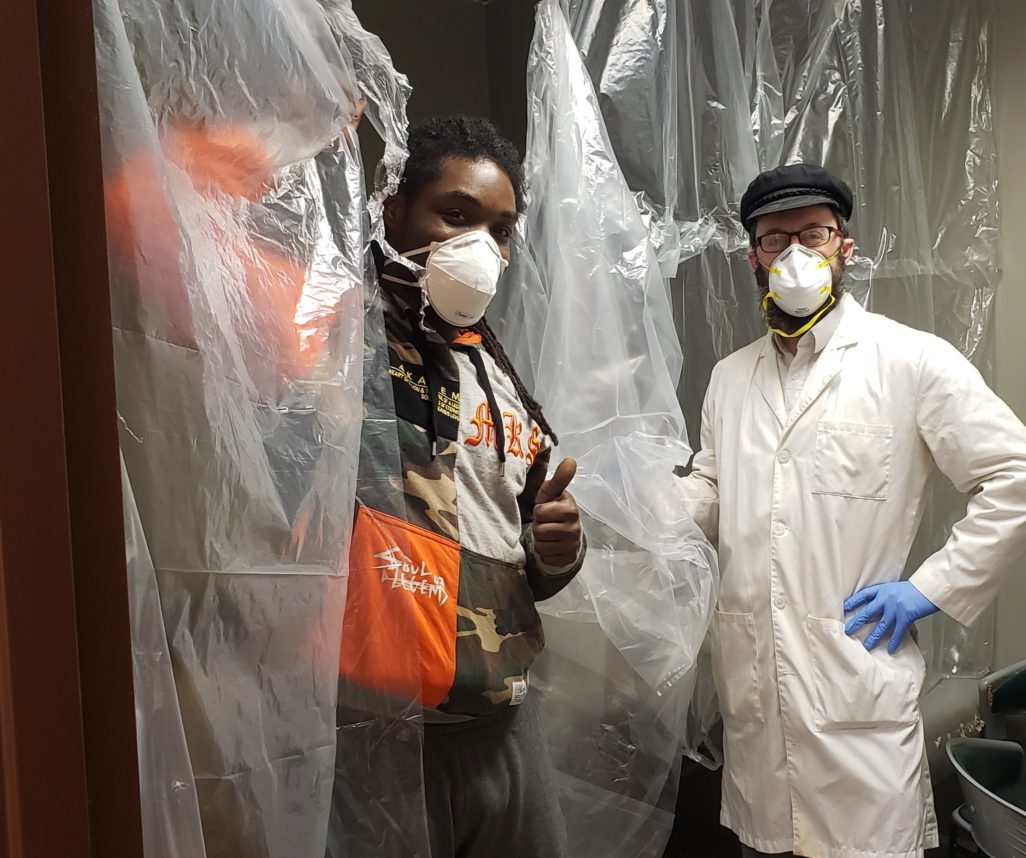
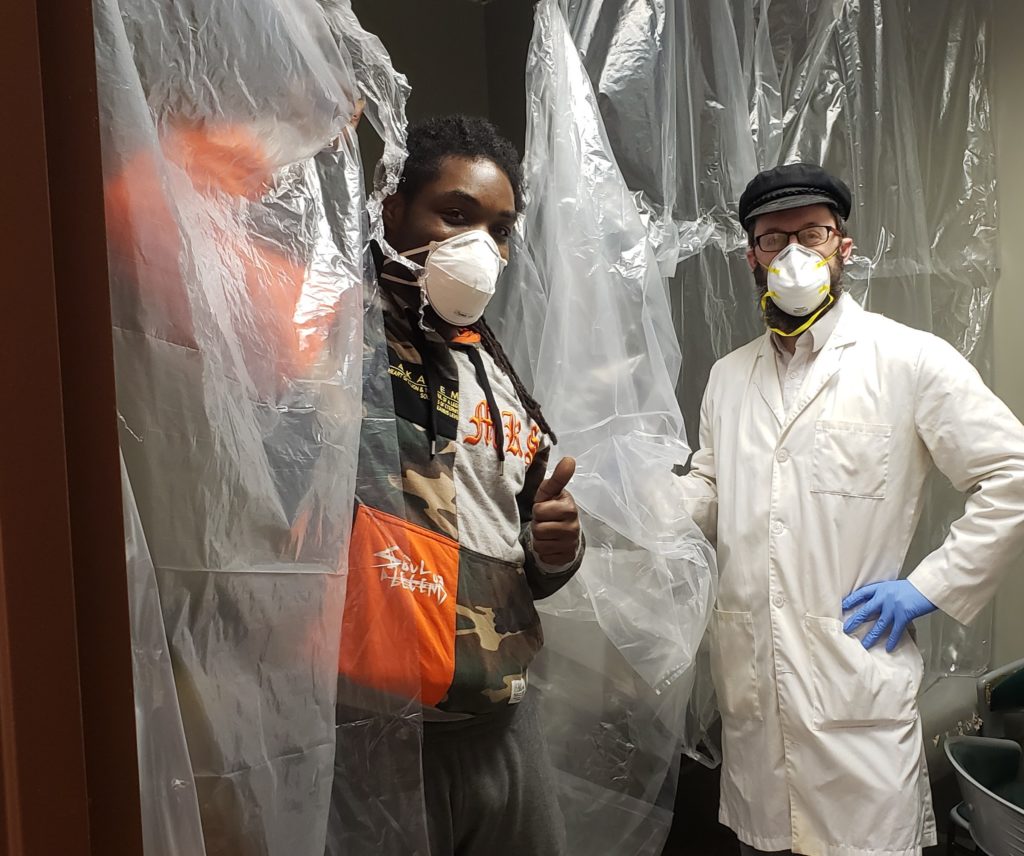
Dozens of my patients crammed into our small waiting room. Some wore masks; many didn’t. My staff made regular announcements, directing people to space themselves 6 feet apart from one another. Some even sat on the stairs outside the waiting room. One of our nurses literally built a wall of clear plastic as a barrier between me and my patients. However, with most of our patients being homeless and living in close-quarter public shelters, and with the new guidelines discouraging us from testing asymptomatic patients, I had to assume we were being exposed to COVID-19 every day. And I didn’t even have a N95 mask to wear.

Many providers in New York know exactly what I’m talking about. While the military sends a floating hospital to America’s “ground zero” and New York waits for the federal government to send in more medical supplies, I had created a Facebook group titled the “Jewish COVID-19 Support Group.” Within minutes of creation, I had urgent requests from physicians in Long Island who desperately needed masks and personal protective equipment (PPE) for their ICU staff. Individuals with sick family members reached out to me, begging for help.

I didn’t even have enough masks for my own staff.

The author with his co-worker setting up a makeshift “plastic barrier wall.”

As I sped down what usually was a jammed highway I hoped that my fellow New Yorkers were taking this seriously. It shouldn’t have but it surprised me that my morning commute took me half the time it usually takes. It also surprised me to see how many hundreds of cars and people were out and about. Rabbi Yehosha ben Perachia taught in the Talmud (Pirkei Avot 1:6) to “judge everyone favorably” so I told myself that all these people must be fellow medical providers or people with essential business needs. After all, this war can literally be won by people staying home and sitting on their couch. But, even with all the hashtags, frantic social media posts, and even CDC announcements on Youtube, I knew there were still folks living life as usual.

On Saturday, Governor Cuomo was appalled to see all the “disrespectful” people gathering in parks around New York. Some of my own patients told me they weren’t wearing masks or gloves because they weren’t worried – “If He [the Creator] wants to call me up, He’ll do it.” I even received an email from some of my Jewish brethren arguing that the synagogues should be kept open so that we can showcase to the world “our total belief and commitment that our [Creator] is the only one who can save us and that Jews praying and learning b’rabim (in public) in a minyan (group prayer assembly) is a very powerful tool to employ [in beseeching G-d] to come to the rescue of humanity in this perilous time.”

It is for this reason that I now feel the urgency to stand up and speak out. While we don’t understand why the Creator has allowed this virus to infect the world, we do understand the Torah’s clarion call to save lives.

Even during non-pandemic times, we are commanded to “guard your lives” (Deuteronomy 4:15) and are even allowed to desecrate the Shabbat for the sake of “pikuach nefesh” – rescuing lives at risk.  During a pandemic, we must particularly consider the Torah’s mandate to protect public health, as it states, “Do not bring blood upon your house,” (Deuteronomy 22:8) and “Do not stand idly by the blood of your fellow” (Leviticus 19:16). And just look at the chorus of Rabbinic religious leaders who have recently stood up to address the current crisis.

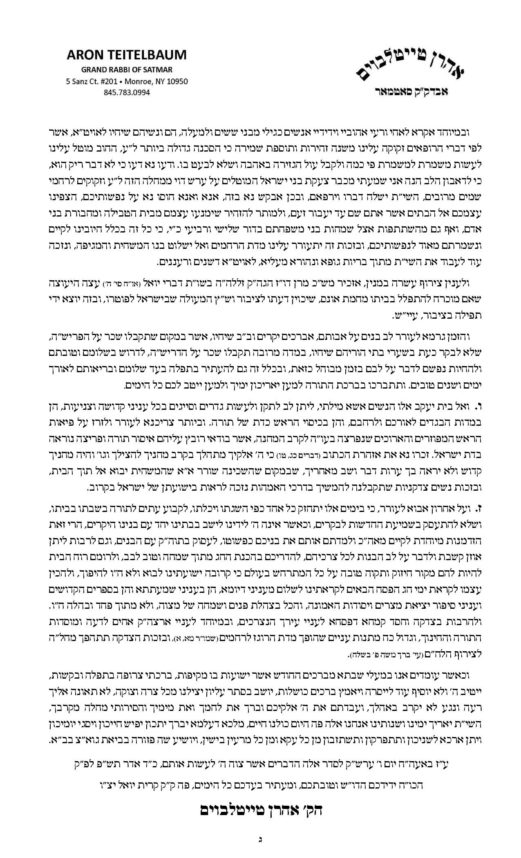
In the Sephardic community, Israel’s Chief Rabbi Yitzhak Yosef ruled that one must leave their phones on during the Shabbat, so they can be easily reached by medical providers. In Ashkenazi circles, the world-renowned Halachic authority Rabbi Dovid Cohen ruled it to be a “sin” to pray with a Minyan. Leaders of the Modern-Orthodox community issued a plethora of rulings for how to adhere to Halacha (religious law) while maintaining all the necessary Covid-19 precautions. And the list goes on.

A declaration from the Grand Rebbe of Satmar urging “social distancing” guidelines.

But there may still be some who resist the imperative to stay home and save lives, based on religious grounds. To those folks, I wish to share with you the story of the 19th century Torah scholar, Rabbi Yitzchak Dov Soloveitchik, the Brisker Rav, ZT”L. Someone once asked him the following question,”If there are two equally competent physicians to consult with, should I consult with the one who is more God-fearing?” The Brisker Rav angrily replied that one shouldn’t even “consider” a physician’s “fear of G-d” when making medical decisions. The Lubavitcher Rebbe ZT”L once related this story (“Mind over Matter, pg. 319) and questioned, why indeed did the Brisker Rav reject the premise of the question and, not just reject it, but angrily reject it?  The Rebbe explained that the Brisker Rav was afraid that if he showed interest in the degree of a physician’s religiosity even when both doctors have comparable skills, it may eventually lead to a catastrophe. The “broken telephone” of storytelling might lead someone somewhere to think that one is obligated to choose a more religious doctor over a less religious doctor. This might lead to someone choosing a doctor who is less of an expert which, in turn, might lead to lives being placed at risk. In order to save a potential future life, in a farfetched potential future scenario, the Brisker Rav shut down the question and even feigned anger. The Rebbe writes, “In a situation where lives are or can be at risk, it is forbidden to remain silent.”

The Torah teaches that we consider a possible danger to life as being equivalent to a certain danger (Talmud, Yuma 83a) and that, when lives are in danger, Torah law dictates that “it is a mitzvah for the greatest among the group” to personally desecrate the law in order to save a life. As it states, “One who shows alacrity is praiseworthy, one who stops to ask is a murderer, and one who is asked is worthy of disgust” (Talmud Yerushalmi, Yume 8:5).

It is “disgusting” for people to use the Torah as a shield for their ignorance and/or indifference to the very real and present dangers posed by COVID-19. The very same Halacha (Torah law) that directs us to congregate for prayer also directs us not to aggravate a pandemic. The very same Torah that commands, “I am the Lord, Your G-d” (Exodus 20:2) also commands, “And healing shall [the human] heal” (Exodus 21:19), from which the Talmud (Berachot 60a) derives the noble mandate for physicians to be healers.

What is also disgusting is the folks who have sent messages to my Jewish brethren complaining about “your people” in Charadei communities who have disobeyed the social distancing rule and have conducted weddings or large gatherings of prayer. There are many people, of all different faiths and backgrounds, who have disobeyed this rule. Attempting to use this virus to focus hatred on the Jewish community reminds me of the way the Jewish community was picked on last year during the measles crisis that swept New York. Many began to blame the Orthodox for not vaccinating their children while disregarding the fact that most of the schools with unvaccinated students weren’t even Jewish or the reality that 9% of Americans (30 million people!) are reportedly anti-vaxxers. Furthermore, it was an Orthodox nurse, Blima Marcus, who led the way in debunking vaccination myths for the American public. The virus of hatred and bigotry often seems innocuous as it infects a society with its vile “us vs. them” narrative.

Rather, what is needed now is for all the good people of the earth to stand together and fight the virus, beginning with debunking myths from people who say, “This is only a disease of the elderly,” “I have no symptoms so I’m safe,” or “It’ll all be over in a couple of weeks.” No, they are horribly wrong.

My colleagues who now stand at-risk on the “front lines” can attest to the fact that there is no consensus for how to accurately distinguish COVID-19 from any other condition based solely on clinical presentation. Many carriers are indeed completely asymptomatic. And while most young people without comorbidities are likely to be fine, our hospitals are filling up with more and more young and otherwise completely healthy people who now require ventilators just to breathe. Furthermore, many of my medical colleagues posit that this pandemic will worsen over the next 30-45 days before it gets better.

As we approach Passover, I know that many will desire to be with their loved ones while the world endures this plague. But, as we prepare for the Passover Seder commemorating the Paschal sacrifice, I urge you to remember the Torah’s definition of sacrifice. On this upcoming Shabbat, we will begin reading the Book of VaYikra, often translated as the “Book of Leviticus” for its focus on the sacrifices and rituals conducted by the tribe of Levi in the Holy Temple. And yet, the word “Vayikra” doesn’t mean “The tribe of Levi,” it rather refers to the act of “calling out.” One can only “call out” to another. The ancient Hebrew word for sacrifice, “Korban” means to “come close.” One can only “come close” to another. This entire third book is teaching us that the point of a “sacrifice” is not what you give up of yourself but what you give to another.

On this day, I call out to you to spread the word and dispel the darkness. I call out to you to be like Reb Yisroel Salanter, who taught, “Most men worry about their own bellies and other people’s souls, when we all ought to be worried about our own souls and other people’s bellies.” I call out to you to be like Reb Yisroel Baal Shem Tov, who taught, “One must give up of your ruchnius (spirituality) for the sake of another’s gashmius (physical needs).”

I call out to you to stay home and save lives. As the Torah teaches, “Whoever saves one life is as if they saved an entire world.”

This story was originally published on Chabad.org. 


Rabbi Levi Welton is an educator-turned-journalist passionate about sharing the values of Torah with a global audience. Raised in the San Francisco Bay Area, he holds degrees in medicine, education and film. 

I’m a Rabbi and a Physician Assistant. This is Why I Want You to Stay Home. Read More »

Holocaust Museum to Present Virtual Programs Via Facebook Live

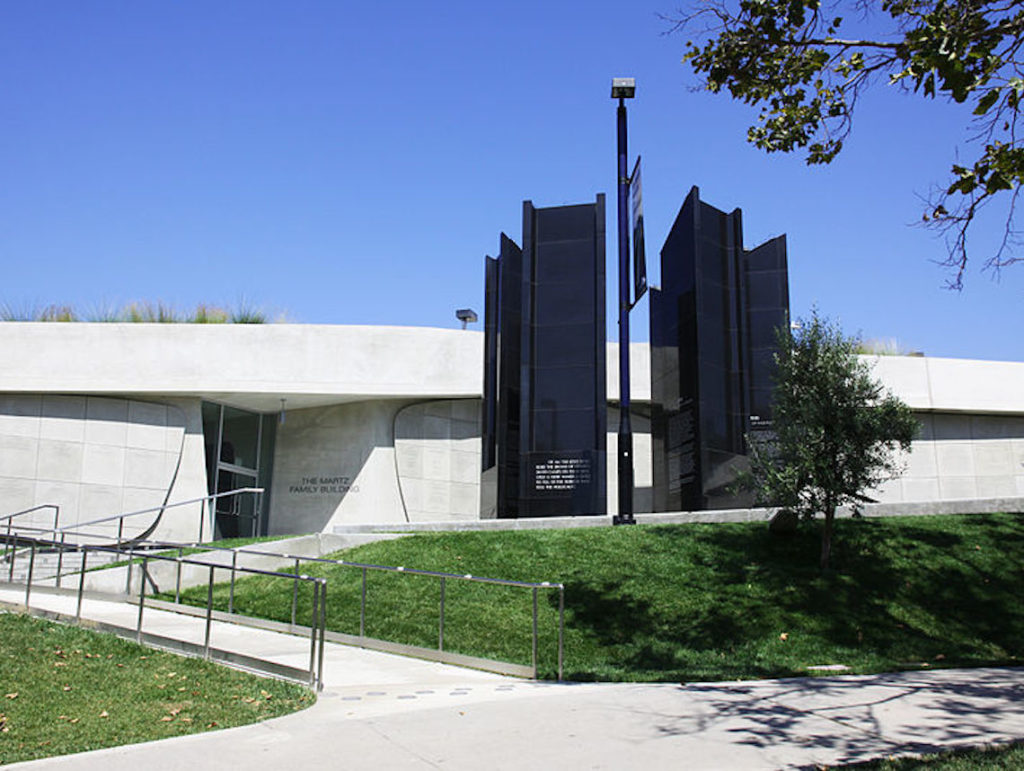
Although the Los Angeles Museum of the Holocaust is closed indefinitely in response to the coronavirus crisis, its virtual programs are ongoing.

On March 31 at 11 a.m., LAMOTH will present “The Kindertransport’s Rescuers and Rescued: A Second-Generation Conversation,” about the British railway operation that rescued 10,000 children from Nazi-occupied territories in 1938-1939. Barbara Winton, the daughter of rescuer Sir Nicholas Winton; Amanda Susskind, whose father was one of “Winton’s Children;” and Michelle Gold, the Museum’s Board Chair and the daughter of a Kindertransport survivor, will participate in the discussion. Click here for more information and registration.

John Demjanjuk, the notorious Nazi death camp guard who lived in secret in Cleveland until he was exposed and brought to trial for his crimes in Jerusalem, is the subject of “Ivan of the Extermination Camp: John Demjanjuk,” which will be presented Apr. 2 at 4 p.m.  Journalist Tom Teicholz, who covered the trial in 1987, is the author of the new book “Ivan of the Extermination Camp,” and will discuss it and the case with the Jewish Journal’s book editor Jonathan Kirsch. Register here.

Genealogy and the Holocaust: A Discussion with Michael Morgenstern; April 7 at 11 a.m. on Facebook Live
Many Holocaust survivors left Europe without any physical trace of their relatives who perished. Many do not even have photographs of their loved ones. Michael Morgenstern, a member of the Museum’s education department and an experienced genealogist, has spent countless hours doing genealogy research for Holocaust survivors and their families. In some cases, he has succeeded in helping survivors locate previously unknown photographs of family members who did not survive. In this presentation, he will share some research tactics, as well as examples of documents that he has found for survivors in the community. Click here for more information.
This story was updated to include a Facebook Live event taking place on April 7.

Holocaust Museum to Present Virtual Programs Via Facebook Live Read More »

‘When They Come for Us, We’ll Be Gone’— 10 Years Later

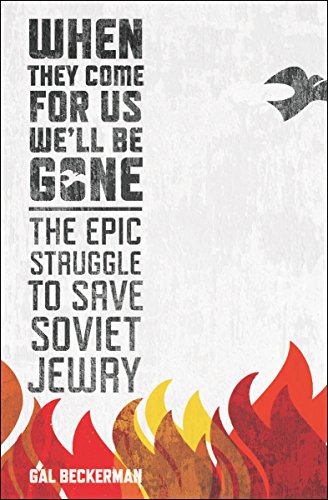
In this Passover season, we are reminded of the more recent “Let My People Go” in Jewish history — that of the rallying cry of the Zionist activists who defeated the Soviet superpower in the 20th century. Gal Beckerman’s 2010 history of the battle waged in the former U.S.S.R. and in the U.S. to rescue Russian Jews is titled “When They Come for Us, We’ll Be Gone: the Epic Struggle to Save Soviet Jewry.” It received much attention when released 10 years ago and still stands as the most successful book to cover the topic.

This is a time of worldwide resurgence of violent anti-Semitism, and this book’s portrayal of how grass-roots Jewish activists and community-based organizers joined to change the landscape of Jewish history is the exact type of inspiration needed right now. All who care about the Jewish future would benefit from re-examining Beckerman’s study.

Beckerman is a journalist, not a historian. In his book, he departs from the sanitized, establishment view of the fight for freedom and sheds light on many corners of the Soviet Jewry movement others purposely would have neglected.

Early in his narrative, Beckerman singles out the groundbreaking work of the Student Struggle for Soviet Jewry/SSSJ and Yaakov Birnbaum as the catalysts for the American side of the campaign. The lesson that Jewish students with little money and no political power can initiate change by working in a disciplined and smart way is a highly instructive one.

A careful reading of the book leaves one with the knowledge that these activists were inspired by the great pre-World War II Zionist leader Ze’ev Jabotinsky, on both sides of the Iron Curtain. More than that, these activists very often were at the forefront of the Soviet Jewry movement in the formative years of the struggle. Unfortunately, Beckerman draws no conclusions from this, and he seems mostly oblivious that adherents of Jabotinsky collectively made a more substantial contribution to the campaign than any other ideological grouping.

The book opens with a look at Yosef Mendelevitch and his fellow Riga-based activists. In this section, Beckerman illustrates it was the older Jabotinsky activists who, in the 1960s, inculcated in the younger Jews (who were Mendelevitch’s age) a new outlook: “By showing a young person a map of Israel, teaching him a few Hebrew songs, and exposing him to Jabotinsky’s essays, they could alter his sense of himself.”

On Mendelevitch himself, Beckerman writes, “The first piece of illegal writing Mendelevitch read, typed and loosely bound with a needle and thread, was a collection of Jabotinsky’s writings.”

In the depiction of the rise of SSSJ, Beckerman notes the central role Jabotinsky adherents played in Birnbaum’s efforts. This Jabotinsky connection repeats itself in America again and again. Later, when the 1965 creation of the first successful adult activist group, the Cleveland Council on Soviet Anti-Semitism, is covered, Beckerman relates “the group found inspiration in … Jabotinsky” — but he fails to make any connection to the Riga activists, who also were inspired by Jabotinsky four chapters earlier.

Later, when the Jewish Defense League’s part in the story is covered, Beckerman notes veterans of the Jabotinsky movement made up many of its early leaders and activists. However, again, he does not point out Jabotinsky was the decisive commonality in all these isolated groups and efforts.

Who was Jabotinsky? Ze’ev Jabotinsky (1880-1940), is a figure too often forgotten. He was a Zionist leader, orator and writer. He founded the Jewish Legion during World War I, as well as the Haganah self-defense units in Jerusalem in 1920. Prime Minister Benjamin Netanyahu’s father, Benzion, served as Jabotinsky’s personal secretary just after the outbreak of World War II.

What were Jabotinsky’s vital contributions? His words, deeds and ideas animated a generation of young Jews to resist the Nazis, rescue fellow Jews from Hitler’s forces, and fight for the freedom of Israel as soldiers in the Irgun and the Stern Group/LEHI. Later, Jabotinsky Zionists led the movement for freedom for Soviet Jewry in the United States and inside the Soviet Union.

Beckerman provides the evidence of the key role Jabotinsky’s devotees played in freeing Soviet Jews but does not present the much-needed closing argument. The book is uniquely inspiring to would-be young Zionist activists — it’s virtually a handbook for them — but the soul in the story is missing. And that is Jabotinsky’s exclusive brand, comprised of a blend of four ingredients: Jewish pride, street activism, devotion to duty and unapologetic Zionism.


Moshe Phillips is national director of Herut North America’s U.S. division. Herut sponsors the Zionist History Book of the Month project. “When They Come for Us, We’ll Be Gone” is the April book of the month. Learn more about Herut here.

‘When They Come for Us, We’ll Be Gone’— 10 Years Later Read More »

david suissa podcast curious times

Pandemic Times Episode 11: Yamit Wood in New York


New David Suissa Podcast Every Morning at 11am.

Yamit Wood, Jewish Journal Food Editor, opens up about what life is like in New York City during the Coronavirus epidemic.

How do we manage our lives during the Coronavirus crisis? How do we keep our sanity? How do we use this quarantine to bring out the best in ourselves? Tune in every day and share your stories with podcast@jewishjournal.com.

Pandemic Times Episode 11: Yamit Wood in New York Read More »

Nikki Yanofsky Talks ‘Black Sheep’ Album Release and Life During Coronavirus

Montreal-based singer and songwriter Nikki Yanofsky found success at an early age, setting a record as the youngest artist to have a #1 Billboard single for the longest period of time, and that song was simultaneously #1 on both the pop and jazz charts. Meanwhile, Yanofsky is also the youngest singer to record for famed jazz record company Verve Records. Also of note is that her credits feature a virtual “who’s who” of pop, R&B and jazz legends, including Herbie Hancock, Rod Temperton, will.i.am, Elton John, Wyclef Jean, Stevie Wonder and Quincy Jones.

Yanofsky’s forthcoming studio album is titled “Black Sheep” and it will be out on May 8. Produced and co-written by Zachary Seman and Roger Kleinman (Joey Bada$$, ASAP Rocky), “Black Sheep” is a bold collection of pop songs, and it also features the last two songs that “Thriller” songwriter Rod Temperton ever penned; Temperton, one of Yanofsky’s closest friends, also penned music recorded by Heatwave, George Benson, Michael McDonald, Donna Summer, James Ingram, Quincy Jones and LL Cool J.

I had the absolute pleasure of speaking with Nikki Yanofsky by phone on March 27, 2020 – in the midst of the current Coronavirus pandemic – about “Black Sheep,” working with Rod Temperton and other legends and future plans. We also talked a little Judaism, including her prior experience co-writing with other Jewish artists, whether she was bat mitzvahed, and whether she would ever record a Hanukkah album.

The full chat is embedded below for your listening pleasure and will likely appear on a future edition of the “Paltrocast With Darren Paltrowitz” podcast.

More on Nikki Yanofsky and “Black Sheep” can be found here and here.

Nikki Yanofsky Talks ‘Black Sheep’ Album Release and Life During Coronavirus Read More »

Parenting in Pandemic

On a Tuesday morning, I woke up and went to Target. I was annoyed, my plans had changed, an appointment was cancelled and instead of having a free morning to work I was stuck at home with my two little boys (ages 3 and 1) with nothing to do so I decided to make the best of it and take them to buy a new toy. This is my secret guilty mom hack for surviving long days with no plans and bad weather. The next day was a very ordinary preschool day and the next day we decided to lock ourselves into our home and not come out again for the foreseeable future. And that’s how a lot of us experienced the second week of March here in the US.

A nefarious sounding illness abroad called Covid 19 had been percolating on my news feed and then suddenly it was here and our lives changed forever. It seemed like it took 24 hours to go from “not a big deal” to “the most significant moment of our lifetime.” And in the wake of its continuous destruction, the Coronavirus has left millions of parents questioning how to possibly continue to create little worlds of safety and happiness for their children at home.

I have yet to tell my boys much of anything about what’s going on, but I’m not sure how long I can say ‘not today, bud’ when my son asks to go to the grocery store. Last Friday, after our preschool Zoom class (there’s something no one said before 2020) he cried and asked me to “bring them all back” to the computer because he wasn’t ready to say goodbye just yet. I’m not ready for real hurt and sadness to enter his little world, this wasn’t part of our plan.

It’s been over two weeks now since my family and I have begun our social distancing life of self quarantine isolation. I don’t know what stage of grief I’m in for all we have lost – for the friends who are sick and dying, for the financial security we have depended on that’s now gone, for the normalcy and routine that’s been shattered, for the unknown, for the physical closeness of friends and family, for everything and everyone suffering. What I do know is that at no time in history has anyone in an unfathomable situation survived it by not believing they could. So every morning just before I open the door to my son’s room I say to myself ‘we can do hard things’ (my favorite quote at the moment). Then I open the door, smile and say, “Good morning my love bug, are you ready to have a great day!”

This is the Jewish way, this is living the prayer we recite each morning; “modeh ani lefanech,” thank you God for returning my soul to me, to see another day. So we try to look for blessings and light, even in the darkest days. That’s our role as parents in a time of pandemic, to help our children each morning find new hope and healing from all the hurt they might have seen or felt the day before.

It’s incredibly exhausting and emotionally draining – to play silly games when you just want to read the news, to see meals be met with huffs and puffs when you’re worried about access to food. It’s OK to cry, for your children to see you cry, for them to know that there is bad out there, just remind them there’s good here too and when they’re scared and sad they can hold on to you. 

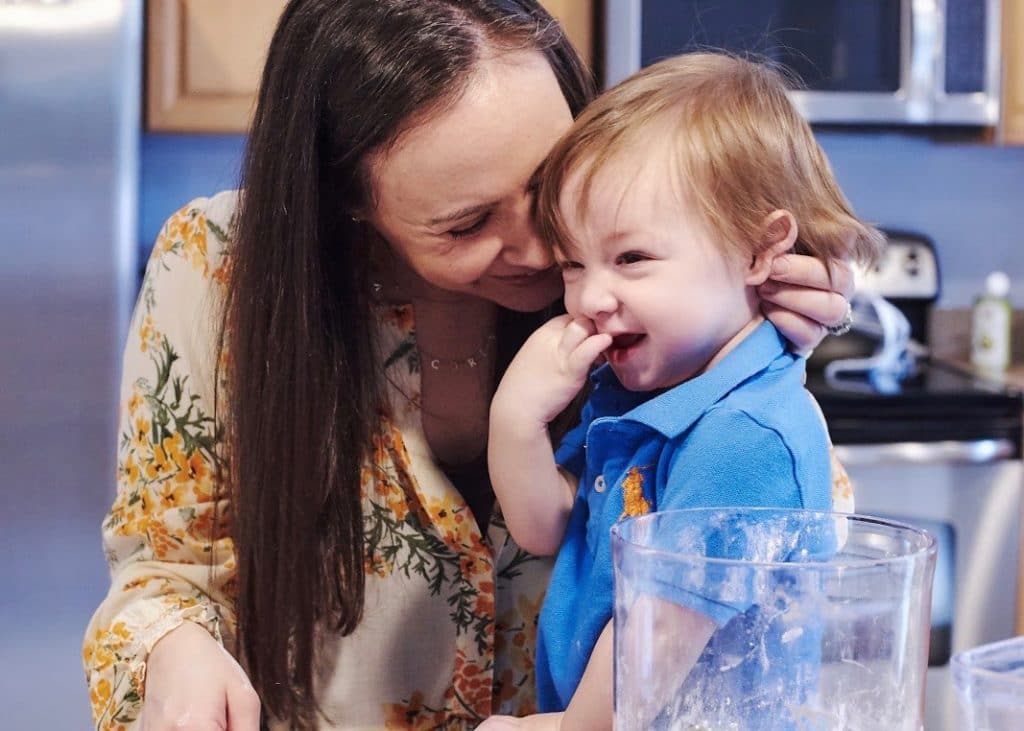
Photo by Sarah Yeoman of The Family Cookbook

One blessing of this horrific reality is that for once there’s no bad guy. There’s no evil villain plotting against us. In fact, the whole world is working together to try and find a cure, a vaccine and an answer to limited supplies. We are living in a historical moment of global unity and for once we can tell our children that millions of millions of people are all staying home in an effort to save those most vulnerable and most precious to us. And while there’s no bad guy, there are so many good ones, the nurses and doctors, emergency workers, grocery store employees, pharmacists and everyone else who is braving the unknown to make sure we are safe. We can teach our children to say thank you to the heroes too. 

That’s the macro, and now for the micro, here’s what we do to make it day in and day out to make it through. First, we stick to a routine but not a schedule, for example we always go on a stroller walk in the morning but it’s not always at 10 a.m., sometimes it’s 10:30, or 9 or even 11. Second, I let it go, but I don’t let it go all the way. I allow an extra Sesame Street episode here and there but we still don’t use iPads or phone games. Third, I don’t don’t pick battles. If they want to wear PJs all day, so be it, and if they want to spend an hour throwing toy cars in a backyard mud pit, I go with it. I find the less I need to interrupt or nag the better for me and them. Ultimately I prioritize kindness above all, being kind to our siblings, to our dogs, to each other, so that’s what I lead with and that’s when I intervene – I don’t prioritize a sparkling clean house and all toys put away, so it gets messy here every day, and that’s OK. I also bake almost every day with the boys, I’m literally filling us up with sweetness! That’s my micro of parenting in the time of pandemic. 

I hope to someday very VERY soon write “Parenting AFTER Pandemic – How to Get Back to Normal” be’ ezrat hashem, stay tuned!


Marion Haberman is a writer and content creator for her YouTube/MyJewishMommyLifechannel and Instagram @MyJewishMommyLifepage where she shares her experience living a meaning-FULL Jewish family life. Haberman is currently writing a book on Judaism and pregnancy titled “Expecting Jewish!” released Winter 2019. She is also a professional social media consultant and web and television writer for Discovery Channel, NOAA and NatGeo and has an MBA from Georgetown University.

Parenting in Pandemic Read More »

Losing My Father During Social Distancing

On Tuesday, March 10, my 97-year-old father, Nat Krotinger, was discharged from his third hospitalization in four months with a diagnosis of chronic heart failure and COPD; he started home hospice under the primary care of his long-time live-in aide. His medical team didn’t see the point of additional hospitalizations, and moved in oxygen and other equipment to his home.

We thought he would be with us for months, eating his beloved twice-daily turkey sandwiches. He was fairly responsive and aware, although getting more confused about the date and his location. That same day, CA Governor Gavin Newsom announced 24 new cases of COVID-19 for a total of 157 confirmed cases in the state.

One week later, March 17, his breathing got worse, and he laid in the hospital bed in his bedroom, the sunlight whispering in through the faded sunflower curtains purchased in the 70s. He was having trouble breathing, so the hospice staff recommend more nebulizer treatments with albuterol to open up his lungs and started giving him low doses of morphine. On that day, Los Angeles County reported 50 new cases of COVID-19, bringing our total to 144.

Then, on Shabbat morning, March 21, the long-time aide called me at 7:15 am to say my Dad had passed, quietly, quickly, without so much as a cough or a sigh. By then the number of cases in Los Angeles County had increased to 351. Statewide rules to Stay-At-Home had gone into effect. The mortuary team at Malinow and Silverman came in full hazmat suits to get him, as a precaution for themselves, and for us. They told us to stay at least 8 feet away from them.

The coronavirus permeated every single aspect of his burial and shivah, even though he did not die from it. We were limited to 10 people at the burial, done graveside by Rabbi Mark Goldfarb under a tent, with the chairs spaced out, and the only attendees were me and my sister’s nuclear families, plus our niece’s sweet fiance and the long-time caregiver. We were afraid to hug. At times, it seemed we were back in history, living far away from others, and taking on the mitzvah of burying DIY the patriarch of our family.

The usual shivah services in the home were ruled out. To say Kaddish during shivah, I turned to our shul, Temple Beth Am and their afternoon Zoom prayer services, which included time at the end for mourners to say Kaddish, but with everyone’s mic turned off to prevent cacophony.

When my mom died 14 years ago, I found the informal shivah visits at home during the day even more meaningful than saying the actual Kaddish prayer so to recreate that experience in a time of physical distancing, I turned to my personal Zoom room, Friends, family and shul members were invited to “visit” each day during set hours, never sure whose faces would appear each session.

There were friends from my high school youth group, graduate school at HUC/USC, former work colleagues, Temple Beth Am, and many other touchpoints of my life. It was especially nice to have my sister, Eve Panush, jump on from Sacramento, along with my sister in law in New Jersey as well as Israeli friends. In the usual shiva calls at home, there’s no way they all could have been together at the same time, yet thanks to Zoom, we were all there.

Jewish tradition dictates that when a mourner finishes shivah, he/she, should “get up” and walk around the block, moving from the private domain into the public. We asked a few nearby friends to come over, all spaced out more than 8 feet from each other;  I spoke briefly about my Dad, and then we walked around the block, everyone trailing far behind or on the other side of the street, while also using Zoom to connect with family further away. 

I learned that although there’s no real substitute for hugs over rugelach and lukewarm tea, the virtual expressions of love and caring were still very real and comforting. May his memory be a blessing.

Losing My Father During Social Distancing Read More »

Episode 188: Corona, Coalition and Constitutional Crisis

These are highly turbulent times in Israel. Not only are we facing the Corona crisis with a health system that’s more or less stuck in the 80’s, we are also in the midst of a political earthquake that’s shattering the entire Israeli political landscape as we know it. Here’s a small recap of what’s happened here in just the past few days: the Supreme Court ordered Yuli Edelstein, the head of the Knesset, to hold an election for his successor, he refused and resigned, thus causing a constitutional rift (if Israel had a constitution); Ganz, the head of the Blue and White Party, decided to cross his most loyal political partner, Yair Lapid, and against all odds join Bibi for a right-wing-orthodox government; And if nothing crazy happens (which at this point, is just like saying if nothing normal happens), it looks like Bennet, Israel’s Defence Minister, will be left out of the upcoming coalition.
.And that’s just the appetizer.

To discuss all this sweet sweet craziness, we decided to talk to Vivian Bercovici. Vivian served as Canada’s Ambassador to Israel between 2014-2016. She’s a Lawyer, a business consultant and a columnist for several outlets including the Jerusalem Post, the National Post, and Commentary Magazine.
Vivian was also brave enough to risk her life and join us today on the podcast, and for that we’re extremely thankful.

Vivian’s Twitter

Episode 188: Corona, Coalition and Constitutional Crisis Read More »

William Helmreich, Sociologist of US Jewry and Inveterate New Yorker, Dies of Coronavirus

(JTA) — Sociologist William Helmreich, 74, an academic with eclectic interests whose areas of expertise ranged from race relations to urban life to Orthodox Jewry, died of coronavirus on Saturday.

A longtime professor at City College of the City University of New York, Helmreich penned more than a dozen books, ranging from the seminal 1982 book “The World of the Yeshiva: An Intimate Portrait of Orthodox Jewry” to “What Was I Thinking: The Dumb Things We Do and How to Avoid Them.”

“Helmreich is extraordinarily energetic and voluble,” The New Yorker wrote of Helmreich in a 2013 piece by Joshua Rothman about Helmreich’s chronicle of his urban walks in New York City, “The New York Nobody Knows: Walking 6,000 Miles in New York City.” Research for the book had Helmreich walking city streets nearly every day for four years, and he later expanded his work by following up with specific guides for each borough.

“I love the city,” Helmreich was quoted as saying. “I love to read about the city, to live the city, to walk the city.”

Born in Switzerland in 1945 to parents who were Holocaust survivors, Helmreich came to the United States as an infant and grew up on Manhattan’s Upper West Side. He went to Yeshiva University for college and obtained his doctorate at Washington University in St. Louis.

He lived most of his life in Great Neck, on New York’s Long Island, where he was part of the local Orthodox Jewish community. Helmreich was a member of Great Neck Synagogue.

“Willie was in precisely the wrong profession for the coronavirus: He was a sociologist and he loved interacting with people,” Brandeis University professor Jonathan Sarna told the Jewish Telegraphic Agency. “Social distancing was not in his nature. Connecting with people is the point of his book about walking New York, and his scholarship also saw him exercising his interview skills in a wide range of ways. His book ‘The World of the Yeshiva’ pioneered a subject that few, at the time, considered worthy of study.”

Among Helmreich’s other books are “Against All Odds: Holocaust Survivors and the Successful Lives they Made in America,” “The Enduring Community: The Jews of Newark and Metrowest,” and “The Black Crusaders: A Case Study of a Black Militant Organization.”

At the City University of New York, Helmreich held the title of “distinguished professor,” the highest academic honor that CUNY bestows on its faculty.

Helmreich is survived by his wife, Helaine, and three children: Deborah Halpern, Joseph Helmreich, and Jeffrey Helmreich, a professor of philosophy and law at University of California, Irvine. A fourth child, Alan, died two decades ago.

A private graveside funeral took place Sunday. Due to the pandemic restrictions in place in New York, in-person shiva visits are not possible.

William Helmreich, Sociologist of US Jewry and Inveterate New Yorker, Dies of Coronavirus Read More »