fbpx

March 30, 2020

New York Jew Dies Suddenly of Coronavirus at 74

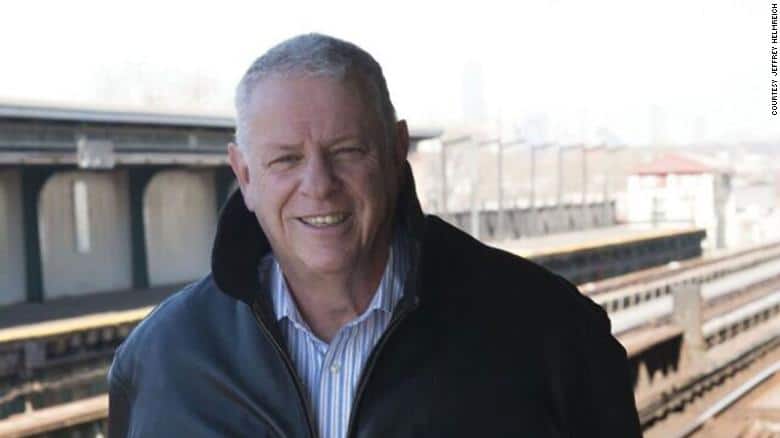
William Helmreich, a prominent sociology Professor best known for walking nearly every block of New York City, died Saturday morning of coronavirus at the age of 74, his family said.

Helmreich wrote 20 books, including “The New York Nobody Knows: Walking 6,000 Miles in the City,” about his walks through New York City as he met and learned about its residents.
Born in Switzerland to Holocaust survivors, Helmreich immigrated to New York City as an infant.
He taught sociology at City College of New York.
“Professor Helmreich was a true City College institution, a man with a restless curiosity about the people around him, a ceaseless investigator and an avid storyteller,” CCNY President Vincent Boudreau said in a statement to CNN.
“He believed that everybody had a story worth telling,” Jeffrey Helmreich said of his father.
“Every place and every person was interesting to my father. And every person felt interesting when talking to my father.”
After testing positive for coronavirus, Helmreich’s symptoms seemed to be improving. He died suddenly on Saturday.
“We weren’t ready for this at all. We didn’t say goodbye. We didn’t think we had to say goodbye,” Jeffrey Helmreich said.
His family held a virtual funeral with few guests. They were not able to sit shiva.
Funeral service workers in personal protective clothing carried the casket while Helmreich’s widow and one of his sons were in attendance, standing six feet apart.

New York Jew Dies Suddenly of Coronavirus at 74 Read More »

Rosner's Domain Podcast

Amotz Asa-El: The Jewish March of Folly

Amotz Asa-El and Shmuel Rosner discuss Amotz’s thought provoking new book.

Award-winning journalist and bestselling author Amotz Asa-El, The Jerusalem Post’s senior columnist and former executive editor,[1] is a fellow at the Hartman Institute; The Jerusalem Report’s senior writer; and a leading commentator on Middle Eastern, Israeli, and Jewish affairs.

Amotz Asa-El: The Jewish March of Folly Read More »

Gov. Cuomo Renames Hate Crime Legislation to Honor Monsey Stabbing Victim

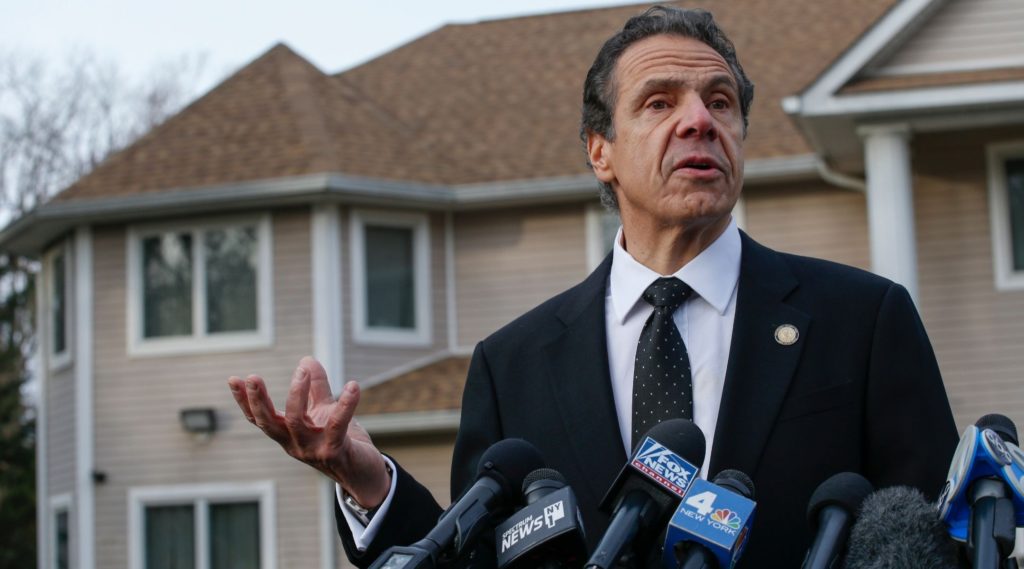
New York Gov. Andrew Cuomo said he is renaming proposed state hate crime legislation in honor of the Monsey stabbing victim who died on Sunday.

“I am deeply saddened to learn of the passing of Josef Neumann, who suffered brutal stab wounds after an attacker invaded the home of Rabbi Chaim Rottenberg on the final night of Hanukkah three months ago,” Cuomo said in a statement Monday.

“This repugnant attack shook us to our core, demonstrating that we are not immune to the hate-fueled violence that we shamefully see elsewhere in the country.”

Neumann had remained in a coma from the time of the Dec. 28 attack to his death. He was 72. Four others were injured in the attack.

Following the attack, Cuomo proposed legislation that equates hate crimes with domestic terrorism. The legislation will be called the Josef Neumann Hate Crimes Domestic Terrorism Act.

Cuomo called on the state legislature to pass the act in the budget due this week.

“We owe it to Mr. Neumann, his family and the entire family of New York to get it done now,” the governor said.

Gov. Cuomo Renames Hate Crime Legislation to Honor Monsey Stabbing Victim Read More »

Reports: PA Prime Minister Accuses IDF of Intentionally Spreading Coronavirus to Palestinians

Palestinian Authority (PA) Prime Minister Mohammad Shtayyeh alleged on March 29 that the Israel Defense Forces (IDF) are intentionally spreading coronavirus to Palestinians, according to online reports.

Ynet News reported that Shtayyeh said that there have been “testimonies that some of the [Israeli] soldiers are trying to spread the virus on car handles.” He added: “This is racism and hatred of people who long for the death of the other. We will record this in the list of crimes [against Israel].”

Anti-Defamation League CEO Jonathan Greenblatt tweeted, “Shameful that, in the midst of a global crisis, PM Mohammed Shtayyeh is blaming IDF soldiers for spreading #COVID19 in Palestinian territories. This #scapegoating is disgraceful & a modern version of blood libel, an age-old #antisemitic canard.”

He argued in a follow-up tweet that Shtayyeh’s comments are even more infuriating when considering that the Israelis and Palestinians have been collaborating on their responses to the coronavirus; United Nations Special Coordinator for the Middle East Process and Personal Representative of the Secretary-General to the Palestine Liberation Organization and the Palestinian Authority Nikolay Mladenov said in a March 28 statement that the partnership was “strong.”

Throughout March, the PA — including Shtayyeh — compared Israel with the coronavirus on several occasions, saying that Palestinians are facing the coronavirus and the “occupation virus,” according to Palestinian Media Watch, a nongovernmental media watchdog group. The PA acknowledged the cooperation between the Israelis and Palestinians against the coronavirus on March 17, announcing that the two sides had established a joint operations room to fight the disease.

On March 25, the Coordinator of Government Activities in the Territories (COGAT) delivered 3,000 test kits and 50,000 masks from the World Health Organization (WHO) to the PA.

“Once more, COGAT is cooperating closely with the World Health Organization to make assistance possible in the Palestinian Authority’s struggle against the coronavirus outbreak,” COGAT Maj. Gen. Kamil Abu Rukun said in a statement at the time. “I commend the teamwork of the international organizations in this important shared endeavor, I wish steady good health to all the residents of the region, and I hope that we will continue to work together in the fight to halt the spread of this dangerous virus.”

Reports: PA Prime Minister Accuses IDF of Intentionally Spreading Coronavirus to Palestinians Read More »

9 Jewish TV Shows to Binge During Lockdown

Although the emergence of the coronavirus has made things seem bleak, there’s an upside to being trapped inside to avoid a raging pandemic: You finally have an excuse to catch up on all your favorite shows.  However, it’s likely that you’ll binge through your favorite series pretty quickly. That’s why we’ve arranged a hit list of surprisingly Jewish series you can stream:


1. “Big Mouth”
The coming-of-age animated comedy about puberty and the chaos it brings is full of Jewish content. Not only is its protagonist, Andrew (John Mulaney), from a Larry David-style Jewish family, his main middle school love interest, Missy (Jenny Slate), is a biracial Jew. The show is ripe with Jewish references, with self-declared “Fox News Jewish” characters fighting with “NPR people who were raised Jewish and no longer practice” at the school, plus a Passover episode in Florida and, of course, all the self-loathing we’ve come to love.

Where to watch: Netflix
Seasons: 3


2. “Grace and Frankie”
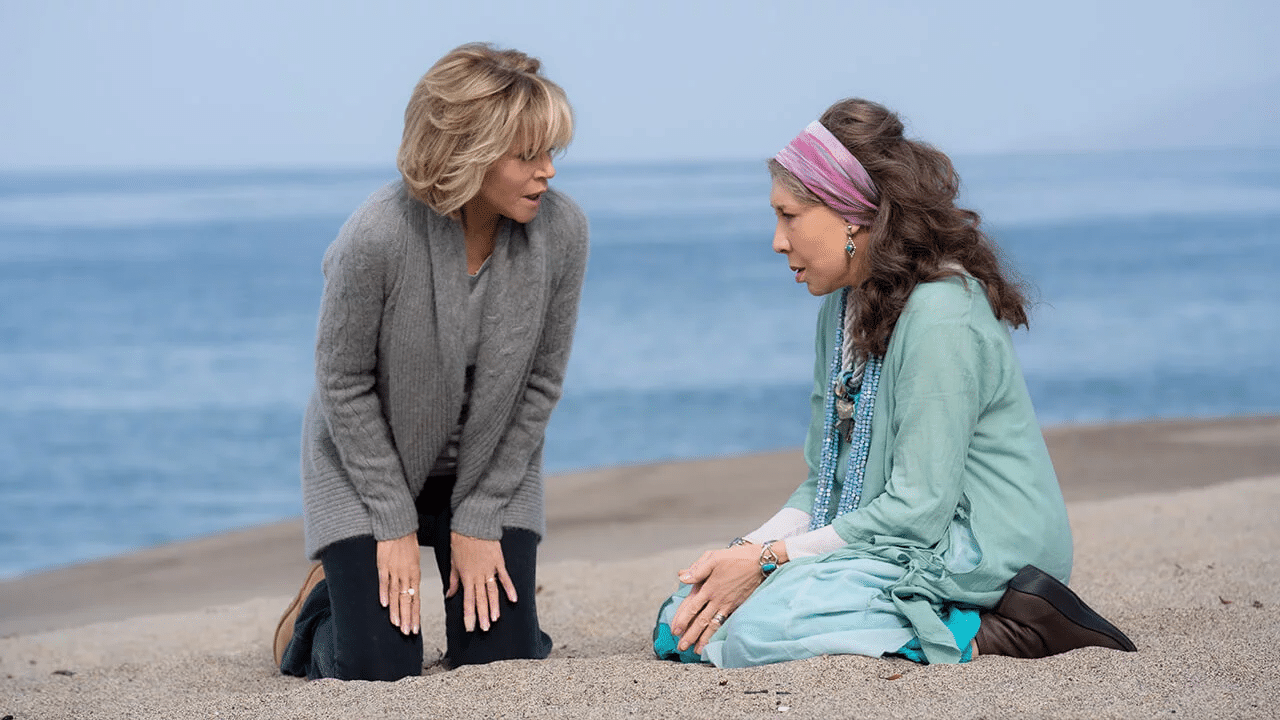
“Grace and Frankie” delights in the chaos of aging. Its all-star cast includes Jane Fonda, Lily Tomlin, Sam Waterston and Martin Sheen. The show centers around rivals Fonda and Tomlin, who discover their husbands are gay. Tomlin’s character, Frankie, is the matriarch of a contemporary Jewish family that many secular Jews can see themselves in. It will certainly fill the void of West Coast cultural Jewry that “Transparent” left behind.

Where to watch: Netflix
Seasons: 6


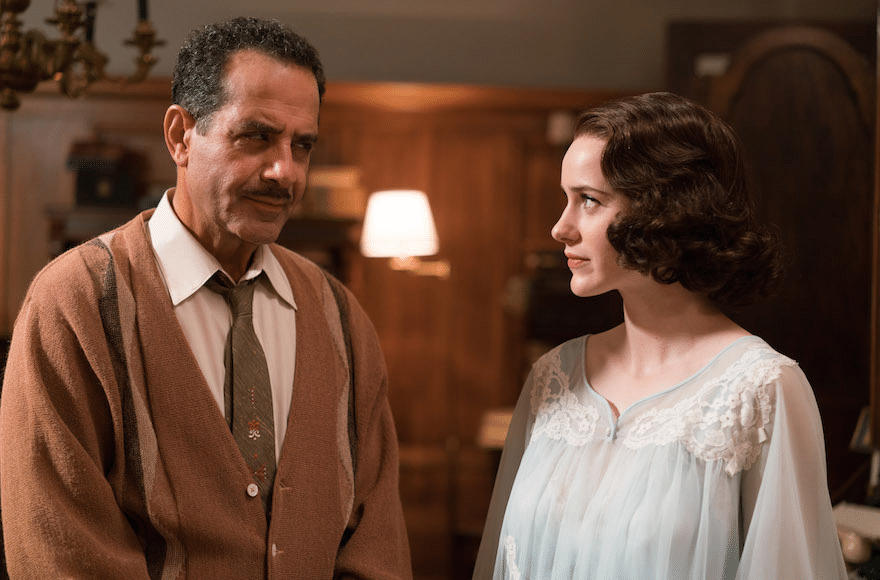
Midge Maisel, played by Rachel Brosnahan, with her father Abe Weissman, played by Tony Shalhoub, in “The Marvelous Mrs. Maisel.” Photo by Amazon Studios

3. “The Marvelous Mrs. Maisel”
This series is a 1950s tale of a Jewish stand-up comic making her way through a man’s industry. With numerous Emmys and Golden Globes under its belt for acting, writing and just about everything else, Maisel offers a joyful escape from chaotic reality. For the most part, it’s family-friendly.

Where to watch: Amazon
Seasons: 3


4. “The Kominsky Method”
Created by multiple Emmy winner Chuck Lorre and starring Oscar winners Michael Douglas and Alan Arkin, “The Kominsky Method” follows a once-famous actor and his agent in their twilight years. These two icons are truly in their element playing cranky old Jewish men.

Where watch: Netflix
Seasons: 2


“When Heroes Fly” Photo courtesy of Netflix

5. “When Heroes Fly
An action-packed yet soulful thriller, “When Heroes Fly” follows four friends who served together in the Israel Defense Forces. They reunite for a deeply personal mission — to rescue one of their sisters, who they thought had died in a car accident. “What it does best is show how in Israel, mandatory army service is the melting pot that throws diverse groups together, so an Ashkenazi elite or Orthodox Jew can end up taking orders from a scrappy Mizrahi kid in a combat unit, and how these formative experiences bond them like brothers for life,” Adrian Hennigan said in his review of the series for Haaretz. Plus, the series is available in Hebrew and English.

Where to watch: Netflix
Seasons: 1


Al Pacino in “Hunters.” Photo courtesy of Amazon Prime Video

6. “Hunters”
This series focuses on a group of vigilantes in the 1970s, spearheaded by Holocaust survivors who hunt down Nazis who avoided justice. The show has caused controversy, with leaders from both the Auschwitz Memorial and the USC Shoah Foundation criticizing its fictionalizing of the Holocaust. But the show is beautifully shot and fully embraces the nuances of Judaism. In the first episode, the lead character struggles with not being able to sit shivah for his grandmother, who has no immediate family left. Now is the time to tune in and join the debate.

Where to watch: Amazon
Seasons: 1


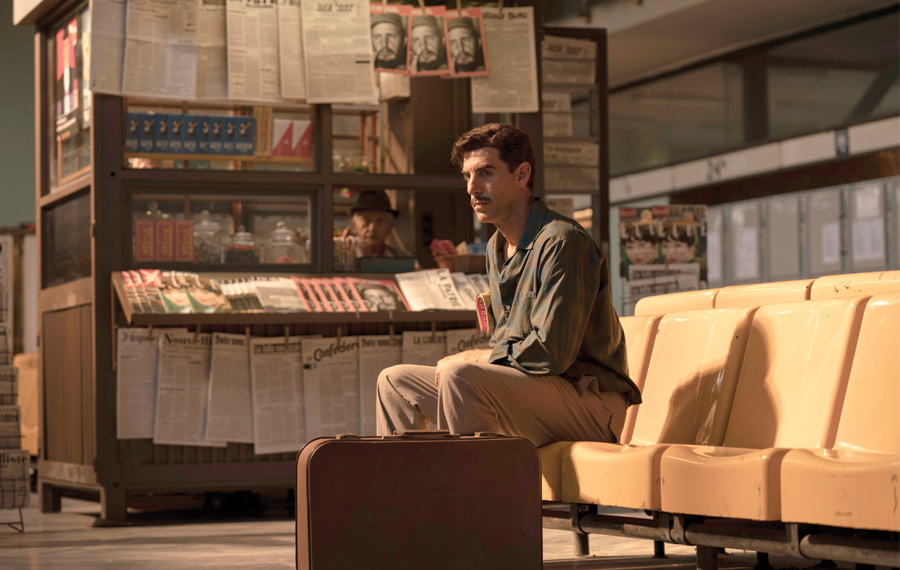
“The Spy” Photo courtesy of Netflix

7. “The Spy”
Sacha Baron Cohen plays Israel’s most consequential spy, Eli Cohen, who infiltrated the Syrian government in the 1960s and saved thousands of Jews. The show is gripping and gut-wrenching and features meaningful Mizrahi representation. The spy struggles with racism within the Jewish community while being its saving grace. It also grapples with how much one Jew is willing to sacrifice for the greater cause of the Jewish people.

Where to watch: Netflix
Seasons: 1


Shira Haas; Photo courtesy of Netflix

8. “Unorthodox”
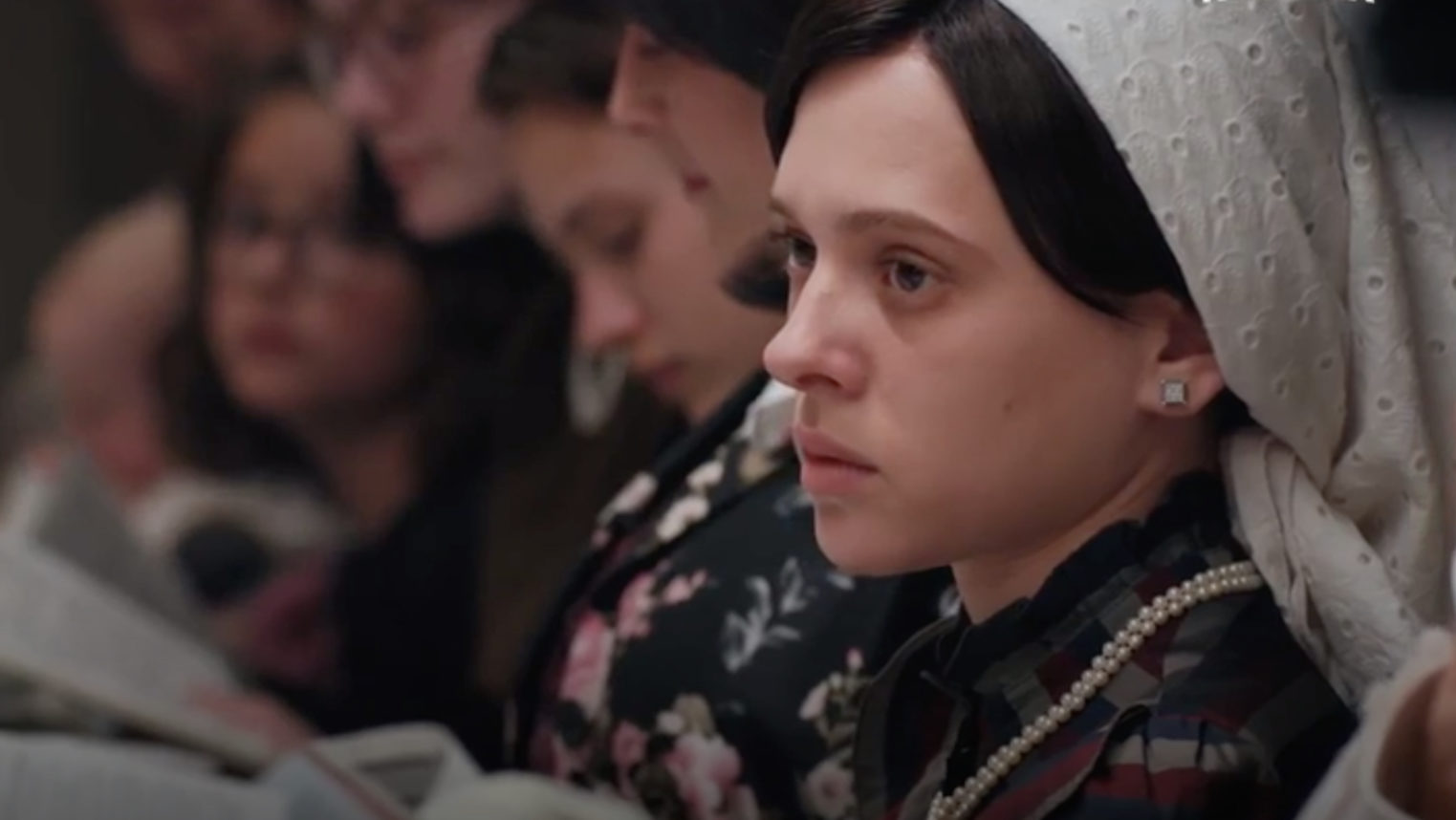
If you liked the Netflix documentary “One of Us,” you’ll love “Unorthodox.” The miniseries is based on Deborah Feldman’s bestselling 2012 memoir, “Unorthodox: The Scandalous Rejection of My Hasidic Roots,” and was just released. The show is loosely based on Feldman’s life-changing choice to abandon her arranged marriage in Brooklyn and seek autonomy in Berlin. The writers were so adamant about how they sought to accurately represent ultra-Orthodox life rather than scandalize it and were so committed to that accuracy that much of the series is in Yiddish. Plus, Shira Haas, who portrays the protagonist, Esty, is already a fan favorite, having portrayed Ruchami Weiss on the hit series “Shtisel.”

Where to watch: Netflix
Seasons: 1


Larry David in “Curb Your Enthusiasm” Photo by John P. Johnson

9. “Curb Your Enthusiasm”
Not only is the meta-romp about Larry David’s impolite escapades around Los Angeles the most quintessentially Jewish series out there, it also has new episodes. The show, which follows David (as himself) as he goes through his daily life, is now streaming new episodes every week. It also features high-profile guest stars including Jon Hamm, Abbi Jacobson, Vince Vaughn and Isla Fisher. And an anti-Semitic dog.

Where to watch: HBO
Seasons: 10


Ariel Sobel is the Journal’s social media editor.

9 Jewish TV Shows to Binge During Lockdown Read More »

L.A. Rabbi Dies of Coronavirus

A Los Angeles rabbi reportedly died of coronavirus complications on March 29.

According to Yeshiva World News and Vos Iz Neias, the rabbi was Nachman Morgan, who had been a rabbi at the Yeshiva Rav Isacsohn Torah Emes Academy, where his wife, Esther Morgan, is a teacher. His brother, Sholom Morgan, announced his death on social media:

Morgan was known for teaching classes on Gemara, which is rabbinical analysis of the Torah, for all ages.

A page on the Jewish crowdfunding site The Chesed Fund has been set up for Morgan’s family. The page describes Morgan as “a pillar of the Los Angeles community for over 35 years. [He] taught thousands of children and adults alike.” The campaign has raised more than $123,000 as of midday on March 30. The goal is $250,000.

As of March 29, there were 2,136 cases of coronavirus in Los Angeles County and 37 deaths. Los Angeles County Department of Public Health Director Dr. Barbara Ferrer said, “Our hearts and prayers go out to all the families and friends of individuals who have died. I ask that everyone please do your part to not infect others or become infected yourself by adhering to the public health directives and practicing social distancing.”

L.A. Rabbi Dies of Coronavirus Read More »

COVID-19 and the American Jewish Economic Crisis

American Jewry is facing a financial and structural crisis. The economic impact of the coronavirus pandemic will be devastating to the American Jewish communal system and is of immediate concern to a significant number of Jewish families and seniors. The longer this crisis continues, the broader and more destructive the impact will be on our communal and religious enterprises.

The immediate concern must be for vulnerable families and seniors, as income streams freeze and communal resources diminish. Longer-term realities suggest an economic tsunami, wide and deep, affecting broad segments of the Jewish institutional landscape and placing substantial pressure on the core resources of our fundraising and foundation networks.

Although there is no way to know the full social and fiscal impacts of this crisis, initial reports from family service providers, Jewish free-loan administrators, Jewish educators and rabbinic leaders suggest a broad and growing caseload of families and individuals in crisis. The range of needs and affected people will be extensive, including individuals living in isolation, families reporting on domestic violence, and households without the financial resources to meet food and shelter requirements.

On the operational side, questions are rising about the economic viability of synagogues, schools and camps. The Jewish social-service safety net is being stretched by the dramatic rise in requests for clinical and health services; limited access to loans and grants; fewer resources to sustain counseling and meal programs; and the lack of availability of scholarships and financial-assistance packages. Pressures on the communal system will continue to increase as conditions deteriorate.

On the professional side, we likely will experience significant job displacement. Institutional reductions in services and programs will be extensive, and the permanent closing of buildings and other communal resources will be devastating. In the aftermath of this pandemic, we likely will observe a number of institutional mergers and the realignment of organizational missions.

“Following this extraordinary moment in time, we will see profound changes in the Jewish world.”

In particular, the future of Jewish camping, the viability of many synagogues and schools, and the wellbeing of some of our social service agencies will be threatened. The scope of financial resources that likely will be required to “save” the number of “in trouble” organizations, agencies, camps, schools and synagogues is beyond the reach of Jewish funders. As Jewish foundations and funders nationally and locally seek to mobilize their resources, the economic spread appears to be expanding experientially.

Following this extraordinary moment in time, we will see profound changes in the Jewish world. A wide swath of our communal and religious systems likely will come undone by this experience.

One should look at various historical models to gain helpful insights. In her research on New York Jews and the Great Depression, author Beth Wenger provided an important perspective on the economic, social and political changes that resulted.

As with the 2008 economic recession, we will likely see a fundamental downsizing of the American Jewish community. At that time, I wrote:

“The full impact of the current economic crisis may not be felt for years. In the midst of it, core institutions are being fundamentally reshaped and individual lifestyles reconstructed. These economic challenges threaten the existing infrastructure of the American Jewish community, leading to a new order of institutions and leaders. … For many older Jews, many of their core institutional patterns of personal engagement have been altered. For younger Jews, the dislocations may foster opportunities for further experimentation and disengagement from traditional patterns. The long-term outcome of this transformation is likely to be a far weaker, less cohesive American Jewish community.”

What possibly is more debilitating than previous economic reversals is the current reality that the institutions of our community are financially and programmatically limited, and in some cases, unable to operate during this pandemic shutdown. At the moment, we are, in essence, frozen in place.

In responding to these emergency and long-term financial needs, can we expect a nationally driven and locally managed effort to mobilize our communal resources?

We will see profound changes in the Jewish world following this extraordinary moment in time. When our communities return to a new normal, we will have inherited a weakened and financially compromised communal infrastructure. Adding to this level of uncertainty, during the next several years, it is conceivable we will experience other “waves” of COVID-19 and/or the possibilities of other pandemic conditions.

Projections:

The “New” American Jewish Community: It is possible that in the aftermath of this phenomenon, we might see a fundamental reorganization of the core functions of our Jewish communal system.

Generations: Consider that millennials and Gen Z already have encountered in their lives the 2008 financial crisis and now, this pandemic; their lives forever will be shaped by these two experiences. In comparison, the Great Depression affected our grandparents. In the aftermath, transformative events frame how a generation thinks and behaves.

Virtual Tools as the New Reality: We now know virtual technology will become a central and fixed organizing tool for learning, shopping, engaging and praying. We are witnessing in some measure the best of society and of this sector. With great speed, we have already been able to document an explosion in online services, programs, and resources and the personal networks of friendship and support that have emerged.”

Religious/Communal Revival: Are we likely to see a bump-up in religious participation and communal engagement? After previous crises in U.S. history (for example, the Civil War and World War II), America experienced an uptake in religious and civic engagement.

This moment marks a new American Jewish reality. In these challenging times, we will see a fundamental economic restructuring of the communal enterprise, just as we will experience the reshaping of our larger social networks, our systems of practice and our focus on a different political environment.


Steven Windmueller is the Rabbi Alfred Gottschalk Emeritus Professor of Jewish Communal Service at the Jack H. Skirball Campus of HUC-JIR, Los Angeles. His writings can be found here.

COVID-19 and the American Jewish Economic Crisis Read More »

L.A.’s Orthodox Jews Adjust Their Passover Plans During Pandemic

With stay-at-home orders in place due to the coronavirus pandemic, Passover is shaping up to be a more solitary and low-key holiday this year. And while many in the non-Orthodox community are already preparing for virtual seders via Zoom, FaceTime or Skype, that’s not an option for most Orthodox Jews, who don’t use technology on Shabbat or religious holidays (including the first two and last two days of Passover).

A March 25 ruling from Sephardic Israeli Orthodox rabbis said that seniors, who would be alone for the seder and feel depressed or isolated, could use Zoom to connect with their families. The permission came with the caveat that devices are turned on before the holiday.

However, not all local Orthodox Jews or rabbis are on board with this ruling.

“I am not in favor of using Zoom at the seder,” said Rabbi Jason Weiner, senior rabbi and director of the Cedars-Sinai Spiritual Care Department and rabbi of Knesset Israel in Pico-Robertson. However, he added, “I would agree that in certain situations this year, such as someone suffering from mental health issues like severe depression, as well as elderly people who must be alone because of the current situation who may be unsafe and need people to check in on them, etc., that there could be situations in which it may be a good thing.”

Rabbi Elchanan Shoff of Beis Knesses Los Angeles in Pico-Robertson told the Journal, “Halachah is a lot like medicine. Obviously, some things are forbidden, just as some things are medically bad for everyone. But even when there is ‘room for leniency,’ a huge part of a decision for any person relates to who they are and many other factors.”

Even if there are stories online saying there will be more lenient practices this year, Shoff said Orthodox Jews can’t rely on them. “There is a great need for each person and family to seek competent guidance,” he said. “Whatever you do, do not simply trust a Facebook comment. They are usually misleading at best. If you need advice on Pesach, or mikvah or something else, reach out to someone who can help you with halachic advice.”

Beyond the “to Zoom or not to Zoom” question, the upcoming holiday presents a unique challenge for Orthodox Jews in Los Angeles.

“I’m unable to get ready to celebrate freedom when I feel imprisoned in my own home.” — Deb Brandt-Sarif

Deb Brandt-Sarif told the Journal, “I’m having such conflicted feelings about Pesach this year. [My daughter] Lauren was stockpiling cereal and pasta to survive quarantine at exactly the time of year when I would normally be getting rid of them. It’s so confusing. I’m unable to get ready to celebrate freedom when I feel imprisoned in my own home.”

For Chari Pere, staying home for Passover is an entirely new experience, since she and her family have always gone back to their hometowns in New York for the holiday. She said she’s been soliciting friends’ advice on cleaning, recipes and shopping, but it’s been a struggle to find items that are actually in stock. However, she’s trying to focus on the positive.

“I’m grateful for this opportunity to spend time with my three children and husband,” she said. “Life moves so fast and I’ve been saying for a while that I wish I had more time to spend with them. I guess I got my wish and then some.”

Sheila Asher Meyer is disappointed that she won’t be able to go home to her family in Atlanta, where she gathers with her married siblings, their children and her cousins every year. Like Pere, she’s never been in her own home for Passover and feels completely unprepared.

“One of my children [who is] trying to have a positive attitude about the situation expressed that she is looking forward to the toned-down seder,” Asher Meyer said. “Since [it] will only be our family, everyone will be able to share their insights and thoughts at the table. We will try to bring in songs and our traditional Sephardic seder customs, such as acting our Yetziat Mitzrayim (going out of Egypt) and hitting [each] other with scallions during ‘Dayenu.’ ”

She’s also taking extra steps to ensure the holiday is a memorable one for her family. “I know it might feel very lonely not to go to shul or get together with friends,”she said. “Even though my siblings and their families live close by, we will not be getting together with them. My children are very sad about it and spent time making colorful cards for all the extended family to let them know we are thinking about them during this time.”

In addition, Asher Meyer said she has ordered some board games her children have been asking for.

Vivian Becker will be spending the holiday with her daughter Eva instead of her entire extended family of 15 to 20 people. “I feel very sad that I can’t have the children [and grandchildren] at the table,” she said. “I think we’re going to have a more serious seder without the children’s participation.”

For those who don’t have family in L.A, the holiday may be particularly hard. Shlomo Walt, who normally has plans with friends every year, isn’t sure what he’ll be doing. “I’d like to go to a family for seder if possible but I don’t know how that will happen,” he said. “I usually bring about three to five people with me to almost every meal, especially the sedarim.”

Brittany Domb was supposed to spend the holiday with families in Pico-Robertson, but now she’s going to be making the seders by herself. “I’m keeping the prep and food simple and trying to look on the bright side,” she said. “It’s really the safest option, as I don’t want to risk getting sick or, God forbid, get anyone [else] sick. To make the holiday special, I got a really in-depth haggadah with 250 questions and answers to keep me entertained, as well as a book that was recommended specifically for someone [celebrating the holiday] by themselves.”

Rabbi Eli Stern, director of outreach at LINK Kollel and Shul in Pico-Robertson, said there are advantages to staying home instead of going to a resort, for instance, where it becomes more of a vacation and the seder is not as personal. “Obviously, the circumstances are terrible and we have to make arrangements for people who can’t do it themselves, but just having the seder with our family and having the chance to reconnect to the holiday on a very personal level is a good thing,” he said.

Sarah Almogue, who is spending the holiday with her husband, daughter and 79-year-old mother-in-law, is relying on prayers for comfort now.

“I just pray that HaShem has a plan and that we are part of it,” she said. “I want just to protect those I love and my amazing community from this virus by doing my part.”

L.A.’s Orthodox Jews Adjust Their Passover Plans During Pandemic Read More »

Adelson Donating 2 Million Masks to Hospitals, Report Says

Jewish Insider reported on March 30 that casino mogul and philanthropist Sheldon Adelson is donating 2 million masks to hospitals in New York and Nevada.

According to the report, the masks were in made China; 250,000 of the masks are going toward “the Trump administration’s coordinated effort to assist health workers,” per the report.

Hospitals nationwide are experiencing shortages of masks and ventilators, particularly in New York, where hospitals have been overwhelmed with COVID-19 patients. President Donald Trump said on March 24 that the federal government will provide 8 million ventilators and 14 million masks to medical personnel throughout the country.

Adelson, the Las Vegas Sands chairman and CEO who also is a major figure in Republican politics, said in a January statement that the coronavirus is “unique and serious. A top priority is the health and safety of our employees and guests and we are doing everything we can to support the governments in both Macau and China.” He also lobbied for the passage of the $2.2 trillion stimulus bill that Trump signed into law on March 27; Adelson’s businesses will not receive any of the aid, Casino.org reported.

Adelson Donating 2 Million Masks to Hospitals, Report Says Read More »

Israeli Student Designs Cutting-Edge Protective Mask With Disinfecting Case

Imagine this: You’re a college student assigned to design a product that could help humanity in a future apocalyptic scenario. You think hard about a world where even breathing could be risky. Then, within months, that reality happens and your “what if” school project becomes a potential lifesaver.

That’s what happened to Yael Mordechay, a junior at the department of industrial design at the Bezalel Academy in Jerusalem. In her class on wearable technology, she designed an innovative protective air mask that could potentially safeguard many during the COVID-19 crisis.

When Mordechay’s professor asked her to create a solution for “a problem that’s going to be in the future,” she chose to address air pollution. “It’s a big problem in China and India, but there’s not a lot of awareness in Israel,” she told the Journal. “It’s not cool to wear masks.”

So, Mordechay went sought to create a user-friendly mask that would be cool to wear. Researching her options, Mordechay realized that bulky masks with big filters are more equipped to handle pathogens, but smaller masks were definitely more fashionable. So, working with two labs in Japan, Mordechay developed ways to detect air pollution and bacteria with a slimmer product.

Her next move was to eliminate the awkward strap to keep masks on tight. “I understood that the band behind the head is not comfortable for a lot of people,” she said. “So I found a special kind of glue that is two-sided. One side you stick on the surface and the other side is special for the skin. You can take it off without it peeling [off] your hair and put it on again.”

With this technology, her mask became strapless, following the trendy minimalism of Apple’s cordless headphones, but Mordechay also wanted something that was aesthetically pleasing. While it was necessary to make the mask sterile, “It was also important to me that it was colorful, not white or connected to doctors,” she explained. She decided to decorate it with “something that you’re not embarrassed to put on in the street.”The current prototype is color-blocked with bright teal and a suede-style tan. It does not look like a medical mask, but a graphic accessory.

To ensure the mask was as safe as possible, Mordechay knew that she had to make it  durable for an extended period of time.  “You can’t wear a mask for more than 3 days,” she said, noting that when you take it off it becomes contaminated. “I needed to make a case that would make it easy to keep it clean and to take it out.”

So she developed a special bag with its own disinfecting system. The case uses UV light technology to destroy particles and bacteria, leaving the mask sterilized and safe to re-use.

Two weeks ago, the Food and Drug Administration acknowledged that “the need by healthcare providers and personnel for personal protective equipment (PPE) such as surgical masks and surgical and isolation gowns, may outpace the supply during the Coronavirus Disease 2019 (COVID-19) outbreak.”

Last week, photos of nurses at the Manhattan hospital Mount Sinai West using Hefty black trash bags as makeshift protective garb went viral. The caption read: “NO MORE GOWNS IN THE WHOLE HOSPITAL.”

Shortly thereafter a nursing manager died of the virus. Staffers believe that her illness and death were caused by the lack of basic supplies. “I’m only a student,” Mordechay said, but she hopes, with the help of her professor, she can get the masks out into the world.

Israeli Student Designs Cutting-Edge Protective Mask With Disinfecting Case Read More »