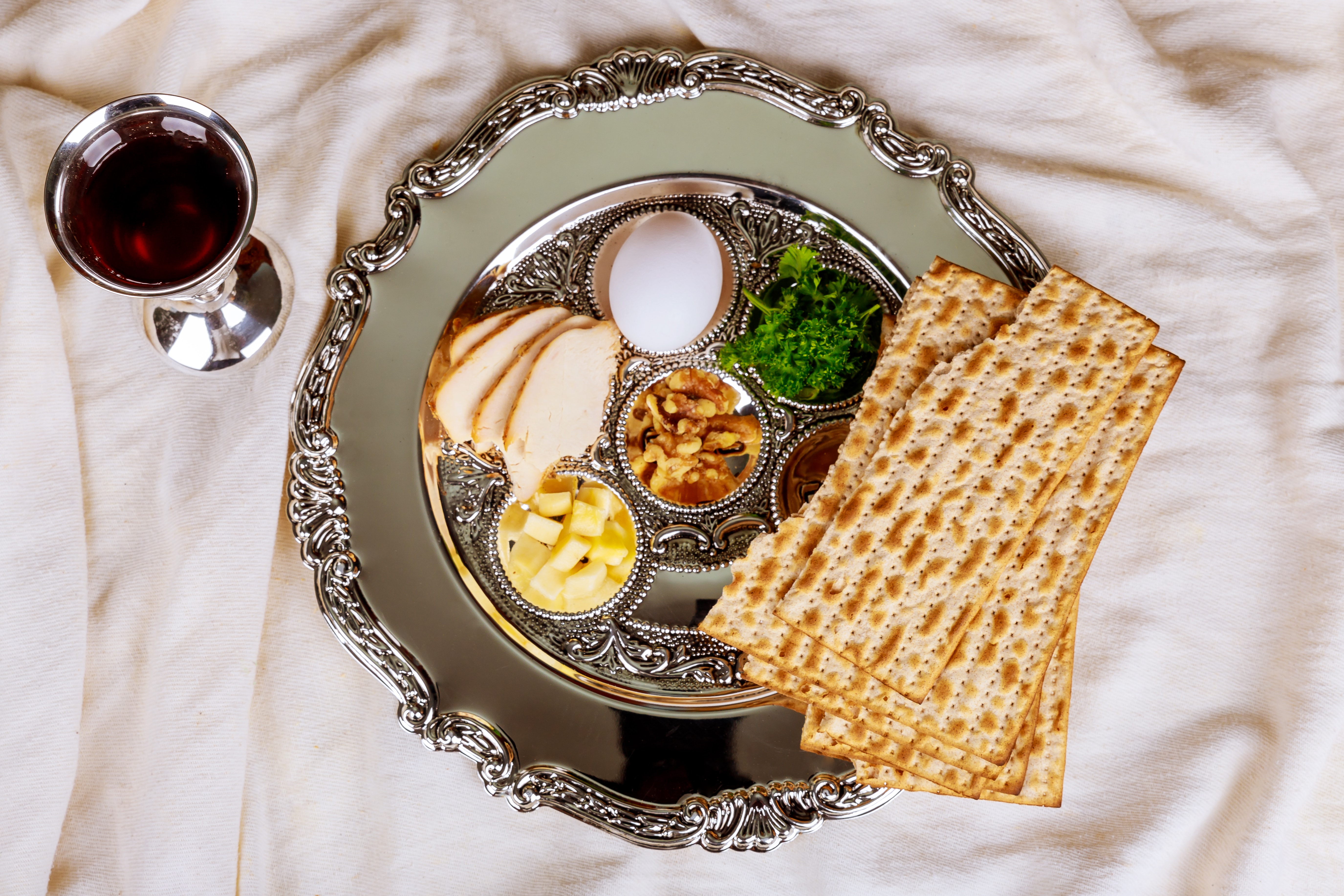
With stay-at-home orders in place due to the coronavirus pandemic, Passover is shaping up to be a more solitary and low-key holiday this year. And while many in the non-Orthodox community are already preparing for virtual seders via Zoom, FaceTime or Skype, that’s not an option for most Orthodox Jews, who don’t use technology on Shabbat or religious holidays (including the first two and last two days of Passover).
A March 25 ruling from Sephardic Israeli Orthodox rabbis said that seniors, who would be alone for the seder and feel depressed or isolated, could use Zoom to connect with their families. The permission came with the caveat that devices are turned on before the holiday.
However, not all local Orthodox Jews or rabbis are on board with this ruling.
“I am not in favor of using Zoom at the seder,” said Rabbi Jason Weiner, senior rabbi and director of the Cedars-Sinai Spiritual Care Department and rabbi of Knesset Israel in Pico-Robertson. However, he added, “I would agree that in certain situations this year, such as someone suffering from mental health issues like severe depression, as well as elderly people who must be alone because of the current situation who may be unsafe and need people to check in on them, etc., that there could be situations in which it may be a good thing.”
Rabbi Elchanan Shoff of Beis Knesses Los Angeles in Pico-Robertson told the Journal, “Halachah is a lot like medicine. Obviously, some things are forbidden, just as some things are medically bad for everyone. But even when there is ‘room for leniency,’ a huge part of a decision for any person relates to who they are and many other factors.”
Even if there are stories online saying there will be more lenient practices this year, Shoff said Orthodox Jews can’t rely on them. “There is a great need for each person and family to seek competent guidance,” he said. “Whatever you do, do not simply trust a Facebook comment. They are usually misleading at best. If you need advice on Pesach, or mikvah or something else, reach out to someone who can help you with halachic advice.”
Beyond the “to Zoom or not to Zoom” question, the upcoming holiday presents a unique challenge for Orthodox Jews in Los Angeles.
“I’m unable to get ready to celebrate freedom when I feel imprisoned in my own home.” — Deb Brandt-Sarif
Deb Brandt-Sarif told the Journal, “I’m having such conflicted feelings about Pesach this year. [My daughter] Lauren was stockpiling cereal and pasta to survive quarantine at exactly the time of year when I would normally be getting rid of them. It’s so confusing. I’m unable to get ready to celebrate freedom when I feel imprisoned in my own home.”
For Chari Pere, staying home for Passover is an entirely new experience, since she and her family have always gone back to their hometowns in New York for the holiday. She said she’s been soliciting friends’ advice on cleaning, recipes and shopping, but it’s been a struggle to find items that are actually in stock. However, she’s trying to focus on the positive.
“I’m grateful for this opportunity to spend time with my three children and husband,” she said. “Life moves so fast and I’ve been saying for a while that I wish I had more time to spend with them. I guess I got my wish and then some.”
Sheila Asher Meyer is disappointed that she won’t be able to go home to her family in Atlanta, where she gathers with her married siblings, their children and her cousins every year. Like Pere, she’s never been in her own home for Passover and feels completely unprepared.
“One of my children [who is] trying to have a positive attitude about the situation expressed that she is looking forward to the toned-down seder,” Asher Meyer said. “Since [it] will only be our family, everyone will be able to share their insights and thoughts at the table. We will try to bring in songs and our traditional Sephardic seder customs, such as acting our Yetziat Mitzrayim (going out of Egypt) and hitting [each] other with scallions during ‘Dayenu.’ ”
She’s also taking extra steps to ensure the holiday is a memorable one for her family. “I know it might feel very lonely not to go to shul or get together with friends,”she said. “Even though my siblings and their families live close by, we will not be getting together with them. My children are very sad about it and spent time making colorful cards for all the extended family to let them know we are thinking about them during this time.”
In addition, Asher Meyer said she has ordered some board games her children have been asking for.
Vivian Becker will be spending the holiday with her daughter Eva instead of her entire extended family of 15 to 20 people. “I feel very sad that I can’t have the children [and grandchildren] at the table,” she said. “I think we’re going to have a more serious seder without the children’s participation.”
For those who don’t have family in L.A, the holiday may be particularly hard. Shlomo Walt, who normally has plans with friends every year, isn’t sure what he’ll be doing. “I’d like to go to a family for seder if possible but I don’t know how that will happen,” he said. “I usually bring about three to five people with me to almost every meal, especially the sedarim.”
Brittany Domb was supposed to spend the holiday with families in Pico-Robertson, but now she’s going to be making the seders by herself. “I’m keeping the prep and food simple and trying to look on the bright side,” she said. “It’s really the safest option, as I don’t want to risk getting sick or, God forbid, get anyone [else] sick. To make the holiday special, I got a really in-depth haggadah with 250 questions and answers to keep me entertained, as well as a book that was recommended specifically for someone [celebrating the holiday] by themselves.”
Rabbi Eli Stern, director of outreach at LINK Kollel and Shul in Pico-Robertson, said there are advantages to staying home instead of going to a resort, for instance, where it becomes more of a vacation and the seder is not as personal. “Obviously, the circumstances are terrible and we have to make arrangements for people who can’t do it themselves, but just having the seder with our family and having the chance to reconnect to the holiday on a very personal level is a good thing,” he said.
Sarah Almogue, who is spending the holiday with her husband, daughter and 79-year-old mother-in-law, is relying on prayers for comfort now.
“I just pray that HaShem has a plan and that we are part of it,” she said. “I want just to protect those I love and my amazing community from this virus by doing my part.”