fbpx

August 7, 2019

Israeli-Palestinian Conflict Ignites in ‘Our Boys’ Miniseries

After the abduction and slaying of three Jewish teenagers by Hamas terrorists in Jerusalem in the summer of 2014, the Israeli-Palestinian conflict reached a boiling point when ultra-Orthodox extremists retaliated by killing a young Palestinian. The incident unleashed an escalating series of protests, riots and rocket fire as war broke out in Gaza.

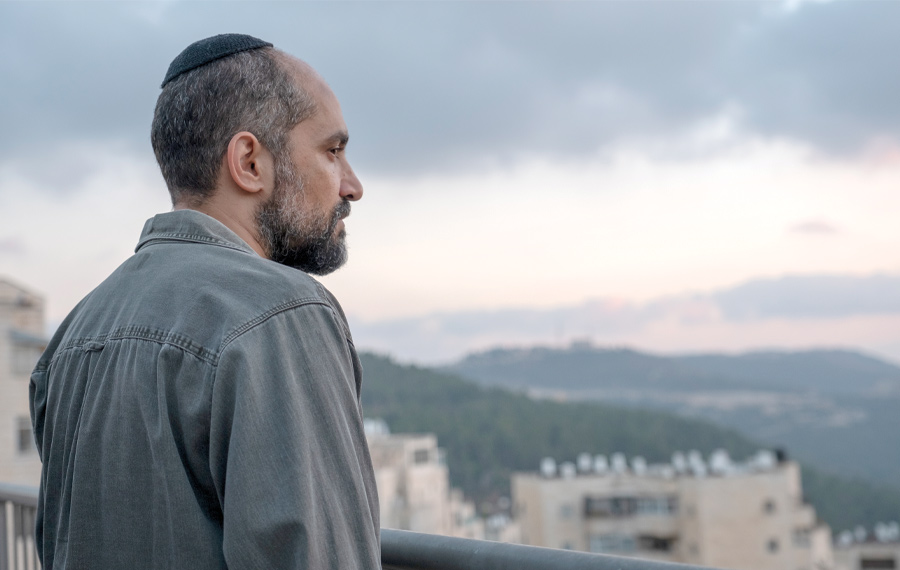
The HBO 10-part series “Our Boys,” premiering on Aug. 12, focuses on the investigation into the revenge killing of the Palestinian youth — Mohammed Abu Khdeir — to tell a bigger-picture story about the psychology of hate and vengeance. The series is told from the perspectives of the Abu Khdeir family as well as the lead investigator for the Shin Bet, and an impressionable young Charedi man who was involved in the crime. 

Before participating in a panel presentation for the Television Critics Association, creators/writers/directors/executive producers Hagai Levi (“The Affair”), Joseph Cedar (“Norman”), Tawfik Abu Wael (“Thirst), Keshet CEO Avi Nir (“Homeland”) and actor Shlomi Elkabetz discussed the project with the Journal.

“We understood that it was more complicated than a procedural crime story,” Levi said. “We had a huge question: How could it happen? Could it be us? Could it be our children? We tried to get into a very deep exploration of a hate crime, which is very relevant everywhere in the world.” 

The filmmakers did extensive research, “speaking to everyone on all three sides of the story to get into the depth of every detail,” Cedar said. Levi laid out the overall structure, Cedar and Abu Wael separately tackled the Israeli and Palestinian perspectives, and all three brainstormed.

“The difficulty was figuring out how to structure the story so the audience is drawn into something that is endlessly complicated but still has to work as a thriller,” Cedar said. “We had separate political points of view, aesthetic tastes and styles of work, but the clashes became a method. When we argued about something we found a way to go deeper into what we were arguing about. We were obsessive about the smallest details and I think the show is a reflection of that obsession.”

“Each one of these guys has his own voice and perspective but still came up with a coherent and deep creation,” Nir said. “It symbolizes the show itself.”

The responsibility to accurately portray the facts and real people in the story was always paramount, Levi noted, but dramatic license was taken elsewhere. “There are characters based on real people but we’ve changed their names for reasons having to do with the alterations we needed to make for dramatic purposes, and there are characters that are fictional that helped us tell the story,” Cedar said.

Several characters are composites, including Simon, the Shin Bet officer played by Elkabetz, a writer-director making his acting debut in “Our Boys.” 

“There’s a thread through the show that there’s a possibility for violence and a possibility for connection, but you have to choose.” — Avi Nir

“Simon is chasing the truth, and while doing it he has to fight [the system] and confront the reality of that summer in so many ways. He [represents] so many things that people felt. Becoming this person was to reveal a truth that nobody wants to talk about,” Elkabetz said.

Shot in Hebrew and Arabic, “Our Boys” blends documentary footage with the narrative, in a prayer scene at the Kotel, for example. “Jerusalem is a character in the show,” Nir said. “It’s part of the texture.”

A few focus groups aside, the series has not been seen in Israel or anywhere else, and the filmmakers are eager to see how it will be received. “It’s hard to predict but I think the quality of the show will speak for itself,” Nir said. “When you watch the show, maybe some of your preconceptions go away and you respond to the various characters and the truth in the story. You cannot predict whether it will change things, but the mere fact that it resonates is important.”

“Hopefully, what Avi is saying is true, that the story will suck the audience into the lives of our characters in a way that will override any political resistance,” Cedar said. 

After an intense three-plus years spent on “Our Boys,” “I think all of us are going to run away from political issues. The next project for all of us will be more intimate,” Levi said. Elkabetz is returning to directing and Nir has several projects in the works including English-language remakes of the Israeli series “The A Word” and “The Baker and the Beauty.” But one question remained about the project at hand: Can telling stories like this make a difference?

Nir sees “more than a glimmer” of hope for the future. “There’s a thread through the show that there’s a possibility for violence and a possibility for connection, but you have to choose,” he said.  

“I don’t believe that one show will make a difference, but I hope it will open doors for other stories like this to tell this complexity of life and give other Palestinians a platform to tell their stories,” Abu Wael added.

At the very least, Cedar hopes to elicit a greater understanding of the issues surrounding this subject. “I went into this project with many complicated moral questions about [that] summer and specifically the killers of Mohammed. By the end of the process, confusing things became less confusing, muddy waters became transparent. I think by the end of the tenth episode, there’s clarity for viewers who stick with us.”

“Our Boys” premieres at 9 p.m. Aug. 12 on HBO.

Israeli-Palestinian Conflict Ignites in ‘Our Boys’ Miniseries Read More »

‘True Grit’ and ‘Bumblebee’ Actress Hailee Steinfeld’s First Trip to Israel Was ‘So Special’

Academy Award-nominated actress and multiplatinum recording artist Hailee Steinfeld traveled to Israel for the first time July 22-July 29 and said “It is so special here… A trip I will never forget.”

Steinfeld’s trip was organized by entertainment executive Traci Szymanski in partnership with CharityBids. The trip was made possible by philanthropist and media mogul Haim Saban.

After visiting Israel for her first time in 2003 with Birthright, Szymanski made it her mission to share the gift of Israel with others. Szymanski partnered with CharityBids in hopes of encouraging celebrities and influencers to experience Israel for themselves.

To date, Szymanski has traveled to Israel with multiple celebrities including The Backstreet Boys, Jason Derulo, Paula Abdul, Joanna Krupa, Jeremy Piven and NBA stars.

Traveling alongside her parents, Pete Steinfeld, who is Jewish, and Cheri Steinfeld, who is Christian, the family started the trip with dinner on the rooftop of Aish HaTorah overlooking the Western Wall. They visited the Western Wall and tunnels, the City of David, the Church of the Holy Sepulchre, Yad Vashem and Shalva National Children’s Center. They were seen riding ATVs around Jerusalem, visiting a winery, horseback riding and boating in the North, camel riding in the South, floating in the Dead Sea, touring Caesaria, shopping in Jaffa and enjoying the nightlife in Tel Aviv.

Hailee Steinfeld and Lior Suchard. (Photo courtesy of CoStar Entertainment)

During her stop in Mahane Yehuda, Jerusalem, Steinfeld was spotted with Israeli superstar, Noa Kirel, director Michael Bay (“Transformers”) and Michael Strahan (former New York Giants defensive, co-host of “Strahan and Sara). She also attended Jon Bon Jovi’s concert in Tel Aviv where she met master mentalist Lior Suchard backstage.

Steinfeld wrote, “Shalom Israel” in Hebrew on Twitter on July 23 to let others know she has entered the holy land. She also posted photos on her Instagram story on a camel with her “camel license” and a photo overlooking the Dead Sea with the caption, “It’s so Special Here. Love. Israel.”

As Steinfeld departed Israel, more celebrities arrived for their concerts, including Jennifer Lopez with fiancé Alexander Rodriguez and J. Balvin.

‘True Grit’ and ‘Bumblebee’ Actress Hailee Steinfeld’s First Trip to Israel Was ‘So Special’ Read More »

Judge Rules Fordham University Must Allow SJP on Campus

A New York state judge ruled on July 29 that Fordham University has to recognize Students for Justice in Palestine (SJP) as a student group on campus.

Judge Nancy Bannon wrote in her decision that while Fordham University is a private institution, the university’s “rules, regulations, and guidelines do not empower the Dean of Students to restrict the university’s recognition of a student club based on its potential for raising issues or taking political positions that might be controversial or unpopular with a segment of the university community.”

She added that she didn’t think there was any evidence to suggest “that SJP might encourage violence, disruption of the university, suppression of speech or any sort of discrimination” and that the contention that SJP singles out Israel “is not an established ground for denying recognition to a student club.”

Bannon went on to say “that SJP advocates only legal, nonviolent tactics aimed at changing Israel’s policies.”

Fordham Dean of Students Keith Eldredge denied SJP recognition in December 2016, stating in an email to then-student Ahmad Awad, who would have led the SJP chapter, “I cannot support an organization whose sole purpose is advocating political goals of a specific group, and against a specific country, when these goals clearly conflict with and run contrary to the mission and values of the university.”

Associate Dean and Director of Global Social Action Agenda at the Simon Wiesenthal Center Rabbi Abraham Cooper said in a statement to the Journal, “We commended Fordham University’s initial rejection of a BDS [boycott, divestment and sanctions] ‘club’ whose sole purpose is to lobby for an anti-Semitic anti-peace campaign that demonizes and delegitimizes the democratic Jewish state and her Zionist supporters and which injects anti-Semitism into the mainstream of campus life globally.”

He urged Fordham to appeal the ruling. 

“BDSers freedom of speech was never at issue as it is well protected both inside and outside the classroom,” Cooper said. “Fordham University set parameters for its clubs long before BDS came on the scene. BDS and Muslim Brotherhood’s goal is [to] bully its critics into silence. Freedom of speech for them is a one-way street.”

StandWithUs Center for Combating Anti-Semitism Director Carly Gammill similarly said in a statement to the Journal, “We believe there may be valid basis for an appeal of this decision. Indeed, it is discouraging that the court ruled against a decision Fordham made with the intention of opposing hate and protecting academic freedom on campus. We are hopeful that a future ruling in this or another case will permit the administrations of private universities like Fordham to exercise their own free speech rights, in accordance with any applicable policies, to say no to groups like SJP that frequently spread hate, encourage violence, and violate the free speech of others.”

AMCHA Initiative Co-Founder Tammi Rossman-Benjamin also said in a statement to the Journal, “The reality is that every one of our studies has found that schools with SJP chapters are, depending on the year, between four and seven times more likely to have acts of anti-Jewish hostility such as assault, harassment, suppression of speech, and destruction of property. And the guilty party behind many of the cases is SJP, both individual members and the group as a whole.”

However, she argued that “as tempting as it is to want to block the establishment of such a group because of the proven negative track record of many other similar groups, it’s troubling to ban a group until they’ve engaged in behavior worthy of being banned. But as soon as those intolerant, harassing and violent behaviors arise, serious consequences must ensue, up to and including shutting down the group.”

A 2017 report from the Jerusalem Center for Public Affairs states that “SJP has been censured or suspended for anti-Semitism and incitement” on various campuses.

“Northeastern University in Boston suffered violent and anti-Semitic attacks perpetrated by SJP members,” the report states. “However, its chapter continues to operate with relative impunity, regardless of numerous warnings by the university administration. For example, SJP Northeastern stormed a Holocaust remembrance event with anti-Israel signs, chanting ‘Free, Free Palestine!’ During its 2012 Israel Apartheid Week activities, SJP members plastered the Northeastern campus with anti-Semitic messages, targeting a statue of a Jewish trustee of the university.”

Fordham spokesman Bob Howe told the Jerusalem Post in an email, “The university is reviewing the court’s decision before deciding on a way forward.”

Judge Rules Fordham University Must Allow SJP on Campus Read More »

Israel Has Lessons on Gun Violence for the U.S.

This weekend, in less than 24 hours, 22 people were killed in El Paso, Texas, and nine people were killed in Dayton, Ohio, as a result of gun violence. The latter attack marked the 250th mass shooting in the United States this year.

A mass shooting is defined as one in which a gunman kills at least four people.

Israel has had success in preventing such attacks, and, say experts, can provide guidance on how to prevent them in the future. Although many people in Israel carry guns, there are fewer mass shootings per capita than in the U.S. because of more restrictive gun regulations.

According to Israeli government statistics, about 40 percent of applica-tions for gun permits are denied.

Those that are granted are done so mainly in cases in which the licensing authority believes an individual has a specific need for a firearm. One example is Israelis living in communities in the West Bank, where there is the threat of Palestinian attacks on civilians.
Gun permits in Israel must be renewed regularly, and owners must undergo a psychological evaluation before receiving a weapon and at set intervals thereafter.

In 2018, Jerusalem passed legislation loosening restrictions on the ownership of guns, making them accessible to about 600,000 potential applicants — or about 1 in every 15 Israeli civilians. After suffering from years of terrorism, some politicians, particularly on the right, have urged Israelis to arm themselves.

Although the Israeli police this week announced that more than 3,600 weapons were confiscated and thousands of people arrested on related charges in the first half of 2019, there remain thousands of illicit arms throughout the country, especially in Arab communities.

Regarding the U.S., it is estimated that the number of privately-owned guns exceeds the population of the country.

“America is exceptional because of its attitude toward guns,” professor Jonathan Rynhold, deputy head of the department of political studies at Bar-Ilan University, told The Media Line. “Any other country would see this as a threat to the well-being of its citizens and would put more restrictions on gun ownership.”

Besides more restrictive gun control, which limits who can own and carry a weapon, Rynhold said Israel views mass shootings differently than Washington, D.C., does and thus invests more resources into preventing them.

“In Israel, it’s a national security issue, as mass shootings are viewed as terrorist attacks,” Rynhold said. “In America, it’s about personal safety. The U.S. puts a lot of resources into what it calls homeland security.”

Danny Yatom, former director of Israel’s Mossad spy agency, told The Media Line that it is time for the U.S. to change its attitude toward gun violence.

“Maybe the United States should view it as a terrorist attack, even though the one who squeezed the trigger is American,” Yatom said. “The murderer comes equipped with weapons to slaughter innocent people. That’s exactly what terrorism is.”

He added that if the United States invested the same amount of money and resources into stopping gun violence as it does to prevent al-Qaida-style terrorist attacks, it might have more success in curbing the former incidents.

Although Yatom praised the tactical response of the American SWAT teams to shootings, he said their main problem is that they arrive after casualties occur, which is too late.

“The first and foremost element in order to succeed in foiling terrorist attacks is [accumulating] accurate intelligence in real time,” Yatom said.
He noted that the biggest problem in the El Paso shooting, for example, was the failure of law enforcement to pick up on the killer’s messages on social media, indicating that he was about to carry out an attack.

Yatom advocated for the U.S. government to develop a system that is capable of combing through social networks and flagging individuals who could be potential shooters. Laws would then be needed to allow authorities to question a suspect before he or she carries out a shooting.

Yatom also recommended placing guards with firearms at the entrances to every public place people frequent, similar to Israel, where the government often pays for private security companies.
“Having armed guards trained to deal with people who are intent on shooting innocent people will prevent many of the successes these murderers have had,” Yatom said.

He also offered practical advice to business owners as well as to those who find themselves in a location with an active shooter.
The former should identify and secure vulnerable points in their establishments and install metal detectors, Yatom said. They can also build obstacles like a fence so that there are only one or two places for people to enter.

“This will help because it is easier to secure fewer places,” he stressed. “This also applies to schools and universities.”

For civilians caught in an active-shooter situation, Yatom advised people who are armed to try to stop the individual but only if they are trained to do so.

He suggested that everyone else hide and call the authorities as quickly as possible to apprise them of the situation.

Yatom concluded that in Washington, D.C., the gun lobby is a powerful force that pushes back against proposed laws from being enacted to curb gun ownership and violence. As a result, he said it should be the responsibility of the National Guard to assist in stopping the mass shooting epidemic in the United States.


This story was origionally published in themedialine.org

Israel Has Lessons on Gun Violence for the U.S. Read More »

L.A. Orgs Announce Grants That Will Aid Jewish Help for the Homeless

Homelessness in the city of Los Angeles is up 16% from last year, while L.A. County numbers are up 12%. However, new grants from the Jewish Community Foundation of Los Angeles (JCFLA) and Cedars-Sinai Medical Center will provide funding to organizations supporting services for homeless people and new housing models aimed at creating affordable shelter. 

On July 16, JCFLA announced $600,000 in General Community Grants to three organizations that provide housing to homeless individuals and families. The organizations, Brilliant Corners, LA Family Housing (LAFH) and The People Concern, will each receive $200,000. The overall amount represents a 22% increase in the foundation’s funding to homelessness related organizations from last year. 

Foundation President and CEO Marvin I. Schotland said in a press release that his organization expects the grants will provide hundreds of people the opportunity to transition to permanent housing and “bring further attention to this pressing issue affecting us all, and encourage other funders and community leaders to step forward and work together to address it.”

He added, “We recognize that homelessness is a large-scale, complex problem that requires the kind of bold thinking and innovative interventions reflected by this year’s General Community Grant recipients to whom we are proud to provide our support.”

On Aug. 5, the foundation announced its Cutting Edge Grants to seven innovative local initiatives focused on transforming Jewish Los Angeles, including Safe Parking LA (SPALA), which provides safe parking options and supportive services for individuals living in their vehicles. SPALA will receive $300,000 over three years to engage synagogues and members. The Journal has covered IKAR’s involvement in this program. SPALA co-founder and Executive Director Scott Sale said in the release that the new grant will be able to expand the program beyond IKAR “into other synagogues within Los Angeles City and County as it attempts to provide refuge and connect the 15,000 persons presently living in vehicles.”

“We recognize that homelessness is a
large-scale, complex problem that requires the kind of bold thinking and innovative interventions reflected by this year’s General Community Grant recipients.” — Marvin I. Schotland

Through its Motel Conversion Project, Brilliant Corners will renovate a Mid-City L.A. motel and provide housing for dozens of homeless individuals. It plans to scale the project by providing technical assistance to other housing providers so that hundreds more individuals can be housed. 

The People Concern is partnering with Flyaway Homes for a Scalable Permanent Supportive Housing for Homeless Individuals program by leveraging private investment dollars and modular construction to reduce the cost and time it takes to develop permanent supportive housing. 

The LA Family Housing grant will support its Shared Family Interim Housing project as it purchases, renovates and converts three San Fernando Valley houses into shared interim housing for homeless families, giving them access to schools, parks and supportive services. 

Cedars-Sinai is contributing $15 million — up from $5.9 million last year — to 108 nonprofit programs and organizations that foster housing stability, provide sustainable programs for the homeless and build clinical and financial capacity at community clinics, according to a press release. The grants, announced in July, will support mental health training, services for LGBTQ+ and veterans’ groups, and a range of social services provided by several Jewish organizations including the Jewish Free Loan Association, which will receive $500,000 over five years to establish the Cedars-Sinai Housing Stability Loan Fund, designed to provide immediate housing assistance to stabilize those on the verge of homelessness.

According to the release, Cedars-Sinai also is making grants to Jewish Family Service, Sharsheret and Bet Tzedek to serve a range of social, education, homeless and legal needs. 

“We take our role in the community as seriously as we take patient care, research and education,” Cedars-Sinai President and CEO Thomas M. Priselac said in the release. “We are driven by a strategic focus on improving access to care and addressing social determinants of health. Ultimately, we are working to break down barriers that affect tens of thousands of people within the safety net.”

L.A. Orgs Announce Grants That Will Aid Jewish Help for the Homeless Read More »

Canter’s Deli Shares Stories and Sandwiches in New Book ‘Stories on Rye’

For many Angelenos, the family-run Canter’s Deli is an extension of their own families: Matzo ball soup recalling childhood, deli sandwiches after late-night Dodgers games and tempting delectable desserts tempting from the bakery case. 

The iconic deli has witnessed romances, lifecycle celebrations and dreams of greatness since 1948, when it moved to Fairfax Avenue from its original Boyle Heights location. And on Aug. 3, dozens of people gathered in the deli’s back room to celebrate the release of “Stories on Rye: A Collection of Memories Shared at Canter’s Deli Since 1931.” The book was edited by Gina and Alex Canter (and illustrated by Gina) — fourth-generation family members of the legacy begun by their great-grandfather.

“Every time anyone ever finds out our last name is Canter or that we’re associated with this restaurant, they feel obligated to tell us their stories, their memories,” Alex Canter said at the event. “We realized that the story and history of Canter’s Deli extended beyond just our family and touched a lot of people’s experiences in Los Angeles.”

The Canters collected more than 5,000 memories for the book. Most writers are credited only by first name. There are a number of reflections by and about celebrities. Prince’s first manager wrote about introducing The Purple One to his first corned beef sandwich. Rami Jaffee, keyboardist for the Foo Fighters, talked about visiting Canter’s during his time at Fairfax High School and as a fledgling keyboardist. Guns N’Roses guitarist Slash met up with his parents at Canter’s after getting kicked out of the Fairfax Theater. Belinda Carlisle from The Go-Go’s spent many late nights at Canter’s with a kasha knish or a corned beef on rye. Johnny Depp, Nicolas Cage, Patricia Arquette, Rodney Dangerfield, Christian Slater and celebrity guest stars pop into some of the collected stories. But the real spotlight belongs to the non-celebrities who share their Canter’s stories in the book.

“Baked apples and Dr. Brown’s soda calmed my nerves and gave me the start of 20 years of research.” — Faith Goldman

For Faith Goldman of Torrance, Canter’s was the setting for several special events. In an attempt to finish her late husband Bob’s memoirs about being born and raised in Shanghai, Goldman interviewed others who had lived there at the same time. One interview subject suggested they meet at Canter’s.

“Baked apples and Dr. Brown’s soda calmed my nerves and gave me the start of 20 years of research, interviews and finally a trip to Shanghai to walk in Robert’s shoes,” Goldman said. 

A year after her husband died, Goldman went to a Jewish singles dance and met Harry Fischman. Their first meal together was at Canter’s. When her kids wanted to meet Fischman, the group went to Canter’s, where Goldman’s son Sam grilled Fischman about his life and intentions toward his mother. 

“I guess he passed the interview, as we were together for 20 years,” Goldman said. When Fischman died in 2015, Goldman and her children celebrated his life at Canter’s. “Coming back to Canter’s today was cathartic and sad at the same time,” she said. 

Even as the event celebrated Canter’s famous food, there was an acknowledgment that in the United States — and even on the stretch of Fairfax where Canter’s sits — many people still struggle with hunger. 

“The United States is one of the wealthiest nations in the world and yet we have over 40 million people who do not know where their next meal is coming from,” said Abby Leibman, president and CEO of MAZON: The Jewish Response to Hunger, speaking to the event’s attendees. A portion of book and T-shirt sales from the event are being donated to MAZON. 

“You guys are all of our favorite stories,” Alex Canter said. “Thank you all for submitting the stories and being a part of this experience with us.”

Canter’s Deli Shares Stories and Sandwiches in New Book ‘Stories on Rye’ Read More »

Bend the Arc’s Jeremiah Fellows Fight for Immigration, Criminal and Housing Justice

On a recent Sunday afternoon, several dozen people, most of them Jewish, gathered in a backyard near Koreatown to learn about the Defund Hate campaign and what they could do to combat the current administration’s immigration policies. 

They read Rabbi Sharon Cohen Anisfeld’s poem “Prayer for Immigrant Children and Families” and heard from an individual seeking asylum in the United States about the travails he endured in his native country and then at the hands of Immigration and Customs Enforcement (ICE) in a California detention center. Leading the meeting was a group of young, passionate activists — all Jeremiah Fellows with Bend the Arc, the progressive, Jewish social justice nonprofit.

The Jeremiah Fellows program for young adults ages 22-32, began 13 years
ago in Los Angeles. But this year, for the first time, it expanded to several other cities, including Miami, St. Louis, Cleveland and Denver. Next year, it will add even more locations. 

“There is a growing hunger in the Jewish community to do this kind of work,” said Bend the Arc Southern California organizer Rebecca Green.

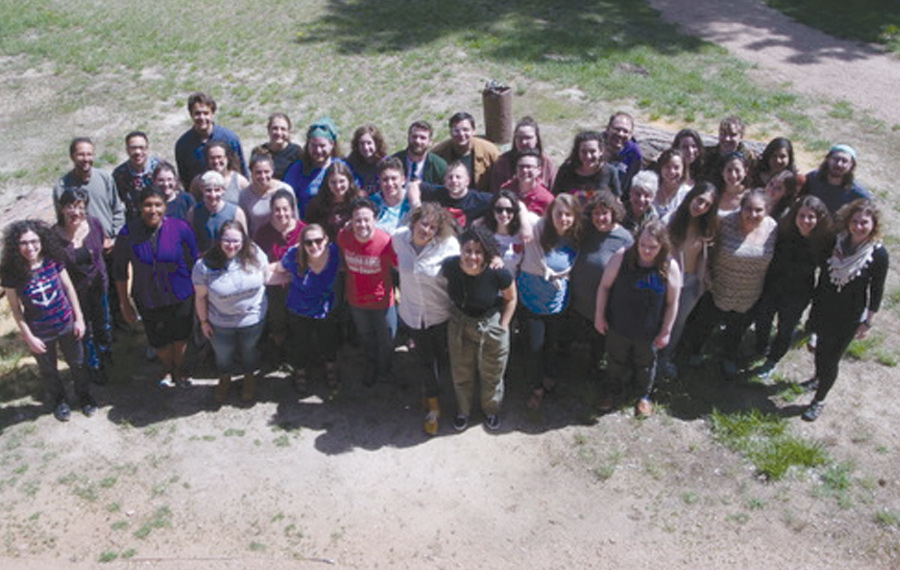
There are 40 fellows in the current cohort, eight of whom are based in Los Angeles. It’s a diverse group: men, women, straight, gay, trans and queer. But they share certain traits.

“It’s people who are really interested in engaging the Jewish community and social justice work,” said Jeremiah Fellowship National Director Carrie Sterns. “People able to make the time commitment.” (Jeremiahs, as the fellows call themselves, commit to a minimum of 30 hours a month of volunteer work. There is no stipend or compensation.)

“The idea of, if we are the chosen people, then hell yeah, we have to give back and act.” — Sarah Levine 

“And people willing to be public leaders,” Sterns added. “Other than that, we look at the cohort as a whole; people who bring a diverse set of skills to the table. Some people have really strong backgrounds in social justice. Some have really strong Jewish backgrounds.”

They participate in the monthly general Los Angeles chapter meetings, often taking key roles on the three main committees, which focus on immigration justice, criminal justice and housing justice. And they plan and participate in events such as the Defund Hate gathering. 

“A big part of the Jeremiah model is learning through doing,” Sterns said. “Jeremiah Fellows are kind of our inner ring of committed volunteers that work to move the campaigns of Bend the Arc forward. They are making decisions for us, guiding most of the work we do.”

Fellow Sarah Levine, 25, moved to Los Angeles from Vermont in December. She decided to focus her energies on criminal justice reform, specifically bail reform.

“I had always felt this pull to explore my Jewish identity more,” said Levine, whose father is Jewish. “I was also under this false dichotomy where it was politics or religion; where you couldn’t be a part of both. I chose what in my mind was the political route and became more involved politically at a young age.”

After college, Levine volunteered at a Virginia nonprofit that serves and supports people recently released from prison.

“As I [have grown] older, I’ve been really allowing myself to acknowledge and learn about the fallacy of that [false dichotomy],” she said. Being a fellow has “definitely been a really important and wonderful part of becoming part of the Los Angeles community,” Levine added. “It’s been really grounding.

“At the same time, it’s been a healthy version of exploding my whole idea of what I thought religion was and really reshaping that; how I can show up in choosing to be both a Jew and a person who is active in organizing and politics. … The idea of, if we are the chosen people, then hell yeah, we have to give back
and act.”

Bend the Arc’s Jeremiah Fellows Fight for Immigration, Criminal and Housing Justice Read More »

Westside JCC Maccabi Teens Bring Home Gold From Atlanta

Both the Westside Jewish Community Center (JCC) under-16 girls’ and under-16 boys’ soccer teams brought home the gold from the recently completed JCC Maccabi Games in Atlanta. The girls defeated the host team, 4-2, in the final, while the boys also beat the Atlanta team in the finals in a 3-1 penalty shootout after a 2-2 tie. 

The annual games were held in Atlanta from July 26-Aug. 2 and in Detroit from Aug. 2-9. One hundred and seventy five Westside JCC athletes from ages of 12 to 16 participated, thanks to the JCC and the Jewish Federation of Greater Los Angeles, which also sent 30 volunteer coaches to the games. A total of 3,000 participants attended the games from throughout the United States, as well as Israel, Hungary, England, Mexico, Panama and parts of Canada. 

After the under-16 boys’ win, JCC Maccabi Games Head Soccer Coach Lee Turnbull told the Journal, “The reason I volunteer for Maccabi is because I want to be an influence in these kids’ lives. I was a much worse kid than these kids are [when I was their age] and [because of] a sprinkle of good influences that I luckily found, I turned out OK. I want to give [my players] incredible memories. I want them to not get so stressed about schoolwork and realize it’s OK just to take a break here and there and breathe. I try and help the kids to be critical thinkers.” 

Los Angeles Westside JCC Director of Experiential Learning and Maccabi Games Delegation Head Ari Cohen the Journal, “As a program, our goal is to [create] an impactful Jewish experience for our teens by being connected to Jews from across the religious spectrum, denominational spectrum, socioeconomic and geographical boundaries of Los Angeles, as well [as] the world. By connecting them to all these different types of Jews and the global Jewish world, we see that our kids have a greater desire to stay connected to the Jewish community for their teen years and beyond.” 

Turnbull, a former animal behaviorist, said receiving Instagram messages from his players about how he’s “influenced them and given them a new perspective on life, [makes me] want to scream from the rooftops because I feel like I’ve already achieved everything I’ve ever wanted to achieve in this world. It’s all I yearn to do.”

As a program, our goal is to [create] an impactful Jewish experience for our teens by being connected to Jews from across the religious spectrum, denominational spectrum, socioeconomic and geographical boundaries of Los Angeles, as well [as] the world.”

 — Ari Cohen

As a values-based program, JCC Maccabi stresses principles of community, learning, friendship, health and wellness, inclusiveness, family and repairing the world, Cohen added. The games, he said, replicated an Olympic-style “opening ceremony and serious competitive structure. Beyond that, the things that make it special are that our opening ceremony always [includes] a tribute to the Israeli athletes who were killed at the Munich Olympics in 1972 [and] we have an athlete and spectator pledge to uphold the values of the JCC Maccabi Games.”

The Munich tribute is so impactful because the participants “connect immediately to these athletes, and therefore Israel, global Judaism and the Jewish world,” Cohen said. “We see a lot of tears at [the] opening ceremonies every single year.”

Aside from the opening ceremony and competitive sports, other activities, workshops and icebreakers were offered throughout the week to encourage participants to meet new people and learn about Israel and Jewish values. 

“Every day our kids [participate in] a huge activity together, which is something that’s different than most athletic experiences,” Cohen said. “Kids who are playing against each other at one moment really intensely are the same kids that are hanging out at the night activity,” he said. “We also make sure [that] every team is involved in a tikkun olam experience to give back to the community that is hosting us.”

Indeed, 13-year-old Ben Escobar, who played on the Westside JCC’s under-14 baseball team in Atlanta, said, “I enjoyed the nighttime activities and having fun with my teammates. I also loved hanging out with four other baseball players from all over the country at my host family’s house. We played lots of pingpong and watched baseball together. The opening ceremonies were very welcoming and made me feel like I was part of a greater Jewish community. It also made me excited for the week.”

Cohen said he hoped the teens had an “exposure to the greater Jewish world and the increased pride they have in their own Jewish identity. The other thing that’s very important to us is to give them a really great athletic experience and have high-quality coaching … and at the same time, to be great Jewish mentors so they begin to understand and reconnect with the fact that sports can be something that gives them a stronger sense of self and teaches [them] positive human values. 

“Maccabi,” he said, “creates a community. Once you’re in it [you’ll] do whatever [you] can to [expand] that community.”


Melissa Simon is a senior studying journalism at University of Wisconsin-Madison and a Jewish Journal summer intern. 

Westside JCC Maccabi Teens Bring Home Gold From Atlanta Read More »

Camp Ramah Denies it Removed a Counselor Because of Her Views on Israel

(JTA) — A Conservative Jewish summer camp is denying that it makes personnel decisions based on politics after a senior staff member claimed she was removed from her position because of her left-wing views on Israel.

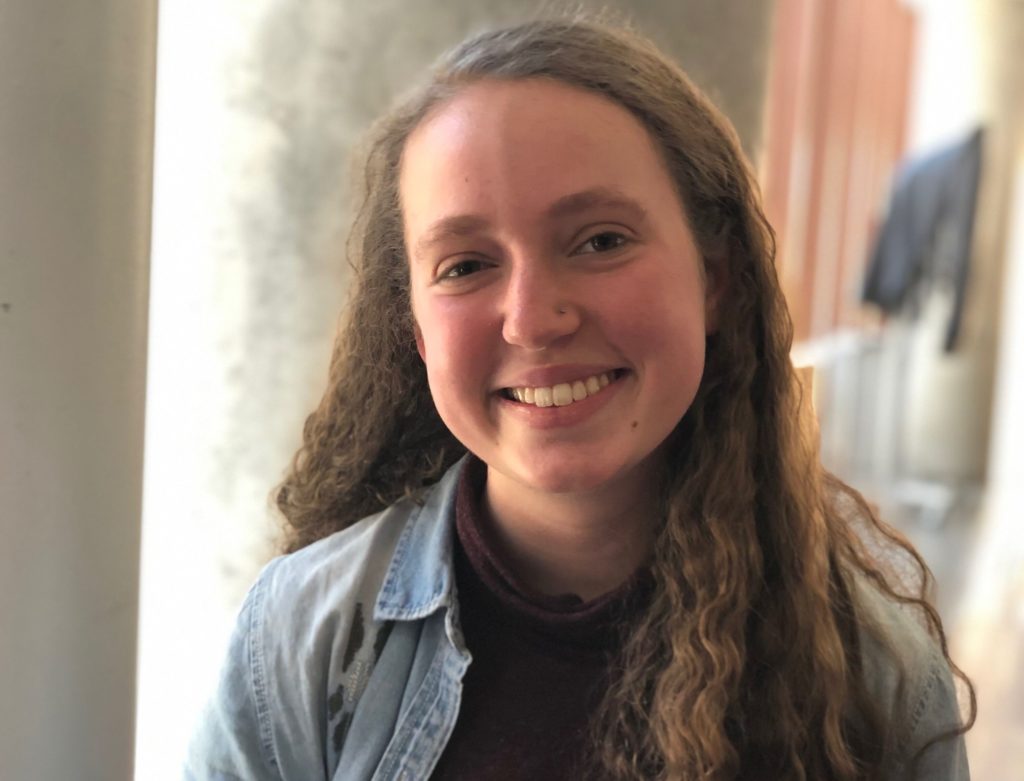
Sylvie Rosen, 22, who has served on staff at Camp Ramah in the Rockies for five summers, told the Jewish Telegraphic Agency that she was removed from her job as a counselor for incoming high school juniors after she clashed with her supervisor over Israel education.

She said she was prohibited from attending future Israel programming and removed from the role in early July after she talked with campers and told them she opposed Israel’s West Bank occupation and wanted to include critical perspectives in Israel programming.

Rosen said she had also clashed with her supervisor on other issues unrelated to Israel. She was offered another job at camp that would have lasted the rest of the summer, but chose to become a liaison to parents of younger campers. She left camp when that role ended this week.

The conversation that preceded her removal was initiated by campers, Rosen said. It came the day after the age group took part in a pro-Israel program. Rosen said the campers who approached her were uncomfortable with the program’s tone.

“It became clear really early on that my rosh, my supervisor, wanted our campers to form only really positive relationships with Israel, and I was interested in also talking about the occupation and critical views on Israel-Palestine,” she said.

“My rosh found out we had this conversation, and was upset that it happened,” she added, recalling that he said, “Effective now, you are not allowed to contribute to any more programming for the rest of the session. We’re doing a program on Israel and you are not allowed to come.”

In a statement, Rabbi Eliav Bock, the camp director, suggested that Rosen’s claim was false.

“We have never dismissed any staff member for their political beliefs,” the statement said. “It is camp policy not to publicly discuss personnel matters.”

Asked if she was intentionally testing Ramah’s policy on Israel, she said, “No, I wanted to give my campers the education I think they deserve.”

Rosen’s claims come as a group of Ramah alumni and staff affiliated with the group IfNotNow have protested the Conservative Jewish camp network’s approach to Israel education. IfNotNow is a millennial Jewish protest group that opposes Israeli occupation of the West Bank.

The group held a training last year for Jewish camp staff on how to discuss Palestinian perspectives, and criticize Israel’s actions while at camp. Rosen is a member of IfNotNow and took part in the training. This year, IfNotNow raised $6,500 in a campaign to get Ramah camps to host events with Combatants for Peace, which describes itself as a group of former Israeli and Palestinian combatants who are committed to nonviolence and oppose the occupation. Rosen was also active in the Combatants for Peace campaign.

When none of the camps said yes, IfNotNow hosted the group in Washington, D.C., and New York City.

Ramah responded to the IfNotNow campaign by saying in an April statement that its “campers and staff members hold a range of opinions on many contemporary issues, including Israel.” But it also said “Zionism is a central part of our core mission” and that it does not allow support of the movement to boycott, divest from and sanction Israel known as BDS.

“We do not, however, permit the sharing of educational messages at camp that do not support the existence of a strong, secure, and democratic Jewish state in Israel,” the statement said. “Accordingly, we do not allow educational messaging that supports BDS. We also do not permit the expression of hate or racist ideas against any group, including the Palestinian people.”

IfNotNow does not take a position on anti-Israel boycotts or whether Israel should be a Jewish state, which critics say amounts to condoning BDS and anti-Zionism.

Ramah brass knew that Rosen was an IfNotNow member before this summer. Last summer, she was the head of the ninth-grade age group, and said she ran programming that included criticism of Israel without any problem. She just graduated from List College, a joint program of the Conservative movement’s Jewish Theological Seminary and Columbia University.

“I made sure that programming that we ran had all different perspectives,” Rosen said about her experience last summer. “I had staff members that came and wanted to teach about their love of Zionism. If that’s what they want to teach about, that’s fine, but we have to have other perspectives.”

Ramah was founded in the 1940s in part to instill what its architects called a positive Zionist identity. Israeli culture and Hebrew infuse its daily activities. Campers are encouraged to use Hebrew words, and camps employ groups of Israeli counselors. Some programs revolve around Israeli cuisine, music and dance.

But camps have different policies on how to implement the principles expressed in the April statement. Ramah in the Rockies, as a policy, does not allow staff members to discuss their own political beliefs regarding Israel or any other country. But Mitchell Cohen, the international Ramah network’s director, said he’s comfortable with staff, including Israelis, expressing right- or left-wing views as long as they don’t cross the red lines enumerated in the statement.

“Those voices are heard at Ramah camps,” Cohen said in an interview. “If you’re an [Israeli staff] member and you vote for Labor or for Meretz, your opinions are as valid as people that vote for the New Right or Likud,” Israeli political parties on the left and right, respectively.

Camp Ramah Denies it Removed a Counselor Because of Her Views on Israel Read More »

Summer Delights: A Kiss Friendly Garlic Pesto Recipe

Along with last week’s sauerkraut recipe, a fermented food that’s sure to improve your gut health, there are other recipes I use in a medicinal manner when I am run down or overworked. You’d be hard pressed to find a more medicinal ingredient than garlic, a plant in the onion (Allium) family, related to shallots and leeks, that has been used throughout history for its health properties.

Although garlic originally is thought to be a central Asian discovery, the Egyptians valued garlic’s medicinal properties so much that they buried their dead with the bulbs for use in the afterlife. Rabbinic literature is peppered with references and praise for garlic. A portion of the Talmud states that garlic “satisfies hunger, it warms the body, it illuminates one’s face, it increases seed and it destroys intestinal parasites.” It’s considered a mitzvah to eat foods loaded with garlic on Friday nights in many Orthodox communities to enhance fertility and as an essential and effective aid to “create ardor and enhance lovemaking” on Shabbat.

Eating garlic was so much a part of the Jewish identity that Jews were known as “garlic munchers” and the sulfurous smell of the herb was used as an anti-Semitic slur by the Romans who came up with the expression “allium olere” or “stinking of garlic” to identify Jews as people of a lower class. Classic Italian dishes like artichokes braised with garlic became known as “Carciofi all Giudia” or “Jewish-style artichokes.” 

Jewish “penicillin” in the form of chicken soup gets its reputation as a health food in part because of the onions and garlic that infuse the broth; the benefits of garlic are indisputable for a wide variety of ailments. Large-scale studies have proven that regular doses of garlic may lower blood pressure, reduce cardiac events, increase bone health, help with athletic performance and fatigue, reduce the severity of colds and flus, and may even prevent Alzheimer’s and dementia.  And even if it didn’t contain manganese, B vitamins, vitamin C, selenium and calcium, garlic enhances the flavor of so many dishes, the fact that it’s so good for you is just a bonus. 

One of my favorite garlic delivery systems is pesto sauce. Pesto originated in Genoa in the Liguria region of Italy. The word “pestâ” means to pound or to crush in Italian and, in a traditionally made pesto, the ingredients are ground in a mortar and pestle — pestâ, pestle, pesto — get it?

The benefits of garlic are indisputable for a wide variety of ailments.

Pesto is a mix of herbs combined with cheese, nuts and a good quantity of another great health food, olive oil, to make it more fluid. It’s usually then served over pasta but it can be used to top soup as in the great French Pistou, spread on bread or drizzled on vegetables. Although pesto can be made with a variety of herbs and nuts, I find the classic mixture of Italian basil, garlic, pine nuts, Parmesan and extra virgin olive oil a hard combination to improve upon.

The only downside to the savory, incredible powerhouse of nutrients is garlic breath. No one likes to smell like garlic, and there are many people who cannot handle the odor. I’m conscious of this when making pesto at the embassy. One day, while whipping up a huge batch of pesto for a lunch special, I started to think about how to prevent people from suffering through their co-workers’ garlic breath during afternoon meetings. 

That’s when I took a page from the French playbook and added a whole bunch of chopped parsley to the mix. Parsley does two important things to a pesto. First, it keeps the sauce a vibrant green color but second, and more importantly, it neutralizes some of that raw garlic sharpness that can do a number on our stomachs as well as our non-garlic eating companions or co-workers.
Now, I never make pesto any other way because the parsley mellows the pesto and makes it much more kiss friendly. In addition, a small amount of fresh lemon juice, when added to the raw garlic, although not traditional, goes a long way in mellowing out the piquancy of the garlic.

At home, I use my mortar and pestle to make pesto but that’s impractical when making vast quantities of the sauce because pounding that much basil and parsley is too much work. On the other hand, if you don’t overprocess, a food processor with the regular blade insert makes short work of pesto and allows you to use the abundance of basil in your garden or a fresh bunch you may find in the farmers market. 

The following recipe will leave plenty of leftover pesto to freeze. You can double or halve the recipe but I always double it. Pesto can hold in the fridge with a layer of olive oil on top for at least a week and can be frozen in jars or containers indefinitely.

It can’t be beat for a quick pasta, to serve over steamed vegetables, as a spread for fresh bread or swirled into eggs. I particularly love it as a topping for zucchini noodles (if you don’t own a spiralizer yet, get one!) or even on top of grilled fish such as salmon or trout. 

It packs a hefty nutritional punch from the basil, parsley and garlic, which makes it high in antioxidants along with a good olive oil; it’s probably one of the most detoxifying and absurdly tasty things you can eat.

With the addition of the parsley and lemon to prevent garlic breath, this is one case where you should feel practically obligated to kiss and tell.

Kiss-Friendly Pesto
20 cloves garlic, peeled
15 tablespoons untoasted pine nuts (if unavailable, use cashews)
15 ounces fresh Italian basil
4 ounces curly or flat-leaf parsley
10 ounces grated Parmigiano-Reggiano
(for dairy-free version, substitute 5 ounces nutritional yeast)
4 tablespoons fresh lemon juice
2 1/2 cups mild-tasting extra virgin olive oil (preferably Italian)
5 pinches sea salt (be cautious, cheese is salty)
5 healthy grinds black pepper (optional)
2 ounces grated Parmesan (or nutritional yeast) for garnish (optional)

Pulse garlic in food processor until finely chopped.

Add pine nuts and pulse again until chopped.

Add basil and parsley and continue to pulse until the pesto has reached a rough, rustic consistency. Pulsing mimics a pestle pounding ingredients.

Add Parmesan cheese and lemon juice and pulse a final time to combine. If needed, scrape down the sides of the processor a few times to incorporate ingredients. 

Place mixture into a bowl and drizzle in olive oil, stirring to incorporate the oil. Season with salt and pepper to taste.

Pesto is a raw sauce and shouldn’t be cooked but rather, gently heated. If serving pesto over pasta or zucchini noodles, heat noodles in a pan with a generous amount of pesto and a few tablespoons of pasta cooking water to make it come together and bind into an emulsion.

Grate additional Parmesan on top (or a sprinkling of nutritional yeast) and drizzle with a bit more olive oil.

Makes 4 cups.


Yamit Behar Wood, an Israeli-American food and travel writer, is the executive chef at the U.S. Embassy in Kampala, Uganda, and founder of the New York Kitchen Catering Co. 

Summer Delights: A Kiss Friendly Garlic Pesto Recipe Read More »