fbpx

August 7, 2019

83 Jewish and Pro-Israel Organizations Call for ‘Safeguards’ in Response to Drafted Anti-Israel Curriculum

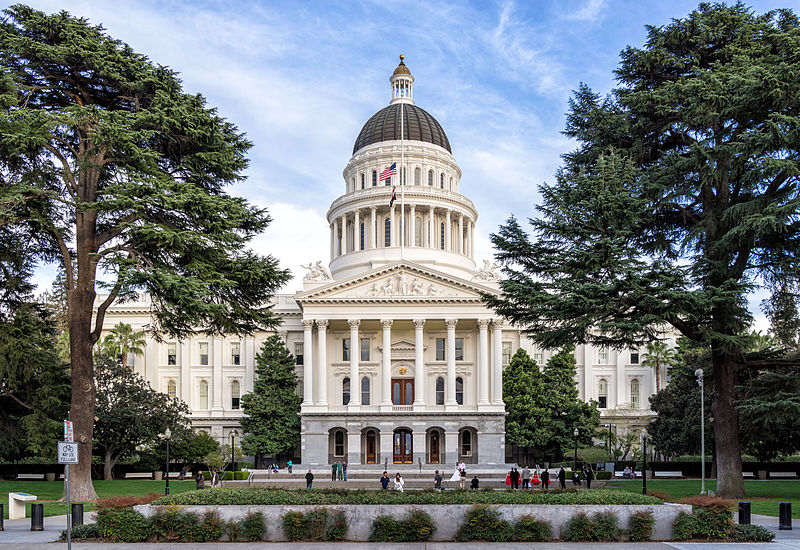
Eighty-three Jewish and pro-Israel organizations urged the California Department of Education to implement “safeguards” in response to drafted anti-Israel ethnic studies high school curriculum.

The organizations, which include the AMCHA Initiative, Simon Wiesenthal Center, StandWithUs and Jews Indigenous to the Middle East and North Africa, wrote in an August 7 letter to the California Department of Education Quality Commission Chair Soomin Chao that the proposed mandatory Ethnic Studies Model Curriculum (ESMC) portrays “Jews and Israel as part of ‘interlocking systems of oppression and privilege’” and endorses the boycott, divestment and sanctions (BDS) movement. 

“There is considerable evidence showing that the kind of anti-Zionist propaganda and activism promoted in the ESMC is strongly linked to acts of anti-Jewish hostility,” the organizations wrote. “Studies of anti-Semitic activity on college and university campuses across the country have consistently shown that schools with anti-Zionist expression and activity, including the promotion of BDS, are about three times more likely to host incidents targeting Jewish students for harm, including acts of harassment, vandalism and assault. Implementation of a model curriculum that includes the promulgation of such political, ethnic or religious hatred can’t help but threaten the safety and well-being of Jewish and pro-Israel high school students in the state.”

They added that while the curriculum needs to be re-written, there needs to be “safeguards” in place to ensure that any sort of curriculum in the future cannot be weaponized “against any group” or incentivize “high school students to take action based on such enmity” against a group of people.

“We strongly urge you, as well as the Board of Education officials and state legislators copied on this email, to immediately address this consequential problem by establishing safeguards for ensuring that all state-sponsored curricula and other instructional materials may never be created or used as tools of political indoctrination that promote hatred and incite harm against any race, religion, group or individual,” the letter concludes.

First reported by Jewish News Syndicate on August 2, the drafted ESMC would require students to study pro-BDS figures like Rep. Ilhan Omar (D-Minn.) and Women’s March, Inc. leader Linda Sarsour, and features songs that provide odes to “Free Palestine.” The California Jewish Legislative Caucus wrote in a July 29 letter to Chao that the drafted curriculum “erases the American Jewish experience” and promulgates “negative stereotypes about Jews.”

The Progressive Zionists of California similarly said in an August 2 statement, “The curriculum gives voice to those who discriminate against Israeli citizens and denies the history of ethnic Jews, including Jews from the Middle East and North Africa. By ignoring the historic Jewish presence in the Middle East and North Africa, the drafted curriculum fails to affirm the heritage of Sephardi and Mizrahi Jews, who were forcibly expelled from their countries, saw their money, homes, and private possessions stolen from them, faced severe discrimination, and escaped to Israel and other places including California.”

According to Jewish Telegraphic Agency, the drafted curriculum will likely be approved in 2020. 
83 Jewish and Pro-Israel Organizations Call for ‘Safeguards’ in Response to Drafted Anti-Israel Curriculum Read More »

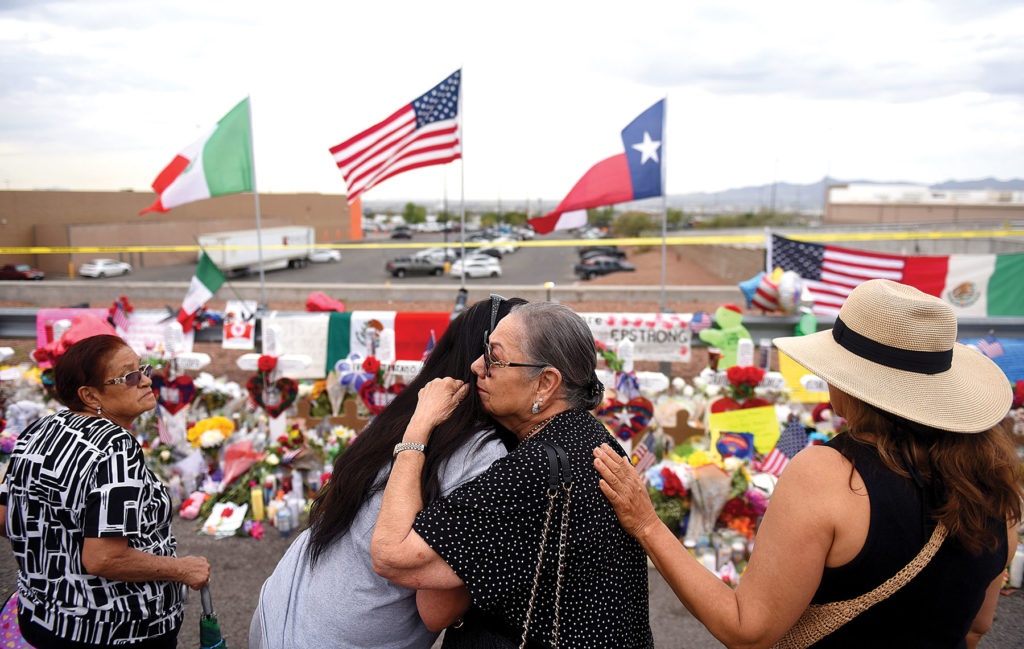
Immigrant, Gun Policies Clash in El Paso

When we heard about the 22 people gunned down at a Walmart in El Paso, Texas, by a man who authorities said was connected to a white supremacist manifesto, we couldn’t shake the thought: Had we led some victims there?

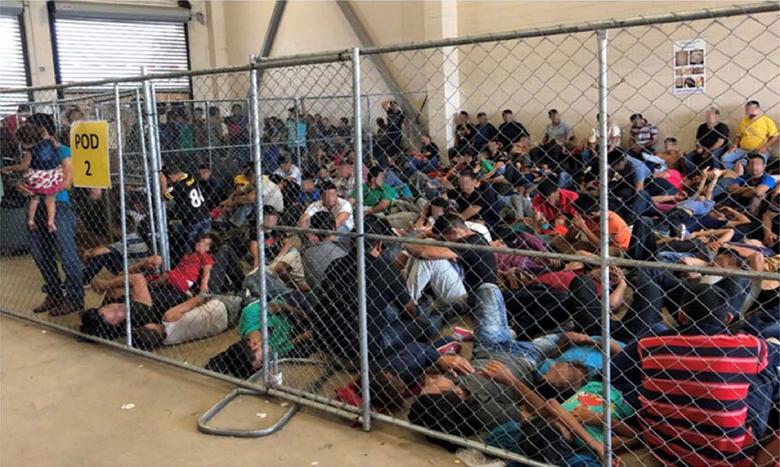
At the end of July, we flew to El Paso for Moral Monday at the Borderlands, an interfaith clergy action organized by Repairers of the Breach and supported by the Religious Action Center of Reform Judaism. We gathered to express our disgust with the way our government treats asylum seekers on our southern border. Clergy from all over the country gathered to march. The event culminated in an unsuccessful attempt to enter a detention center to provide pastoral care.

On the plane to El Paso, one of us sat next to an Immigration and Customs Enforcement agent. The agent said that he thought the solution to the crisis on the border was to separate more families and to make detention longer and more miserable as a deterrent. This disheartening encounter set the tone for our trip.

We volunteered at a temporary shelter for immigrants that was their first stop after being released from area detention centers. Immigrants arrived with little more than the clothes on their backs. The shelter helps them contact their sponsors, gives them a change of clothing and some supplies, and arranges transportation to the next step in their journey.

The Playroom

I (Jennifer Rueben) was placed in the playroom. There were about 30 children, most of them alone, waiting for their parents to consult with volunteers. The children were dirty, with soiled clothes, matted hair and long fingernails. Most were barefoot and the bottoms of their feet were black. The youngest ones played while older children sat quietly. I spoke no Spanish, but almost immediately, the children had named me “Tia” (Aunt). They squealed it with delight as I decorated their faces with stickers. I had no idea what they had been through or what their futures would hold. All I knew is that these beautiful children understood something that we lose sight of as we grow up in this troubled world: We are all family.

The Hygiene Room

I (Margie Slome) was placed in the hygiene room. After detainees phoned relatives or sponsors, my colleague, Rabbi Kim Geringer, and I handed out one towel per family. They also were entitled to a bar of soap, toothbrushes, a comb, infant formula, four diapers, a razor, feminine hygiene products, shampoo, conditioner, and a few more items. I let the children choose their hair ties and lip balm. A comb, toothpaste … a little kindness, and they were off to lunch. Another busload of immigrants would arrive soon.

On our last day in El Paso, using our discretionary funds, we bought $2,000 in Walmart gift cards to deliver to the shelter. We told the volunteer site manager who gratefully received them, “Please tell the asylum seekers that, on behalf of our congregants, we want to welcome them to our country.”

The Walmart where the immigration and gun crises collided on Aug. 3 is only a four-minute ride from the shelter. We may never know if some of those we met might have decided to go use those gift cards that afternoon, only to be caught in a mass shooting. Welcome to America.

Last year, a white supremacist murdered Jews at the Tree of Life synagogue in Pittsburgh, holding them responsible for immigrants coming into our country. And at the El Paso Walmart, a suspected white supremacist took aim at immigrants directly.

We cannot allow political leaders to turn a blind eye to the dehumanization and demonization of people who, despite this most recent act of terrorism, still will risk death to seek a better life here, fleeing greater danger in their homelands. The baseless hatred that is the common denominator between the abuse of immigrants and mass shootings is only strengthened by our silence. We must not stand idly by while our neighbors bleed. The time is now for all of us, as Jews and as people of conscience, to act.


Rabbi Margie Slome is the rabbi of West End Temple in Neponsit, N.Y. Cantor Jennifer Rueben is the cantor of Ohef Sholom Temple in Norfolk, Va.  

Immigrant, Gun Policies Clash in El Paso Read More »

The Normalization of Gun Violence

He who saves even one life, it’s as if he’s saved the entire world. So says the Talmud.

In the wake of a weekend of massive gun brutality — in El Paso, Dayton and Chicago — which came just days after the Gilroy Garlic Festival shooting, I kept thinking: What is the decent response to our now normalized gun violence?

I use the word decent because I, personally, hate guns. I didn’t grow up in a gun family and no one we knew owned a gun. The idea of pointing a gun at a person or an animal makes me nauseated. If it were up to me, only the military, police and security personnel would be able to have guns.

Of course, it’s not up to me. We have the Second Amendment and, more problematically, we have a well-established gun culture, where guns are something you play with and fetishize.

But we also have the vast majority of the country — decent Americans who may own a handgun for self-defense but are completely disgusted with today’s grotesque level of gun violence.

And so I ask: What is the decent response? Taking handguns away from those abiding by the law is not the answer, though the rate of accidental violence is high, so clearly increased gun safety has to be part of the solution. 

What is the decent response to our now normalized gun violence?

When I ask gun enthusiasts, their answers remind me of how the far left answers nearly all questions: lots of verbiage designed to obscure the truth. Actually, gun purists sound the most like “pro-choice” fundamentalists: “Keep your bloody hands off of my gun/body.” One might reasonably ask both sectors: Why all of this glee in murder?

On Aug. 5, the New York Post’s front page emphatically stated: “Ban Weapons of War.” The editorial page pressed President Donald Trump to ban assault weapons once again. “We know. That label doesn’t actually describe a clear class of guns. And that some studies show that the last ban, in effect from 1994 to 2004, had a limited impact. But that simply means the next ban should be better written, with a clear definition focused on factors like firepower — rate of fire, muzzle velocity, etc. — not on cosmetic features.”

As for the Second Amendment: “[It] leaves ample room for regulating gun rights, just as every other constitutional right has its limits. … The Supreme Court has ruled that the Second Amendment protects the right to own ‘guns in common use.’ That doesn’t cover the semiautomatic weapons regularly used only in mass shootings.”

“ ‘Guns don’t kill people, people do, says the cliché,’ ” the Post continued. “But the twisted and the evil can kill a lot more people when handed a murder machine. Our Founding Fathers gave us the right to bear arms in a time of muskets. They did not foresee a time when one 21-year-old could kill 20 people in the span of minutes.”

Then Trump, who has always been a pragmatic centrist on guns, addressed the nation: “Hate has no place in America.” He pledged additional resources to the FBI, called for strengthening detection of early warning signs and better background checks, and condemned video games and social media for the “glorification of violence.”

“We must recognize that the internet has provided a dangerous avenue to radicalize disturbed minds and perform demented acts,” Trump said. “We must shine light on the dark recesses of the internet and stop mass murders before they start.”

Finally: “Those who commit hate crimes and mass murders should face the death penalty.”

Trump called for bipartisan legislation and unity: “In one voice, our nation must condemn racism, bigotry and white supremacy. Hatred warps the mind, ravages the heart and devours the soul. … Open wounds cannot heal if we are divided.”

It was no doubt the most decent speech of his presidency. Democrats responded by blaming Trump for all the shootings. They seem to have missed that the Ohio gunman reportedly was a rabid leftist. Should we blame progressives for his murders? Rabid hate is just as fierce on the left as it is on the right.

Trump has just given us an outline for gun decency. Now he has to follow through, starting with the gun control legislation already in Congress that Republicans have been holding up. Ironically — tragically — uniting on gun violence could be precisely what this country needs right now.


Karen Lehrman Bloch is an author and cultural critic living in New York City.

The Normalization of Gun Violence Read More »

I’m Really Starting to Lose It: Remarks on El Paso and Dayton

Something is happening to me. Every day, I worry whether I’ll be a victim of a gunman with a manifesto.

I know that more Americans drown in bathtubs than die in mass shootings, but in this case, emotions outweigh statistics.

I’m devastated for the families of those who were killed in recent mass shootings. And I’m really starting to lose it.

I recently waited with our toddler for 20 minutes to enjoy a trolley ride at the Grove. When it arrived and the passengers got off, I stood paralyzed because I saw a duffel bag on one of the empty seats.

“Mama, come!” my son yelled as he ran toward the stationary trolley. I almost tackled him to the ground before I heard the conductor ask, “Did anyone leave a diaper bag?”

Is it normal to mistake a diaper bag for an explosive device? I never thought so until I became a mother.

I had been trying to think positive thoughts. Then a gunman killed three people — including two children — on July 28 at the Gilroy Garlic Festival. The next weekend, a suspected white supremacist killed 22 people at an El Paso Walmart, and hours later, a gunman killed nine people in Dayton, Ohio. I considered locking my family inside our home and bolting the windows. But my family could never tolerate being locked inside for a long period of time with me.

My anxiety has even compelled me to act as a de facto security guard.

Several months ago, I attended a talk by a famous Iranian women’s rights advocate, who is loathed by the regime. I carefully scanned the venue for the best seat, which, for me, is closest to an exit.

As I listened to the speaker defend the rights of Iranian women, I saw that one of the doors had been left open. I went outside and saw a young security guard.

“Excuse me,” I said. “Have you been briefed on who is speaking today?”

“What?” he responded. 

“She’s a public enemy of Iran,” I explained. “Could you at least make sure that the entrance is closed?”

He raised his eyebrows, pointed outside, and said, “Ma’am, look around you. This is West Hollywood. We’re safe.”

I couldn’t believe it.

He called me ma’am.”

He also invalidated my concerns. I wondered if anyone had ever said that about the city of Poway before the April 27 Chabad shooting.

Is it normal to mistake a diaper bag for an explosive device?

I began to lecture him. “That doesn’t matter.” I said. “Iran has spies all over the United States. Two of them were just discovered by the Feds. They were waiters in an Orange County restaurant and they were doing surveillance on Jewish communities.”

Seeing that I’d have to protect the 500 attendees myself, I crossed my arms, stood outside the room and tried to look tough, which, at 5-foot-2, isn’t easy.

Am I a candidate for anti-anxiety medication? Yes.

I also have seating contingencies for restaurants and parks, and don’t get me started on places where Jews congregate.

I wasn’t always like this. I used to have only one seating criterion for synagogues: Where could I nap without being noticed by the rabbi? But between anti-Semitic attacks in Europe, Israel and the United States, I’ve changed.

Before turning to medicine, mindfulness or aromatherapy candles, I wanted to know how Judaism tackles fear and anxiety.

Rabbi Dov Heller, who’s also a licensed therapist, offered me a spiritual antidote to what he referred to as my struggles with “generalized existential anxiety and threats to one’s personal survival.”

Heller stressed that comfort may be found in truly trusting God and knowing that “everything is in God’s control, and ultimately, we have no control over anything that happens in the world. If someone can truly live on that level and internalize trust in God, then one’s anxiety will go down and they will have more consistent peace of mind.”

I’m really trying to keep that in mind, but whether we’re talking about gun control or God’s control, it’s horrifyingly obvious that one (or both) of them needs to do something about the estimated 390 million civilian-owned guns in my country.


Tabby Refael is a Los Angeles-based writer and speaker.

I’m Really Starting to Lose It: Remarks on El Paso and Dayton Read More »

El Paso Was Not Random or Senseless. It Was Xenocide.

In the midst of rage, it’s hard to think straight. After more than 30 people were murdered last week in three separate mass shootings, it’s understandable if our reaction was to scream: “Enough is enough!”

Once the rage dies down, however, we still need to think of solutions. It should be obvious that there is no one magical solution to this madness.

We need smart and effective gun control, better management of mental illness, closer monitoring of online activity for warning signs, better enforcement of laws to keep guns away from those prone to violence, media cooperation to starve killers of the fame they crave, a toning down of hateful and racist rhetoric, and so on. We need all of it and more.

But for a certain kind of crime, like the one at El Paso that targeted “Hispanic invaders,” we also need a new name.

When a murderer goes after a group based on race, ethnicity or religion, it’s not enough to call it a crime. When Hitler targeted the Jews for annihilation, we didn’t call it a crime or even terror. We called it “genocide,” which is the “deliberate killing of a large group of people, especially those of a specific ethnic group or nation.”

A Jew-hater who walks into a synagogue to murder Jews is committing a type of genocide. So is a Muslim-hater who walks into a mosque to murder Muslims, or a white supremacist who walks into a Walmart to murder Latinos.

A Jew-hater who walks into a synagogue to murder Jews is committing a type of genocide. So is a Muslim-hater who walks into a mosque to murder Muslims, or a white supremacist who walks into a Walmart to murder Latinos.

This is not my idea. I heard it on Sunday from my friend Stephen Smith, who runs the USC Shoah Foundation and is UNESCO Chair on Genocide Education. As the nation was reeling from the latest shootings, he sent me a text with this idea for a column: “The manifesto-based killings are a kind of genocide … the killing of the outsider.”

As he further explains in his column this week, “In my 25 years of researching the Holocaust, Armenian, Rwandan and other genocides, there are certain similarities and themes that are consistent in every mass tragedy: ideology, dictatorial leadership, armed conflict and government perpetration.”

But what happens when it’s not a government that commits genocide but a lone killer?

“This presents a legal dilemma,” he writes, because “[t]he acts of these individual, radicalized men, and the ideologies behind their actions, are clearly genocidal in nature, but perpetrated by one person rather than a government. There are no obvious precedents of lone wolf genocidaires in Western society.”

Smith believes these “genocidaires” represent a new, 21st-century phenomenon unlike any other.

“Unlike international terrorism, none of these lone wolves is inspired by a centralized organization with a hierarchical structure.

“Unlike other mass shootings such as at Columbine High School in Colorado or the Harvest music festival in Las Vegas, this brand of killing isn’t indiscriminate: The shooters are targeting a particular group of people whom they deem a threat — Jews, Muslims, Christians, Latinos, etc.

“And unlike hate crimes, these acts are expressly homicidal, whereas a hate crime can occur without causing a scratch.”

In other words, we’re dealing here with a new kind of menace, and if we are to fight it effectively, we ought to start by finding the right name for it.

Smith suggests the term “Xenocide.” 

“[Xenocide] combines two Greek words to mean the killing of people perceived as foreigners or outsiders. It suggests, rightly, that the act is rooted in racism and xenophobia. It implies that the act is fundamentally different from other kinds of killing. It also implies mass killing, because the target is not an individual, it is a group.”

This new term is not meant to apply to all mass shootings. Rather, it recognizes that there’s something especially sinister about the deliberate targeting of a special class of people, whether by a country or an individual.

Smith believes these “genocidaires” represent a new, 21st-century phenomenon unlike any other.

Just as the legal term “genocide” gave the international community a special tool for prosecuting nations, the term xenocide can give law enforcement a special tool for prosecuting personal genocides at the local level.

What was the massacre at the Walmart in El Paso but a depraved individual committing a mini genocide against Latinos?

All gun violence is abominable, yes, and we must fight to eradicate it with every tool at our disposal. But we must also reserve special attention for the evil of evils, for killers who go after groups because of their race, ethnicity or religion.

Justice also means doing justice to the depravity of their act. Those killers are not just criminals or terrorists, they are guilty of xenocide, and it doesn’t get any worse than that. Just ask Hitler.

El Paso Was Not Random or Senseless. It Was Xenocide. Read More »

Aug. 9, 2019

CLICK HERE FOR FULLSCREEN VERSION

Aug. 9, 2019 Read More »

Israel Condemns Belgian Paper’s Defense of Op-ed About Jews’ ‘Ugly Noses’

(JTA) — In an unusual move, Israel’s embassy in Belgium condemned a local daily for printing and defending an op-ed in which Jews are described as land thieves with ugly noses and a superiority complex.

The embassy addressed the July 27 op-ed by Dimitri Verhulst on Wednesday, writing on Twitter that it “is deeply shocked by the publication in Belgian newspaper De Morgen of a blatantly anti-Semitic article.”

Israel rarely comments on articles published in commercial media in democratic countries.

Ambassador Emmanuel Nahshon wrote on Twitter that his embassy “will fight forcefully and uncompromisingly against anti-Semitism, which is a crime not only targeting the Jewish community but against any democratic and tolerant society.”

The controversy over Verhulst’s column, titled “There is no promised land, only stolen land,” has been brewing for almost two weeks. The Forum of Jewish Organizations of Belgium’s Flemish Region complained to police about the column, which erroneously attributes a quote about ugly Jewish noses to Serge Gainsbourg, the late French-Jewish singer, and suggests Jews justify the subjugation of Palestinians by regarding themselves as God’s  “chosen.”

Dutch Chief Rabbi Binyomin Jacobs said the op-ed reminded him of anti-Semitic propaganda that was last tolerated in Dutch and Belgian mainstream media in the 1940s.

Israel’s protest followed a statement by De Morgen to the Jewish Telegraphic Agency asserting the paper’s support for Verhulst. De Morgen’s editor in chief, Bart Eeckhout, told JTA that the op-ed is not anti-Semitic and that its critics were merely trying to “silence” his outlet’s criticism of Israel’s policies.

Israel Condemns Belgian Paper’s Defense of Op-ed About Jews’ ‘Ugly Noses’ Read More »