fbpx

April 17, 2019

British and US Soccer Teams to Participate in March of the Living

(JTA) — Two professional soccer teams — one in England and one in the United States — will send a joint delegation to the March of the Living.

The Chelsea Football Club and New England Revolution announced Wednesday in a statement to the Jewish Telegraphic Agency that they will have some 30 members attend the May 2 event in Poland, when approximately 10,000 people will march silently from the Auschwitz to Birkenau concentration camps to commemorate the lives lost in the Holocaust.

The joint delegation will include Chelsea Director Eugene Tenenbaum, CEO Guy Laurence, former manager Avram Grant, club ambassador Steve Redgrave and six players from its under-18 academy. From the Revolution, President Brian Bilello and former player Charlie Davies, now a club ambassador, will attend.

Last year, Chelsea was the first member of the Premier League, the top level for British soccer clubs, to send a delegation to the march. The Revolution of Major League Soccer will be the first U.S. team to send a group.

On May 15, the teams will compete in a charity match in Boston to raise funds for four organizations: the World Jewish Congress, Anti-Defamation League, Holocaust Educational Trust and Pittsburgh’s Tree of Life synagogue, the site of a deadly shooting last year.

The participation in the March of the Living is part of a joint initiative by Chelsea, which is owned by the Russian Jewish businessman Roman Abramovich, and the Revolution, which is owned by the American Jewish businessman Robert Kraft, to fight anti-Semitism in sports.

Chelsea launched the project last year in response to its fans on multiple occasions using anti-Semitic slurs and singing anti-Jewish cheers.

British and US Soccer Teams to Participate in March of the Living Read More »

Groundbreaking Jewish Content Site BimBam Shuts Down

In early April, BimBam, the pioneering and award-winning Jewish digital storytelling site best known for its animated videos depicting weekly Torah portions, announced it was shutting down after 11 years. 

BimBam’s content library of over 400 original videos — representing more than 11 million views and 22 million minutes of watch time on YouTube — will remain online at ReformJudaism.org, which is maintained by the Union for Reform Judaism (URJ). 

BimBam videos emerged from founder Sarah Lefton’s journey to expand her own Jewish literacy, she told the Journal. In 2005, she had an idea for animating the weekly Torah portion, and in 2006 was selected for the ROI Summit (an initiative from the Schusterman Foundation that brings together young Jewish activists, entreprenuers and innovators in their 20s and 30s who enhance Jewish engagement), where she could pitch her innovative Jewish idea to influencers. 

Lefton enlisted her creative collaborators, animator Nick Fox-Gieg and writer Matthue Roth; interviewed her friend Rabbi Andy Shapiro Katz about the parsha of Balak, which would be read in synagogue the week of the ROI Summit; and churned out a pilot for what was then called “G-dcast.” At the presentation, Lefton got a standing ovation.

“That lit up the future for me,” Lefton said. “I realized this is a viable thing.” 

Two years later, Lefton put together funding to support a complete year of videos, which launched on Simchat Torah in 2008. Then the team animated wide swaths of the Bible, from Joshua to Esther to Psalms. It created the original cartoon series “Shaboom!” for children ages 4-7 and their parents, teaching Jewish values, including welcoming guests, expressing gratitude and visiting the sick. The team built “Judaism 101” to help young adults connect to Jewish rituals, prayers and texts (43% of BimBam’s viewers are ages 18-34). 

Longtime fans may recall “Leviticus,” a brutal-yet-entertaining “Fruit Ninja”-style slicing game that tested knowledge about ancient Temple sacrifices. There was “Let’s Bake Challah,” an app/game for ages 2-6, and the e-Scapegoat, an online confession tool recalling the ancient custom of priests symbolically transfering the Israelites’ sins to a goat.

“BimBam could have been the Pixar of multimedia Jewish learning.” — Joshua Avedon. 

BimBam convened rabbis and art students to co-create videos on the Talmud, Jewish law and everyday prayer. It worked with more than 5,000 Jewish educators to make its content available to all, at no cost. Lefton is also “insanely proud” of “Studio G-dcast,” which assembled college students to learn Jewish stories and make videos in “a six-day film jam.” 

“I never thought that videos were for educators and kids,” Lefton said. “I always thought it was for people like me — young adults making up for a mediocre Jewish education in the past.” 

Yael Weinstock Mashbaum, a teacher at Sinai Akiba Academy, said BimBam’s videos “provide midrash and interpretation that enhanced [students’] understanding of the chapter and the story.”

She also encouraged her students to analyze which parts of the text BimBam chose to include or omit from the video.

“The videos challenge students to go beyond defining and summarizing content and go deeper,” she said. “It’s a different layer of how to question and think about the text, sparking ideas in both educators and students. It allows for higher-order thinking.” 

Rick Zieff, a Los Angeles-based voice actor who provided a few voices for the “Shaboom!” series, said he was proud of his involvement in the show “because of the messaging and what they’re calling co-viewing, watching with your kid. [The videos] start questions, bring answers and are thought-provoking and funny.”

“Making great content is easy if you have the right people around,” Lefton said, crediting her team, especially video director and producer Jeremy Shuback, as having created “some of the best videos we ever made.” Still, Lefton said that distribution channels make it difficult for small creators to get their work noticed “without celebrities or million-dollar ad campaigns or the right algorithmic magic sprinkled on top.” 

“You can control how many times you post and use SEO (search engine optimization) titles,” outgoing BimBam CEO Jordan Gill told the Journal. “But you can’t control audience behavior.”

In a press release, URJ President Rabbi Rick Jacobs called BimBam’s videos “powerful tools and conversation starters for all audiences including … the Reform movement’s network of educators and youth professionals to share with their students.”  

“BimBam could have been the Pixar of multimedia Jewish learning,” Joshua Avedon, CEO of Jumpstart Labs, a philanthropic research and design lab based in Los Angeles, told the Journal. “If Jewish philanthropy saw BimBam’s individual videos as the value proposition, they missed the point. Sarah Lefton and a gaggle of very talented people built a studio capable of turning authentic Jewish content into beautifully produced, bite-sized animated storytelling. People understand that if you want great theater, you have to keep theaters in business to produce it. The same is true for a Jewish animation studio.”

BimBam spent about a year considering its options before moving forward with URJ. In the press release, Lefton noted, “BimBam has been blessed with extremely generous donors and friends for 11 years but we were unable to sustain our budget at a size that would let us produce high-quality content without compromising our approach.”

BimBam produced all its content for less than $1 million a year, Gill said. 

“I’m surprised that funders who really care about high-quality Jewish education weren’t tripping over each other to bankroll BimBam’s operational costs so the talent could focus on making great videos,” Avedon said. “The URJ is acquiring a terrific library, but the actual value of BimBam was its creative potential to make any kind of Jewish content relevant and captivating.”

“BimBam had a lot more to say and it’s unfortunate the funding wasn’t there to keep going, but we also look at our body of work and consider it a tremendous success,” Gill said. “We feel very proud of this content and are confident that our partners at URJ will continue to steward it and its life will be continued.”

Groundbreaking Jewish Content Site BimBam Shuts Down Read More »

UCLA Prof Dismisses Concerns of Lack of Pro-Israel Balance on ‘1948’ Panel

James Gelvin, a history professor at UCLA, dismissed concerns of the lack of pro-Israel voices during a panel discussion inside the West Hollywood City Council Chambers on April 16, asking if it would be required for there to be a panel defending Syrian President Bashar al-Assad’s actions.

Gelvin was on a panel discussing the anti-Israel film “1948,” which was shown earlier in the evening in the city council chambers to nearly 165 attendees; also on the panel were UCLA History Professor Robin Kelley and USC Journalism Professor Sandy Tolan. The panel was moderated by Estee Chandler, the founding organizer for Jewish Voice for Peace Los Angeles and host of the KPFK “Middle East in Focus” radio program.

In response to a written question from the audience regarding balance, Gelvin brought up how, during an April 1 West Hollywood City Council meeting, audience members accused the pending panel of having an anti-Israel bias.

“In the last two years, I’ve written 35 articles – mostly on Saudi Arabia and Syria – and not one on Israel,” Gelvin said. “We don’t pick on Israel particularly. When Israel does what’s wrong, we call them out for it. But we don’t really feel the need to balance Israel any more than we feel the need to balance out our talks about, for example, Saudi Arabia and Syria.”

Gelvin added, “Can you imagine that there would be another panel discussion if this was on Syria, that we would have another panel discussion afterwards in defense of Bashar al-Assad and in defense of what the Russians did to the city of Aleppo, for example?”

Gelvin did acknowledge that the Israel-Palestinian conflict is “a very, very distinct thing.”

The “1948” film portrays Israeli Jews as “war criminals and monsters, creating ill will and potentially putting Jews and supporters of Israel in danger,” Debra Glazer, Orange County representative for StandWithUs, told the Journal in February after seeing the film at UC Irvine on Jan. 31. Gelvin and the rest of the panel downplayed criticisms of the film being anti-Semitic. Kelley said he didn’t want “to deny the pervasive existence of anti-Semitism” but said that “oftentimes white nationalists are pro-Israel” and “many of the charges of anti-Semitism are coming from a place of power where there are consequences from those kinds of claims.”

In response to a question from the audience about the Boycott, Divestment and Sanctions (BDS) movement, Gelvin said that he “recently moved to a full support of BDS” because he didn’t think that a two-state solution is possible since he thinks that the Israeli government will eventually annex communities in Judea and Samaria. Tolan said he supported the First Amendment rights of the BDS movement and Kelley said he viewed BDS as a “successful, effective, nonviolent form of civil disobedience,” expressing opposition to anti-BDS laws.

Sean Siegel, an alumnus of Students Supporting Israel who helped organize a protest against the screening of the film and attended the panel discussion, told the Journal, “The panel itself [was] completely one-sided and the questions that were asked… were completely one-sided. So no one who supported Israel had their point of view to be heard.”

Before the movie screening, city councilman John Heilman told the audience that the city council was looking into hosting a panel representing a differing point of view sometime in May.

The full panel discussion can be seen below:

https://www.facebook.com/karen.pomer/posts/2256055257803399

UCLA Prof Dismisses Concerns of Lack of Pro-Israel Balance on ‘1948’ Panel Read More »

The Enduring Success of ‘The Hamilton Haggadah’

“The Hamilton Haggadah” debuted two years ago, but much like the success of Lin-Manuel Miranda’s Tony-winning phenomenon “Hamilton: An American Musical,” the haggadah ripped from the show’s headlines is still one of the best to have at the seder table if you’re looking for a lively singalong this year.

The Journal recently caught up with the haggadah’s creators to discuss the enduring success of a project that started out as little more than a lark. 

After discovering a few Jewish-themed “Hamilton” parody songs on Facebook almost four years ago, Rabbi Jake Adler and Rabbi Emily Cohen (then students at the Reconstructionist Rabbinical College in Pennsylvania) came up with the idea of a “Hamilton” parody Google doc for Passover that married show tunes and religious text. 

“We weren’t even making it for public consumption as much as a nice distraction from schoolwork,” Adler, 35, said.

The doc took the duo a week to compile and they shared their new songs on blogs and within their small Facebook community. The next day, someone from a “Hamilton” fan Facebook group reached out to Adler to say the doc had gone viral and people were going “wild over it.” 

Cohen, 31, a songwriter who grew up around music, said the success of the doc was so organic that their names weren’t even on it. Once they knew people enjoyed their efforts, they were able to build on it and, in 2017, turned it into a fully-fledged haggadah with commentary, seder instructions and music. Thus “The Hamilton Haggadah” was born.

“The haggadah, I think, is a serious work of innovative Jewish practice, that people could use and get something out of,” said Cohen, who is now the Jewish Emergent Network rabbinic resident at Lab/Shul in New York. “I think people who don’t connect to a traditional haggadah can [with this].”

“In creating the haggadah, Cohen and Adler noticed many parallels between Alexander Hamilton’s story and the Exodus narrative. King George III’s ‘You’ll Be Back’ could easily be sung by Pharaoh (‘Get Them Back’). The song “The 10 Duel Commandments” becomes ‘The 10 Plagues of Egypt.’”

In creating the haggadah, the pair said they noticed many parallels between Alexander Hamilton’s story and the Exodus narrative. King George III’s “You’ll Be Back” could easily be sung by Pharaoh (“Get Them Back”). The song “The 10 Duel Commandments” becomes “The 10 Plagues of Egypt.”

Adler, who is now a rabbi at Congregation Kehilat Shalom in New Jersey, said people initially were surprised by the 19-song haggadah because it wasn’t just “fluffy.” It came with SoundCloud links to listen along to, and connected the themes of the holiday with modern musical melodies and lyrics that were well thought out. 

Adler and Cohen were careful not to force new melodies on families that cherished their traditions. One of the biggest choices they made was not to turn the song “Dayenu” into “That Would Be Enough.” 

“We didn’t want to replace ‘Dayenu’; it’s a significant part of people’s seders,” Adler said. “Though we have new ways of thinking of things, we also love tradition and didn’t want to pull people away from it.”

Cohen admits the hardest challenge was realistically being able to speak the words in “The Battle of Yorktown,” aka “Yam Suf/Crossing the Red Sea,” as quickly as in the original Broadway recording. 

Other songs in the haggadah include “Moshe Navi Ben Amram” (“Alexander Hamilton”) and “The Story of Tonight,” which becomes the order of the seder service. Adler says his easiest song to write was Pharaoh’s “Get Them Back,” while Cohen’s was Aaron Burr’s lullaby to his daughter “Dear Theodosia,” which is the melody used for the Four Questions.

“That one popped right in my head. I remember when I wrote it was ‘boom, done,’” she said. “The original tune is so special so again that’s true to every seder you go to, it’s a mish mash of traditions.”

The self-described “young, scrappy and hungry” writing team notes that their haggadah brings a new, young energy to a seder. Now that fans have something they can bring to the seder table, they are more involved and become teachers to others around the tables, they said. 

Cohen and Adler said it didn’t feel right to profit from the haggadah, so they have made the PDF free to everyone and attached a link to donate to the nonprofit HIAS, founded as the Hebrew Immigrant Aid Society. 

“People were asking where they could buy it, so we [took] their energy and excitement and directed it to where it can make a difference,” Adler said. “We wanted to make that difference in addition to making this voice that is ‘Hamilton.’ It is also a voice that [continues to say] that ‘immigrants get the job done’ (a “Hamilton” reference), and we as Jews know what it means to be a stranger and we are obligated to help the stranger.”

Four years after coming up with their “Hamilton” parody songs, “People are still interested in this,” Cohen said. “We didn’t know if it would be a flash in the pan when it went viral. It is really cool that long after we released it, people still want more. … If someone picks up our haggadah and does one song and then does another one, it’s dayenu.”

“The Hamilton Haggadah” is available here. 

The Enduring Success of ‘The Hamilton Haggadah’ Read More »

Why Are Sephardic Seders Different from Ashkenazic Seders?

When Rabbi Daniel Bouskila was a child, his teacher asked him to share something from his family’s seder. Bouskila sang “Chad Gadya,” in Judeo-Arabic, the way his Moroccan family did at home.

His teacher was shocked. 

“ ‘Jews speak Arabic?’ ” Bouskila recalled his instructor saying. 

Bouskila told this story as part of a talk he gave about Sephardic Passover customs on April 13 at Westwood Village Synagogue.

The Journal spoke with several community members about growing up with or incorporating Sephardic rituals and customs in their seders. 

Traditions

Sephardic Jews, originating in Spain before relocating to regions including North Africa, the Mediterranean and Southern Europe, have diverse Passover traditions. Among them are whipping one another with scallions to recall how the Egyptian taskmasters beat the Hebrew slaves.

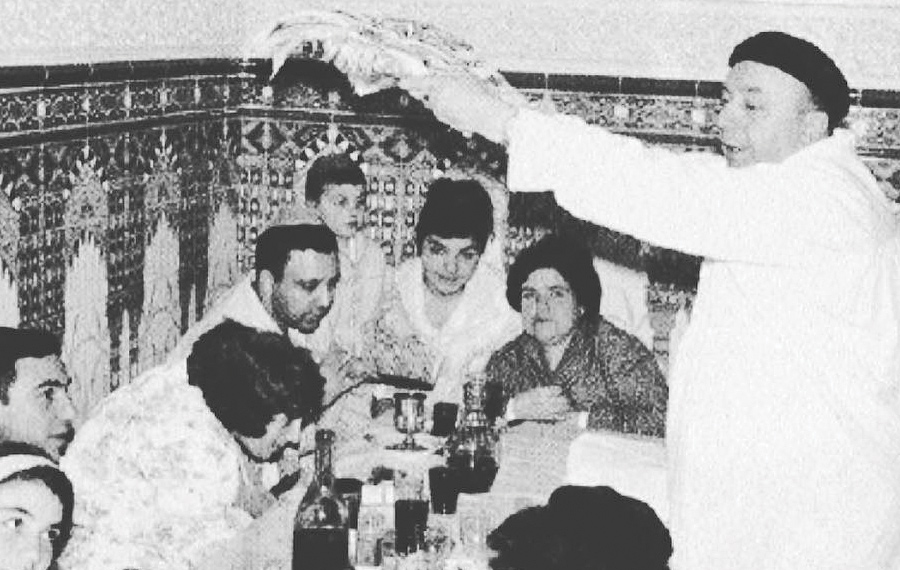
Lesser known practices include Bibhilu, a Moroccan ritual in which the seder leader holds the seder plate over the heads of others while reciting, “In haste, we went out of Egypt with our bread of affliction and now we are free.”

Bibhilu is connected to the kabbalah’s 10 sefirot or divine attributes, Bouskila said, explaining how kabbalists say the three pieces of matzo on the plate represent “crown,” “wisdom” and discernment”’ the bone is “kindness”; the egg is “strength”; maror is “splendor”; Charoset is “eternity”; karpas is “glory”; hazeret, a bitter green, is “foundation”; and the seder plate is “kingship.” 

“The presence of God is on the seder plate,” Bouskila said. “It’s like you’re blessing them one by one.”

Another Sephardic ritual is the practice around the Ten Plagues. Instead of dipping a finger or utensil into the wine cup for each of the Ten Plagues then placing a droplet of the wine on the plate, as is Ashkenazic custom, the leader of the Sephardic seder pours wine into a bowl for each plague while another person pours water into the bowl, adding more wine and water for each additional plague.

One theory behind this practice is that the mixture of water and wine re-creates what happened when the Nile River turned red with blood from the first plague, Bouskila said.

Marcia Weingarten, a longtime member of Sephardic Temple Tifereth Israel, expanded on this ritual in an email to the Journal, noting that after the plagues are recited and the water and wine have been poured into the bowl, the women solemnly leave the house, carrying the bowl, then pour the contents onto the ground. 

“Then, in a very kabbalistic way, the plagues turn into blessings,” Weingarten said. “Each woman touches her hand to the ground that has now been covered with the liquid and says a blessing with her wishes for her family for the year to come.”

“Wherever we live and whatever community or background we’re from, we’re all telling the same story, in the same order, in the same steps, with slight variations and traditions.”

 — Marcia Weingarten 

Food

Ashkenazic charoset usually is made with chopped apples mixed with wine and walnuts, while Sephardic charoset usually includes dates, walnuts, wine and vinegar.

Ashkenazic Rabbi Bradley Shavit Artson, dean of the Ziegler School of Rabbinic Studies at American Jewish University, said he became hooked on Sephardic charoset when he was in college. His medieval literature professor gave him a 14th-century recipe with dates, figs, orange rind, pine nuts, brandy and honey.

“It is amazing,” Artson said in a phone interview. “And it looks like mortar used for bricks. And so [my family] makes a big batch of that stuff and we shape it like a pyramid and put little plastic Moseses and Pharaohs around the bottom. We don’t even make the Ashkenazi charoset anymore.”

Weingarten, whose mother was one of the founding members of Sephardic Temple, is the author of the Ladino cooking and lifestyle blog “Bendichas Manos” (“Blessed Hands”). Explaining the differences between Ashkenazic and Sephardic seders, she said Sephardic Jews use celery instead of parsley for the karpas, and romaine lettuce instead of horseradish for the maror. Most Sephardim dip the karpas in vinegar rather than salt water, and they eat lamb, whereas Ashkenazic Jews merely have a shank bone on the seder plate. 

Some of these differences in cuisine are geographical, Artson said. Ashkenazic Jews eat spicy horseradish as the maror to remember the bitterness of slavery because horseradish root was available. The bitter-tasting romaine lettuce that is part of the Sephardic seder was not available in Europe at that time of year,
he said. 

“Ashkenazim like to use horseradish because their grandparents and their bubbes and zaydes used horseradish,” he said. “That’s because they came from Poland, where they didn’t have lettuce.” 

Kitniyot

During Passover, Most Sephardim are permitted to eat kitniyot, which includes grains and seeds, rice, corn and peas.

“Thank God for not making me Ashkenazic on Pesach,” Bouskila joked. In
his home, American-Jewish influences found their way into his family’s Moroccan seders because Bouskila’s parents were as committed to being American as they were to being Moroccan, he said. So on Pesach, they eat Moroccan salads along with matzo ball soup made from Manischewitz matzo meal.

The Haggadah

Weingarten, whose grandparents were from the Greek island of Rhodes, incorporates English and Hebrew as well as the Judeo-Spanish language, Ladino, into her seder. 

“Even though it is not a language we use often, the third and fourth generation are learning different passages and songs [including “Chad Gadya” and “Echad Mi Yodea”] in that language,” Weingarten said of Ladino. “It is something uniquely special to our families. It is nice to see the next generations carry those traditions on.”

At Bouskila’s home, guests sing from the haggadah rather than just read. They follow punctuation in the Sephardic hagaddah indicating where to pause in the chanting, Bouskila said. 

“If you look in an Ashkenazi haggadah, the text is punctuated according to the grammar of how you would read a paragraph. Sephardic haggadot are typically punctuated to reflect a rhythmic chanting,” he said. “There is no one person who sings. Everyone sings it together.”

Universal seder

Despite the differences between Sephardic and Ashkenazic seders, they nevertheless follow the same universal framework, Weingarten said.

“Jews everywhere are doing the same thing. We all have the same experiences. That is the beauty of the Jewish world. Wherever we live and whatever community or background we’re from, we’re all telling the same story, in the same order, in the same steps, with slight variations and traditions,” she said. “And we’ve been doing it for generations.”


Why Are Sephardic Seders Different from Ashkenazic Seders? Read More »

Jason Greenblatt on Trump’s ‘Deal of the Century’ for Peace

What does the United States’ much-anticipated Israeli-Palestinian peace plan say and when will it be released? 

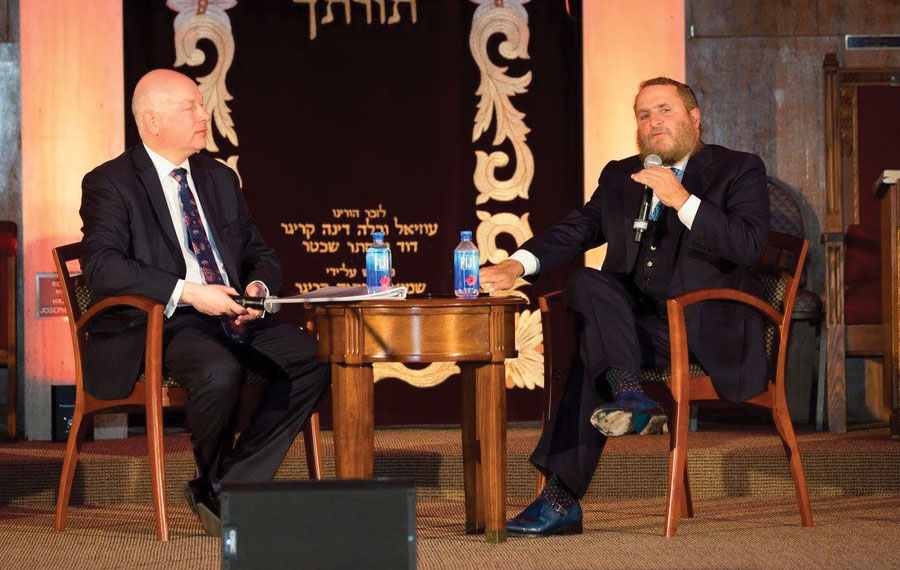
While he was tight-lipped about what it entails, Jason Greenblatt, one of the chief architects of the plan, adviser to President Donald Trump and special representative for international negotiations, told attendees at an event at Beth Jacob Congregation on April 8 that there were two possibilities regarding the plan’s release date. “Either between now and mid-June or post mid-June,” he said. 

Rabbi Shmuley Boteach, who interviewed Greenblatt at the event, responded, “Wow. Has that been said before?” 

“Think about it,” Greenblatt replied. “I didn’t really say anything.”

Greenblatt made his remarks at a public forum with Boteach. Several hundred people turned out for the event introduced by Jewish Journal Publisher and Editor-in-Chief David Suissa.

Not much has been said about the Trump administration’s Middle East peace plan that the president has called “the deal of the century,” one which Greenblatt has worked on for the past two years with Jared Kushner, the president’s son-in-law and senior adviser, and U.S. Ambassador to Israel David Friedman. 

“Neither [the Israelis nor the Palestinians] will like everything in the vision,” Greenblatt said, “but we are confident both sides will understand why we came to the conclusions we did if they are willing to engage. 

“When we release the vision, we ask each person to read the vision in its entirety and then judge it for themselves. We hope for honest, realistic, soul-searching dialogue among those affected by the conflict. We hope everyone … will ask themselves the question, ‘Will our lives be better off with this vision and are the compromises to get this done worth it?’ ”

Having worked for more than 20 years as Trump’s real estate lawyer, Greenblatt may seem an unlikely choice to work on the plan. Following his 2016 election, Trump appointed Greenblatt as one of his top advisers on Israel, tasking him with developing a peace agreement between the Israelis and the Palestinians.

Making his first public appearance in Los Angeles since his appointment,  Greenblatt said he has taken a realistic approach “on the elusive peace agreement between the Israelis and the Palestinians and on the relationship between Israel and its Arab neighbors. Our approach has been to drop the tired talking points of the past that have never and will never achieve peace.” 

Stating that “the time has come to speak the hard truths because peace can only be built on truth,” Greenblatt added, “That is why President Trump and the Trump administration believe that we need to speak clearly about the issues even if it makes some people uncomfortable.”

“Neither [the Israelis nor the Palestinians] will like everything in the vision, but we are confident both sides will understand why we came to the conclusions we did if they are willing to engage.” — Jason Greenblatt

Greenblatt said Trump’s decision to relocate the U.S. Embassy to Jerusalem from Tel Aviv; the president’s denouncement of attacks on Israel from the Gaza Strip; the United States’ withdrawal from the Iranian nuclear deal; and the recent designation by the U.S. of Iran’s Islamic Revolutionary Guard Corps as a terrorist organization have exemplified Trump’s willingness to act on hard truths. 

Trump’s actions, however, do not mean that his administration does not care about the Palestinians, Greenblatt said.

“I know the cynics — and there are so many of them — like to say the administration doesn’t care about the Palestinian people, or that we are biased against the Palestinians. That is simply not true,” he said. “We care about all Palestinians — those in the West Bank, those in Gaza and those languishing in refugee camps who have been used as pawns for decades in a political game and should have started their lives years ago.” 

Greenblatt also stressed the importance of no outside party imposing peace on the Israelis and the Palestinians, the need for direct talks between the two sides and the importance of the U.S. serving as an honest broker. 

“No matter what the Palestinian leadership says, only a plan put forth by the U.S. has a chance of succeeding,” he said.

The Palestinian Authority has cut off ties with the U.S. following the relocation of its embassy in Israel. 

“[Palestinian Authority] President [Mahmoud] Abbas should recognize he is missing an opportunity and we can’t help him or his people if he doesn’t help himself,” Greenblatt said. “No one is demanding that President Abbas sign a deal that is not good for his people, but we are asking President Abbas not to prejudge a plan and not to use the Trump administration’s policy positions as a convenient excuse not to strive for peace.”

Boteach also brought up the geopolitics of the Middle East and how they have changed under the Trump administration. While former President Barack Obama attempted to negotiate a deal with Iran, Trump has condemned Iran and worked more closely with Saudi Arabia, which, like Israel, is concerned about Iranian hegemony in the region, Boteach said.

“Everybody seems to see Iran as the great threat,” he noted. “Is there a danger in building the prospects for peace on ‘the enemy of my enemy is my friend?’ ”

Greenblatt said there was more to the warming of ties between the Gulf States and Israel than seeing eye to eye on Iran. The Arab states, like Israel, appreciate assertive U.S. leadership in the Middle East, he said. 

Greenblatt also came to Trump’s defense over accusations that the president foments anti-Semitism. As an Orthodox Jew and the son of Hungarian Jewish refugees, Greenblatt said Trump respects the Jewish people, noting how the president has always respected Greenblatt’s religious practice and Shabbat observance. 

He added, “Forget the fact he is not an anti-Semite. Most people believe he is not an anti-Semite, but anyone who tries to accuse him of causing anti-Semitism is missing the boat. Anti-Semitism is on the rise, it is true — it’s certainly on the rise in Europe — but it’s not because of President Trump. We need friends like President Trump to help us get through that fight. And if we alienate our friends, I fear for my kids, I fear for your kids, I fear for all of our kids and our grandkids.”

The more than hourlong discussion concluded with a Q&A session with the audience, during which Greenblatt said his plan was aspirational.

“We’re putting forth a vision,” he said, “not a peace treaty.”

Jason Greenblatt on Trump’s ‘Deal of the Century’ for Peace Read More »

Jewish Veg Holds First Vegan Seder in L.A.

Jewish Veg, the Maryland-based nonprofit that advocates for Jews to embrace veganism, held its first Los Angeles event on April 14: a vegan seder at Beth Chayim Chadashim (BCC) in Pico-Robertson.

BCC Executive Director Rabbi Jonathan Klein led the nearly 80 attendees through the seder. He began with the first blessing of the wine, pointing out that the four cups of wine are meant to parallel the four promises given to the Israelites that were enslaved in Egypt.

“For vegans, the four cups might serve to remind us of the current state of affairs, but remind us to maintain hope,” Klein said, noting that while it’s “easy for animal rights activists to lose hope in this era of factory farms and animal enslavement,” the Israelites were eventually redeemed after being enslaved for 480 years by the Egyptians.

“We lift our cups in blessing as an affirmation that our drive to overcome servitude is divinely inspired,” Klein said.

He then proceeded to the washing of the hands, explaining that it’s a requirement in Judaism to take care of the human body, and that veganism has several health benefits, including healthy heart function, lower cholesterol, lower rates of certain kinds of cancer and protection against chronic diseases such as Type 2 diabetes.

“As we wash our hands tonight, let us reflect on the ways in which we clean and care for our bodies and our souls,” Klein said.

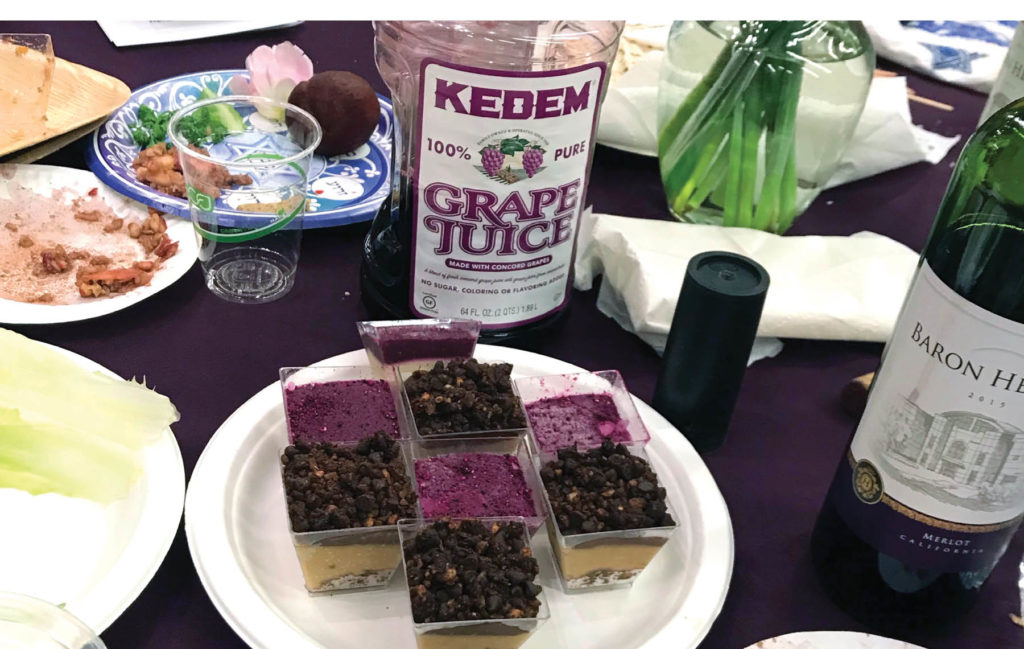
The vegan seder plate consisted of the traditional parsley, Charoset and maror, but used beets and flowers in place of the lamb shank bone and roasted egg. According to the Jewish Veg Vegan Haggadah, the use of the beet “dates all the way back to the Talmud and mimics the blood of the sacrifice, without causing actual harm to any animal.” The flower symbolizes “the natural world in bloom.”

Klein pointed out that the first items that are eaten from a traditional seder plate are plants, which is a “reminder that you can survive with a plant-based diet.” 

The Four Questions part of the Vegan Haggadah asks, “How did we choose to make a commitment to vegan living and what brought us to that choice? How do we continue to reaffirm and uphold that choice?”

The Four Questions part of the Vegan Haggadah asks, “How did we choose to make a commitment to vegan living and what brought us to that choice? How do we continue to reaffirm and uphold that choice?”

Of the Four Children, the Vegan Haggadah asks, “What can we say to the wicked child, who believes that animal suffering is not their responsibility? How do we explain to the simple child, who does not understand the ways in which animal agriculture poisons the planet? And what of the wise child, who already knows all there is to learn and yet does not act?”

The Vegan Haggadah also uses each of the Ten Plagues as “a call for change.” For the first plague (blood), the Vegan Haggadah states, “The global slaughter of 60 billion farmed animals a year is the biggest source of bloodshed and violence on Earth.” For the plague of hail, the Vegan Haggadah states, “Animal agriculture is the leading cause of climate change, producing even more greenhouse gases than all forms of transportation combined.” And for the plague of the death of the firstborn, the Vegan Haggadah states, “Millions of babies are born each year without enough to eat, while more than a third of the world’s corn, soy and alfalfa are grown for and fed to livestock.”

During the meal portion of the seder, attendees were served vegan matzo ball soup, and vegan gefilte fish made out of chickpeas and seaweed. The main course was portobello pot roast; brisket braised red cabbage, and roasted vegetables with sage, thyme and rosemary. Sides were sweet potato kugel, green beans and asparagus. 

For dessert, attendees could choose between blueberry or vegan chocolate cheesecake.

Toward the end of the seder, Klein explained that the final cups of wine signify the hope that “we can overcome the evils of animal agriculture and factory farming. We pray, we hope that the healing that all of us so desperately desire will become manifest and live fully self-actualized to who we are, as Jews, as animal rights activists.” 

Attendee Paulette Gindi told the Journal that she liked how she was “finally” able to go to a Jewish event in Los Angeles where she didn’t have to question if the food came from “an unethical source. I really appreciated how [Klein] and the vegan seder that [Jewish Veg] put together really created a modern-day approach to celebrating Passover while also being cruelty-free and compassionate to animals and the environment.” 

Aaron Ferber said although he isn’t normally a vegan, he thought the event provided a “great treat” in having “a break from eating animals” and becoming healthier.

 Mmamalema Molepo, who is visiting from South Africa, said although he also isn’t a vegan, he enjoyed the food because it was still the type of food that even a meat-eater or vegetarian would eat. He also said that the seder’s focus on animal rights made it a unique event.

Jeffrey Cohan, the executive director of Jewish Veg, told the Journal that the event met the organization’s expectations.

“I was so proud to see the room packed with so many people and to see people really enjoying every aspect of it,” he said, “from the haggadah to the food and everything in between.”

Jewish Veg Holds First Vegan Seder in L.A. Read More »

Her Torah Study Group Inspires Loyal Following

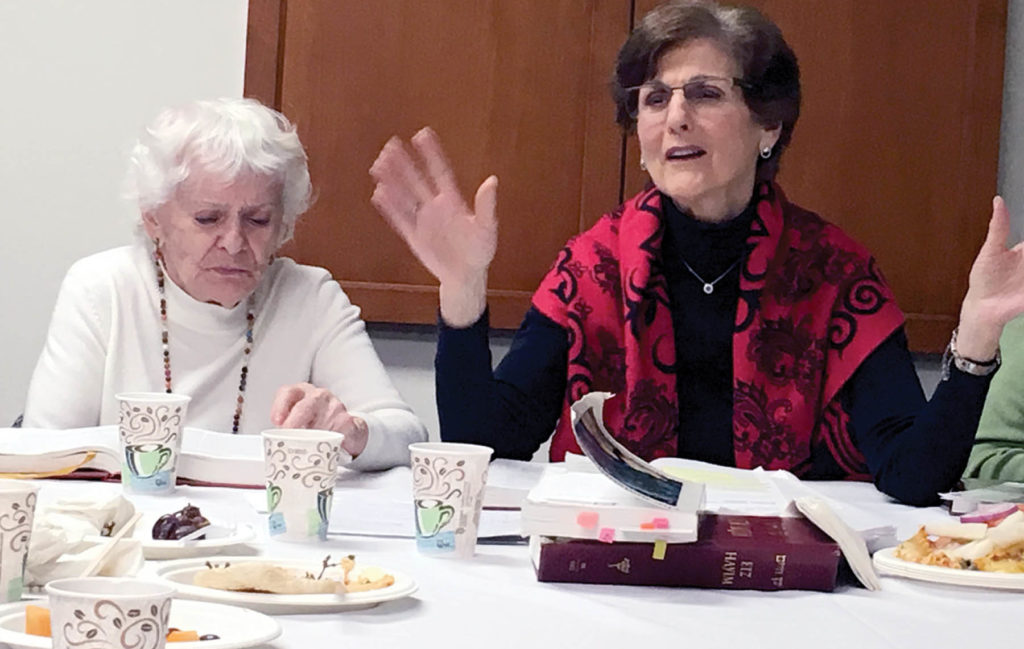
On a recent Saturday afternoon, about two dozen adults, most of them congregants of Valley Beth Shalom, gathered in a lounge at the Encino synagogue for a weekly parsha discussion group led by Judy Freier. 

Freier is not a rabbi or cantor. She doesn’t speak Hebrew. But for the past six years she’s been attracting a loyal group of participants to her talks about Torah.

“I have chutzpah,” Freier freely admitted, when asked about the origins of the group.

Almost seven years ago, the Tarzana resident joined Valley Beth Shalom. A month later, she approached Rabbi Ed Feinstein and said, “You’re missing something I’d like to see happen — a Torah study group that is lay led. A discussion thing.”

Feinstein gave his blessing. A few months later, Freier posted a notice about the new group in the temple’s bulletin, and she was off and running. Never mind that the New York native grew up in a secular household and had no formal Jewish training.

“I grew up knowing I was Jewish but not knowing what that meant,” Freier said. “My first husband, a Holocaust survivor, really gave me the gift of religion. When we got married, he introduced me to the joys of the synagogue, the joys of the holidays and the joys of being Jewish.”

Each week, Freier, a former middle school math teacher with a doctorate in education, spends 10 to 15 hours preparing for the upcoming session. She arrives with dozens of sources and articles painstakingly marked with sticky notes. Over the years, she has assembled a home library of more than 100 reference books. She always tries to bring something new for the group. After all, some of the regulars have been with her from the start. But there are certain books that she cites regularly, among them Rabbi Bradley Shavit Artson’s “The Bedside Torah: Wisdom, Visions, and Dreams.” 

“I am not an authority,” Freier said. “I’m a facilitator of learning. My goal is to make it accessible because I always felt it was inaccessible. And most Jews feel that way.”

Usually, Freier begins each session with a brief summary of the week’s parsha, followed by a question. “I want to hear your interpretation,” she recently said to the group. “In your mind, how do you view the kosher laws?”

For the most part, Freier embraces disparate views. “This is so Jewish that we argue,” she exclaimed during one session. “I love it.”

Freier strives for the four levels of Torah study known by the acronym PARDES: Peshat is the direct reading; Remez is the metaphorical, or the meaning behind it; Derash is an interpretation of what can be drawn from it.

“The last level you almost never get to — Sod,” Freier said. “I call it the aha moment, the secret. That is what we try to seek. … I try to get away from just the peshat.”

Discussions are robust. But Freier admits she runs a “very tight ship. People have to raise their hands,” she said. And she is quick to put an end to any side chatter or private conversations.

“She makes sure that everyone is participating and speaking, to some extent,” said Ron Reiter, a Sherman Oaks psychologist who has been attending Freier’s Saturday group since its inception.

“Judy does amazing research,” he added. “She really spends hours upon hours, and I always learn something new. She’s a very good teacher. I really don’t feel like I walk away with the same old, same old.” 

For Freier, leading the weekly sessions has been fulfilling. “The more I study, the more I am immersed in it,” she said. “I think it is one of the most inspirational ways to spend your time.” 

So much so that her enthusiasm for the material often spills over into other parts of her life:

“My friends go, ‘Here she goes again …’ ”

But she has no plans to stop.

“This to me is such a calling,” she said. “I jumped into a pool without seeing if there was any water in it and the water filled up. It’s changed my life in so many ways. It’s made me see things through different eyes.”

Her Torah Study Group Inspires Loyal Following Read More »

JFS { Hope Helps Hairdressers Recognize Domestic Violence

About 50 students in Santa Monica City College’s (SMC) cosmetology program are gathered in a campus classroom. Some are hair stylists in training, others are future aestheticians or manicurists. But they’re not here to learn about color trends or the latest skincare innovations. They’re here to learn about domestic violence through a training program led by two professionals from JFS { Hope, part of Jewish Family Service of Los Angeles.

In July 2018, AB 326 went into effect in California. The law requires that students in hair and beauty schools, like those at SMC, take courses in domestic violence awareness as part of their licensing process. JFS { Hope, which operates two 24-7 crisis hotlines for victims of intimate partner violence, two crisis shelters and offers free counseling in English and Spanish, immediately came on board. However, the curriculum JFS { Hope uses for these trainings is not its own. It uses the Professional Beauty Association Foundation’s Cut It Out program. But their goals are the same: recognize, respond and refer.

“How do you recognize domestic violence when you see it?” began JFS { Hope’s Kitty Glass, who co-led a recent training with colleague Gabrielle Hassan. “How do you respond and what do you do? You all are in a really unique situation because of the kind of relationship you’re going to establish with your client. It’s a very safe relationship. … So you may hear things or you may see signs. We want you to feel equipped to offer support. We don’t expect you to be a therapist. We just want to heighten your awareness of intimate partner abuse.”

The majority of the presentation was spent looking at intimate partner abuse, which generally affects 1 in 3 women and 1 in 4 men.

“It crosses all socio-economic barriers,” Glass said. “Ethnicity makes no difference. Sometimes we do see in some cultures a more patriarchal type of relationship. But anybody can be a victim.”

When a client comes into the salon and, let’s just say, they are having their hair done, having their nails done, having a facial, we touch. …  We are relaxing our clients … that’s when they start talking and we see a lot of things that go on.” — Helen LeDonne

Glass and Hassan also spent significant time discussing some of the many reasons victims often can’t or don’t simply walk away, including real or perceived pressure from various religious communities.

“Women are leaving five to seven times before leaving for good,” Hassan said. “There is a lot of burnout in family members” who tire of watching their loved ones return to an abusive partner, she added. Consequently, “[victims] become very isolated from their families. So many times I have heard, ‘I didn’t know where to go for help.’ ” This is where the future beauty professionals come in to the picture.”

A beauty professional might suspect abuse. Maybe their client has bruising or clumps of hair missing. Maybe it’s clear they aren’t taking care of their hygiene like they used to. All of these could be indications of abuse, according to the training. But Hassan warned, “Don’t assume.” 

The instructors also underscored the importance of not pushing individuals who may not be receptive to, or ready for, offers to help. “The main thing is that you’re available, that you’re a good listener,” Glass said. “If you hear something, you can certainly ask if she would like some support.” 

All participants were provided the National Domestic Violence Hotline number ([800] 799-7233) as well as the two 24-7 crisis hotline numbers for JFS { Hope ([818] 505-0900 and [323] 681-2626) to share. 

Helen LeDonne, a longtime hairdresser who teaches a handful of cosmetology classes at the school, said the mandate “[is] going to create a lot of awareness out there. When a client comes into the salon and, let’s just say they are having their hair done, having their nails done, having a facial, we touch. …  We are relaxing our clients. … When a client is relaxed, that’s when they start talking and we see a lot of things that go on. We hear a lot. They tell us so much more than they would a girlfriend or a relative.”

She added, “As a cosmetologist, we have so much power in our hands to help people, to make them feel good and help their self-esteem. Cut It Out is an extension of that.”

JFS { Hope Helps Hairdressers Recognize Domestic Violence Read More »

If I Even Find a Crumb …

Five weeks before the holiday, my wife uttered those three words that frighten the heck out of me every year: “Pesach is coming!”

Those words could scare the goose bumps off a goose. It’s also the most expensive holiday of the year. Our rabbi recently told us that for Pesach, we should “give until it hurts and then give more and then give more than that” to make sure the poor have food. This is a serious holiday.

On March 27, 23 days before the start of Pesach, I was in Glatt Mart in Los Angeles when I heard woman screaming, “They’ve already taken my breadcrumbs. Somebody help me. I want my breadcrumbs.” Housekeepers move systematically from room to room like Marine sharpshooters looking for a piece of crust that might be lurking inside a sock or under a rug. A Cheerio found after the start of the holiday could cause the same panic as if the Ebola virus was discovered at a local school. Local car washes familiar with the holiday’s drill await the crazy rush of Jews and their cars. The real frumies will steam clean their engines in case a piece of pretzel got sucked into the air conditioner, while a Chassidic family with 16 kids might find one of their kids sleeping under a pile of Gemaras in the back seat. There is a run on toothbrushes at drug stores. Local restaurants prepare to close as if a monster storm was heading their way. 

Nothing like getting in touch with your slave roots at the Ritz Carlton in Naples, Fla.

For the past six months, people have been signing up for Pesach programs at some of the top resorts in and out of the country. Nothing like getting in touch with your slave roots at the Ritz Carlton in Naples, Fla. A big family could easily spend more than $100,000 to go away for the week — well worth it for not having to cook and clean the house. 

The hotels where these events are held don’t really understand what they’re in for. First, some of the hotel elevators must be turned into Shabbos elevators so people don’t have to push a button. 

Then the hotel needs to hire 200 extra people to open the rooms because Jews aren’t allowed to use magnetic key cards on the Yom Tov. Room service can’t figure out why no one from this group ever gets hungry and orders anything. And the gym staff is amazed that none of the 700 people goes near any sort of exercise equipment.

The night of the first seder, the wait staff can’t believe their eyes when they see hundreds of people filing into the dining rooms, bringing pillows and what looks like three months’ worth of books. The children already are wearing pajamas and carrying blankets. They look like they plan to be there a long, long time. For a group that supposedly doesn’t drink alcohol, the staff watches as each person polishes off copious amounts of wine while leaning to the left as if they’re about to fall off their chairs. People working the dining room are phoning loved ones to say that it looks like they might not be home for a few days.

“Remember, two prunes for every one matzo. Good Yom Tov.”

One of the themes of this holiday is that we don’t forget where we came from, so we repeat the entire routine on the second night, so we remember not to forget.

The holiday of Passover and the ritual of the seder remind us that the Exodus out of Egypt culminated with God’s revelation to us at Mount Sinai, where God gave us the Torah and revealed himself to every Jew, not only to our leader, Moshe.

And finally, like many Jewish holidays, it’s about spending time with family and friends and, most of all, teaching our children this story. When our kids were little, what a thrill it was for us to see them stand on a chair and listen to them sing “Ma Nishtana.” The only thing better than seeing your son or daughter stand on a chair for the first time and recite the four questions is when someone takes you and your family to one of these five-star resorts and picks up the bill. 

Remember, two prunes for every one matzo. Good Yom Tov.


Mark Schiff is a comedian, actor and writer.

If I Even Find a Crumb … Read More »