fbpx

March 20, 2019

A Good Name

We all want the best for our children. We all want to help them succeed. We should all know, however, that there are lines which must not be crossed. 

Getting a tutor for your child who is struggling in math? Of course — if you are fortunate enough to be able to afford it.

Sitting with your kid, helping them think about what topic they should choose for their essay? Not a problem.

But committing fraud? Stealing a university spot from a more qualified student? Conspiring to create fake athletic credentials for your child, in a sport they have never even played or that their high school doesn’t even offer? You’ve got to be kidding me.

The college admission scandal that has been in the news these past few weeks is personal for me. It’s not just that my oldest went through the process last year with SAT and ACT prep classes, college visits and essays, and then the painful and anxiety producing season of acceptances, deferments and rejections. It was personal in another way. As I read the list of names of the accused, I saw two that I recognized: parents of children whom my kids had gone to preschool with years ago.

I wondered how these people I had known as decent, loving parents and seemingly fine, upstanding members of our community could have justified such reprehensible behavior — if they indeed did what they are accused of having done.

Yes, we all want our children to succeed in life, but what do we mean by success? Is getting into an elite university our measure of success? Is it so important that we would sacrifice our integrity or, even worse, the integrity of our children to achieve it?

This is much bigger than the 50 or so individuals named as part of the “Operation Varsity Blues” college admissions scandal. Our culture needs fixing. 

“We all want our children to succeed in life, but what do we mean by success? Is getting into an elite university our measure of success?”

We need to rethink our definition of success, of status, of what constitutes “bragging rights” for parents and students — and for the rest of us as well. We need to rethink how a “good name” is acquired, what we call a shem tov in Hebrew. That’s what those parents and students wanted. What they got was quite the opposite.

 Here’s the important lesson: a good name, a shem tov, cannot be purchased. It is earned through a lifetime of goodness.

In the words of our Sages: ‘ “A good name is better than precious oil; and the day of death than the day of one’s birth.” ’ (Ecclesiastes 7:1) They asked [King] Solomon: Why is a good name better than precious oil? He replied: When a person is born, no one knows what he or she will become, but when they leave this world with a good name — a good reputation — they inspire others to do good deeds by their example…. And when others speak of them, they say: ‘How righteous was this person! How great were her acts of righteousness! How learned was he in Torah! How devoted was she to a life of mitzvot — a life of duty! Surely will his sleep be with the righteous!’ ” (Midrash Tanchuma, Vayakheil 1:3)

This is what we should want for our children and ourselves. This is the success for which we should strive: a life of integrity; a life of goodness; a life well-lived that will inspire others to live well.

Make no mistake: As Jews, learning matters deeply to us. But, in the end, the most precious diploma we can ever aspire to earn is a shem tov.


Rabbi Yoshi Zweiback is the senior rabbi at Stephen Wise Temple.
A Good Name Read More »

Three Antique Torahs Stolen from Synagogue in Tehran’s Jewish Ghetto

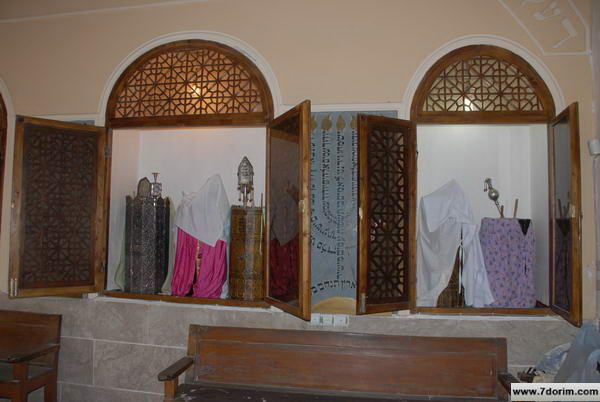
Iranian Jewish community leaders in the U.S. have confirmed reports that on Feb. 28 three antique Torah scrolls were stolen by unknown thieves from the centuries-old Ezra Yagoub synagogue located inside Tehran’s Jewish ghetto.

While the Iranian regime has not launched any official investigation into the incident and state-run media outlets have not reported on it, a statement released by the Los Angeles-based Iranian American Jewish Federation (IAJF) indicated that their organization is unaware of any specific motive behind the theft of the Torahs.

“The Iranian American Jewish Federation is deeply concerned and anxious about this incident and will be looking closely to learn the results of the investigation by the authorities and the law enforcement,” stated Susan Azizzadeh, president of the IAJF in the statement.

Shahram Yaghoubzadeh, chairman of the Iranian American Jewish Federation of New York, said his group “hopes that the governmental authorities in Tehran will do the right thing and use their vast intelligence and power to ensure the apprehension of the perpetrators and return of these sacred scrolls to the synagogue”.

The modest synagogue which is a little more than 500 square feet was established 125 years ago after an affluent Jewish merchant Ezra Yagoub bequeath funds for the formation of the synagogue at his deathbed. Likewise, the synagogue’s Torah scrolls are from the same time period and encased in ornate wood and metallic cases with metallic ornaments on top called “rimonim”.

According to Habib Levy’s book “Comprehensive History of the Jews of Iran: The Outset of the Diaspora” (Mazda Publishing, 1999), during the 1930s the Ezra Yagoub synagogue briefly housed Jews who had fled Afghanistan and the Iranian city of Mashhad when travel in route to make Israel their final home. Iranian Jewish activists in Los Angeles said the synagogue also temporarily housed Jews who had fled Nazi-controlled Poland during WWII.

Additionally, Iranian Jews in Los Angeles and New York said the synagogue was in full use up until 60 years ago when Jews gained great freedoms as well as wealth which prompted them to moved out of the Tehran’s Jewish ghetto during the Pahlavi dynasty. Since that time and until today the synagogue has been maintained by members of the Tehran Jewish Committee as a historic Jewish site.

Iranian Jewish leaders in L.A. said in recent years, Parviz Yeshaya, the former national chairman of the Jewish Council in Iran, has only kept the synagogue open for Saturday services for small groups of Jews visiting Tehran from other Iranian cities.

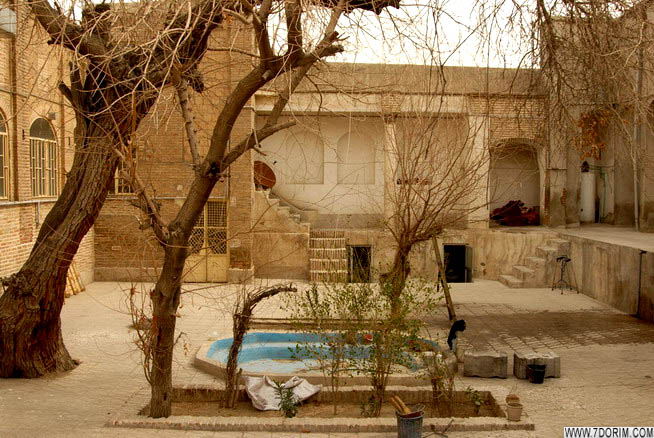
Outside ezra yagoub synagogue. Photos by 7dorim.com

Prior to the 1979 Islamic revolution, nearly 80,000 Jews lived in Iran and thousands during the last 40 years have left or escaped the country due to threats to their lives as well as bias laws against religious minorities living in Iran.

Leaders in Iranian Jewish communities in Southern California and New York have remained mostly quiet about the theft of the three antique Torahs for fear that what they say may be used as an excuse by the Iranian regime to retaliate against the estimated 5,000 to 8,000 Jews still living there.

Yet individual Iranian American Jewish activists said they are speaking out against the regime. Activists maintain that the Iranian regime’s officials have repeatedly claimed to be tolerant and benevolent to Iran’s Jews to Western news media outlets, but in reality, have turned a blind eye to recent incidents of vandalism of Jewish sites in Iran and appropriation of historic Jewish burial grounds throughout Iran.

“The condition of the Iranian Jewish community should also be watched carefully and incidents like this should not be taken lightly”, said George Haroonian, an Iranian Jewish activist based in Los Angeles.

Haroonian said many Iranian Jews in America are concerned that their brethren in Iran are in danger because of the escalating conflict between Israel and Iran’s terrorist proxies in the region.

“With the worsening of the political situation between Israel and Iran– such as in Syria, Lebanon and the Palestinian territories, our community is an easy target for direct or indirect attacks and harassment,” Haroonian said. “The regime and its adherents may extract revenge on Iran’s Jews for the losses of the regime in Syria”.

The theft of the Torahs from the Ezra Yagoub synagogue is just the latest incident against Iran’s Jewish community. In late December 2017 two synagogues located in the southwestern Iranian city of Shiraz were vandalized by unknown assailants who left a total of five Torah scrolls and numerous prayer books damaged or totally destroyed. Likewise, Tsedaka charity boxes were also stolen from the synagogues. The incident was never investigated by the regime’s authorities and no arrests were made in connection with the crime.

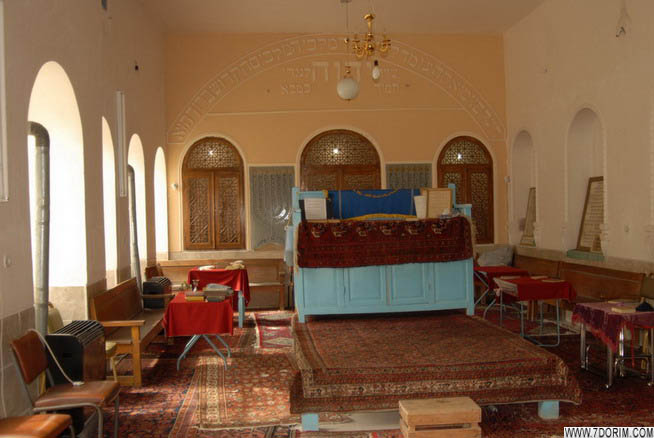
Inside ezra yagoub synagogue. Photo by 7dorim.com

Moreover, in November 2012, Toobah Nehdaran, a 57-year-old married Jewish woman, was strangled, then repeatedly stabbed to death, and her body was mutilated in a ritual manner by thugs who had broken into her home located inside the Jewish ghetto within the Iranian city of Isfahan. Nehdaran’s gruesome murder was never investigated by Iranian authorities and suspects were never arrested in connection with her murder.

Also in January 2011, the Iranian student Basiji militia, of the Abu-Ali Sina/Avicenna University in the western Iranian province of Hamadan rioted outside the entrance of the Esther and Mordechai tomb and threatened to destroy it if Israel destroyed the Al-Aqsa mosque in Jerusalem. The Iranian state-run media news reported at that time that Basiji militia had removed the mausoleum’s entrance sign, covered the Star of David at the mausoleum’s entrance with a welded metal cover and demanded the site be placed under the supervision of the local Islamic religious authority. In the end the tombs, were not damaged nor destroyed.

Calls for comment to the Permanent Mission of the Islamic Republic of Iran to the United Nations in New York were not returned.

Three Antique Torahs Stolen from Synagogue in Tehran’s Jewish Ghetto Read More »

Purim and Nowruz: Spring Into My Identity

We talk about the word “authenticity” now more than ever. We live in a society that demands that we constantly ask ourselves who we really are, and feeds us answers as to whom we should be. I remember as a seventh-grader, my middle school assigned my class a yearlong project titled “Who Am I?” 

Since I was a little girl, I had a concept of self that was based on two major identities that could feel closely related and strongly contradictory: being an Iranian and being a Jew.

Every spring, the Jewish holiday of Purim and the Persian New Year, called Nowruz, fall close together on the calendar, giving Persian Jews a chance to first feel gratitude for our people’s survival (Purim), and then stuff our faces with various Persian pastries and welcome the spring with Nowruz, a nondenominational holiday marking the spring equinox, and one which millions of Persians, Afghans and some Indians, celebrate with warm joy and distinct customs. But this year, the holidays fell on the same day: March 21.

Growing up in an Iranian-American Jewish family in Los Angeles, I always celebrated Purim — dressing in costume, hearing a reading of the Megillah and, of course, eating hamantashen. Most Persian Jews will attest that Purim is our holiday — when we not only identify strongly with being Jewish but also with being Persian, since the narrative took place in ancient Persia and the leading figures, good and bad, were Persian. 

This past year, I’ve been striving to find ways to connect with my Persian and Jewish roots.

As a fashion blogger for www.fashionlaine.com,  I use my platform to celebrate all types of holidays, ranging from Purim to Thanksgiving, through unique photoshoot concepts that I create. This year, when I realized that Purim and Nowruz would occur on the same day, I found the seventh grader in me asking, “Who Am I?” I was conflicted between creating a post dedicated to Nowruz and my Iranian identity, or instead honoring Purim and my Jewish identity. 

I’m blessed to have more than 100,000 followers on Instagram (@iamfashionlaine) and use my platform to share posts that define who I am. So in thinking this year about whether I wanted to create a photoshoot dedicated to Purim or to Nowruz, I understood that the holiday I would pick would ultimately show my followers which part of my identity was a bigger priority for me. And it wasn’t easy to decide how I would reflect myself to all those followers, most of whom are neither Persian nor Jewish. 

This past year, I’ve been on a road to identity and self-discovery, striving to find ways to connect with my Persian and Jewish roots. This has ranged from participating in 30 Years After’s Maher Fellowship, which introduced me to other young Iranian-American Jewish leaders, to writing “Monday Motivation” posts on my Instagram with lessons from the week’s Torah portion. Whether all those followers care to read reflections about the weekly parasha from a fashion blogger is a matter for another column. 

I’m beginning to understand that what’s beautiful about trying to define oneself is the realization that we don’t need to box ourselves into being just one thing — or one person. The secret to learning who you are is knowing that you give ultimate meaning to what that means. 

So, who am I? I’m an Iranian-American Jew, a female, a blogger, an aficionado of rainbows and unicorns, who eats Persian food with my family every Friday night, attends synagogue every Saturday, and keeps kosher.

This year, I won’t simply celebrate “Iranian Elaine” or “Jewish Elaine” — but the whole of Elaine, paying homage to the customary tradition of dressing up on Purim, alongside my Iranian roots. I like to call my decision for the final look: “If Queen Esther was a modern day rainbow millennial fashion blogger.” As you can imagine, it will involve a lot of rainbow fabric!


Elaine Daneshrad is the co-creator of 30 Years After’s annual Taboo Summit, which addresses controversial issues within the Iranian-American Jewish community. 

Purim and Nowruz: Spring Into My Identity Read More »

Converging on Humanity

On Sunday, March 17, when I didn’t think the news could get any worse, I heard from my Egyptian friend Marwa Maziad, a scholar of international relations at the University of Washington. She messaged me a link to a Haaretz op-ed titled, “After Christchurch and Pittsburgh, U.S. Jews and Muslims Need Each Other More Than Ever.” It featured a photo from an interfaith vigil in Manhattan. A woman is holding a sign that reads: “Your Jewish cousins have your back.”

“We talked about cousins way before everybody else,” Maziad wrote. “I think it will happen this time.”

That morning, a Palestinian had killed two Israelis near Ariel, authorities said. Some Palestinians handed out sweets to celebrate. Also that day in Amsterdam, protesters with Palestinian flags turned their backs on a Dutch rabbi’s remarks at a vigil for the victims of the Christchurch, New Zealand, massacre. Two days before, Chelsea Clinton was verbally attacked by a group of psychotic New York University students, who accused her of causing the New Zealand terrorist attack because she dared to criticize Rep. Ilhan Omar’s anti-Semitism.

I wasn’t feeling very optimistic.

But Maziad persisted: “I’m optimistic because I believe things happen for a reason — and they eventually stabilize.” Tragedies like New Zealand “help to bring people together,” she said.

She sent me a passage from the Quran: “O mankind, indeed, We have created you from male and female and made you nations and tribes, that you may know one another.” 

“People need to see themselves in the other,” Maziad wrote. “That level of familiarity will heal people — and help them converge on humanity. … Literally at the level of, ‘Oh, they have eyes and ears and hair and necks in the same places!’ Like babies, when they start examining the adults who are holding them,” Maziad explained. “That takes away from the demonization of all by all. Knowing one another becomes a life purpose.”

I told her that she was beginning to lift my pessimism.

“Optimism is a political act,” she responded. “We need to look for similarities even before we respect our differences. Also, just know that at the root of all things bad is fear. When that fear is addressed, peace will follow. We have one family legacy. One region. One God. If we go back to that as often as we should, there would be more peace.” 

I realized that what Maziad was saying converged with the philosophy of my Lebanese friend Imad. In line with positive psychology, Imad argues that there will always be toxic people and situations in our lives. The key is not to react to them — let toxicity happen without responding to it with anger or fear. If we don’t react, it will by definition become less significant. 

“We have one family legacy. One region. One God. If we go back to that as often as we should, there would be more peace.” — Marwa Maziad

It’s not a coincidence that I’ve gone through the hardest year of my life surrounded by serene Muslims. That closeness allowed me to grieve with them over New Zealand and inspired me to write about the current political situation with honesty and tough love. 

We can let negativity define our lives — and social media make that very easy — or we can choose optimism. Optimism does not mean ignoring reality. It means seeing it, understanding it, but then hoping and believing that the bad happens for a reason.

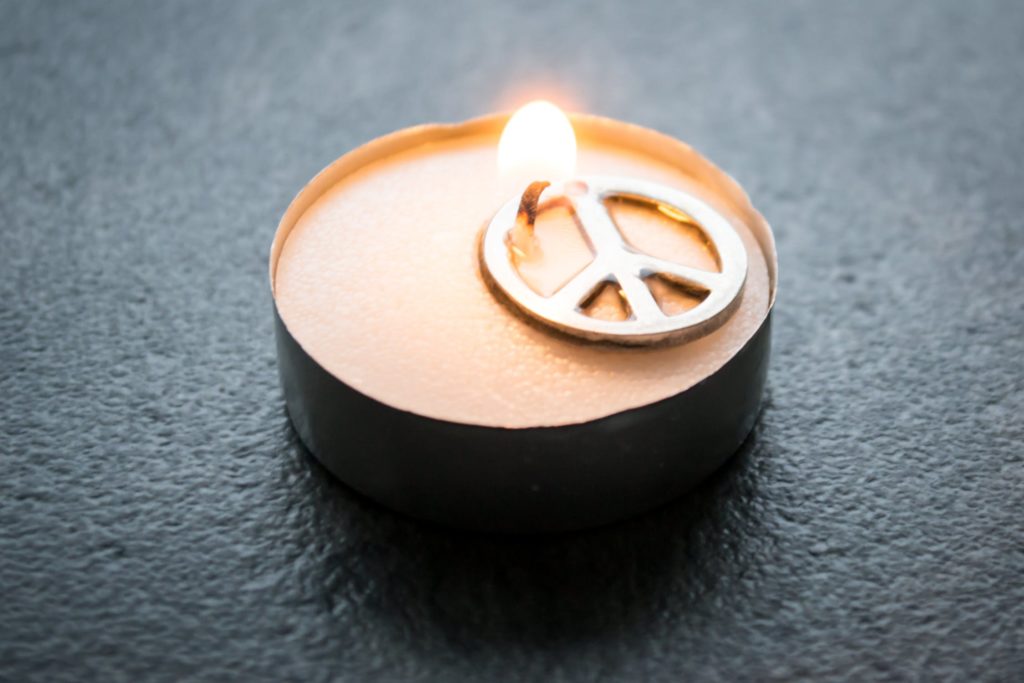
The Shabbat after the Christchurch tragedy, I invited my Muslim neighbors over to say a prayer after we lit the candles. Before we began, I told the kids — two Jews and two Muslims — that the man who is suspected of killing 50 worshippers in two mosques hated both of our religions.

No one spoke for a minute as that sank in.

My neighbor Saya and her son, Reese, recited “Al Fatihah” after we sang the blessing. Al Fatihah is the first chapter of the Quran, I learned. Its seven verses form a prayer, and many interpret its meaning — “the opener” — to refer to its ability to open a person to faith in God.

At the end, they said, “Amin.” 

“Did you just say Amen?” I asked. 

“Yes, we said Amin,” they replied.

Cousins, converging on humanity.


Karen Lehrman Bloch is an author and cultural critic living in New York City.

Converging on Humanity Read More »

Carl Reiner Gives Museum a Big Birthday Gift

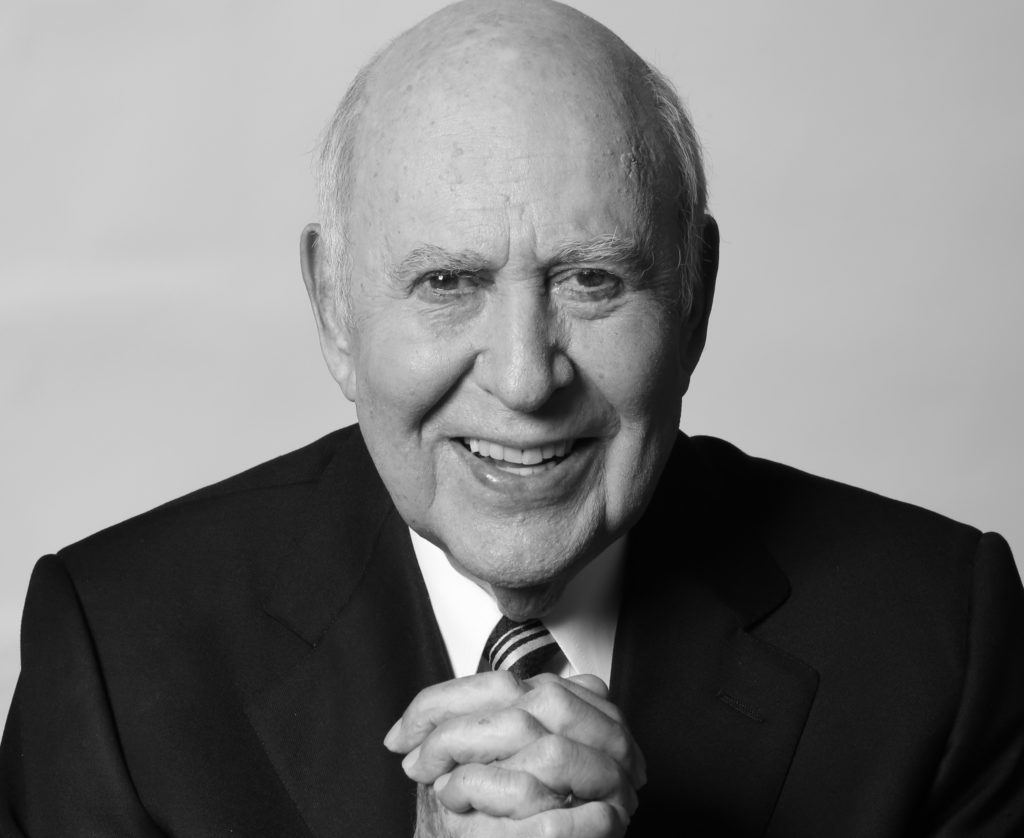
Comedy legend Carl Reiner is celebrating his 97th birthday by giving a major gift. Born on March 20, 1922, the nine-time Emmy winning producer, director, writer and actor has donated his collection of production scripts from “The Dick Van Dyke Show” to the National Comedy Center, a comedy museum in Jamestown, New York. Stored away in boxes since 1966, the 158 scripts, annotated with Reiner’s notes, are being digitally copied and preserved.

“There’s nothing more satisfying than having an idea and seeing it through to find out that, not only did you like it, but the audience and critics all seemed to agree,” Reiner said in a statement. “When asked, ‘Of all the theatrical projects you’ve done in your life, what are you most proud of?’ I always say, hands down, it’s creating and producing ‘The Dick Van Dyke Show.’ It was a labor of love. I applaud The National Comedy Center for keeping the creative fires burning by singling out and preserving something most people feel deserves preservation,” he added.

The Reiner material will be combined with photos, scripts, and other documents from the collections of actress Rose Marie and John Rich, who directed 41 episodes of the iconic sitcom.

“Collectively, the Reiner, Rich, and Rose Marie materials constitute the most comprehensive ‘Dick Van Dyke Show’ archive yet assembled,” Laura LaPlaca, the Comedy Center’s Director of Archives, said.

Carl Reiner Gives Museum a Big Birthday Gift Read More »

March 22, 2019

March 22, 2019 Read More »