fbpx

July 27, 2018

TABLE FOR FIVE: Vaetchanan

Weekly Parsha: One Verse, Five Voices

You shall love the LORD your God with all your heart and with all your soul and with all your might. (Deuteronomy 6:5)

Miriam Yerushalmi
Author, Counselor

L’vav’cha translates literally as “your hearts.” The plural wording reminds us that we were each created with two distinct inclinations — the animal soul and the Godly soul — that motivate us in our service of God. We tend to imagine the animal soul as the source of our base, negative impulses or character traits; and we think we would be better people if only we could conquer and eradicate that part of us.

Not so!

Both souls, both hearts are holy, and both are necessary to loving God fully. The animal soul emanates from a very high spiritual plane, yet corresponds to our bodily nature. It is likened to a “wild ox”: untamed, passionate, a tremendously powerful force of potential spiritual energy waiting to be applied. The Godly soul, which actually emanates from a lower existential plane, is like a lamb. It knows how God wants to be loved, and wants to love God that way, but lacks the energy or the physical capability to fulfill its highest potential.

Through prayer and meditation the Godly soul harnesses the fiery passion of the animal soul, and as the passion and love are directed toward Godliness, the holy fire burns away the negativity within the “ox,” creating a healthy unification of the spiritual and physical realities within each of us, thus permitting a higher love of, and avodah (service) to, the quintessentially Infinite One.

With united hearts we can reach transcendental heights of love for our Creator —  and ourselves.


Rabbi Ari Segal
Head of School, Shalhevet High School

The verse presents a conundrum, a Jewish doctrine equally as fundamental to our faith as it is difficult to understand. Commandments of the body are routine in Judaism, but commandments of the heart? That’s another matter.

How can the Torah legislate that we experience an emotion — especially love toward such an unfathomable being as God?

In fact, emotion and action are more closely connected than we think. Many sages interpret the fulfillment of Ve’ahavta (You shall love) as the actions that demonstrate our love of God; not the love itself. Commandments are designed to inspire love of God, and they can have an impact even if we aren’t currently capable of loving God “with all your heart.”

The Kotzker Rebbe comments on another verse in this week’s parsha that we are commanded to keep our love for God “on” rather than “in” our hearts, suggesting an inherent process of preparation. Our deeds that encourage this love wait on the “surface” of our hearts, ready to flood in when we are open to this complicated commandment.

This approach to Ve’ahavta offers another insight. It’s easy nowadays to make ourselves miserable in pursuit of our goals. We focus on achievement, forgetting to celebrate the journey itself. But truly living each experience is equally, if not more valuable than, that tantalizing end. Ve’ahavta reminds us to savor the process. As we open our hearts to loving God, let’s also open our minds to appreciating every step of our journeys, no matter what waits ahead.


Rabbi Lori Shapiro
Open Temple

Love. The English word for love is so simple. We use it so often, we have rendered it meaningless: I love you. Love you. Hand heart.

Love pops like a soap bubble on the face; but, the Hebrew word for love — Ah-ha-vah — is a deep diaphragmatic workout. Say it. Ah-ha-vah. Exhausting, isn’t it?

Even the Hebrew grammar of the word itself is work. It’s a participle-type word, meaning it is both a noun and a verb, a thing and an action. So, in Hebrew, even the grammatical tense is a workout. Love, in Hebrew, is a thing that demands of us, as the rabbis teach, to obey with a bodily awareness —  to almost breathe for another.

In Deuteronomy 6:5, Moses is in the throes of his elegy to the Israelites. His life nearly done, he imparts to the Israelites (and to us) the essence of what we must know. We must know the commandments. We must know our history. We must know God.

But how do we, mere mortals not meant for prophecy, attain such knowledge? Through the work of Ah-ha-vah. And how do we do this? With sweat. With obedience. With giving. With Ah-ha-vah — all of your heart. Ah-ha-vah — all of your soul. And Ah-ha-vah — all of your everything.

That’s love.


Rabbi Adam Kligfeld
Temple Beth Am

One of the wisest things I learned from my grandfather, Rabbi Bernard Kligfeld z”l, is that in life and in love sometimes feeling follows action. We are taught that feelings govern action. You love, and therefore you hug. You feel committed, and therefore you donate.

Sometimes reality does work out that way. But just as often, because you begin to volunteer, you develop greater esteem for the cause or the beneficiary of your volunteerism. Sometimes, you hug your child not because you’re feeling love for her in that moment, but rather you’re lacking that loving feeling momentarily and by hugging her the warmth and the tenderness return.

We can reawaken feelings through action. As important as that is to learn with respect to the animate people within our lives, it is also important to internalize with respect to the great-but-evanescent parts of our life — including our Creator. Do I wake up every morning infatuated with Adonai? I don’t. But once I start to utter the Modeh Ani; once I begin to articulate my prayers and wrap my tefillin, and begin to engage in the very actions that are deemed to be loving expressions to the eternal one, the feeling begins to return, like blood rushing back to an extremity.

When the Torah commands us to love the Lord our God, perhaps it is too much pressure to think of it as an obligation to feel. Maybe we ought to heed it as a reminder to do. And through the doing, the love will return.


Rabbi Reuven Wolf
Maayon Yisroel

As a Jew, you have a both a human heart and a Godly heart. Your Godly heart loves God with a burning passion. Your Godly heart is crazy about God. But you don’t normally feel your Godly heart. Though your Godly heart is your truest heart, it generally remains buried deep beneath your subconscious.

Your conscious heart is the human heart, and the human heart is not so crazy about God. What the human heart cares about is “me” and “my life.” To the extent that God enhances my life, I consider Him; to the extent that He doesn’t, I don’t. God, however, wants us to love Him with both of our hearts.

On the verse, “Ve’ahavta es Hashem Elokecha bchol l’vavcha” (“You should love God with your whole heart”), Rashi comments: “bshnei yitzrecha” (with both of your hearts). God wants you to love Him with your Godly heart and your human heart, to care about Him with both your spiritual self and your regular self. But how can we do that?

Through thinking about Him. Just like in a human relationship, the more you appreciate your partner’s awesomeness, the more you will love him or her. And the more you appreciate God’s awesomeness, the more you will love Him. Take time every day to ponder God’s greatness, to think about the vastness and grandeur of His creation, to reflect on the bounty He has given you. With a little time, your human heart will begin to love God, too.

TABLE FOR FIVE: Vaetchanan Read More »

Who Killed Raphael’s Son? Part 4

Editor’s note: This is the fourth of a five-part excerpt from the novel “The Luminous Heart of Jonah S.” by Gina Nahai.


The Riffraff Brigade — all verminous twenty-seven of them, plus their dull-witted spouses, innumerable children, woebegone in-laws, and ill-treated maids — had told the police they had spent the weekend at their recently acquired family estate in Rancho Mirage. They had left Los Angeles Friday at noon, in time to be safely out of their cars and ready for Shabbat before sundown, and planned to return on Tuesday morning.

The occasion for the trip was to celebrate the purchase — $12 million plus change, all cash, thirty-day escrow — of the house that would henceforth serve as proof, to themselves if to no one else, of the Riffraff family pedigree and their old-money identity. That they had bought the house for less than it had cost to build was, of course, an advantage. That it was paid for by other people’s money was, to the Riffraff, just the sweet flavor of success.

The Riffraff’s weekend getaway, of course, could well be a foil: Surrounded by a golf course, two waterfalls, two swimming pools, and four tennis courts, the estate was easy to enter and exit without detection. Because so many people would stay at the house at once, the temporary absence of one or two could have gone unnoticed by the rest. Because they were all liars and thieves and more putrid, even, than Raphael’s Son (he, at least, had the excuse of having suffered as a child), not one of them was above bearing false witness.

Add to that the very relevant fact, well known in the community but not something the Riffraff would have volunteered to the cops, that the family’s ancestral trade, stretching back three hundred years and two ghettos, plus Cyrus Street in Tehran, was shechita — the kosher method of killing animals for human consumption—and you might have yourself some viable suspects.

Shechita necessitates the use of a smooth, razor-sharp blade, a quick and continuous motion that severs the animal’s jugular vein, arteries, trachea, and esophagus at once, and the draining of the carcass’s blood.

You didn’t have to be a Talmudic scholar to know this, or especially paranoid to buy into the theory that animals, like humans, have a soul; that shechita frees the soul and leaves only the flesh to consume; that animals killed any other way carry their soul in their flesh, from the slaughterhouse to the butcher shop and onto a man’s dinner table and, upon consumption, into the human frame where it—the beast’s unhappy, restless soul — will remain. But you did have to know the Riffraff well enough to realize that not one among them was brave enough to risk running into Raphael’s Son’s soul post-slaughter — hence, one could argue, the single, smooth, and efficient cut to the throat, and the gallon of blood drained in the car before the body was taken away. Leon knew the Riffraff well enough. As far as he was concerned, they were to Iranian Jews what the Oklahoma City Bomber was to the rank and file of the United States Armed Forces: a painful and tragic aberration. But perfidy alone wasn’t proof of homicide.

As far as he was concerned, they were to Iranian Jews what the Oklahoma City Bomber was to the rank and file of the United States Armed Forces: a painful and tragic aberration. 

“They thought he was going to throw them under the bus,” Eddy explained at the apartment. He stood above the hot plate where he had started to make a fresh pot of Turkish coffee.

“They thought?”

Eddy stirred the dark, viscous liquid.

“Who gave them that idea?” Leon continued.

Eddy shrugged and kept stirring. After a minute he picked the pot off the hot plate and turned toward Leon. “His lawyers wanted to quit. He wasn’t giving them anything to work with and they said he was going to jail for twenty years and it would be bad for their reputation.”

Without asking, Eddy poured the coffee into two small cups, put one on top of the TV for Leon, and picked up the other for himself.

Leon ignored the coffee.

“So he gave them his cousins?”

Eddy downed his coffee like a shot of tequila, then felt in his shirt pocket for his cigarettes. “I have to go outside for a minute.”

He couldn’t smoke in the apartment and couldn’t be around his mother with his hair and clothes smelling of tobacco. So he went downstairs every hour or so, inhaled two or sometimes three cigarettes at once, then came up and changed his shirt, washed his hands, and wet his hair before he tended to her again.

“Wouldn’t it be easier to quit?” Leon asked rhetorically, as he followed Eddy down the staircase.

On the sidewalk, Leon waited till Eddy had lit up and sucked down a good lungful of smoke. 

“Okay. Come on,” he pressed.

Eddy took another drag. His hands were shaking and his chest was so bony, Leon expected to see cigarette smoke flowing out of his torso. He was one of those people who seem to be perpetually on the verge of having a heart attack or a stroke, but who somehow pull through year after year, then finally die when no one’s looking.

“I’ve been thinking this day would come,” he said, and inhaled another cigarette.

As far as he was concerned, they were to Iranian Jews what the Oklahoma City Bomber was to the rank and file of the United States Armed Forces: a painful and tragic aberration. 

In response to an invitation from Leon, the Riffraff sent three delegates, each representing one aspect of the whole, to the station on Monday afternoon: The brains, Joshua Simcha, was five feet tall in dress shoes. At sixty-three, he had hands the size of a child’s, round spectacles, a mouth shaped like a wide beak, and the nervous, thin musculature of a bird. The brawn, Daniel Simcha—thirty-two, a six-foot-two block of solid, swollen muscle, with a full head of hair and a tinny, nasal voice completely incongruous with the rest of him. The beauty, Hadassah Simcha, forty-nine, resembled a hybrid gone bad: she had Joshua’s beak and his bad eyes, Daniel’s stature and pectorals, and it went downhill thereafter. She arrived wearing a white skirt suit—purchased at Ross Dress for Less on Westwood Boulevard and first worn at her eldest daughter’s bat mitzvah some ten years earlier. Under the jacket she sported a black cotton dress shirt she had bought from Saks Fifth Avenue in Beverly Hills on the day of the historic “everything must go” sale in 2009 when, according to eyewitness and police reports, fully grown women from one of the wealthiest neighborhoods in the world had broken into fistfights over $5,000 Chanel purses at 50 percent off.

Hadassah had a firm handshake that bordered on aggressive. Daniel looked everywhere but in Leon’s eyes, twitched and rocked and shook to release tension from his muscles like a basketball player before a game. Joshua wore a kippah and carried a box of Persian nougat he had just bought from one of the half dozen Iranian grocery stores on Westwood Boulevard south of Wilshire. He put the box on Leon’s desk and sat down in one of two lightweight aluminum chairs without armrests.

The bearing of a gift, usually nougat or pistachio nuts, was one of those gestures that had been de rigueur in Iran: You never called on another person, or asked a favor, without bringing an offering of sweets, or a bundle of flowers, or, if dealing with government officials, cops, or the police and military, a paper bag stuffed with cash. In the early years after the revolution, white people in America and Europe received more boxes of nougat and packets of pistachios than they could have consumed over an entire lifetime. Everyone from the bank teller to the hairdresser to the traffic court judge in areas with large concentrations of Iranians had a stack of brown and yellow boxes of gaz-e Esfahan — nougat from Esfahan — on their desk. The whites had no idea what to make of these offerings, and they were too polite to ask. The Iranians, in turn, sensed the white people’s discomfort and were embarrassed, but couldn’t understand why. It took a year or two for most to realize that offering gaz-e Esfahan to a police detective in the midst of an investigation could be construed as a cheap and ill-advised attempt at a bribe. Three decades later, the Simchas still hadn’t received the memo.

Joshua Simcha told Leon that he and his siblings were second cousins by marriage to Raphael’s Son. Their father, thanks to Hashem, was a big landowner in Iran, and he had provided the seed money for their many investments in America.

“We did okay, thank God.” He adjusted his kippah in hopes of drawing Leon’s attention to it. “Lately, we’ve been hurting because of my cousin who ripped us off.”

Like the handful of other Iranian Jews who had embraced orthodoxy in America as a business decision—good networking possibilities, and a general assumption that people of faith were more honest than others—the Simchas played the religion card whenever possible.They told Leon that they too had been victims of Raphael’s Son’s Ponzi scheme, only they had been singled out and blamed by the other creditors because of their family ties with him.

With Hashem as their witness, every last one of them had stayed in Palm Desert the entire weekend, plus Monday, and were nowhere within fifty miles of Holmby Hills.

They had no idea who could have committed such a heinous crime; only HaShem decides when and how we die. What they knew for sure was that the killer couldn’t have been an Iranian Jew, and that’s because, simply put, Iranian Jews did not kill.

You could go back three thousand years, study the entire history of the tribe, and, with the exception of those who had served in the army and fought in wars, you would not find a single instance — not one — of an Iranian Jew committing murder. Once every decade or so there might be a blow to the head or (more recently, in America) a shooting, but they all involved mentally ill people who avoided being medicated for fear of losing aabehroo. And there might have been a few suicides, but we’ll never know for sure because the families would never admit to that, again because of their aabehroo.

Here, the three Simchas took a break from their narrative, exchanged a few pregnant looks, mumbled to each other in Persian, and finally came to a consensus.

“If I were you,” Joshua reached over and put his own child-size hand on Leon’s, “I’d look outside ourselves for the culprit.” He was whispering—in Persian—and glancing to his right and left from the corners of his eyes for anyone within hearing range who might understand the language. “God forbid I should commit the sin of lashon hara, but you know, Mr. Soleyman had some dealings with that gangster, Jimmy Lorecchio.”

Jimmy Lorecchio was a half bald, grossly overweight, never-learned- how-to-button-his-pants, sixty-nine-year-old alcoholic with only a high school diploma and a red, bloated face marked with pus-filled red boils oozing teenage acne. Barely anyone outside city hall had heard of him or would have recognized his Buddha-like figure with the much-too-small head where, in a futile attempt at vanity, he dyed what little was left of his hair a greenish blond. He would have been better advised to work on his teeth, or whatever internal fumes caused the intense sulfuric smell that lapped out of him every time he so much as opened his mouth as he sat at his desk, already at work on his Wild Turkey, by three every afternoon.

By five p.m. he would be on the phone, yelling obscenities at any and every person foolish enough to take his call at that hour, and by seven he was passed out on the couch in his office, or behind his desk.

His wife had divorced him and obtained a restraining order two decades before, his children had changed their names and moved away, and his only living relative, a sister in Florida, hadn’t reached out to him or returned his calls since Christmas 2001.

And yet, in spite of his atrocious physique and unsparing halitosis, Jimmy Lorecchio held the mayor, the fifteen members of the city council, the five county supervisors, and every other elected official in L.A. in a permanent state of terror. As head of the largest and most powerful union in the city, the International Brotherhood of City Workers, he could single-handedly swing any election by ordering his workers to vote a certain way. He traded on his reputation, well deserved, of being pathologically vindictive, unreasonable, and interested only in showing anyone who dared challenge him who held the ultimate authority in the city.

For years, there had been speculation that Lorecchio resorted to more than the plain old bullying of politicians to keep his fiefdom in check. Employees who left before they were fired often found themselves unable to find another job anywhere in the city; managers who so much as questioned a single decision he made were accused of everything from unethical behavior to flat-out madness, and summarily fired. Rumors abounded about unexplained house fires, illegal electronic surveillance, and accidental falls from the roofs of twenty-story buildings. No one — not the police, nor the district attorney, nor even private business owners who needed Lorecchio’s support to obtain city contracts or advance their agenda before the city council — dared mention the rumors aloud, much less try to verify their accuracy. Even the mainstream press, struggling to survive the electronic age and weary of the possibility of a union strike, bent over to avoid offending the boss.

“Jimmy Lorecchio had some dealings with Mr. Soleyman,” Hadassah Simcha said, joining her brother in not committing lashon hara. Leon knew where she was going with this, but wasn’t about to make it easy for her.

“That is,” she said, “they knew each other through Lorecchio’s deputy, that guy everyone calls Snake.”

Luci’s right-hand man was a ninety-year-old professional grafter known, not at all affectionately around city hall, as the Rat in the Hat. “Rat” was for his protruding yellow husk-like front teeth, and for his shifty, disloyal character; “Hat” was for the greasy, fraying, ill-fitting cowboy hat he wore day and night, indoors and out. The other was a dark-skinned chauffeur-turned-spy from East Asia who reeked of incense and bore an uncanny resemblance to a Bengali water buffalo. His name was Naji, but he was so openly devious, habitually deceitful, and instinctively mean, most people referred to him as “That Fucking Snake.” Together, they carried out the unsavory tasks Luci did not wish to be linked to directly.

Hadassah was still waiting for Leon to exhibit a sign of recognition. Next to her, the younger brother had gone back to contemplating his knuckles, and Joshua remained still, mouth half open and eyes darting behind the glasses.

“You know that missing $30 million they wrote about in the papers a while ago?” Leon nodded. For years, Jimmy Lorecchio had had singular jurisdiction over the union’s funds and other holdings. He spent as he pleased, to support candidates he could control when they assumed office or to prompt other unions to back his own stance on issues, and God only knows what else, legal or not, because no one from the union, the press, or the city was going to risk alienating him by demanding an accounting.

Among his many expenses was a special fund set up in the year 2000 to “help facilitate greater understanding between labor and business.” At the time of its establishment, Lorecchio transferred $30 million from the union’s coffers into the fund. After that, no one heard about the fund for thirteen years.

In 2013, a Los Angeles Times reporter asked about the fund and was told that it was empty. He asked what the money had been spent on and did not get an answer. Normally, that was as far as the matter would go, given Luci’s sway. But courage comes from the most unlikely places. The paper pursued the question throughout the year. In 2014, a new city comptroller — apparently not angling for reelection — committed blasphemy by asking the courts to order Luci to open the fund’s books or otherwise report on the fate of the $30 million. The last anyone knew, Luci was accusing the comptroller of union busting and had called for a citywide strike.

“Well,” Hadassah sighed, as if truly saddened to have to break such news, “I’ll bet you can guess what happened to that money once Mr. Soleyman declared bankruptcy.”

According to Hadassah Simcha and her two brothers, Raphael’s Son had enticed Lorecchio to entrust him with the fund’s money. They had met in 1998, when Raphael’s Son wanted to buy a piece of land that belonged to the union. Technically, the property wasn’t officially for sale, so Raphael’s Son followed the informal protocol of reaching out to That Fucking Snake with an offer to be taken to the boss. The land was purchased for $10 million, well below market value. Luci’s permission to sell the land was purchased for $2 million, deposited by Eddy Arax in a numbered account in the Caymans. To Raphael’s Son, this was just the beginning of a long and fruitful relationship.

He prevailed upon That Snake to arrange a meeting with the Rat in the Hat. He, in turn, carried a message to Lucifer. At a time when banks offered an interest rate of 3.5 percent on a CD, Raphael’s Son guaranteed a 10 percent return. From that profit, he suggested, Luci could reimburse the union its 3.5 percent and keep the difference for himself.

They started with smaller deposits — a few hundred thousand dollars at a time. Once a month, the Rat would bring a stack of cash and hand it to Eddy, pick up the interest payment on the existing deposit in cash, and be gone. But Luci got bolder. The deposits became larger.

The fund was established. Thirty million dollars was transferred into its coffers, then promptly handed over to Eddy Arax.

“But you see, Mr. Pulitzer,” Hadassah offered her best Goldie Hawn smile, “you don’t cross Jimmy Lorecchio and expect to get away unharmed.”

And besides, Leon carried the thought to its logical conclusion, who knew what Raphael’s Son would be willing to reveal in order to buy himself immunity from prosecution or enter a plea deal if the trial wasn’t going his way?

To be continued.

Who Killed Raphael’s Son? Part 4 Read More »

Storyteller, Undercover Arab

It was late in the day and all Rami wanted was to put his head against the bulletproof window of  “the settler bus,” as he calls it, and doze off. But stuck in traffic, the religious Jew next to him saw an opportunity for conversation. He gesticulated wildly, telling Rami how fed up he was of living in fear of Arabs.  Rami nodded but did not answer. Even with his fluent Hebrew, his accent would have given him away as a Palestinian Arab. 

The traffic intensified. As they approached the Gush Etzion junction in the West Bank, they encountered several dozen policemen, soldiers and bystanders. A riot broke out. There had been another terror attack — a Palestinian had tried to stab a soldier. The army had shot and killed him. Rami was petrified. Arabs don’t usually ride settler buses, but they were more frequent than the Arab buses from the Jerusalem bus station. It took all his strength just to will his legs to move. He got off the bus and ran to a nearby gas station where he knew there was an Arab worker. He sat there, trembling, until his mother came to get him.

Rami, 29, is full of similar stories. Even as we spoke at a café in Jaffa, an Israeli asked if Rami had served in Duvdevan — an elite counter-terrorist unit in the Israel Defense Forces. With shorn hair, hazel eyes and a chiseled physique, Rami’s generically handsome Middle Eastern appearance means he melts into a crowd as seamlessly in Tel Aviv as in downtown Ramallah. 

Rami was born and raised in a Palestinian refugee camp in the south Hebron hills. One of five children, his parents instilled in him the importance of respect for others. Nonetheless, he grew up in a culture of hate. 

“I didn’t choose my childhood,” he said. “My neighborhood, school, university, all of these influences led me to grow up hating the other side.” 

“For a Palestinian to come to Israel and work in an international company like Intel or Google, this is a dream.” – Rami

These days, his association with Jews is the reason that ties with his closest childhood friends were severed. But during his days as a tour guide when he was 20, he had an encounter with Israelis at a tourism summit that was the turning point for him. Until then, the only Israelis he’d known were soldiers, and his memories of their treatment of him were not good. 

Rami recalls angrily telling an Israeli at the summit how his grandparents had been forced out of their home during the War of Independence. He denounced Israel’s policy of changing the Arabic name of their hometown to an Israeli one, Kiryat Gat, as an attempt to erase Palestinian history. He expressed the hope that his grandmother (who, like many Palestinians, still carries the key to the home she fled) would return someday.

Nine years later, Rami has changed his tune. His grandparents’ “right of return” to their former abode? “I don’t believe in that anymore,” he said. “Putting history — the Nakba (the Palestinian “catastrophe” marking the establishment of the State of Israel) or the Holocaust — all the time on the table [means] nothing will change,” he said. “Both sides [are] sad and full of trauma, but we don’t need to allow these things to live with us. We need to start thinking about the next generation.”

Rami is working to do just that. He works as a program coordinator for the Palestinian Internship Project, an organization that places Palestinian university graduates in three-month internships at companies in Israel. 

“For a Palestinian to come to Israel and work in an international company like Intel or Google,” he said, “this is a dream.”

Storyteller, Undercover Arab Read More »

Journalist Tells Hair-Raising Tale of Defying Iranian Regime

“The Wind in My Hair: My Fight for Freedom in Modern Iran” by Masih Alinejad (with Kambiz Foroohar) (Little, Brown) is, at once, a haunting and highly intimate family memoir and a bold political manifesto composed by an eyewitness to the agonies that have befallen Iran over the last four decades and an active participant in the struggle to set the country free. 

Alinejad, who describes herself only half-jokingly as “a troublemaker and an infamous Iranian journalist,” writes with self-evident pleasure about the village in the province of Mazandaran in northern Iran where she was born in 1976. “I’m the proud daughter of Ghomikola,” she writes. “Mazandaranis, or Mazanis, as the people are affectionately called, are proud of their long history of independence, which predates Islam. We have our own dialect, Mazani or Tabari, and nothing gives me more pleasure, now that I live in the West, than to find a fellow Mazani and speak in my local tongue.” 

Her memoir fairly glows with fond memories of her homeland and her beloved family, and she conjures up sights, sounds and smells that make her memories come fully alive. Rich people in her village lived in brick houses, but  “[our] house was modest and made out of mud.” To make repairs, her father — whom the family called “AghaJan” (“Dear Sir”) — would spackle the walls with a paste made of cow dung, mud, straw and rice husks. “After it had dried, AghaJan and my brothers would paint the walls, but that didn’t kill the smell.” Even today, as a resident of Brooklyn, N.Y., “I associate the smell of cow dung with the smell of home.”

She was only 2 years old when the Islamic Revolution brought down the monarchy that had ruled Persia for 2,000 years and replaced it with a stern Islamic theocracy. “Even to this day, almost forty years after the revolution, there are debates with many Iranian families about whether my father’s generation made a mistake in overthrowing the Shah and his Western-inspired ideas … to bring in a regime that looked to the seventh century for moral and legal guidance,” she explains. For the courageous woman she grew up to be, however, it was nothing less than a catastrophe: “In the Islamic Republic, being born a woman is like having a disability.”  And the symbol of her oppression was her beautiful head of hair, abundant and curly.  

Masih Alinejad’s memoir shows us what the politics of the Islamic Republic look like at ground level, where she carefully navigated through the treacherous waters of an authoritarian state.

“My hair was part of my identity, but you couldn’t see it,” Alinejad writes. “When I was growing up, my hair was no longer part of my body. It had been hijacked and replaced with a head scarf.”

Starting in adolescence, the high-spirited young woman began to fight back. At school, she participated in acts of youthful protest such as arranging bowls of water so they would spill on the clerics as they entered the school and scrawling political graffiti on the walls. “If hijab is a good thing, then men should wear it also,” she told her religious teacher. “Some men are so ugly that they do need to be covered up to protect us women.”

Later, as she was befriended by fellow dissidents, Alinejad discovered that acts of disobedience, no matter how mild, carried dire consequences in the Islamic Republic. When the security service showed up to arrest her fiancé, AghaJan — a dedicated supporter of the regime — pointed at his daughter and instructed the officer: “Arrest this one, too.” When she ended up in a jail cell, she observed “the number of prayers on the walls to a God that had abandoned those who had scrawled them.” After a coerced confession and a pro forma trial, she was sentenced to five years in prison and 74 lashes. The prison sentence was for the political crimes, explained the judge, and the whipping was “for mixing with boys.”

The sentence was suspended on the condition that Alinejad demonstrate her compliance with Islamic law for a period for a period of three years. While she shows us how she succeeded in staying out of prison, Alinejad never abandoned her principles. She reinvented herself as a journalist and a broadcaster, and her memoir shows us what the politics of the Islamic Republic look like at ground level, where she carefully navigated through the treacherous waters of an authoritarian state.  

Some of the perils were laughable, as when she was suspended from covering the Majlis, the legislature of the Islamic Republic, because she dared to wear red shoes on the job. Other perils were deeply fearful as when she was summoned before the prosecutor general in Tehran whose nickname was “Butcher of the Press.” “So, who is behind you?” he demanded. “Make a confession and I’ll go easy on you, I promise.” The interrogation ended with a stalemate: “My job is to protect the revolution,” he said. “My job is to protect the people,” she retorted. She stayed out of the interrogation cells, but she also was banned from covering the Majlis.

Alinejad achieved a measure of fame in Iran — or notoriety, as she puts it — for her daring articles and books. But she knew she remained at risk, and eventually she received an ominous warning from a high-ranking official: “Leave now, before it’s too late.” So she devised a way to put herself beyond the reach of the Islamic Republic, first in London and then in the United States. At a particularly stirring moment in her heroic account, she describes how she addressed a protest rally that was organized by the Iranian community in San Francisco. 

“I’ve been jailed, beaten, expelled … but I didn’t lose hope,” she told the crowd. “For thirty years we were afraid. Now it is the Islamic Republic who must fear.”

For the reader who is curious about how one remarkable woman survived the dangers, hurts and sorrows of an especially challenging life, “The Wind in My Hair” tells a tense, dramatic and ultimately inspiring story. And for the reader who wonders what life is really like in the Islamic Republic of Iran, the same book is full of hard facts and shocking disclosures.


Jonathan Kirsch, author and publishing attorney, is the book editor of the Jewish Journal.

Journalist Tells Hair-Raising Tale of Defying Iranian Regime Read More »

On Thursday, the Rabbi Was Arrested

I learned of the sudden arrest of Rabbi Dubi Haiyun via a phone call very early on July 19. “Did you hear the news?” the caller asked. “Why would I hear any news at 6:30 in the morning?” I replied. “Well,” the caller said, “your rabbi was arrested.”

I have no rabbi. From childhood, I have been suspicious of rabbis. I don’t dislike them — some of my best friends have the failing of being rabbis. But I never have considered anyone to be “my” rabbi.

So I said, “I have no rabbi.” And the caller said, “You know what I mean.” And I said, “No, I don’t what you mean.” So the caller got impatient. “Rabbi Haiyun,” he said. So I asked: “Rabbi Haiyun from Haifa? But he is supposed to speak today at the event at the president’s house!” Then I realized: It was, indeed, my rabbi — one of the rabbis I invited to speak at President Reuven Rivlin’s annual Tisha b’Av event. There was an Orthodox rabbi, a Reform rabbi, a Hebrew University professor and a Conservative rabbi — Rabbi Haiyun.

He was “arrested” (technically, detained for questioning) after a complaint by the rabbinate. The essence of this complaint was ridiculous: that Haiyun illegally officiates marriage ceremonies. The action taken by the police after the complaint — detaining the rabbi at 5:30 a.m. rather than asking him to schedule a time for questioning — was outrageous. Everybody knows that dozens of Conservative, Reform and, for that matter, unlicensed Orthodox rabbis officiate at unofficial, unrecognized-by-the-state weddings. In fact, there are celebrities who officiate such ceremonies — others who are even high-ranking politicians. Everybody knows that thousands of Israelis have such ceremonies every year, and that tens of thousands of Israelis are guests at such ceremonies. Never — not once — has anyone been detained because of it.

I was on the phone all morning, trying to ascertain whether Haiyun would make it to the event. I was relieved to discover he would be coming, and later pleased to see him embraced by the other participants, from the president on down. He heard calming words from outgoing head of the Jewish Agency Natan Sharansky, and from incoming head of the Jewish Agency Isaac Herzog. He shook hands with all of the other speakers, including the formidable Orthodox rabbi on the panel, Yaakov Medan. He was cheered when he ended his presentation, which was illuminating, but I suspected the cheers were for other reasons.

The rabbi’s detention was problematic, infuriating. The aftermath of the detention was calming, reassuring.

So it was a bittersweet day. On the one hand, something preposterous had happened. On the other hand, the reaction was quick and decisive: public condemnation, wide support and, most importantly, a note of clarification from the attorney general, that there will be no further investigation until and unless there is clear suspicion of criminal action.

There is often a part of the story that observers neglect to mention or take into account when instances such as this occur. “These are the actions of Iran and Saudi Arabia,” Rabbi Steven Wernick, CEO of the United Synagogue of Conservative Judaism, wrote. That Haiyun, awoken in the early hours, was angry enough to compare Israel to Iran (reportedly in a Facebook post) that morning is understandable. But other observers would be wise to refrain from such comparisons because they are only half true: Iran might drag the rabbi out of bed, but would it also host him at the president’s home on the same day? Would it also halt the investigation hours after the rabbi was detained ?

Israel isn’t perfect but it is no Iran. The rabbi’s detention was problematic, infuriating. The aftermath of the detention was calming, reassuring. No — Israel didn’t rewrite its laws of marriage and divorce. There are many Israelis and non-Israelis who believe that such change is essential, but that is a matter for another day. No – Israel hasn’t yet figured a proper way to navigate the complicated world of many Jewish streams. That is also a matter for another day. No — Israel didn’t dismantle the falling-down castle of the rabbinate. It might do it some day. Or maybe — that’s what I believe is going to happen — the rabbinate will become obsolete by its own actions.

Don’t let the idiotic detention of a rabbi fool you. Don’t make the excessive decision of a local police more than it is. It was bad enough without overhyping it. That is to say: Being outraged is sometimes necessary. But moving on is also a useful quality.


Shmuel Rosner is senior political editor. For more analysis of Israeli and international politics, visit Rosner’s Domain at jewishjournal.com/rosnersdomain.

On Thursday, the Rabbi Was Arrested Read More »

When Name Calling Is a Good Thing

As the cashier at the grocery store began to ring up my purchases, she glanced at me and asked, “Did you find everything you were looking for today, ma’am?”

I expected the question — it was company protocol to ask. Even on occasions when I hadn’t found quite everything I had looked for, I’d still answer blandly, “Yes, thank you.”

That day, I decided not to answer by rote. I read her name tag and said, “Yes, thank you, Toni.”

She looked back at me for a just a second and visibly brightened. “Glad to hear it!” she answered with a smile.

With only one word, I was able to infuse a predictable and commonplace interaction with a small spark of personal connection. She was not just a cashier ringing up groceries during a long shift. She was a woman named Toni.

Happy with these results, I have made it a regular habit to call sales clerks or service reps by name. I do it in person and even in online chats. In person, I always am rewarded with a smile, a straightening of the shoulders, an appreciative look. I’d like to think that I would have thought of doing this on my own, but I was prompted to do it because it’s a mitzvah to greet people with a pleasant demeanor. It’s also a mitzvah to be the first to greet another person. What was I waiting for?

You never know where a kind greeting can lead. My friend Barry not only chatted with the manager of a local mailbox store, calling her by name, he asked her out on a date. They were married within the year.

The simple practice of greeting others with a kind expression isn’t such a small thing after all.

Addressing people by their name in a caring way leaves deep impressions. Recently, I attended a memorial tribute for an elderly friend named Maurice. Now, Maurice was a big man with a big personality, brash and bluntly opinionated. We had belonged to Pacific Jewish Center in Venice, the “Shul on the Beach,” for many years. A strong baritone, Maurice had seized the opportunity to begin prayers and hymns with his melodies of choice. His commanding voice and musical selections helped define the spiritual atmosphere of the synagogue for nearly 40 years.

Maurice was a colorful character, yet as people reminisced and eulogized him, it was clear that he had touched people by always remembering shul members’ full names, bellowing out his greetings: “Jacob Israel!” Or, “Leah Emunah!” His loud acknowledgement became one of his trademarks, but it didn’t end there.

He also remembered the names of shul members’ extended family members, and he also remembered what troubles or issues they were dealing with.

As I sat listening to the tributes, I nodded in recognition. Long ago, I told Maurice that my sister was about to undergo another spinal surgery, and for years afterward, he’d regularly ask me, his brow furrowed with concern, “How’s your sister Sharon doing?”

One speaker said half-jokingly, “I thought Maurice only remembered the names of my parents and siblings. Now that I know he did that for everyone, I’m feeling a little less special.”

The youngest speaker at the event, a young mother in her 20s, recalled that even though the synagogue was overflowing with children, Maurice knew all their names. “We all understood that in a small congregation, we were each important. Only later did I realize that a big part of this feeling came from Maurice always addressing us by name.”

In today’s society, too many people feel invisible and lonely. Increasingly, even when we’d like to smile or nod or make small talk with another person in public, we can’t. Too often, they are in the addictive clutch of their phones, an impenetrable barrier. These small losses add up to a much larger fracturing of the social compact.

I discovered through my little experiment, and Maurice proved, that the simple, old-fashioned practice of greeting others with a kind expression and acknowledging their names when we can isn’t such a small thing after all.


Judy Gruen’s latest book is “The Skeptic and the Rabbi: Falling in Love With Faith” (She Writes Press, 2017).

When Name Calling Is a Good Thing Read More »

‘The Bleeding Edge’ Exposes Medical Implant Horrors

Years before Times Up and #MeToo, filmmakers Amy Ziering and Kirby Dick exposed the epidemic of sexual assault in the military and on college campuses with their documentaries “The Invisible War” (2012) and “The Hunting Ground” (2015). Now they’ve turned their investigative lens on the $400 billion medical device industry, exposing catastrophic failures that put patients’ lives at risk in “The Bleeding Edge.”

Telling the harrowing stories of patients permanently scarred by vaginal mesh implants, sickened by toxic levels of cobalt in their hip replacements and irrevocably damaged by the permanent birth control implant Essure, the film reveals how lack of oversight, lax regulations and profit-driven cover-ups can turn technology from lifesaving to deadly.

“We all believe, naively, that if a product is put in our body, it’s been tested,” Ziering told the Journal. “Predominately, it’s the industries themselves that are doing the testing and [saying that] the products are safe. It’s a world where the corporations are in charge, and they don’t have the most moral compass at heart.”

In 2015, Ziering and Dick set out to make a documentary about preventable medical errors in hospitals, “but it morphed into a medical device film,” Ziering said. Not surprisingly, the challenges were enormous.

“With a film about sexual assault, everyone has a familiarity or understanding, but with something like this, it’s a subject no one knows about,” Ziering said. “How do you take this really important, significant topic and make it cinematically compelling?” 

Securing interviews was another challenge. “This is an immensely powerful industry with connections and ties that go in all directions, and they don’t fight fair,” Ziering said. “It’s scary for people to speak freely. We had a lot of people talk to us candidly off the record, but once they went on the record it was a different story.” 

“We all believe, naively, that if a product is put in our body, it’s been tested. Predominately, it’s the industries themselves that are doing the testing and [saying that] the products are safe. It’s a world where the corporations are in charge and they don’t have the most moral compass at heart.” — Amy Ziering

Ziering earned a doctorate at Yale in comparative literature and decided to make a film about her mentor, French philosopher Jacques Derrida, instead of writing a paper. The film was well received and marked the beginning of her creative partnership with Kirby Dick, which has focused on telling stories with political, feminist and social justice themes.

“I’ve always been innately analytical and critical, and really incensed by injustice,” Ziering said. She traces her passion and motivation to her childhood with her philanthropist parents, Marilyn Ziering and the late Sigi Ziering. “They were always
interested in helping people. We learned that example from a very early age,” she said, adding that her father’s experiences as a Holocaust survivor profoundly affected him.

“It was all about helping anyone
else afflicted or in need. I remember when he started his company, he made a
point of hiring refugees — boat people,
Russians. He was grateful that foreigners helped him and he had to give back by helping others who were fleeing oppression or hardship.”

Her family also took in the son of Iranian refugees. “He ended up living with us for four years until his parents could get out,” she said. “For [my parents], it was very much [about] tikkun olam, tzedakah. It was just part of their DNA. I absorbed a lot of that by example and osmosis.”

Ziering describes herself as “extremely Jewish, but not in the way the world recognizes it. I think I’m deeply religious but
not in a conventional way. Am I conventionally observant? No. But I think my films are observant.” 

She and Dick are currently working on a feature about harassment and parity in the entertainment industry and have projects in development with NBC/Universal. 

Ziering, who won an Emmy for “The Hunting Ground” and was nominated for an Oscar for “The Invisible War,” is proud of what the films accomplished in terms of increasing awareness and being catalysts for change. She hopes “The Bleeding Edge” has a similar effect, putting medical devices “in the public consciousness and the public discourse. This industry is enormous and it’s completely under the radar,” she said. “I hope that this promotes better legislation and better oversight.”

There has already been a major victory. On the eve of “The Bleeding Edge” release, Bayer removed Essure from the U.S. market, a de facto reversal of its stance on the effectiveness and safety of the birth control device.  

Meanwhile, Ziering has advice for potential patients. “Be an informed consumer and ask a lot of questions. When you’re sick, you’re vulnerable and you want to trust, but you have to be careful,” she said. “Have your eyes wide open when you
deal with the medical industry. Buyer beware. Everyone knowing this and
exercising the appropriate caution and vigilance would be a huge leap forward in saving lives.”


“The Bleeding Edge” begins streaming on Netflix on July 27. 

‘The Bleeding Edge’ Exposes Medical Implant Horrors Read More »

Tradition, Tikkun Olam Are Not an Either/Or

As a Conservative Jew, I suppose it was not surprising that I found myself agreeing in part with both Gil Troy in his July 20 Jewish Journal cover story about the book by Jonathan Neumann that he approvingly cites, and with Jonathan Klein. After all, the very essence of the ideal Conservative Jew, as defined by “Emet Ve-Emunah,” the only official statement of the philosophy of Conservative Judaism, is “Nothing human or Jewish is alien to me.”

I thus wrote this in the preface of my 2005 book, “The Way Into Tikkun Olam (Repairing the World)”:

“Surveys show that even Jews who doubt the existence or significance of God, who are not involved much in Judaism’s prayers, rituals, or holiday celebrations, who violate Judaism’s restrictions on diet and work on holy days, and/or who do not know much about their heritage or devote any time as adults to studying it nevertheless feel in their bones that they have a duty as Jews to make this a better world, that this is the essence of what it means to be a Jew. As a religious Jew, I would say that it is sad that so many people, by their own description, are “not very religious,” for such people are missing out on a virtual treasure trove of meaning, joy, intellectual ferment, and communal connections that the Jewish tradition offers us in all these other expressions of the Jewish tradition. Still, such Jews are not wrong in identifying “social action” as a key component of what it means to be Jewish, for much of the tradition is devoted to it.”

So, on one hand, Gil Troy and Jonathan Neumann are correct, in my view, that transforming Judaism into universal humanism seriously truncates its scope and message. Seeing tikkun olam as the sum total of Judaism also leads to the view that specific Jewish identity is not necessary. Therefore, all of the following fall by the wayside: marrying another Jew; continuing your learning about Judaism throughout your adult life; raising your children to become serious Jews; joining a synagogue and becoming involved in its worship and activities; supporting other Jewish communal institutions; and advocating for the State of Israel. Those are very serious losses for the Jewish tradition and the Jewish community, and it is anything but clear that either can survive on the basis of tikkun olam alone. They are also serious losses for individual Jews, for seeing tikkun olam as the sum and substance of being Jewish robs them of a whole treasure house of meaning and growth that a more serious and widespread involvement in our heritage and community would give them.

On the other hand, Jonathan Klein is clearly right when he points out that taking care of the poor, the sick and the needy in other ways is fundamental to the Jewish tradition.

On the other hand, Jonathan Klein is clearly right when he points out that taking care of the poor, the sick and the needy in other ways is fundamental to the Jewish tradition. Contrary to Neumann, this part of Judaism is not tangential or based on misreading of a few texts. Rabbi Klein cites just a few of the many texts that depict God as sustaining the needs of the destitute, and that demand of us as a matter of law that we do so likewise. As I point out in my book, tikkun olam also requires that we be there for our family and friends when they need us, that we fulfill very specific responsibilities to them. Any form of Judaism that ignores this, that focuses exclusively on Jewish rituals and prayer, is also a severely truncated form of Judaism, robbing its followers of much of its message and meaning.

Thus, the Jewish tradition itself includes demands that we engage in acts of tikkun olam for our fellow Jews, for people of other faiths, and for our environment — and if that is liberalism, so be it — but it also requires us to study and practice the tradition and to support synagogues and other Jewish institutions as well as the State of Israel. It is that kind of demanding but rich, textured and meaningful Judaism to which Gil Troy calls us, and with which Conservative Judaism has gifted me.

I hope that all of us can find our way into a Judaism that is not either/or but both … and … and … and …


Rabbi Elliot N. Dorff is a rector and distinguished professor of philosophy at American Jewish University.

Tradition, Tikkun Olam Are Not an Either/Or Read More »

Taking a Chance, Finding Friendship

I recently read a United Nations report that said 96 percent of the groundwater in Gaza is unfit for human consumption. This is just one of the reasons I agreed to participate in Walk for Water, an event that brought together Muslims and Jews to raise money for water access in Gaza. The main reason I went to this event, however, was to support my friend Hedab Tarifi, the only person in our NewGround cohort from Gaza. 

NewGround: A Muslim-Jewish Partnership for Change is a nonprofit that builds relationships between Muslims and Jews so they can transform their communities through lasting collaboration. Tarifi and I are just two of the 11 Muslims and 11 Jews who, over the past nine months, have come to know one another through the NewGround Professional Fellowship. The Walk for Water event was a Change-Maker project organized by a group of us as our culminating project of the fellowship.

Tarifi and I didn’t connect right away. In fact, at first I felt intimidated and even afraid to connect with her.

As a spiritual leader in my community, I’m always aware of the responsibility that comes with my role. I want to represent the best version of myself and my community. I am proud to be a rabbi, yet in this context, I felt an added pressure to represent the best version of myself and my community. I truly felt there was too much at stake if things went wrong. I worried, not only as an individual but also as a rabbi, that I would mess up or or say the wrong thing.

Not only is Tarifi clearly a leader in her community, she is also well respected in the interfaith world —  including the Jewish community. I truly felt that if I were to somehow break her trust, I would possibly be risking the relationships so many had worked so hard to create. To say it plainly: I didn’t want to be that guy who thinks he is helping but only makes it worse.

Tarifi and I empathized with each other, agreed to disagree at times, and in the end, became friends. I’d never had a Palestinian friend before.

Tarifi and I spent time together intermittently during our sessions and had intense conversations and disagreements when we did. At one point we decided to meet one on one, and I listened to her tell the story of when her parents sent her to the United States alone at the age of 17 to pursue her education, career and a better life than the one they had known in the Palestinian territories and Egypt.

Tarifi and I empathized with each other, agreed to disagree at times, and in the end, became friends. I’d never had a Palestinian friend before; acquaintances and colleagues, yes, but never a friend.

We are not, like, “BFFs,” but we have grown to respect and admire each other.
Walk for Water brought together 200 Muslims, Jews and allies to walk in support of bringing clean water to Palestinians. Each attendee had a story and reason for participating. Many of these stories were captured in the video that was posted on NewGround’s Facebook page.

I went to Walk for Water to support Tarifi. I went to honor her story and the stories of others who were there, as well. I was ambivalent at times. As a rabbi, should I even attend this event? Should I wear my kippah? Should I even go? What questions might my community ask me? Would they feel betrayed? In the end, I went to support Tarifi, and mostly to listen.

The most important Jewish prayer, the Shema, urges us — commands us even — to hear, to listen. What changed for me over the course of NewGround’s fellowship program was listening to Tarifi’s story. Hearing it helped me understand myself a little better and, in turn, helped me understand Tarifi a little more, too. This stuff is difficult and it is complicated, and it will never cease to be difficult and complicated. But stories, when told and heard from the heart, have the ability to make things easier. At the very least, stories open up possibilities. And in the end, possibilities may be our only chance to reach New Ground.


Rabbi Zachary Zysman is the director of Jewish Student Life/campus rabbi at Loyola Marymount University.

Taking a Chance, Finding Friendship Read More »

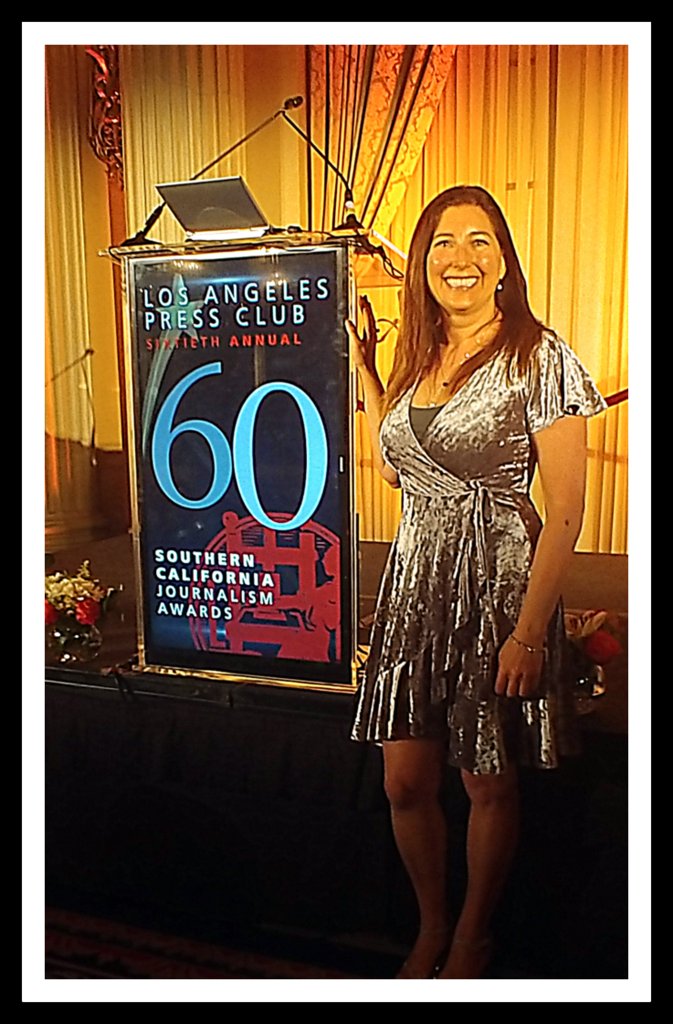
Lisa Niver at 2018 Press Club Awards

July 2018 We Said Go Travel News and Happy Summer!

July News 2018  with We Said Go Travel:

Thank you for all of your support for We Said Go Travel and me. VERY SOON I will have two million views on my videos! I appreciate all of your views, comments and likes. Thank you so much!

All of the entries from the 2017 Photo Award are now published. You can view them here. Our 2018 photo award will start NEXT MONTH! Get ready to share your great shots! We will have four judges for the next award.

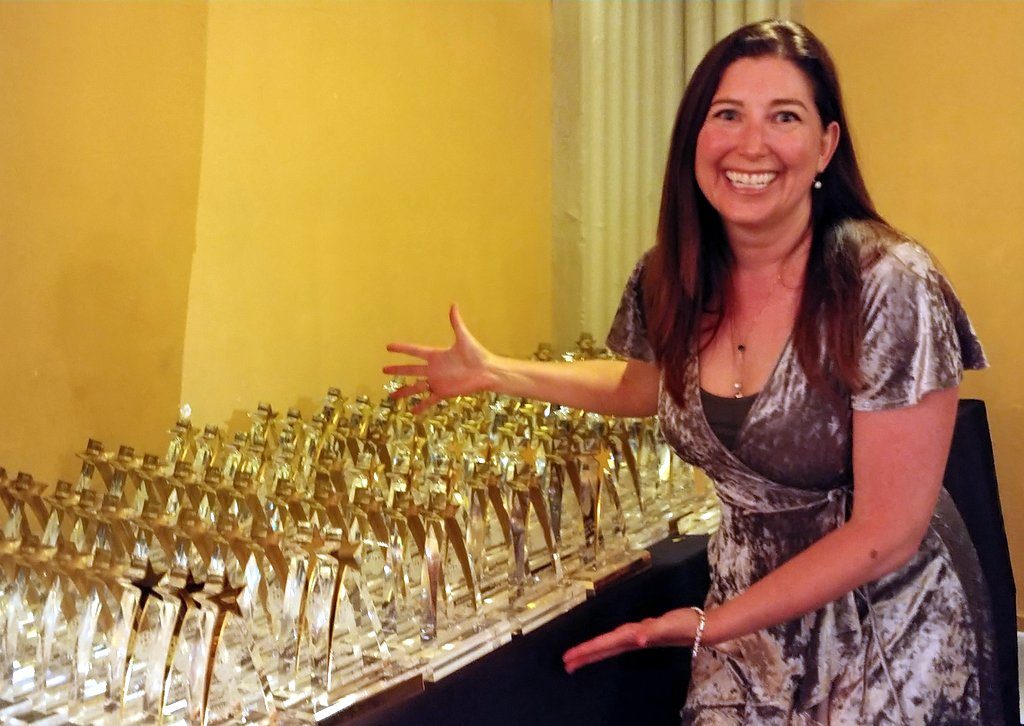
Lisa Niver LA Press Club Awards 2018I loved being nominated for three Press Club awards. The ceremony at the Biltmore included Dolly Parton and Lestor Holt! Wait til you see my video!

Lisa Niver at AT&T Shape 2018
Lisa Niver doing full body motion capture at AT&T Shape 2018

I went to Warner Brothers to be part of the future with the AT&T Shape Event again this year. I cannot wait for all of these 5G innovations to be widely available.

Lisa Niver at VidCon 2018

At my very first VIDCON (YouTube conference), I learned from the very best in the business. I will be using my new knowledge in future videos. Here is my conference in video: VidCon Conference, VidCon Expo Hall and VidCon Conference.

Lisa Niver with Miss SCUBA International and SCUBA Queen USA

Going to the Scuba Show is a highlight every year for me. It feels a bit like an adult candy store! I want to try every flavor. I cannot wait to get back underwater.

Lisa Niver and Wyland on the NCL BLISS

Sailing with Wyland on the NCL Bliss was a real treat. His commitment to protecting our oceans is really making a difference for our planet. I hope you get involved with his foundation.

I was highlighted as a Virtuoso Luxury Travel Advisor in the latest edition of Virtuoso Life Magazine! I am honored to be included! Learn more about my Rocky Mountaineer and Canada adventures here.

Lisa Niver is a Virtuoso Luxury Advisor

I am just back from COUNTRY #100! I cannot wait to tell you all about it and show you the photos and video. YAY!


WHERE CAN YOU FIND MY TRAVEL VIDEOS?

Here are links to my video channels on YouTubeAmazon Fire Tv, and Roku Player. My views on Roku alone are now over one million! My total video views across all platforms is now over 1,977,357  (1.9Million)! ! Thank you for your support! What should I do to celebrate when I get to 2 MILLION views?

Recent videos from my Adventures Across Canada: to see them all CLICK HERE !

I am now planning and booking travel! Where do you want to wander? Find more information about me and my luxury travel advising as an independent affiliate of CRUISE and RESORT, Inc with Virtuoso Luxury Travel Network on my new microsite!

My fortune cookie said “You will live long and enjoy life.” Wishing you good health and grand adventures!

Thank you for your support. Lisa

Discover more on my social media accounts:  InstagramFacebookTwitterPinterestYouTube, and at LisaNiver.com. My social media following is now over 100,000 and I am verified on both Twitter and Facebook.

TRAVEL PHOTO AWARD:

All of the entries from our first Travel Photo award have now been published. I hope to announce the winners next month.  Thank you to everyone who participated and to our judges, Gary Arndt from Everything Everywhere and Jeana from Surf and Sunshine. We hope you will submit a photo in our next award starting in August.

TRAVEL WRITING AWARDS: 

Thank you to everyone who has participated in our 13 We Said Go Travel Competitions! Find the winners for all of them here.

The sunny view at Fairmont Chateau Lake Louise in May 2018 by Lisa Niver
The sunny view at Fairmont Chateau Lake Louise in May 2018

More from We Said Go Travel

July 2018 We Said Go Travel News and Happy Summer! Read More »