fbpx

December 6, 2017

Letters to the Editor: U.N. 1947 vote, Roy Moore, PLO and ‘Wonder’

The Miracle of the UN’s 1947 Decision

While I enjoyed David Suissa’s editorial, I would correct one error: The date Nov. 29th is important enough to Israelis that streets are named after that date (“Homeless for 1,900 Years … and Then a U.N. Vote,” Dec. 1).

Louis Richter, Reseda


Where Does Truth Lie in Moore Controversy?

I see Ben Shapiro’s point in equating the sexual harassment allegations against Sen. Al Franken and Judge Roy Moore (“Roy and Al,” Nov. 24).

However, Al Franken was photographed with his victim on that USO Tour — caught in the act, clearly a crime. He has acknowledged that interaction and apologized. Other accusers have come forward, citing a propensity for his behavior.

Roy Moore, who is running in Alabama for a U.S. Senate seat, has vehemently denied any veracity to allegations by several accusers, 40 years after they supposedly occurred. His attorney requested to have the only tangible “evidence” — an autographed yearbook — belonging to accuser Beverly Young Nelson, be submitted for independent, forensic examination. The accuser’s attorney, Gloria Allred, has refused.

We have seen this mischief many times before.

Last year’s presidential campaign saw even The New York Times gather several women who had worked with Donald Trump. The slanted point of view of The New York Times was that Trump was a sexual harasser and unqualified for public office. The women, to their credit, immediately said that their comments were misconstrued and manipulated.

The current brouhaha with Moore was propagated by The Washington Post, another “leftist bastion.” After several statewide election campaigns in Alabama, why have these allegations of sexual impropriety against Moore not surfaced before? Why now, when Moore is leading in the race?

Allegations in the mainstream media grab attention, but where is truth?

Enriqué Gascon, Los Angeles


A Hanukkah Poem

Rock of ages
Mount Sinai’s thunders,
Angels whisper
Masada’s secrets of old.

Of freedom almost lost
In the City of Gold,
A Temple defiled
And Maccabees had restored.

The miracle of oil
A spark in our soul,
Liberty for all creeds
Letters on dreidels spins.

Holocaust’s nightmares
Never again shall repeat,
The promise of a rainbow
The waters that split.

The gathering of exiles
To their promised land,
Where mountains rejoiced
And bright stars tallied twelve once again.

Danny BenTal, Tarzana


How to Change the Mood in America

Another great editor’s note: “Make America Grateful Again” (Nov. 24). While reading it, I felt the uneasiness of David Suissa to “balance polarities.” And he is quite honest in describing the mood of this country. His first sentence is quite correct: “America is in a lousy mood.” I was myself in a worse than lousy mood for the past three years, so I can relate to that. And I know how difficult it is to get out of the “mess.”

I have always considered good journalists to be like the consciousness of the society and to be among its teachers. Yes, good teaching begins with asking questions. And the better teaching begins with asking the right or more important questions. For example: How can one change the mood for the better of a society of 300 million people?

I was born and lived most of my life in a socialist country. If most of my countrymen were grateful for and had faith in our leaders at that time, my country would have not changed toward democracy.

So, I am very grateful to live in a democratic society now.

Svetlozar Garmidolov, Los Angeles


Plight of the Rohingya Has Many Facets

Stephen D. Smith effectively shines the light on the plight of the innocent Rohingya living in Myanmar. However, he omits historical context which harshly judges the Buddhist government and fails to address its  legitimate  fears (“It’s Time to Speak Up for the Rohingya,” Dec. 1).

In the past millennium, approximately 80 million non-Muslims were killed by Muslim jihadists. Smith quotes the Polish Jew Raphael Lemkin and the 1933 Madrid conference, which tried to legislate against barbarity.

Ironically, Smith mentions the book “The Yellow Spot: The Destruction of the European Jews.” Smith seems unaware that Nazis borrowed the yellow Jewish badge from the Muslim practice adopted in the eighth century called the Pact of Umar, which relegated Jews and Christians to subservient class status beneath Muslims. Hitler heartily approved of the Muslim approach toward Jews.

Perhaps the words of history scholar Andrew Bostom best explain the current religious conflict in Myanmar: “The origins of the Bengali Muslim Jihad in Western Myanmar in the late 19th century through the World War II era, illustrates that it is rooted in Islam’s same tireless institution of expansionist Jihad which eliminated Buddhist civilization in Northern India.”

Richard Friedman, Culver City


PLO Hasn’t Changed Its Spots

The 1993 Oslo Accord recognized the Palestinian Liberation Organization (PLO) as the sole representative of the Arabs of Palestine. This terrorist group was supposed to change its spots, but it has not.

In return for ignoring other Arab leaders and factions, it was invited to set up headquarters in Ramallah and to begin a peace process with Israel. It pledged to prepare the population for life alongside Israel and to end violence and enticement to violence. It also pledged not to attack Israel in international forums.

Well, it lied from Day One. It has rejected every peace offer from Israel, even those offered by Barack Obama’a administration. It is apparent the PLO/Fatah has manipulated everyone. It’s time for them to leave the stage. With support of major Arab League players and the United States, the Palestinians can find new leadership. If not, they will remain the world’s major welfare recipients and others will determine their fate.

Brian J. Goldenfeld, Woodland Hills


Jews, Christians Share Love of Israel

As the holiday season nears, I’m reminded how grateful I am that tens of millions of American Christians strongly support the State of Israel. It’s a miracle that so many Christians have reversed nearly two millennia of anti-Semitism and joined Jews in our pride and love for Israel.

Because Christian loyalty guarantees continued American support, vital for Israel’s survival, they have become our true brothers and sisters under God, and I welcome them with love and joy.

Happy Hanukkah and Merry Christmas!

Rueben Gordon, Calabasas


AND FROM FACEBOOK …

“‘Wonder’: A Call to Our Better Angels” (Dec. 1)

This is an excellent film. I find it sad and disgraceful that people use this film as the latest way to attack President Donald Trump. Why can’t we just enjoy a good film without someone dragging this nonsense into it?

Jay Lehman

“So many lessons to learn in this beautiful film. Well done.”

Marilyn Sommer

Letters to the Editor: U.N. 1947 vote, Roy Moore, PLO and ‘Wonder’ Read More »
Author’s Goal: Show ‘Human Side of Jews’

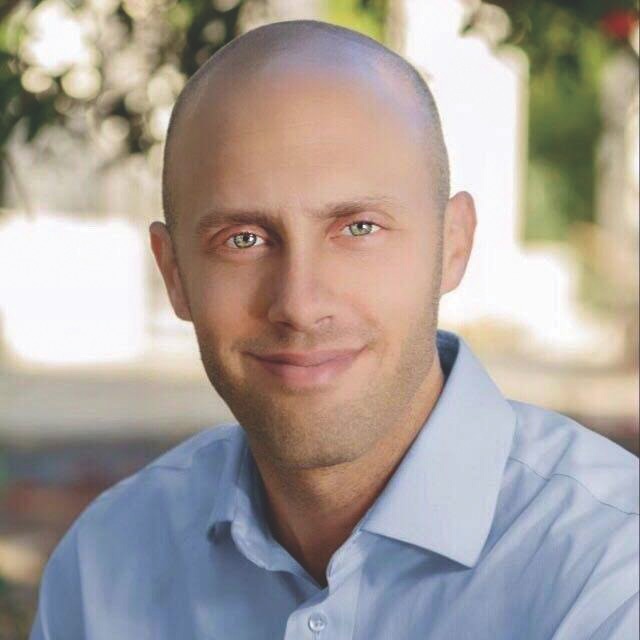
Brimming with intrigue and suspense, Michael Bassin’s outlandish stories make him seem like the lovechild of Dan Brown (“The Da Vinci Code”) and Frank Abagnale (“Catch Me If You Can”).

During a year as a student in the Middle East, he was accused of being a secret agent and threatened by a former Hezbollah fighter in Beirut, who told him: “You’re an Israeli. I can see it in your eyes. I’ve already killed two, and I said once I kill my third, I can die peacefully.”

But for all his capers, Bassin, 32, is really just a nice Jewish boy from Cincinnati with an aw-shucks attitude.

His newly released book, “I Am Not a Spy: An American Jew Goes Deep in the Arab World & Israeli Army,” recounts his exploits during a year in Egypt and the United Arab Emirates (UAE) — peppered with jaunts to Lebanon, Syria, Oman, Kashmir and Jordan — while he was a junior studying International Relations at George Washington University.

While his Jewish day school and Conservative youth group upbringing gave Bassin a solid pro-Israel foundation, it was the relationships he forged with Muslims at his public high school that made him itch to see the other side.

“I wanted to make peace in the Middle East,” Bassin said with the earnestness of a beauty pageant contestant. His role models were people like former American diplomat and Middle East peace negotiator Dennis Ross.

“I also wanted to be the dorky Jew in the room — but without the glasses. I don’t wear glasses,” he said.

So in the summer of 2006, Bassin spent a few months intensively studying Arabic at the American University in Cairo. From there, he went on to spend seven months at the American University of Sharjah, UAE.

After word got out about his Jewish identity in Sharjah, Bassin quickly became something of a cause célèbre. A particularly hostile group of students from the Palestinian diaspora led a crusade against him, he said, spreading the rumor that he was a Mossad agent.

“Yet the more they demonized me, the more popular I became,” Bassin said.

“I showed them the human side of Jews,” he continued. “Propaganda aside, it’s very hard to hate the person sitting in front of you.”

Ironically, Palestinian students from East Jerusalem ended up becoming Bassin’s closest allies on campus. They, too, were viewed with suspicion by other students — especially by those second-generation diaspora Palestinians who had never set foot in either Israel or the Palestinian territories — since they were far more moderate in their attitude toward Israel.

“The fact that they were so utterly shunned by other Palestinian students because they didn’t say Israel and Jews were bad in every way, the fact that they had some nuance to it, made them go in the opposite direction,” he said.

“I wanted to make peace in the Middle East.” — Michael Bassin

He told the Journal of his repeated efforts to strike up a conversation with a beautiful girl in a hijab who always found a way to abscond. “I realized I was having a public relations problem in that people were too afraid to talk to me,” he said.

In an effort to combat his ostracism, Bassin joined the biggest student group on campus, the Palestinian Cultural Club. Although at first he was treated like “the plague,” eventually people became used to his presence, he said. Even Samira, the beautiful girl in the hijab, apologized for being hostile.

“She told me, ‘If I’m going to hate you, I want to do so for my own reasons,’ ” he said. “We ended up becoming extremely good friends.”

Bassin credits his experiences in the Arab world for his decision to make aliyah. Although his time spent in the Middle East made him internalize the fact that human beings are malleable creatures that can learn and grow and affect geopolitical climates, he doesn’t believe this is something that will happen anytime soon.

For Bassin, the next step in his quest to support the Jewish state was to move there and join the military. He was recruited as a combat translator for the Kfir Infantry Brigade. These days, Bassin works as the chief revenue officer in an ad-tech startup in Tel Aviv.

When asked if he ever could see himself embarking on similar adventures again, Bassin smiles.

“I was a kid then,” he said. “I didn’t know my head from my tuchis. But you never know.”

Author’s Goal: Show ‘Human Side of Jews’ Read More »

Israel’s Capital. Duh!

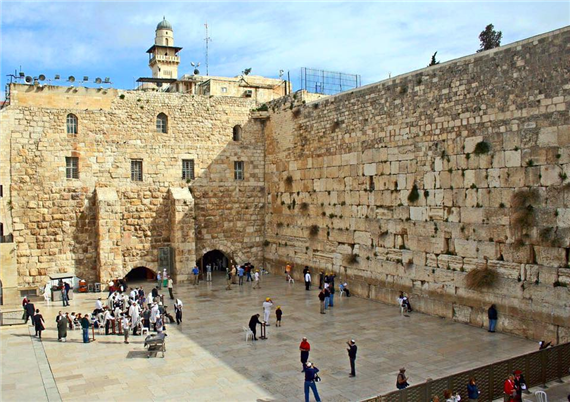
Give President Donald Trump credit for doing the right thing. Give him credit for once using his blunt-mannered approach to do something good. Give him credit for stating the obvious: Jerusalem is Israel’s capital.

Nothing can change this, nothing is supposed to change this. Recognizing Jerusalem as Israel’s capital does not infringe on anyone’s rights, it does not preclude a settlement over Jerusalem in the future, it does not mean that the Palestinians can’t have a claim for parts of Jerusalem. It is correcting a wrong — the wrong notion that Israel should be the only country in the world deprived of the right to establish a capital where it wants it to be.

I know, for some people, giving Trump credit for anything is painful. These people will come up with a pile of excuses as to why the recognition of Jerusalem is wrong, or why it was done at the wrong time, or why it was done in the wrong way, or by the wrong person.

For some people, giving Trump credit for anything is painful.

They would want a Barack Obama or a Hillary Clinton to be the one. They would want a peace deal to be the occasion. They would want Palestinians to accept it, to give their blessing before it is done. They would want it done only under very specific terms that currently seem remote, almost unreachable.

I can easily come up with a similar list and explain why and how such things should be done. But it’s a futile exercise: First, because Trump already made his decision — The New York Times reported that the president told Israeli and Arab leaders of it on Dec. 5, before a planned announcement the following day. Second, because for many of these people, no time would be the right time, and no person would be the right person.

Recognition is important, a moment to celebrate, but we ought to remember that Jerusalem will not change as a result of it. It is still a very poor city. It is unappealing to most Israelis — being too religious, too gloomy, too dirty.

And Jerusalem’s demographic reality is also something to consider. About a third of its residents are Arab. They could potentially elect an Arab mayor and have great impact on Jerusalem’s future. Only they choose to live in denial and pretend that Jerusalem is not Israel’s to keep.

Maybe Israel will not keep all of it forever. As is well documented, previous Israeli prime ministers agreed to compromise in Jerusalem. They agreed to let the Palestinians have their capital in parts of the city. They will have their Jerusalem; Israel will have its Jerusalem. Trump will have an opportunity to twice recognize a capital called Jerusalem.

But truthfully, it is not very likely that he will have such opportunity. The Arab world, predictably, responded to Trump’s decision in its habitual way: rejection, anger, threats, the usual mix of bombast and self-pity that characterizes many of its interactions with all things Israel.

That anger will subside and recognition will be a new reality. It is hard to envision a future American president taking recognition back, or moving an embassy back to Tel Aviv. Not even the Democratic legislators who currently criticize the President’s decision — wrong time, wrong way, wrong person — will take it back. Maybe in a few days, some of them will even come to their senses and agree that cutting this Gordian knot had to be done by a sword.

The Palestinians, if or when their anger subsides, will ask for compensation. They will expect compensation. They will tell their American counterparts that their peace plan must reflect the fact that Israel already got its reward from the administration, and that now it is time for Israel to pay a price for U.S. recognition. Who knows — maybe that’s the plan. Maybe all Trump is doing now is meant to buy credit and goodwill before serving the bitter pill of a controversial peace plan.

But until this happens, give the president the credit he deserves. Give him credit for being a man of his word on this issue. Give him credit for ignoring the threats of the Turks, the French and the Jordanians.

Give him credit for understanding that some bandages should be removed without much hesitation of negotiation or fear of temporary pain. And give him credit for being one of a few number of foreign leaders who throughout history recognized the connection of Jews to Jerusalem.


Shmuel Rosner is senior political editor. For more analysis of Israeli and international politics, visit Rosner’s Domain at jewishjournal.com/rosnersdomain.

Israel’s Capital. Duh! Read More »

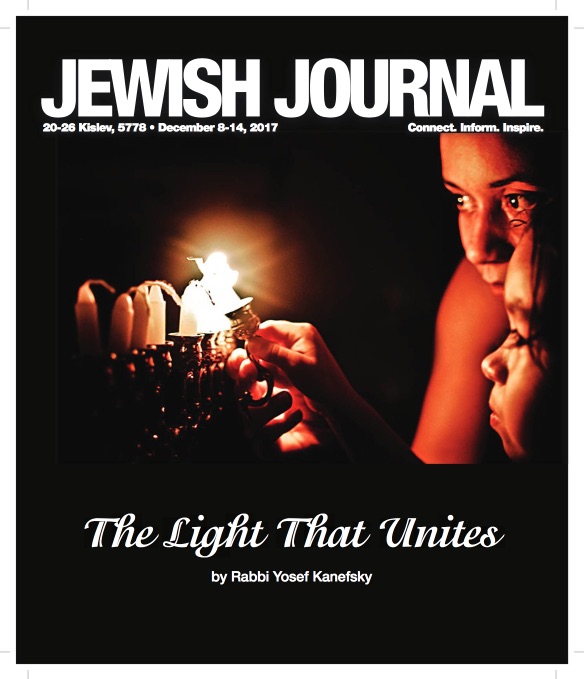
STRONGER TOGETHER: At a time of deep community divisions, Hanukkah holds lessons on the power of unity

On our many trips to Israel, our family had never spent much time in Tel Aviv because most of our friends and relatives live in the Jerusalem area. But a few years ago, when we were planning a visit to see our son, then serving in the Israel Defense Forces, we scheduled a couple of days in the great city on the sea.

I booked a reasonably priced hotel room somewhere near the beach and hoped for the best. To this day, my family teases me for choosing what turned out to be a ghastly choice of accommodations. But my predominant memory of our brief sojourn there is actually quite delightful.

The evening we checked in happened to be the fourth night of Hanukkah. When I walked into the lobby — overnight bag in one hand, Hanukkah menorah in the other — the young man behind the desk politely informed me that hotel policy forbade lighting flames in the rooms. After a brief back-and-forth, he agreed to let us to light our hanukkiah right there in the lobby. Realizing that this was my only option, I accepted the offer. We brought our luggage to the room, then returned to the lobby.

That’s when the unforgettable happened.

The hotel clerk already had laid out some aluminum foil for us, and was standing by, awaiting our return. I set down the hanukkiah and began to sing the blessings, and suddenly was surprised to hear another voice merge with mine: the clerk’s. Suddenly, the small group of people in the tiny lobby of this sketchy Tel Aviv hotel became an unlikely choir of randomly gathered Jews, together praising God for the miracles “in those days at this time.” Some of us had tears in our eyes.

There’s something about Hanukkah. Maybe it’s the arresting appeal of the few and the just overcoming the odds and achieving victory over the mighty many. Maybe it’s the delightful simplicity of the holiday’s main ritual. Perhaps it’s just the time of year. But Hanukkah generates a sense of Jewish unity, of Jewish solidarity and community, as no other occasion on the calendar does.

In wistful moments, we wish things could be this way more often, that the religious, ideological and political fault lines that divide us could become less deep and jagged, that our disputes could be the “arguments for the sake of heaven” that historically gave our people vitality, not poisonous discord. If only Hanukkah were a few hundred days longer.

If we listen closely to Hanukkah, though — to its story and its laws — we discover that it offers indispensable wisdom about how to hold together a community of differences, and about how a community that doesn’t agree on every issue still can learn to live and sing together.

It’s not widely understood why Judah the Maccabee and company specifically chose the 25th of Kislev as the day to rededicate the ancient Temple. The Syrian-Greeks had been successfully driven from Jerusalem months earlier, during the summer of 163 C.E. Yet Judah waited to rededicate the Temple, refraining from bringing his victory to its climax.

The group of people in the tiny lobby
of this sketchy Tel Aviv hotel became an unlikely choir of randomly gathered Jews.

The theory is that he delayed out of a desire to preserve the nation’s unity. The Chasidim of that era were traditionalist Jews who had joined the Maccabees’ resistance, ultimately deciding that the Maccabees’ cause justified fighting even on Shabbat. They also believed fervently that the human efforts to recapture Jerusalem would be capped by the fulfillment of messianic prophecies that God would make Himself known, and the End of Days would commence. So they asked Judah to wait for God to restore the Temple to its prior purity, confident that this would happen during the holidays in the month of Tishrei.

Judah himself believed that the Maccabees’ victory was supported by God, but ultimately engineered by humans. Nonetheless, in deference to the request of the Chasidim, he held off, hoping that the Temple’s rededication would bring together all the Jews in celebration. But when Sukkot ended, on the 22nd of Tishrei, no divine act had occurred.

The Chasidim again asked Judah to wait. Because of the upheavals wrought by Antiochus’ decrees, the Jewish calendar had not been intercalated for several years, so it could be as much as two months out of sync. Again, Judah honored their request, waiting until the 22nd of Kislev. When Divine intervention still hadn’t come, he declared that in three days — exactly three years after the Temple’s desecration — the menorah would be lit and the Temple re-consecrated to God.

It’s possible that if Judah simply had lit the menorah months earlier, over the objections of the Chasidim, Hanukkah never would have come to be. It might have become mired in Jewish sectarian controversy, and we would have lost the story and all that it has come to represent. Judah’s wisdom of waiting was the wisdom of recognizing that Jews interpret the world — and God’s role in it — differently. Judah understood that the greater our ability to hear and honor many voices, the greater the likelihood that we would be able to establish a calendar and to practice sacred rituals that unite us all.

Another piece of advice about how to hold together a community of differences comes from a legal discussion that plays out in the pages of the Mishnah. In many ways, it is the necessary complement to the lesson we drew from Judah Maccabee.

The Mishnah tells of a shopkeeper who, in accordance with halachah (Jewish law), lights his Hanukkah light just outside the door of his shop, which is also his home. When a camel laden with flax passes through the narrow street, the candle sets the flax aflame, and property is destroyed in the resulting fire. The Mishnah asks: Who is liable for the property damage? The flame lighter or the camel driver?

The Mishnah’s majority opinion (known as the Sages) applies the general rule that governs such matters: Anyone who puts a flame in a public thoroughfare is responsible for damages that may result. One Sage disagrees — Rabbi Yehuda. He argues that the shopkeeper should be held blameless because the laws of Hanukkah authorized him to place the flame in the potentially hazardous place.

The Mishnah doesn’t elaborate further on the reasoning behind the two opinions. But other rulings in the Mishnah might offer some insight. The Sages could point to the Mishnah that says that a homeowner is allowed to dispose of water that has accumulated in the home’s courtyard by pouring it into the public domain, and yet if anyone in the public domain should slip on that water, the homeowner is liable. Our deeds sometimes produce unintended consequences for others. When they do, even if our actions are legally permitted, we bear responsibility for those results. The same principle applies to the person who lights the Hanukkah light in a narrow street.

Rabbi Yehuda might object, strenuously distinguishing between emptying water from a courtyard (a discretionary act) and kindling the Hanukkah light (a commanded one). He would find support in a talmudic discussion about another topic: a person who runs through a crowded marketplace. The Talmud says that if the running person carelessly collides with a person who is walking, the runner is liable for damages — unless it happens to be a Friday. Why? Rabbi Yehuda would assert it’s because, on a Friday afternoon, the person is running through the marketplace for the sake of a mitzvah: preparing for Shabbat. And Jewish law cannot simultaneously mandate that you perform an action and also hold you liable for harm that might result. Wouldn’t the same apply to the mitzvah of lighting the Hanukkah light just outside one’s home?

In the end, though, the law follows the opinion of the Sages. Everyone who enters the marketplace on a Friday afternoon knows that people will be rushing, and implicitly accepts that risk. But when it comes to Hanukkah, the law requires only that the Hanukkah light be lit for half an hour. That’s a short enough time that a person who lights in a narrow street should stay nearby and keep close watch. There is no blanket exemption for a person doing a mitzvah.

Here is Hanukkah’s second lesson in preserving and encouraging communal unity. We need to reject the idea that being engaged in the performance of a mitzvah renders a Jew less responsible to those around him or her. To be sure, performing ritual mitzvot requires great attention to detail and we want to fulfill them in accordance with the law. It’s also true that within families and communities, people’s varying interpretations and religious practices can lead to tension, conflict and hurt feelings. The result is that moments that ought to be celebratory and filled with love instead become sources of resentment and division.

The Sages are teaching that when you’re performing a mitzvah, you need to be more — not less — conscious of those around you, and more — not less — sensitive to other people’s needs and welfare. That is not to say that every difference that arises has a neat and simple solution. We all know from personal experience that Passover seders and Shabbat dinners, weddings and even funerals can generate deeply rooted philosophical disagreements among the people who are trying to mark these events together. The important point is this: When we are engaged in performing a ritual mitzvah, we are also engaged in the interpersonal mitzvot of understanding the impact of our actions upon others, and taking responsibility to be sure that our Jewish decisions don’t bring injury to those around us.

If we listen closely to Hanukkah, we discover indispensable wisdom about how to hold together a community of differences.

A final insight arises from the situation in which a person is away from home on Hanukkah. According to Jewish law, a traveler may light the hanukkiah wherever he is sleeping, but the person isn’t obligated to light if his family back home is doing so. Still, even if the traveler isn’t lighting, if she should happen to see a lit hanukkiah, then she should recite the second of the two Hanukkah blessings, praising God, “who has wrought miracles for our ancestors in those days, at this time.”

What’s remarkable is that the traveler doesn’t need to know the identity of the lighter, and the lighter need not be conscious of the presence of the traveler. The two can share the light of the Hanukkah candles simply through the assumption that all of us are perpetually eager to help and support one another. Whatever our Jewish disagreements may be, we embrace thtis fundamental tenet of Jewish peoplehood. If there’s a way that we can support one another’s Jewish lives and journeys, then it should be our honor to do so.

“All of Israel are responsible to one another” is not an empty maxim, but a motto that should guide our lives. Each night of Hanukkah can be a moment of rededication to this principle if we remain conscious that we are lighting not only for ourselves and for our families, but for all of our fellow members of the tribe, whoever they are, wherever they reside and however they live and love their Judaism. Indeed, there may be no better place to wind up on the fourth night of Hanukkah than in the lobby of your accidental Tel Aviv hotel.

There’s something about Hanukkah. It generates a vibe of Jewish unity, of Jewish solidarity and community, as no other occasion on the calendar does. If we will it, the vibe of Hanukkah can become the vibe of Jewish life.


Rabbi Yosef Kanefsky is rabbi of B’nai David–Judea Congregation.

STRONGER TOGETHER: At a time of deep community divisions, Hanukkah holds lessons on the power of unity Read More »

The Dazzling Idea of Hanukkah

“What is Judaism?” asks Rabbi Jonathan Sacks. “A religion? A faith? A way of life? A set of beliefs? A collection of commands? A culture? A civilization?”

It is all of these, he responds, but something more — a “constellation of ideas.”

Judaism values the power to think. The rabbi describes our tradition as “a dazzlingly original way of thinking about life.”

In our Twitter-crazy world of radical polarization, are we losing this power to think? It often feels like it. We seem to always be in combat mode. We want to catch our opponents in a mistake, crush them with our talking points. Instead of valuing ideas, we value clever arguments. Above all, we want to be right.

Great ideas, though, are not about being right. They’re meant to enlighten, not bludgeon. They seek to open minds, not change them. They inspire thought, not angry passion.

Great ideas are not about being right. They’re meant to enlighten, not bludgeon.

Among his favorite ideas, Sacks quotes the American Declaration of Independence and its key sentence: “We hold these truths to be self-evident, that all men are created equal, that they are endowed by their Creator with certain inalienable rights, that among these are life, liberty and the pursuit of happiness.”

While claiming that “this is arguably the most important sentence in the history of modern politics,” Sacks notes the irony that “these truths are very far indeed from being self-evident. They would have sounded absurd to Plato and Aristotle, both of whom believed that not all men are created equal and therefore they do not have equal rights.”

The transformational idea of human equality, Sacks explains, can be self-evident only “to someone brought up in a culture that had deeply internalized the Hebrew Bible and the revolutionary idea set out in its first chapter, that we are each, regardless of color, culture, class or creed, in the image and likeness of God. This was one of Judaism’s world-changing ideas.”

Yes, ideas can change the world, but they can also change us.

One of my favorite ideas in Judaism is how we extract deep wisdom from our holidays. Digging for meaning is integral to the observance of rituals. We don’t just fast, pray or sit around a festive table. We’re supposed to go deep, find life lessons, ask big questions: How can these rituals help us grow? How can they bring us closer? How can they add meaning to our lives?

In our cover story this week, Rabbi Yosef Kanesfsky goes deep to find meaning in the quirky holiday of Hanukkah. If there’s one Jewish holiday that can use such an excavation, it’s surely the festival that has been so trivialized by its modern playfulness — by the dreidels and gelt and jelly doughnuts and latkes and Adam Sandler songs and those nightly gifts for the kids.

Beyond the fun stuff — which we should never undervalue — there’s spiritual gold to mine, and Kanefsky goes digging for the gems. Some of those gems speak directly to issues our community is facing.

“If we listen closely to Hanukkah,” he writes, “to its story and its laws, we’ll discover several indispensable pieces of advice that it offers — advice about how to hold together a community of differences, and about how such a community can learn to live and sing together, despite not always agreeing about every issue that arises.”

In his search, Kanefsky explores why Hanukkah falls so late after the great victory it commemorates. Why did Judah the Maccabee and company specifically choose the 25th of Kislev as the day to rededicate the Temple, even though the Syrian-Greeks had been driven out of Jerusalem months earlier, during the summer of 163 C.E.?

If there’s one Jewish holiday that can use such an excavation, it’s surely the festival that has been so trivialized by its modern playfulness.

“Judah’s wisdom of waiting,” Kanefsky writes, “was the wisdom of recognizing that Jews interpret the world and God’s role in it differently, with resultant differences in how to commemorate and observe significant events. And he understood that the greater our ability to hear and honor many voices, the greater is the likelihood that we will be able to establish a calendar and to practice sacred rituals that unite us all.”

That’s just to give you a taste of the spiritual gems that lurk beneath the dreidels and latkes. They’re part of that “constellation of ideas” Rabbi Sacks speaks about when conveying the compelling nature of the Jewish faith.

“Too few people think about faith in these terms,” Sacks writes. “We know the Torah contains commands, 613 of them. We know that Judaism has beliefs. Maimonides formulated them as the 13 principles of Jewish faith. But these are not all that Judaism is, nor are they what is most distinctive about it.”

What is distinctive is a “dazzlingly original way of thinking about life.”

In this issue, we offer you a dazzlingly original way of looking at Hanukkah. But don’t worry, we also have some great food and gift ideas.

Happy Hanukkah.

The Dazzling Idea of Hanukkah Read More »

Week of December 8, 2017

Week of December 8, 2017 Read More »

Who Will Protect Children From The Morally Bankrupt Palestinian Children Protection Act?

Killing children, no matter the number, is the ultimate crime against the present and future. The Jewish people having suffered the unfathomable blow of having a generation of their children—1.5 million futures wiped out by the Nazis during the Holocaust—are acutely sensitive to this issue.

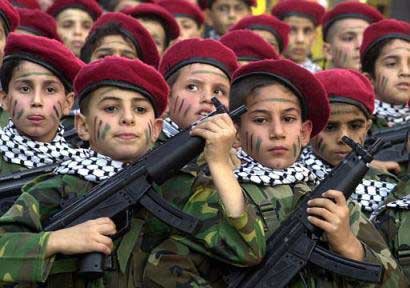
But how to react when adults entomb children to dig tunnels on a mission-to-murder other children? What to do when those in power groom youngsters to be the next generation of human shields, or axe wielders, or suicide bombers?

US Representative Barbara McCollum’s (DFL-Minn.) answer is to blame Israelis when they have no choice but to do what they did  a few weeks ago with the shooting of a 17 year-old Palestinian after he nearly murdered a 35-year-old father, injured a 70-year-old Jew standing at a curb and tried to stab other Jews near the community of Efrat.

Just before Thanksgiving, Representative McCollum introduced a House bill 4391, to restrict U.S. aid to Israel if “Israeli military forces or police” engage in “physical violence” or use “military detention” against Palestinians under the age of 18. In other words, should it become law, the next terrorist attack, just like the one in Efrat, would likely trigger a U.S. aid cutoff against Israel, our only reliable Mideast ally, for the crime of defending its citizens every time a Palestinian kid, indoctrinated with hate tries to murder or maim an Israeli.

The use of Palestinian children to carry out terrorist attacks against Jews in the Holy Land actually predates the 1948 Israel War of Independence. In Armies of the Young: Child Soldiers in War and Terrorism, David M. Rosen shows how during the Arab Revolt of 1936-1939, the Grand Mufti of Jerusalem modeled his lethal child soldiers after the Nazis’ Hitler Youth.

Last year, Representative McCollum was silent when on January 17, 2016, 16-year-old Morad Abdullah Adais broke into the home of Dafna Meir, mother of six children 4 to 17, in the town of Otniel, armed with an 8-inch knife. Later he bragged, “I plunged the knife into her so deeply that most of it was inside her body. She started screaming, the children saw me and also started screaming, then I stabbed her in her upper body another three or four times. She tried to fight me and tried to take the knife from me. The two children who were there were still screaming, but she continued to resist, so I pushed her, and overpowered her.”

Under McCollum’s bill the Israeli army’s arrest of Adais would likely also be deemed “illegal and abusive.”

Hamas doesn’t even try very hard to hide its criminal and systematic abuse of Palestinian children. A televised video is available for anyone to see children from ages of 3 to 5 dressed like suicide bombers, 10 to 13 year-olds embracing a collective death wish, while 14-year-olds prepare for suicide attacks, sometimes wishing farewell to their beaming parents.

The UN-backed Coalition to Stop the Use of Child Soldiers tries to redress such human rights abuse that spans the globe from Africa to Southeast Asia. Indeed, even the UN Security Council designated a “Red Hand Day” to highlight such ultimate serial abuse of children. Yet Hamas openly commits war crimes, not only by targeting Israeli toddlers with rockets, but against Palestinian children who are sacrificed as “human shields.” Hamas and the Palestinian Authority, leverage control of the school curricula, the mosques, and TV to promote a culture that reveres death over life, that prepares youngsters for the next war.

Already in 2012, journalist Nicolas Pelham, no friend of Israel, wrote in The Journal of Palestinian Studies, condemning a “cavalier approach to child labor and tunnel fatalities [that has] damaged the [Palestinian] movement’s standing with human-rights groups, despite government assurances dating back to 2008 that it was considering curbs”. During a police patrol that the author was permitted to accompany in December 2011, nothing was done to impede the use of children in the tunnels, where, much as in Victorian coal mines, they are prized for their nimble bodies. At least 160 individuals have been killed in the tunnels, according to Hamas officials.

Far from imitating the song lyric about constructing a “stairway to paradise,” Hamas prefers to build tunnels to hell.

Embarrassed by revelations, such as Pelham’s about high casualties against child suicide tunnel builders, Hamas decided that the best defense is a good Big Lie offense. It launched a new PR campaign to coincide with Israel’s upcoming 70th anniversary- accusing the Israel Army for “crimes” of killing innocent Palestinian children. No mention of Hamas’ child recruits for violence and terrorism.

Whatever her motivation, McCollum and her nine co-sponsors unfortunately are serving as willing instruments of Hamas’  inversion of this awful truth.

And now, the promised Palestinian “days of rage” over President Trump’s decision to recognize Jerusalem as Israel’s capital. To be sure, it will be young Palestinians that the “brave” leaders of Hamas and Fatah will use as cannon fodder for their bloody photo ops. So the real question remains: Who will finally stand up and demand that Palestinian youth really be protected– from their corrupt and cynical leaders and from the morally bankrupt “Protection Act”?


Rabbi Abraham Cooper is Associate Dean and Director of Global Social Action of the Simon Wiesenthal Center. Dr. Harold Brackman, a historian is a consultant to the Simon Wiesenthal Center.

Who Will Protect Children From The Morally Bankrupt Palestinian Children Protection Act? Read More »

Jerusalem is ours. Period. 10 comments

1.

Not every article makes you popular with all readers, as is evident from the long trail of comments following my New York Times article from yesterday. In this article I raised several points, but let me begin with a few sentences:

It would be a great exaggeration to argue that Mr. Trump bears much resemblance to Harry Truman. But the president — often criticized for being blunt and never shying away from saying what he wants to say — will have his Trumanesque moment by refusing to pretend that Israel has no capital.

Truman recognized the State of Israel. Trump will recognize the capital of Israel. In both cases, Israel’s neighbors refused to accept reality. But it did not matter. Israel exists, Jerusalem is its capital.

2.

What I explained in the article, and many readers did not understand, is that there are two pillars on which to base a recognition of Jerusalem as Israel’s capital.

There is the undeniable historical connection of Jews to Jerusalem as their historical capital.

And there is reality: Israel controls Jerusalem, its government is in Jerusalem and it is not going to let this reality change.

These two facts ought to be enough.

3.

My column for the Jewish Journal this week, which you will be able to read in the print edition, begins in this way:

Give President Trump credit for doing the right thing. Give him credit for once using his blunt manner, and cut-through-bullshit approach, for doing something good. Give him credit for stating the obvious: Jerusalem is Israel’s capital. Nothing can change this, nothing is supposed to change this. Recognizing Jerusalem as Israel’s capital does not infringe on anyone’s rights, it does not preclude a settlement over Jerusalem in the future, it does not mean that the Palestinians can’t have a claim for parts of Jerusalem. It is correcting a wrong — the wrong notion that Israel should be the only country in the world derived from the right to establish a capital where it wants it to be.

4.

Note this sentence: “Recognizing Jerusalem as Israel’s capital does not infringe on anyone’s rights.”

Trump is not saying that Jerusalem cannot be the capital of a future Palestinian State. He does not say that no compromise in Jerusalem is necessary. He does not preclude any future option for a settlement. The Palestinians and other Arab countries are angry not because calling Jerusalem Israel’s capital complicates the peace process. They are angry because they do not want Jerusalem to be Israel’s capital — some of them probably even see it as a cultural or religious insult.

5.

I’ll say it again in a different way: It is not Trump’s recognition that complicates the peace process. It is the unjustified anger of Arabs that complicates the peace process.

6.

For those who want to deal with the nuances of diplomatic language rather than celebrate a symbolic moment of recognition, I’d suggest reading David Makovsky and Dennis Ross of the Washington Institute. They say something similar to what I just said, only better:

[Trump] should make clear that his declaration is not about determining Jerusalem’s final status or boundaries, and that such decisions must still be made through direct negotiations between Israelis, Palestinians, and Arabs (including Jordan, whose role regarding the holy sites was recognized as part of its peace treaty with Israel). In other words, he should simply recognize that Jerusalem will always be Israel’s capital, even if claims about its exact contours can only be resolved through peace talks.

7.

I also hinted in my NYT article that Israel will not be intimidated by the threat of violence. Some readers thought this was a problematic assertion. But it’s not. Every country has issues over which it is willing to accept the need to withstand violence. Every country with a minimum of self-pride would accept the need, if challenged, to withstand violence in order to guard its capital.

8.

You might not care what Israelis think — because they are clearly biased. But note that a vast majority of them, including representatives of all parties except leftist Meretz and the United Arab List, support the recognition of Jerusalem. On this issue, there is (almost) no right and left. The Labor Party supports it, the Jewish Home Party supports it.

9.

Jerusalem will not change as a result of a declaration. It is still, in many ways, a problematic city in need of wise municipal policies.

10.

In the study I wrote not long ago for The Jewish People Policy Institute on Jerusalem and the Jewish people we (me and John Ruskay, co-head of this project) wrote the following:

A clear majority of engaged Jews the world over believe that “all countries ought to move their embassies to Jerusalem.” A small majority of engaged Jews the world over agree that Jerusalem “should never be divided.” A significant majority wants it to be a city “with a clear Jewish majority,” and that “the Temple Mount must remain under Israeli jurisdiction.” However, in a seemingly contradictory statement, a small majority also argues that “Israel should be willing to compromise on the status of Jerusalem as a united city under Israeli jurisdiction.”

I think that covers it all – and it’s all backed by research and data. Jerusalem is our capital. Period. And some of us are also willing to make a compromise in Jerusalem to get peace.

Last and maybe least

Yes, I believed Donald Trump when he vowed to move the embassy. The proof is online.

Why did I believe him? As I wrote more than a year ago, because I thought he is quite serious about many of the promises he made during the campaign. Also, because (as I wrote) moving the embassy is not complicated but highly visible – namely, it is an action that further establishes Trump’s intention to depart with American orthodoxy.

Jerusalem is ours. Period. 10 comments Read More »

Jewish Holidays: Tools That Will Make the Holidays a Little Easier

The holidays are approaching. This can mean different things for families, such as spending time with each other, shopping, or observing Jewish traditions.

Still, no matter how much one prepares, the holidays can be a little stressful. The following are interesting tools Jewish families have at their disposal to make things a little easier during the holidays.

Calendar Days

One of the most useful tools available today is the Jewish Days app. This application can be downloaded on most smart devices and helps people track special Jewish holidays.

It is okay to admit that some of these days are hard to keep track of, and the app tracks these days for you so you are never caught off guard. The app also allows you to add additional notes should there be something worth noting this year.

Proper Storytelling Tool

Getting the days right is just one thing to worry about. Others worry about telling the Haggadah Passover story. The story is normally condensed, but telling it in front of family and friends can still be intimidating.

This is why the Haggadah for Passover application can be useful. It outlines the story to ensure that it is told correctly, and it also tells the user when to drink from the cup of wine.

It makes the moment easier and makes you feel more confident, which is ultimately what everyone wants. All you have to do is type in the name of the app on your app store.

Gifting Help

You have a lot to worry about, from entertaining guests to updating family with all the information they might be interested in. On top of this, you still have to purchase the right gifts.

Another tool worth adding to your list is BestAdvisor, which allows you to browse through hundreds of gifts. This might not seem too useful at first, but what makes this tool unique is that it aggregates reviews from real people so that you get exactly what you were looking for.

You can also check on the present you are considering seeing how others have rated it before deciding on it.

The Cleanup

Preparing the house for the holidays can be a little overwhelming, but it can be a family affair if you want it to.

Getting rid of all Chametz can be challenging, but there are a number of tools out there that you can use to make this a little easier. For example, there is the No Chametz tool, which is an easy app to install and use.

The tool helps you find out what is Chametz, which can be confusing in this day and age. You should also receive a link that shares information. You will be able to sell things while still observing traditions.

Kosher Eating App

You got rid of all the Chametz, but that does not mean your work is done. Now, you have to make sure your food is acceptable for the holidays. It used to be quite difficult to ensure all food was Kosher, but that is becoming easier.

One tool that is making things easier for families across the country is the cRc Kosher application. The tool lists a number of foods that are considered Kosher. Another effective tool to consider is the OU Kosher application that helps you shop at the grocery store since it tells you if a product is Kosher or not.

Technology is making things easier for people, including Jewish families. Granted, these are just some of the tools out there, so do not be afraid to search your app store to look for other tools worth exploring.

Jewish Holidays: Tools That Will Make the Holidays a Little Easier Read More »