fbpx

December 6, 2017

In film ‘Azimuth,’ Enemies Face Eye to Eye

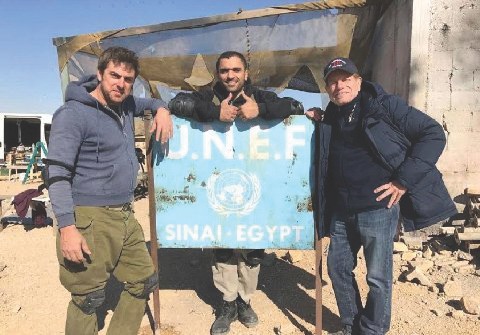
“Azimuth” is an impressive addition to a subgenre of war films in which two enemy soldiers start out by trying to kill each other and end up laying down their arms after recognizing each other’s humanity.

The film, in Hebrew, Arabic and English, is also an unlikely first feature for Mike Burstyn, who made his debut at 3 on the New York stage with his parents, celebrated Yiddish actors Pesach Burstein and Lillian Lux.

Over the years, Burstyn, 72, has displayed his dancing and multilingual singing and acting talents, hopping between the United States, Israel and other countries, on stage, screen, television and in concert halls and nightclubs.

Given his age and continued success in his accustomed media, few might have envisioned Burstyn as writer-director-producer of a serious and humane antiwar film on a conflict as complex and emotional as the battles between Israel and Egypt.

The film opens in the last hours of the Six-Day War in 1967, with hellish scenes of machine gun, tank and aerial fire, and closes in on a wounded Egyptian soldier, painfully crawling in the Sinai desert.

Out of sight but not far away, four Israeli soldiers try unsuccessfully to extract their truck stuck in the sand, until the sergeant in charge decides to take off in the accompanying jeep to look for help. Before his communications go dead, he hears a bulletin that the war is over.

And so the scene is set for Sergeant Moti (Israeli actor Yiftach Klein) and Private Rashid (Egyptian actor Sammy Sheik) — whose real-life fathers fought each other in the actual Six-Day War — to simultaneously seek shelter in a shell-pocked, two-story blockhouse, abandoned in the desert by United Nations forces.

During the film’s next hour, Moti and Rashid try to kill each other by rifle volleys, hand grenades and hand-to-hand combat. Both antagonists communicate in passable English, and early on Moti tries to convince Rashid that the war is actually over, to which the Egyptian replies, “Yes, and I am Moshe Dayan.”

The standoff is interrupted by flashbacks from their lives. In one, Moti receives his mobilization orders in the midst of celebrating his son’s bris, while in another, Rashid, having just returned from fighting in Yemen, consoles his wife that “this time we will beat the Jews.”

In the end, the two antagonists realize that the only way they will survive, and see their families again, is by helping each other.

Burstyn recalled in an interview that as far back as 1967, after serving in an entertainment troupe during the Six-Day War, he played with the idea of making a film showing the “humane” side of war.

The film opens in the last hours of the Six-Day War in 1967, with hellish scenes of machine gun, tank and aerial fire.

At about the same time, a friend gave him the synopsis of a story outlining a theme similar to what would become “Azimuth.” Burstyn kept the story in a trunk and at the beginning of this year, with the looming 50th anniversary of the 1967 war and Burstyn having passed the biblical age of 70, he took another look at the story and decided to set off on a new career.

The film went into pre-production in January of this year, with the desolate Mitzpe Ramon crater in the Negev desert standing in for the Sinai Peninsula as the filming site.

The cast and crew wrapped up shooting in March and the film was ready to go in June.

Looking back on his work of the past few months, Burstyn said, “It took a lot of chutzpah on my part to write and direct a movie for the first time. But I enjoyed it so much, that’s what I want to do in the future.”

The film has not been shown publicly in Israel, but it was screened in July in India at the Calcutta International Cult Film Festival, where it won the award for best narrative feature.

It will have its American premiere on Dec. 15 at the Laemmle Town Center 5 in Encino and continue for a one-week Academy Award-qualifying run. During that week, Burstyn will join the audience for Q-and-A sessions after the daily 7:45 p.m. screenings.

In film ‘Azimuth,’ Enemies Face Eye to Eye Read More »
Doctor Steps Up to Keep the Religion in Circumcision

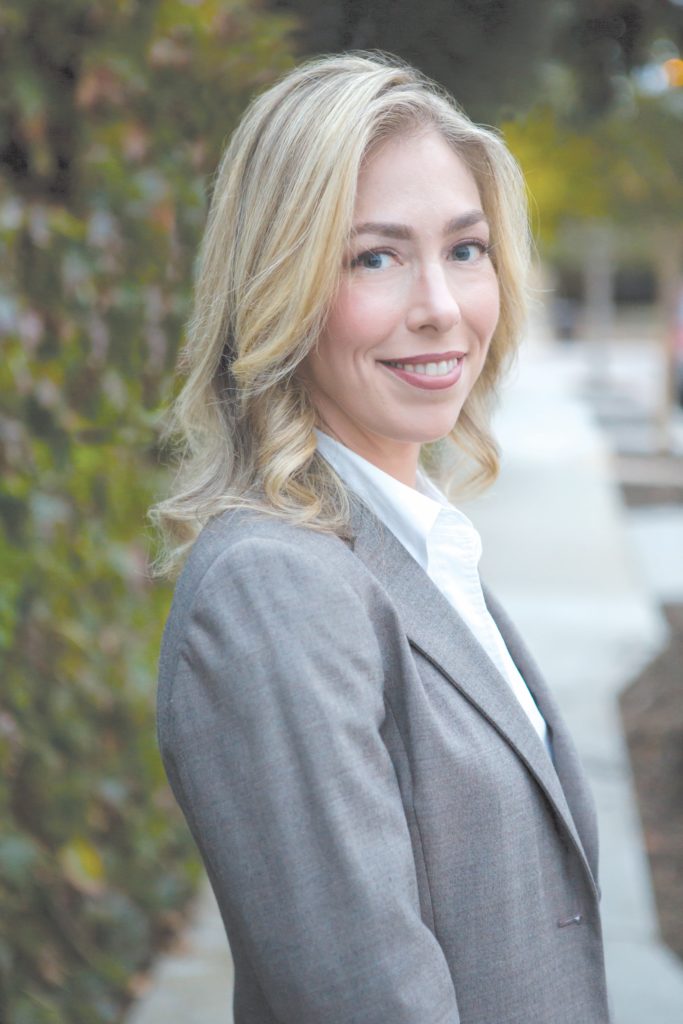
When she became a physician, Hadar Waldman expected to improve the quality of people’s lives — but she never expected religion to be part of that equation.

Then she became a mohel or, more precisely, a mohelet — joining a rarified group of American physicians certified in Jewish ritual circumcision.

But being a woman in this role is a tricky proposition. While liberal Jews have long been comfortable with female mohelim performing circumcision, more traditional Jews still prefer a male.

At 42, Waldman specializes in obstetrics and gynecology and has a private practice in Century City. Born in Israel, she bopped around the United States to accommodate her father’s work as a doctor, living in Atlanta, Baltimore and Cincinnati, before landing in New York to attend a pre-med program at Columbia University. She describes herself as “your typical Israeli-American Southern New Yorker with Midwestern roots.”

“There was a true need in the community for someone who was a physician and a surgeon, and also a woman and a mother.” — Hadar Waldman

After graduating from Sackler School of Medicine in 2006, she began her residency at Staten Island University Hospital, where she performed routine circumcisions on newborn boys.

“Today 60 to 70 percent of the American population is circumcised,” Waldman said. “People who are not Jewish circumcise their babies all the time.”

Non-Jewish couples would cite cultural or cosmetic reasons for wanting the procedure. Most Jews, on the other hand, especially the large Orthodox clientele at Staten Island, preferred the traditional circumcision — a brit milah with a mohel. So it wasn’t until Waldman moved to the West Coast and started her own practice that she noticed how many secular Jews were choosing hospital circumcisions and forgoing the Jewish ritual entirely.

“I became aware that a lot of my Jewish patients were opting out of brit milah ceremonies because they preferred a doctor to perform the circumcision in a hospital, which they perceived to be a safer environment,” Waldman said. “Over time, this troubled me because I saw it as missed opportunity. Too many boys were not entering the covenant of Judaism.”

Last February, Waldman enrolled in the Brit Milah Program of Reform Judaism, a 12-week video-conferencing course that trains Jewish medical professionals around the world to perform brit milah. The program has existed since 1984, and executive director Rabbi Julie Pelc Adler said, “Women participated right away.”

“I don’t remember if a woman was in the very first class,” Adler said, “but I don’t think there was ever a moment when women weren’t invited or encouraged to participate.”

Although there is no halachic prohibition against women performing brit milah, it is incumbent upon the male because Abraham was required to circumcise himself and his sons. However, another precedent was set when Moses’ wife, Ziporrah, circumcised their son to quell God’s wrath toward Moses for neglecting to do it himself.

Last August, Waldman performed her first ritual circumcision. “The way I do it is as compassionate as possible,” she said, noting the cultural debate over genital mutilation. “I do believe in using local anesthesia, a small amount of lidocaine locally, and I give the baby a sugar water solution to comfort him as much as possible.”

She has since performed an additional six ritual circumcisions for local Jewish families. “There was a true need in the community for someone who was a physician and a surgeon, and also a woman and a mother.”

Waldman said being a mother of two has attuned her to the emotional experience of a fraught religious rite. “First-time parents in particular find the whole birth process very overwhelming, and I felt like the brit milah was really no different,” Waldman said. “I am skilled in being able to calm parents. As a doctor, I can prepare my patients for uncertainties; and as a mother, I understand their fears.”

Waldman said she also has been affected by serving as a shaliach, or emissary, for the sacred ritual.

“I never thought of circumcision as emotional or spiritual when I did the surgical procedure in the hospital, but seeing the emotional reaction of these families has been really rewarding.”

Doctor Steps Up to Keep the Religion in Circumcision Read More »

Israeli Troubadour Is All About Harmony

Don’t call Gabriel Meyer Halevy’s 90-minute gatherings — filled with spiritual music and storytelling — performances. He prefers “prayer-formances.”

A committed Israeli social activist in the guise of a holy leprechaun — down to his chic vest and long scarf — the pony-tailed 51-year-old recently played guitar at an intimate gathering at a house in Eagle Rock, where he sang his own compositions in English, Spanish and Hebrew, with snippets of Arabic, Tibetan and other languages thrown in.

The motif in all his songs and stories is that we’re all human and should live in harmony — perhaps not surprising coming from the son of the late Rabbi Marshall Meyer, arguably the most significant figure in Latin American Jewry in the 20th century.

Meyer Halevy’s music consists of chants, prayers and joyful noises all rolled into one — as it probably was millennia ago when music first developed as a response to the mysteries of nature. While he recounted touching personal memories of peaceful gatherings with Jews and Muslims, Israelis and Palestinians, Christians, Hindus, Buddhists, atheists and even the Dalai Lama, he urged attendees to connect with one another as fellow humans sharing a fragile planet. By the time he finished, he had connected with a roomful of people who were dancing and singing, former strangers with their arms around one another.

Meyer Halevy was born and raised in Argentina, the son of Marshall Meyer, a tall and charismatic American rabbi who lived in the South American country for 26 years and revitalized Judaism there. He led a popular synagogue in Buenos Aires, founded Latin America’s first rabbinical seminary, started summer camps and other Jewish educational institutions, spearheaded the rise of Conservative Judaism in Latin America and, putting his life at risk, was a leader in the fight for human rights. In the early 1980s, after the fall of the junta responsible for 30,000 Argentine deaths, 1,700 of whom were Jews, he was on the commission that investigated what was known as the Dirty War.

Subsequent democratic governments in Argentina awarded Marshall Meyer the country’s highest honors, and after his death in 1993, a plaza in Buenos Aires was named for him.

Gabriel Meyer Halevy told the Journal that some of his earliest memories are of being with his father at the seminary, now called the Marshall Meyer Rabbinical Seminary. “My father would take me to his office,” Meyer Halevy said, “and I played with toys under his desk, and he would receive important visitors like Zubin Mehta, conductor of the Israel Philharmonic, or the Israeli ambassador.”

Meyer Halevy has poignant memories from his pre-teen years, as well: welcoming, at home, the Mothers of the Plaza de Mayo, women whose children had disappeared, as well as those whose lives were in danger and hiding from the government. “Often, I’d come home from school,” Meyer Halevy said, “and there’d be people trying to escape from the dictatorship.”

Meyer Halevy’s music consists of chants, prayers and joyful noises all rolled into one.

By the time he was 16, Meyer Halevy joined his father in human rights work. “I grew up with it and feel connected to that message. Of course, my dad and I are different generations — he was brought up in the 1940s with suits and ties and did the university thing, which I didn’t.”

Instead of college, Meyer Halevy wrote for “an Argentine underground magazine and was into theater. But the message and the work I do [now] in sacred activism is directly related to what I got from my dad.”

Since the 1990s Meyer Halevy has made his home in Israel, where he has been involved in many human rights ventures. He was co-founder of the Sulha Peace Project, which brings Jews, Christians and Muslims together so they can experience “their common humanity.”

In “Human,” the opening song on his CD, “The Human Project,” the singer says he is red, yellow, black and white, and that he’s of all religions and nationalities. In other words, that he’s human.

“That’s the vision that has kept me going throughout the years,” Meyer Halevy said. “Keeping the human family in heart and the global family, and the fight for life in all its forms. … It’s a holistic model I learned from my dad.”

Israeli Troubadour Is All About Harmony Read More »

Milken Mourns Loss of Beloved Teacher

Tony Lawrence didn’t have any family in Los Angeles, so the teachers and students at Milken Community Schools became one for him. As he lay on his deathbed Nov. 29 at UCLA Medical Center, Santa Monica, more than a dozen teachers and administrators filled the room. It was so crowded, the nurses could barely get in.

After a yearslong battle with lung cancer, Lawrence could no longer speak, and it was unclear how much he heard or understood. But his friends and colleagues, including Milken Head of School Gary Weisserman, chatted and read text messages aloud as they came in from those wishing Lawrence well, until sometime in the late afternoon, when Lawrence stopped breathing.

“He just sort of slipped away,” Weisserman said. “It was actually beautiful in its own way.”

The high school social studies teacher known for his humor and warmth died last week at the age of 65. Milken held a memorial service for Lawrence on Dec. 1, where students and faculty shared their memories and grief.

Lawrence’s brother, William, who traveled here from Indiana, said he was “just totally overwhelmed” by the outpouring of affection and mourning from Milken community members. “We couldn’t believe it,” he said.

Members of the Milken community also took to the school’s student news website, The Roar, to remember Lawrence, describing how he was able to inspire students and tease them without offending them. Some credited him with their choice of college majors and careers.

“I never had a teacher that pushed their students to reach their full potential as much as he did,” Milken 2017 graduate Hannah Newman wrote. “Mr. Lawrence was the most dedicated, caring, loving, intelligent, and humble person I’ve encountered in my life so far.”

Anthony Carl Lawrence was born on Jan. 22, 1952, in Mooresville, Ind., to Patricia and Lawson Lawrence. After earning bachelor’s and master’s degrees in secondary social studies education at Indiana University in Bloomington, he returned to Mooresville High School, his alma mater, as a teacher. He moved to California in the late 1970s, settling in Orange County. He taught at a number of Southern California private schools before Milken hired him in 2001 to teach subjects including United States history and Advanced Placement Government.
On The Roar website, students recounted jokes they shared with Lawrence as well as his tendency to spontaneously dance in the hallways and at school assemblies.

On Facebook, students also remembered Lawrence’s humor, for instance recalling a yardstick he would use to jokingly threaten them. But his jokes, even the teasing ones, were meant to show he loved them. “He would never heckle somebody he didn’t,” Weisserman said.

“For him, teaching was almost like being in the clergy.”
— Gary Weisserman

The headmaster said Lawrence took charge of civic activities such as mock debates and Election Day events, going out of his way to educate students about the democratic process. He also advised Milken’s chapter of the Junior State of America and often emceed holiday parties and other school events.

Lawrence had struggled with lung cancer for years, but his condition worsened in the past 10 months, prompting him to use an oxygen tank and a wheelchair. He stopped teaching two months ago when one of his lungs collapsed, Weisserman said.

Weisserman said that even while confined to the hospital, Lawrence was eager to get back to teaching, saying, “ ‘I just want to check in on my kids. I just want to be back where I belong.’ For him, teaching was almost like being in the clergy, in that it’s not your job, it’s your work.”

William Lawrence said his younger brother’s nature — warm, funny and a bit mischievous — was evident well before he arrived at Milken, as was his passion for teaching, which was apparent as early as junior high school.

He said when a UCLA nurse called him to inform him of his brother’s death, she wept on the phone, saying that she had grown close to Tony in the short time she knew him. “He had that impact on a lot of people,” he said.

Milken Mourns Loss of Beloved Teacher Read More »

Renovated Young Israel Reopens in Pico-Robertson

Just before sunset last Friday, Moshe Horowitz found himself at the best party in Pico-Robertson. Men, women and children were packing into the renovated and just-reopened Young Israel of Century City (YICC), rejoicing. Beneath a chuppah, marching machers carried Torah scrolls. Mark Goldenberg, a past YICC president, strummed a guitar.

Horowitz, visiting from Woodmere, N.Y., for the weekend’s Orthodox Union (OU) convention, was drinking in the excitement of a modern Orthodox shul returning home after 18 months of construction.

“I’m so glad to be part of this,” Horowitz said. “It’s beautiful.”

YICC has devoted plenty of resources toward making sure people feel that way about the three buildings comprising its new-and-improved campus on Pico Boulevard, between Rexford and Glenville drives.

The renovated sanctuary building, the only one of the three not newly built, features 12 blue glass windows, representing the 12 tribes of Israel, looking onto Pico. The sanctuary has a new ark and bimah as well as furniture — including shtenders (book holders) and seating for nearly 400 — from Kibbutz Lavi in northern Israel.

From left: Young Israel of Century City (YICC) building committee member Robert Rosenberg, YICC Senior Rabbi Elazar Muskin, building committee chair Joe Kornwasser and committee member Ron Bookbinder. Photo by Ryan Torok

The synagogue’s commitment to Israel is reflected everywhere, including in a 300-pound bronze menorah, a replica of the Israeli Knesset symbol, standing in the 4,000-square-foot courtyard behind the shul. The menorah is a tribute to families of the synagogue’s Lone Soldiers, those serving in the Israel Defense Forces without the support of immediate family there. (Five YICC members currently have that status.) Israeli artist Sam Philipe designed the sculpture as well as custom-made mezuzahs affixed to the doorposts.

YICC’s two-story building on the corner of Pico and Rexford houses a social hall on its first floor, while the second floor has offices for YICC Senior Rabbi Elazar Muskin and Associate Rabbi James Proops. It also features children’s and teen facilities plus a library.

“One of the reasons we did this whole thing was the kids,” Muskin said as he showed off the shul. YICC had 50 families when Muskin became senior rabbi in 1986. That number has grown to about 500 families, including between 150 and 200 children.

YICC Building Committee Chair Joe Kornwasser said the synagogue raised more than $10 million for the project, which more than doubled its size to over 20,000 square feet.

“There is a lot to enhance the beauty of the shul and yet we managed to keep the warmth,” said Kornwasser, a shopping mall developer. “I am very, very appreciative of being able to accomplish that.”

Architectural firms Gruen Associates and Susan Narduli Studio, general contractor Millie and Severson and Joseph Kaplan, president of KCG Consulting, worked on the project.

The synagogue’s rotunda is the first room one sees upon entering through the glass entryway off Pico. It is a gathering area for receptions that will be held in the social hall to the left and is an entry point for worshippers entering the sanctuary to the right. Its walls feature the names of some 300 centers of Jewish scholarship — from Jerusalem to Frankfurt, Germany, to Tehran —  laser-written into the gray walls. Muskin calls the room “a rotunda of Jewish learning.”

During nearly 18 months of construction, YICC convened at Harkham Hillel Hebrew Academy, Pat’s Next Door and in a storefront adjacent to the YICC campus. The shul saw a drop in Shabbat attendance but maintained membership levels, Muskin said.

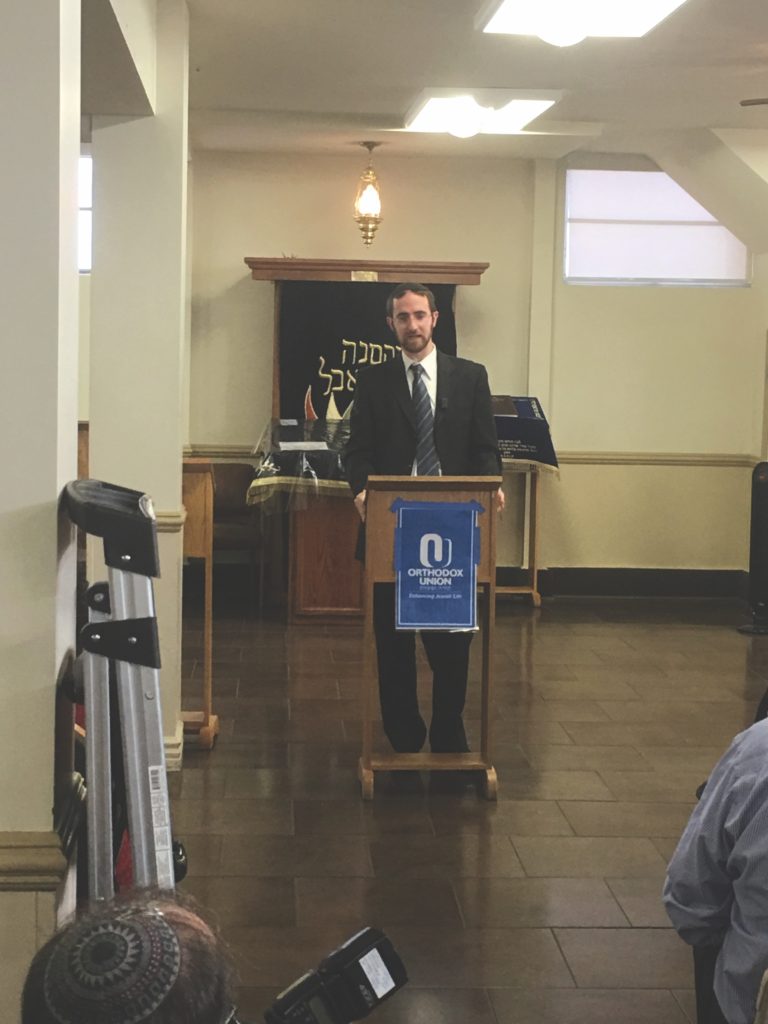
Muskin was overjoyed as he took the bimah on Dec. 1. He said it was fortuitous timing that the synagogue reopened on the same weekend as the OU convention.

In attedance was expectant mother Chelsea Schames, along with her husband, Matthew. “We’re so excited for our children to grow up in this beautiful new space,” she said.

Muskin also noted that the shul’s reopening closely coincides with Hanukkah, which celebrates the rededication of the Temple.

“We’ve been exiled for 18 months,” he told the Journal. “It’s a long shlep.”

Renovated Young Israel Reopens in Pico-Robertson Read More »

Orthodox Leaders Discuss Marijuana, Torah Values, Day School Tuition and More

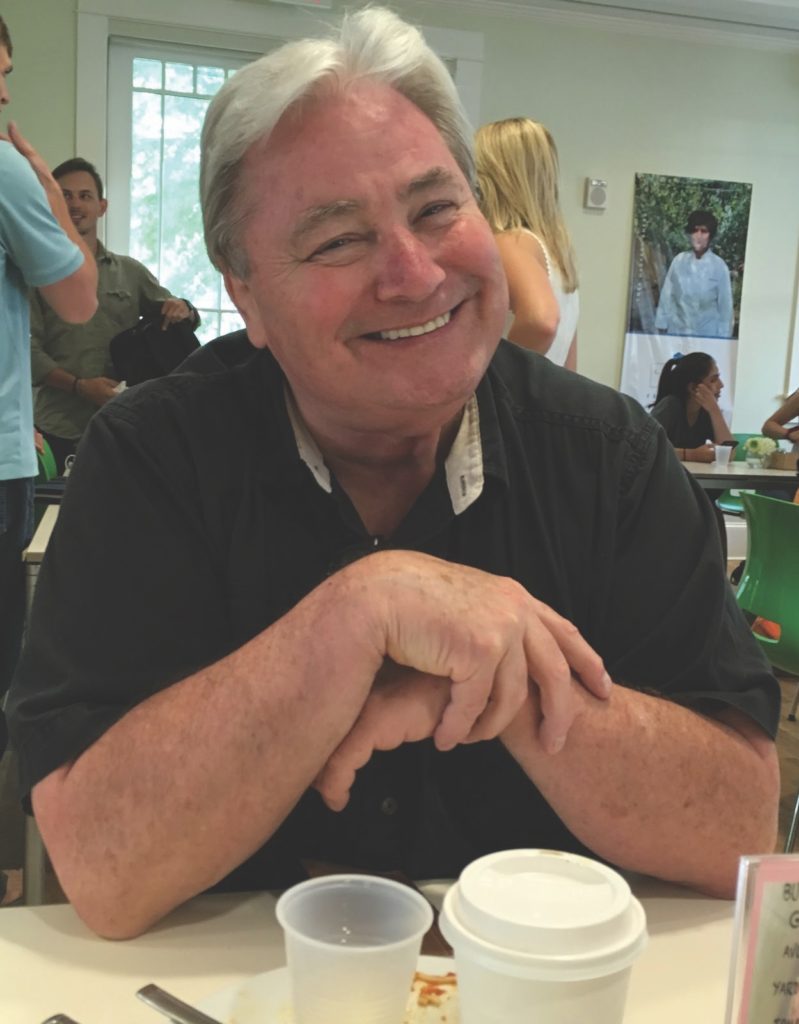
Addressing a room of more than 70 men and women, Rabbi Dr. Zev Wiener found himself at the intersection of Jewish law and a contemporary sociopolitical issue on Dec. 3 as he discussed halachic views on marijuana.

The question at hand: What are the potential consequences when the drug becomes legal in California next year?

Appearing at Learn L.A, an Orthodox Union (OU) West Coast event, Wiener, a Los Angeles psychiatrist, presented Jewish wisdom on the subject, ultimately offering more arguments against marijuana than for it.

Jews should treat their bodies with respect, he said, rejecting the secular view that people are allowed to do whatever they want with their bodies.

Motivational speaker Charlie Harary

Since marijuana can impair memory, it can affect one’s Jewish learning, Wiener said —  a risk he said one should consider before using the drug.

There is no proven correlation between smoking marijuana and negative mental health outcomes, he said, but some data suggest that young people who smoke the drug while their brains still are developing might experience schizophrenia and other forms of mental illness.

While many people say marijuana relieves their anxiety, he said, much anecdotal evidence suggests that it can actually increase anxiety.

Learn L.A. drew more than 100 members of the Orthodox community and beyond to Beth Jacob Congregation in Beverly Hills. The event concluded the Nov. 30-Dec. 1 OU convention, a weekend of teaching and discussion.

Simultaneous L.A. Learn discussions focused on “Current Controversies in Halacha,” “Strengthening Our Torah Values” and “New Insights in Tanach.”

Rav Herschel Schachter of the Rabbi Isaac Elchanan Theological Seminary, Yeshiva University’s rabbinical seminary, discussed “Halachos of Tuition: Who Pays? How Much? And with Whose Money?”

He cited the challenges facing observant families who want to send their children to religious day schools but can’t afford the tuition. He said Jewish law forbids schools from turning away families that cannot pay tuition, lamenting how many borderline-observant families opt for secular schools because yeshiva tuition is so prohibitive. That said, the Shulchan Arukh — Jewish legal codes — says a yeshiva may refuse a child if the parents have the means but don’t want to pay tuition, Schachter said.

“Success is not being who you want to be. Success is being who you are meant to be.” — Charlie Harary

About 100 people listened as Schachter, a father of nine, said yeshivas should do whatever they can to accommodate families of all financial backgrounds. The alternative — public school — would be “a disaster,” he said, so if a family can’t foot tuition, others of greater means should help.

Motivational speaker Charlie Harary followed with a discussion called “Seeing the Invisible: The Power of Torah on Your Perspective.” Harary said the core of success is being connected to other people and that the majority of communication is the ability to listen. And if this applies man to man, he said, it also applies man to God.

A member of the OU leadership board, Harary invoked the story of Joseph, who, he said, would top a list of Forbes’ “most successful Jews.” Joseph experienced many ups and downs throughout his life, he said, eventually becoming one of the most powerful people in Egypt.

“Success is not being who you want to be — success is being who you are meant to be,” he said. “And only God can get you there.”

Harary’s discussion fused spirituality, psychology, science and Jewish wisdom. He told personal stories about his family and argued for the importance of training oneself to see how God communicates in invisible ways.

He discussed the “schema,” or one’s preconceived ideas, and said you can expand your schema by training yourself to see things invisible to everyone else.

“The whole purpose of learning is to train your brain to see the invisible,” he said.

Among the attendees was Elizabeth Thaler, a civil litigator and member of the Beverly Boulevard-La Brea Jewish community who was earning continuing education credits for attending. Speaking to the Journal after Wiener’s discussion on marijuana, she said was interested in the day’s variety of halachic teachings.

Michael Anton, a Pico-Robertson resident who works at a logistics company in El Segundo, said he thought Wiener had taken a position on the topic of marijuana despite stating that he wouldn’t speak for or against its use.

“I think it was slanted, but I don’t disagree with it,” he said.

Still, Wiener displayed deep knowledge on the topic of marijuana, making his talk relevant to contemporary ways of consuming it. During his 45-minute discussion, he discussed how eating edibles such as brownies made with marijuana is popular on Shabbat, since Jewish law prohibits smoking on the Sabbath.

But the potency of edibles, which often induce a stronger high than smoking cannabis, should give people pause before they decide to eat a brownie or any other food with marijuana in it on Shabbat, Wiener said.

While eating edibles may be permissible on Shabbat, he said, it is “playing with fire.”

Orthodox Leaders Discuss Marijuana, Torah Values, Day School Tuition and More Read More »

Rabbis Denounce Trump Tweets at Interfaith Event

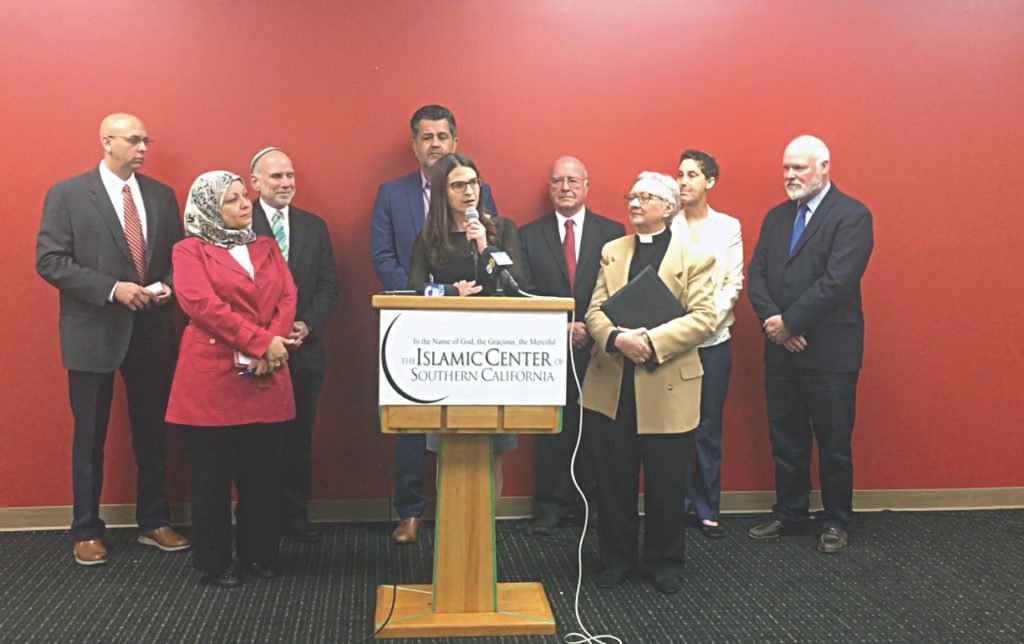
Jewish, Muslim and Christian leaders used a Dec. 1 press conference at the Islamic Center of Southern California to denounce President Donald Trump for tweeting videos purporting to show Muslims engaging in acts of violence and breaking a statue of the Virgin Mary.

“I speak to you today as a rabbi and as a Jew,” said IKAR Rabbi Sharon Brous. “My people know all too well the dangers of fascist regimes that rise to power through stigmatization and the scapegoating of vulnerable minority populations. We will not shrug this off as yet another reckless act from a reckless administration.”

Brous was one of three Jewish clergy members to participate in the press conference. Beth Shir Shalom Rabbi Neil Comess-Daniels and Wilshire Boulevard Temple Rabbi Susan Goldberg — who said she was representing herself and not her congregation — also were among the 10 interfaith leaders at the event. The conference took place as a handful of Muslim worshippers were busy with prayer on the first floor of the mosque.

“The hatred that was spewed out by the president earlier this week can only be combated with this kind of love,” Comess-Daniels said.

On Nov. 29, Trump retweeted three videos that had been shared by Jayda Fransen, deputy leader of the far-right group Britain First. A day later, White House press secretary Sarah Huckabee Sanders defended the president’s tweets to reporters who questioned the legitimacy of the videos.

“I think his [Trump’s] goal is to promote strong borders and strong national security. … Whether it is a real video, the threat is real, and that is what the president is talking about, that is what the president is focused on, dealing with those real threats, and those are real no matter how you look at it,” she said.

Critics of the tweets have said Trump was sharing the videos without offering any context for the content in the videos, fomenting hate against Muslims and spreading propaganda of a hate organization.

“And now, just like after Charlottesville here in the United States, a hate group that has operated on the fringes of society has been promoted and given credibility by the president of the United States of America,” Brous said. “We must not downplay the recklessness and the danger of this act.”

At the Islamic Center, Goldberg expressed the importance of the Jewish community standing with the Muslim community at this time.

“As a Jewish person, there is no question where we need to be right now. We need to be standing with our Muslim sisters and brothers, and comforting you and letting you know that there is so much care and love and protection for you,” she said.

Also participating in the Los Angeles press conference were Bishop Steve Gilliland, director of Muslim relations at the Church of Jesus Christ of Latter-day Saints; Salam Al-Marayati, president of the Muslim Public Affairs Council; Daniel Tamm, the Westside area representative of Los Angeles Mayor Eric Garcetti; Islamic Center of Southern California chairwoman Hedab Tarifi; and Islamic Center spokesman Omar Ricci.

“We will not shrug this off as yet another reckless act from a reckless administration.” — Rabbi Sharon Brous

“It is a sad day when European leaders are teaching the American president about tolerance,” Al-Marayati said, referring to British Prime Minster Theresa May, who criticized Trump for sharing content tweeted by Britain Frist.

Tarifi said she was let down by the president’s polarizing leadership.

“For us to get together to condemn our own president is really very painful,” she said.

Mort Klein, president of the Zionist Organization of America, pushed back against critics of Trump’s tweets.

“The president’s critics seem more concerned about Trump than they do the biggest danger the world is facing: the scourge of radical Islamic terrorism,” Klein said in an email. “Pew polls show that one-third of Muslims under 35 support violence to defend Islam. That frightening ideology must be fought — not Trump’s tweets.”

Rabbis Denounce Trump Tweets at Interfaith Event Read More »

Push Underway to Keep Jewish Artifacts From Returning to Iraq

Eighty-six-year-old Joseph Samuels fled his native Iraq in 1948 and has called Santa Monica home for over 30 years. When a traveling exhibition featuring pieces from the Iraqi Jewish Archive (IJA) — a collection of more than 2,700 Iraqi-Jewish artifacts — had a six-week stay at the Richard Nixon Presidential Library in Yorba Linda two years ago, he knew he had to go.

“I had tears in my eyes,” said Samuels, who lived through violent pogroms in Iraq. “Seeing the artifacts brought back memories of my life in Baghdad, like how we celebrated the Jewish festivals and going to synagogue with my father. It made the history come to life.”

Samuels hopes future generations of Mizrahi Jews get a glimpse into that forgotten history — rediscovered by U.S. forces during the invasion of Iraq 2003 — by seeing the artifacts, some of which date as far back as the 16th century, including Torah scrolls, prayer books and community records.

But that dream could be in danger.

After several extensions on a return date, the U.S. State Department is scheduled to return the IJA to the Iraqi government in September 2018.

Samuels, along with other Mizrahi Jews, Jewish organizations and politicians, vehemently opposes returning the artifacts to Iraq, whose Jewish community today is practically nonexistent.

“This is the property of the Jews of Iraq,” Samuels said. “If it goes back to Iraq, no Jews will be able to go there to visit their history. I feel very strongly about it. It will sadden me a lot if the archive is returned.”

More than 850,000 Jews were displaced from Arab countries and Iran during the 20th century, transforming thriving communities into hordes of refugees. Much of the refugee crisis was generated by pogroms in the Middle East and North Africa after Israel’s victory in the 1948 War of Independence against Arab armies. Today, there are fewer than 3,000 Jews living in Arab countries. Most Mizrahi Jews, those who descend from the Middle East and North Africa, are dispersed across Israel, Europe and North America, with a sizable population in Los Angeles.

The IJA artifacts either were left behind by exiled Iraqi Jews who had flourished there for more than 2,000 years or were confiscated when Jews were forced to flee and were stripped of assets and citizenship.

According to Samuels, a member of Kahal Joseph Congregation, a Sephardic Temple in Westwood, Los Angeles’ sizable Mizrahi community overwhelmingly opposes returning any artifacts to Iraq. Nationally, Jewish Senate Minority Leader Charles Schumer (D-N.Y.) wrote a letter to Secretary of State Rex Tillerson in October asking him to work with Jewish groups to find a suitable home for the IJA.

Gina Waldman, co-founder of Jews Indigenous to the Middle East and North Africa (JIMENA), a nonprofit organization dedicated to preserving Mizrahi culture and history, is a Libyan-born Jew who fled her birthplace of Tripoli in 1967. She likened the IJA situation to giving Jewish-owned artwork confiscated by Nazis during the Holocaust back to Germany.

“The Iraqi government claims these artifacts represent Iraqi national heritage. No, it’s Jewish heritage.” — Gina Waldman

“When the art was stolen from Jewish gallery owners or private Jewish owners by the Nazis, we tried to get it back,” she said. “If it showed up in the United States, we wouldn’t return it back to Germany, so why would this be so different? The Iraqi government claims these artifacts represent Iraqi national heritage. No, it’s Jewish heritage.”

David Myers, president and CEO of the Center for Jewish History in New York and UCLA’s Sady and Ludwig Kahn Chair in Jewish History, also expressed concern about the IJA’s potential return to Iraq but declined to wade too deep into what he called a “sensitive diplomatic issue.”

The treasure trove of Iraqi-Jewish artifacts was unearthed in May 2003 during the Iraq War when a U.S. Army unit stormed the headquarters of the Mukhabarat, Saddam Hussein’s intelligence services. The unit didn’t find the weapons of mass destruction it was looking for, but it did find waterlogged and moldy Iraqi-Jewish artifacts in a basement damaged by flooding after a bombing campaign.

The U.S. government reached an agreement with a provisional Iraqi government to refurbish the collection under the auspices of the U.S. National Archives and Records Administration. More than $3 million was spent on preserving, cataloging, digitizing and ultimately creating an exhibition. Part of the deal included an eventual return of the archives to Iraq.

However, recent comments made by the U.S. State Department appear to be leaving the door open to revisit the IJA situation with the Iraqis.

“Maintaining the archive outside of Iraq is possible but would require a new agreement between the government of Iraq and a temporary host institution or government,” State Department spokesman Pablo Rodriguez told the Jewish Telegraphic Agency in October.

Los Angeles County Deputy District Attorney Elan Carr, who lives in the Pico-Robertson area, was born to an Iraqi-Jewish family that escaped to the United States during the pre-Saddam era. He told the Journal he’d like to see an appointed American negotiator work closely with the Iraqis.

“There’s no shortage of names,” he said. “We have all kinds of ambassadors on issues involving world Jewry, anti-Semitism and many world Jewish issues who are familiar with this.”

Few are as familiar as Carr, who was in Iraq as an Army reservist when the IJA artifacts were discovered in 2003. During his time there, Carr and state department officials were shown storage rooms in Baghdad museums by curators where thousands of additional Iraqi-Jewish artifacts, including more than 400 Torah scrolls stripped of gem-adorned coverings and precious metals, still remain.

“I couldn’t believe what I was seeing,” Carr said.

If you ask Carr, the IJA should be the tip of the iceberg in any negotiations with the Iraqis concerning Jewish artifacts.

“I think the negotiations shouldn’t be just about this particular trove, as important as it is,” he said. “Even if we were successful with keeping the archives here, that comes at what cost? This is one of many troves. There has to be in, my view, a comprehensive global negotiation about what to do with Jewish artifacts in Iraq, and Jewish places there, too, like shrines, sites and cemeteries.”

When asked if he can imagine the Iraqi government preserving the IJA and other artifacts and remnants of Iraqi Jewry, Carr expressed shades of optimism.

“Yes, I can imagine it. I don’t think it would be easy and I don’t they’d do it enthusiastically, but it depends on the negotiation and how badly they’d like to please the United States and how important the issue becomes to the United States,” he said. “I’ll tell you this: They haven’t destroyed them yet. They could’ve but they haven’t.”

The IJA currently is on display at the Jewish Museum of Maryland in Baltimore, where it is scheduled to remain through Jan. 15.

Push Underway to Keep Jewish Artifacts From Returning to Iraq Read More »

Call it Krispy Kremeovitz

Most people don’t know they have the Jews to thank for the culinary masterpiece known as the jelly doughnut.

In 1485, not long after a clever chap named Johannes Gutenberg invented the first printing press, a book called “Kuchenmeister,” or “Mastery of the Kitchen,” was published in Germany. In this cookbook was perhaps the first record of a jelly doughnut, called “Gefüllte Krapfen,” that consisted of bread filled with a bit of jam and deep-fried in lard.

Then in 1532, the book was translated into Polish. The Polish Jews took their little jam doughballs, or paczki, with them everywhere they went, and the concept of stuffing a bready object with a sweet filling spread across the globe like wildfire. The only difference across Europe was the name of this delicacy. Germans call them Berliners, Italians eat bomboloni and in the Netherlands they have their oliebol.

Unlike American Jews, who like to eat potato pancakes to get their Hanukkah oil, Israelis like to eat sufganiyot (from the Hebrew word tfog, or sponge), which are small, deep-fried, jelly-stuffed doughnuts covered in powdered sugar. It is estimated that on each of the eight days of Hanukkah, Israel’s most famous bakery makes about 300,000 sufganiyot.

Perhaps it’s the fact that Americans eat doughnuts year round while Israelis confine their doughnut consumption to a particular time of year that makes sufganiyot so nostalgic for me. As a child in Israel, I would look forward to Hanukkah just to eat a sufganiyah, and when we moved to the United States, where latkes are the norm for Hanukkah, I almost forgot about them.

One year, right before Hanukkah, at my café in the U.S. Embassy, one of my Jewish customers asked me if I was cooking anything special for the holiday. I said I was planning to make potato pancakes as usual. At the same time, one of our bakers came out of the kitchen with a challah that we had on order for a customer for Shabbat. The smell of the challah reminded me of the sufganiyot of my childhood, and so the challah doughnut was born in my kitchen.

It actually makes sense: The best doughnuts are made of a rich brioche type of dough, and challah is basically brioche dough made with oil rather than butter. I tested my theory, using some red plum jam as the only reasonable substitute I could find in Uganda for the sour cherry jam of my youth, and ended up with a formidable facsimile of the Hanukkah treats of my youth. A powdered sugar blanket completed the picture.

Here is my recipe that you can use to make the lightest, tastiest jam doughnuts you can possibly imagine for Hanukkah. But if you are in a pinch, feel free to use any challah dough, even store bought, and follow my frying and filling instructions. Just make sure to thank your nearest Polish Jew for spreading the cheer of the sufganiyot!

CHALLAH SUFGANIYOT
1 1/2 cups lukewarm water
2 1/2 teaspoons active dry yeast
1/4 cup sugar
2 large eggs, beaten, and 1 egg yolk
1/4 cup vegetable oil, plus 4 1/4 cups for frying
4 to 4 1/4 cups all-purpose flour
1 teaspoon salt
1/4 teaspoon freshly grated nutmeg
1 cup seedless jam or jelly, any flavor
Powdered sugar for garnish

To make the dough, put lukewarm water in the bowl of stand mixer. Add yeast and sugar, and stir to combine. Let the yeast mixture rest for 5 minutes.

Add the beaten eggs and egg yolk, along with 1/4 cup of oil, to the bowl and stir to combine.

While the mixer is running slowly, add the flour, salt and nutmeg, and mix until the dough comes together. Mix for 5 minutes to knead the dough well. Turn off mixer and let the dough sit in the bowl of the mixer for 15 minutes.

The smell of the challah reminded me of the sufganiyot of my childhood, and so the challah doughnut was born in my kitchen.

After the rest period, turn the dough out into a lightly oiled bowl, cover the bowl with plastic wrap and refrigerate the dough for at least 8 hours — preferably overnight.

When ready to form sufganiyot, remove dough from the fridge and roll it out on a lightly floured surface until it is 1/2-inch thick. Use a 3-inch doughnut cutter to cut out the doughnuts.

Cut straight down without twisting the cutter and place the cut doughnuts on a lightly greased baking sheet. Repeat with remaining dough.

Cover the doughnuts with lightly greased cling film or a cloth kitchen towel and let them rise until doubled in size or about one hour. They should look very puffy and airy when they are done rising.

To fry the doughnuts, heat the remaining vegetable oil in a pot or wok until the oil reaches 360 F on a thermometer.  You want to use a pot deep enough to deep fry the doughnuts.   Carefully add a few doughnuts to the hot oil and fry until golden brown, about 1 minute per side. Use a slotted spoon to remove the doughnuts from the hot oil and place them on a paper towel-lined baking sheet to remove extra oil. In between frying, make sure the oil gets back up to temperature before putting in more doughnuts.

Let the doughnuts cool slightly. To fill with jam, place filling of your choice in a plastic bag or piping bag. Using a chopstick, make a hole in the top or side of doughnut. Remove chopstick and put in the tip of the piping bag. Pipe in 2 or 3 teaspoons of jam into the center of each doughnut and sprinkle with powdered sugar on all sides before serving.

Makes about 20 sufganiot.


Yamit Behar Wood, an Israeli-American food and travel writer, is the executive chef at the U.S. Embassy in Kampala, Uganda, and founder of the New York Kitchen Catering Co.

Call it Krispy Kremeovitz Read More »

ARTIST OF THE WEEK: Forest Rain Marcia

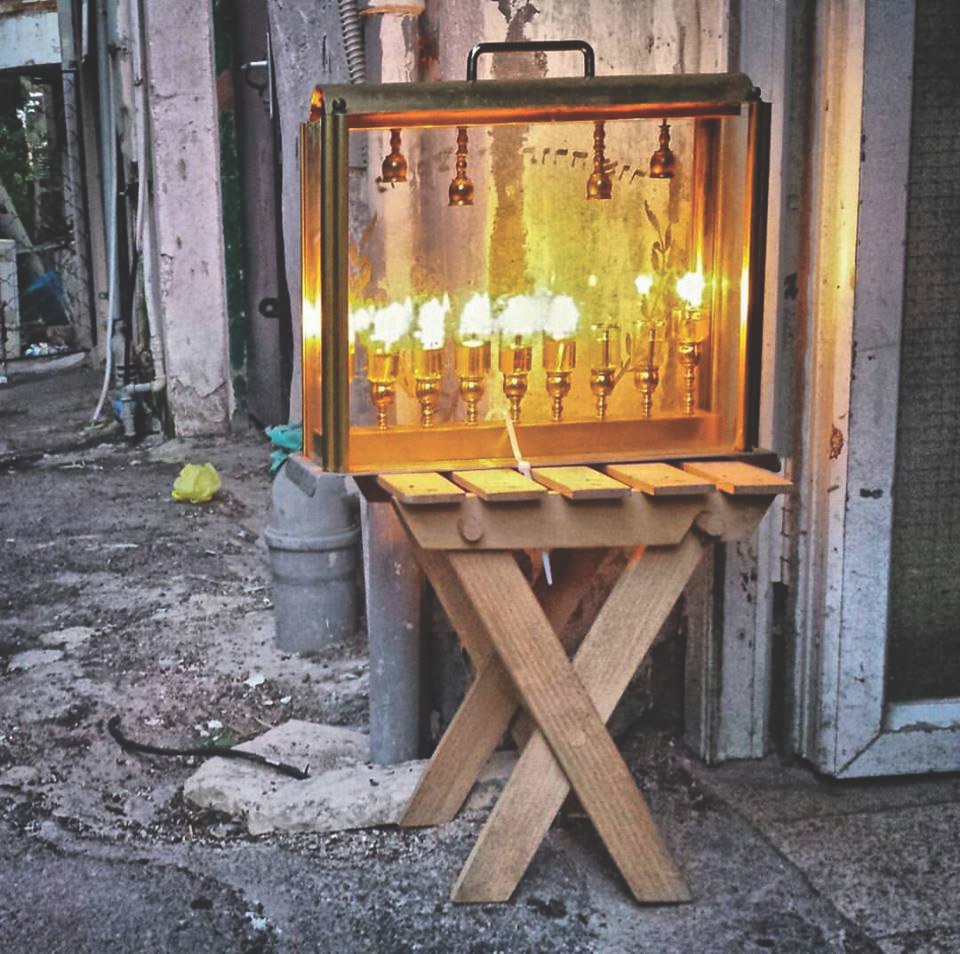
“Tradition,” by Forest Rain Marcia

“Tradition dictates that Hanukkah candles be lit in a place that can be seen by the public. Outside of Israel, candles are normally lit within the home, often at a window. In Israel, many religious families use a hanukkiah that burns oil and place it in a special glass box outside their home. Weather cannot disturb the lights and everyone passing by can see them.

“The hanukkiah in this image was photographed outside an apartment building in Haifa, declaring a beautiful message: ‘A great miracle happened here, in this land, for my people, and I am free to declare it proudly for all to see!’” — Forest Rain Marcia

ARTIST OF THE WEEK: Forest Rain Marcia Read More »