When she became a physician, Hadar Waldman expected to improve the quality of people’s lives — but she never expected religion to be part of that equation.
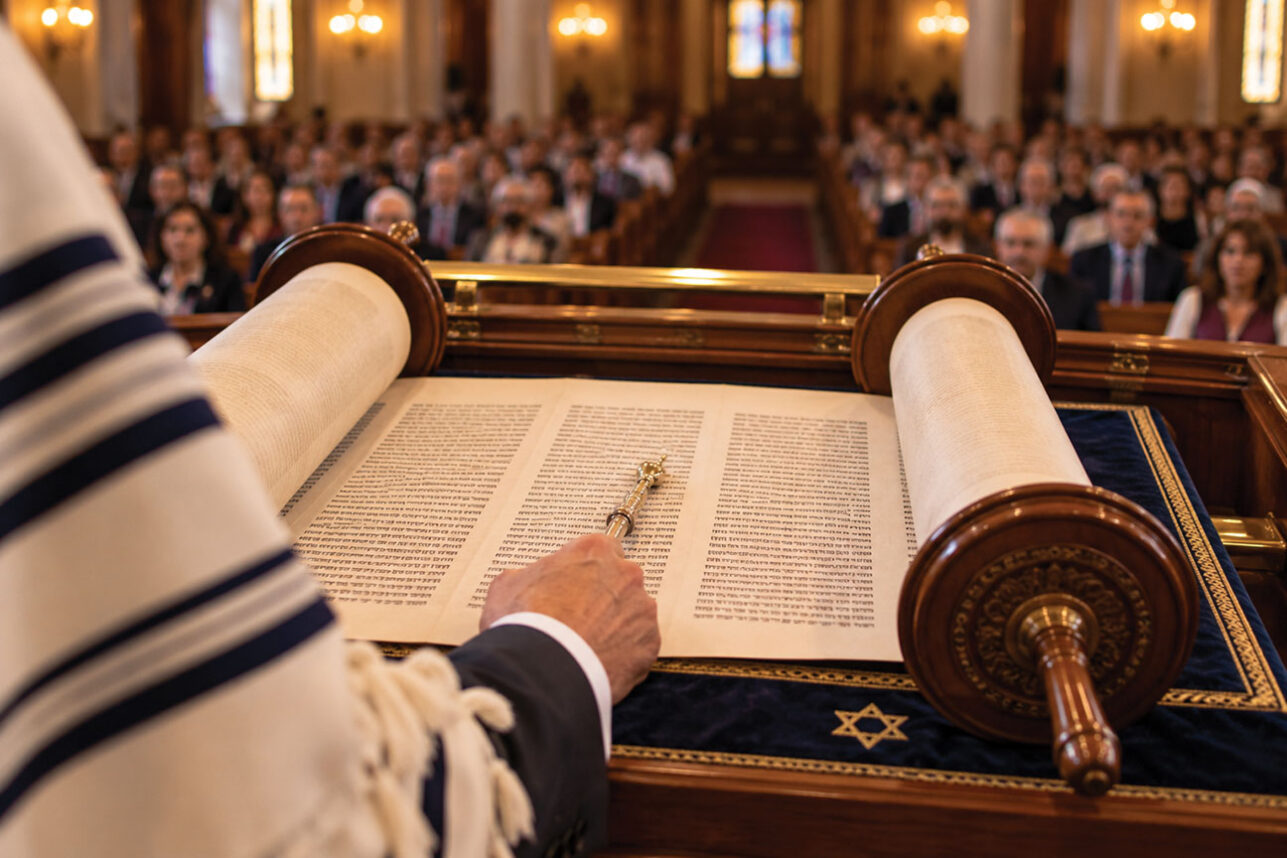
Then she became a mohel or, more precisely, a mohelet — joining a rarified group of American physicians certified in Jewish ritual circumcision.
But being a woman in this role is a tricky proposition. While liberal Jews have long been comfortable with female mohelim performing circumcision, more traditional Jews still prefer a male.
At 42, Waldman specializes in obstetrics and gynecology and has a private practice in Century City. Born in Israel, she bopped around the United States to accommodate her father’s work as a doctor, living in Atlanta, Baltimore and Cincinnati, before landing in New York to attend a pre-med program at Columbia University. She describes herself as “your typical Israeli-American Southern New Yorker with Midwestern roots.”
“There was a true need in the community for someone who was a physician and a surgeon, and also a woman and a mother.” — Hadar Waldman
After graduating from Sackler School of Medicine in 2006, she began her residency at Staten Island University Hospital, where she performed routine circumcisions on newborn boys.
“Today 60 to 70 percent of the American population is circumcised,” Waldman said. “People who are not Jewish circumcise their babies all the time.”
Non-Jewish couples would cite cultural or cosmetic reasons for wanting the procedure. Most Jews, on the other hand, especially the large Orthodox clientele at Staten Island, preferred the traditional circumcision — a brit milah with a mohel. So it wasn’t until Waldman moved to the West Coast and started her own practice that she noticed how many secular Jews were choosing hospital circumcisions and forgoing the Jewish ritual entirely.
“I became aware that a lot of my Jewish patients were opting out of brit milah ceremonies because they preferred a doctor to perform the circumcision in a hospital, which they perceived to be a safer environment,” Waldman said. “Over time, this troubled me because I saw it as missed opportunity. Too many boys were not entering the covenant of Judaism.”
Last February, Waldman enrolled in the Brit Milah Program of Reform Judaism, a 12-week video-conferencing course that trains Jewish medical professionals around the world to perform brit milah. The program has existed since 1984, and executive director Rabbi Julie Pelc Adler said, “Women participated right away.”
“I don’t remember if a woman was in the very first class,” Adler said, “but I don’t think there was ever a moment when women weren’t invited or encouraged to participate.”
Although there is no halachic prohibition against women performing brit milah, it is incumbent upon the male because Abraham was required to circumcise himself and his sons. However, another precedent was set when Moses’ wife, Ziporrah, circumcised their son to quell God’s wrath toward Moses for neglecting to do it himself.
Last August, Waldman performed her first ritual circumcision. “The way I do it is as compassionate as possible,” she said, noting the cultural debate over genital mutilation. “I do believe in using local anesthesia, a small amount of lidocaine locally, and I give the baby a sugar water solution to comfort him as much as possible.”
She has since performed an additional six ritual circumcisions for local Jewish families. “There was a true need in the community for someone who was a physician and a surgeon, and also a woman and a mother.”
Waldman said being a mother of two has attuned her to the emotional experience of a fraught religious rite. “First-time parents in particular find the whole birth process very overwhelming, and I felt like the brit milah was really no different,” Waldman said. “I am skilled in being able to calm parents. As a doctor, I can prepare my patients for uncertainties; and as a mother, I understand their fears.”
Waldman said she also has been affected by serving as a shaliach, or emissary, for the sacred ritual.
“I never thought of circumcision as emotional or spiritual when I did the surgical procedure in the hospital, but seeing the emotional reaction of these families has been really rewarding.”