fbpx

June 21, 2017

Keeping our Neighborhood Safe and Affordable

There are few things more essential to stable, healthy living and a happy family than having a roof over your head. Anyone who has ever experienced or even chanced a risk at losing their home or apartment, knows what this means on an unfortunately intimate level. Here in Los Angeles, the largest Jewish community is situated just to the south of Beverly Hills, and the rental market has certainly blown up in the last few years, where it is uncommon to find a 1 bedroom apartment for less than $2000.00 a month.

For many of us in the Jewish community, making the basic ends meet every month, and paying the exorbitant rent that keeps us within the community is a major challenge. There are a number of factors that have contributed to the steep increases.

Last week I attended a hearing at City Hall to speak on one of those factors. The specific topic under debate was whether or not the Council committee should allow what has become known as “home sharing” or specifically, the “AirBnB’ing of a community” where residential property owners would be able to share their space for up to 180 days a year; essentially 6 months. Hundreds of people crowded the Council chambers and the overflow area outside. An overwhelming number of people were there to speak on behalf of renting communities, as well as some workers from the hospitality industry, which takes a direct hit when visitors turn to AirBnB instead of the traditional offerings. Hoteliers, housekeepers and maintenance workers and all the hundreds of businesses that service these businesses; everyone affected by the prospect of allowing an increase to home sharing came out to speak their piece. Others, donning matching light blue shirts, came to appeal to the Council to increase the number of days they are allowed to share their living space through AirBnb.

When it was my turn to speak, and when I spoke about how turning permanent residences into hotels for so many days a year is hurting our Jewish neighborhoods and our financial viability, I heard several people scoff. I happened to be seated amidst a sea of blue shirts- mostly homeowners that want to continue making a substantial income through AirBnB. Their appeals were emotional. It covers the mortgage, some said. I’m an actor and can’t make a living otherwise, I heard, at least a few times – made me wonder whether they were acting or really concerned for the many people that have been thrown out of their homes so that owners can rent their houses for large sums of money at the expense of so many neighborhoods.

I couldn’t help but wonder- how did these people make a living before the AirBnB app was an option? How did they afford a downpayment or the mortgage thus far, if they are so reliant on AirBnB that, as they claimed, any restrictions on the number of days allowed would devastate them? It doesn’t make much sense. I couldn’t help but wonder if more than a few of them were paid actors, attending the meeting on behalf of AirBnB, with nothing to lose.

Later in the week, I read a bulletin on a local Facebook page, alerting our Jewish community about a number of apartments, in the prime of our neighborhood, that have been converted for the sole use of AirBnB. With a weekly rate of $700.00, it has turned 1 bedroom apartments into ATM machines, at rates impossible for families that live in the neighborhood to compete. Additionally, I read that a parent walking her young child found a used needle on the grass, outside of that same building, and another that saw prostitutes leaving the building at night. The rent is already so high in our neighborhood, and these by-the-night rentals are turning our expensive neighborhood into an unsafe neighborhood.

I support people doing what they can to make a living, and I applaud the entrepreneurial strength of AirBnB, but I also expect that these systems function harmoniously with the greater needs of the community, responsibly and protective of our long-term interests. Jewish communities are one of many communities across Los Angeles that endure a direct impact of loose standards, and we should expect that Councilmembers in our areas, such as Mr. Koretz, Blumenfield, and Bonin and also other leaders representing neighborhoods that have been hit the hardest, such as Mr. Harris-Dawson, Council President Wesson and Mr. Englander, to guide the council to limit the number of days for home-sharing, and set protective standards for our community safety and security. Regulatory ordinances must include and cover primary residences, so that our family neighborhoods remain family neighborhoods. And they must include caps, that limit the number of days any residential dwelling can be used as an alternative to a hotel, far below 180 days, or half of the entire year.  

Los Angeles is a city of rich multiculturalism. Our Jewish neighborhoods, like so many neighborhoods that represent the diverse landscape of our city, deserve to be protected from the strong arm of unregulated and unreasonable profiteering.

Keeping our Neighborhood Safe and Affordable Read More »
The Bachelors Film

Today I went to a press screening at the LA Film Festival of The Bachelors, a sweet, touching film about a father and his high school aged son starting over after the untimely death of his wife. This emotional film, starring J.K. Simmons, Julie Delpy and the wonderful Josh Wiggins as the son, was capably directed and written by Kurt Voelker. It just opened in theaters, you can see other fine films and events at the LA Film Festival which runs through June 22. For more information visit filmindependent.org.

The Bachelors Film Read More »

Trump administration reiterates: Israeli settlements do not help the peace process

The Trump administration again said that Israel’s settlement expansion does not help the peace process.

State Department spokeswoman Heather Nauert at a media briefing Tuesday spoke about the development of more Israeli settlements in response to a reporter’s inquiry.

The report asked Nauert, “If the Israeli government would stop building settlements or would issue a freeze at the present time, that would help accelerate the process, correct?”

Nauert responded, “The president has been clear all along – his position on this has not changed – and that is that we see settlements as something that does not help the peace process.”

Israeli Prime Minister Benjamin Netanyahu launched a new policy earlier this year to curb settlement building in the West Bank, acceding to President Donald Trump’s wishes, but Jewish settlement building has continued.

The State Department statement came on the eve of a visit to Israel by Trump’s point man on the peace process, Jared Kushner, who with his team hopes to renew Israeli-Palestinian talks.

In Israel, Kushner met with the family of an Israeli border policewoman killed by a Palestinian terrorist.

Trump administration reiterates: Israeli settlements do not help the peace process Read More »

Jared Kushner and Jason Greenblatt after Netanyahu meeting: Making peace will ‘take time’

Arriving at an Israeli-Palestinian peace will “take time,” President Donald Trump’s top two negotiators said after meeting with Israeli Prime Minister Benjamin Netanyahu.

“The United States officials and Israeli leadership underscored that forging peace will take time and stressed the importance of doing everything possible to create an environment conducive to peacemaking,” the White House said in a readout after the meeting Wednesday between Netanyahu and Jared Kushner, a senior adviser to Trump and his Jewish son-in-law, and Jason Greenblatt, his special envoy to the region.

The cautious tone appeared to defer to Netanyahu’s preference to go slow in advancing Israeli-Palestinian peace. Netanyahu does not believe that the Palestinians are fully committed to coexistence and accuses their leadership of continuing to incite violence.

For their part, Palestinian Authority officials have enthusiastically embraced Trump’s hopes of reviving the talks and have dropped some previous prior demands, including that Israel freeze settlement building.

Greenblatt and Kushner have been tasked with reviving peace negotiations. Greenblatt has visited the region multiple times since Trump became president in January, while Kushner was making his first visit as an envoy. He accompanied Trump during his one-day visit to Israel and the Palestinian areas last month.

Also present at the meeting was David Friedman, the U.S. ambassador to Israel.

“The three United States officials discussed Israel’s priorities and potential next steps with Prime Minister Netanyahu, acknowledging the critical role Israel plays in the security of the region,” the readout said.

Greenblatt and Kushner also plan to meet with Palestinian Authority President Mahmoud Abbas during their visit before returning to Washington, D.C., to brief top Trump administration foreign policy officials.

Jared Kushner and Jason Greenblatt after Netanyahu meeting: Making peace will ‘take time’ Read More »

A ‘Not Famous’ life celebrated onstage

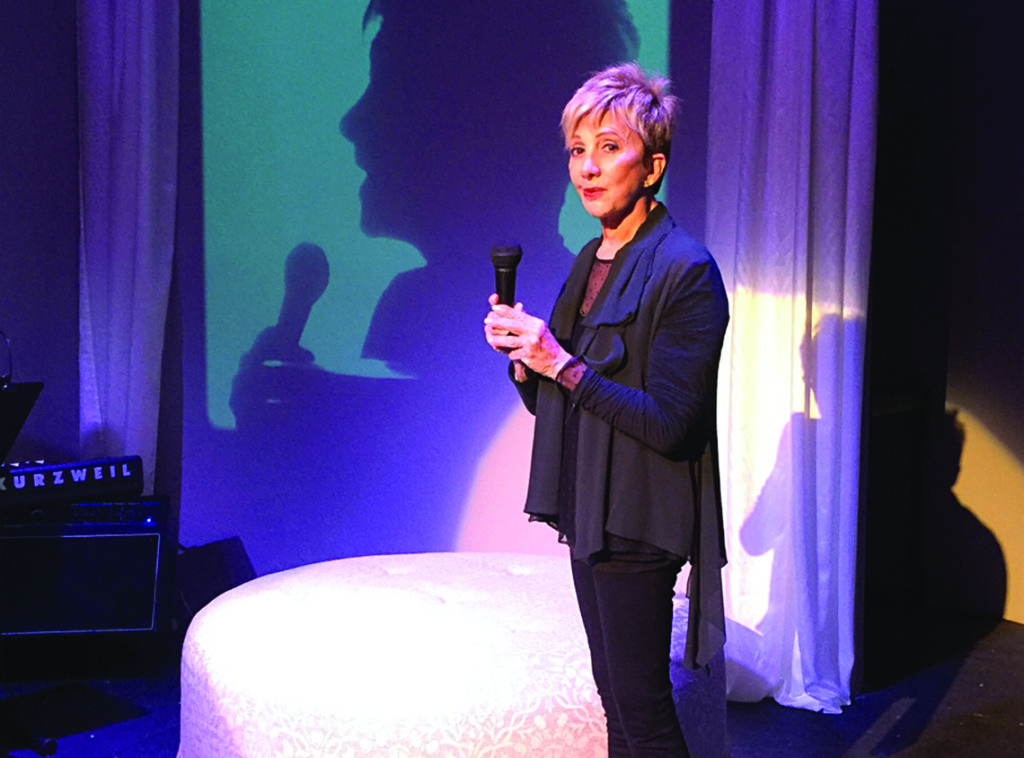
spent the early part of my life searching for fame, and I found the more meaningful things in life. So, it doesn’t matter that I’m not famous,” Barbara Minkus said in a recent interview.

Minkus may not be famous, but, as she tells the audience in her musical memoir, “I’m Not Famous” at the Santa Monica Playhouse, she leads a full life as a performer, wife, mother, grandmother and psychotherapist. Her one-woman show is a gently comedic, sometimes poignant, trip down memory lane, revealing the turning points in her life and challenges she has overcome.

While not a household name, Minkus is a seasoned performer whose career includes appearances on such television shows as “The Danny Kaye Show,” “The Merv Griffin Show,” “The Tonight Show” and “Love, American Style.” She also was the first Lucy in the off-Broadway production of “You’re a Good Man, Charlie Brown.”

She has played three Jewish icons onstage, as well: Fanny Brice, in a touring company of  “Funny Girl”; comedian Molly Picon, in “Picon Pie” at the Santa Monica Playhouse; and Catskill resort owner Jennie Grossinger, in the musical “Saturday Night at Grossinger’s.” Susan Morgenstern, who directed her as Grossinger, also directs her in this production, which she and Minkus wrote together.

In the show, Minkus talks at length about the eating disorder that ballooned her weight to 200 pounds as a preteen. She says she was ostracized by the other Jewish girls at school.

“The eating disorder came because I felt rejected — a lot of people go through this — by the kids. I was basically a homely person, and I didn’t know how to enjoy my look. I wanted to be like other girls,” she said. “That was a big hurt. But that’s long gone, long gone.”

She tells the audience a story about her first job in the Julius Monk New York revue “Bits and Pieces” in the early 1960s, when she learned something important from the New York sophisticates in the company, that people eat three meals a day.

“In my family, we ate all day long,” she said, “and then we sat down to eat three more times. I mean, I never knew that people stopped eating in between.” She tried eating only three meals and the weight came off, but Monk had hired her as a chubby cherub, so he ultimately fired her.

She said she struggled with closet eating until well into her late 30s.

“Once I worked that through with Overeaters Anonymous and having some goals, I don’t ever have to worry about being heavy again,” she said, adding, “The overweight issue isn’t with me at all anymore.”

Minkus also had to deal with learning disabilities. “Dyslexia wasn’t ‘in’ then, when I was growing up, and I felt very ashamed of the fact that I had learning issues,” she said.

Despite her learning difficulties, she earned a graduate degree as a marriage and family therapist in the mid-1970s and was valedictorian of her class. She then began parallel careers, as psychotherapist and performer.

However, until about two years ago, she said her patients, who knew her by her married name, Barbara Barron, didn’t know about Barbara Minkus, the performer. Nor did those who knew her as an actress know she was a therapist. With this show, she is bringing together her identities.

During her performance, Minkus discusses the blessings in her life, particularly meeting ophthalmologist Arnie Barron on a blind date and marrying him, in 1972. At last, she said, she was accepted as who she was.

“For me, that was a turning point — and, I think, having my children at a very late age. I never expected that,” she said.

The couple had agreed that they were both too busy to have children. But then they went to Israel.

“Something happened to me in Israel,” Minkus said. “I felt, maybe, a little bit about my Judaism, but I don’t think Israel is just about being Jewish. It’s about where it all began, for whatever belief system people have. Being there and seeing the generations of life that started there made me realize that I would like to pass on my generation to another person, to little ones.”

They had two children, Benjamin and Jennifer, who are now parents, and became active in Stephen Wise Temple, where their children went to school.

“My grandparents were the founding members of Temple Emanuel (a Reform congregation in Chicago). So being in temple has always been part of my life,” Minkus said. “But I didn’t have the spiritual connection until I married my husband, who came from a very Conservative background. So, together we met in the middle and decided it was very important to have a spiritual home.”

Minkus wants her audiences to leave the theater feeling that they’re not alone in whatever life journey they are taking.

“That’s what I’ve been getting after the show,” she said. “I go out and meet people, and they all say the same thing: ‘Thank you for sharing who you really are and being that open about your struggles. It’s helped me.’ Isn’t that the greatest gift a person can get?”

“I’m Not Famous” will be playing through July 22 at the Santa Monica Playhouse, 1211 Fourth St., Santa Monica. For tickets and more information, visit this story at jewishjournal.com. 

A ‘Not Famous’ life celebrated onstage Read More »

culture-lab

Culture Lab project sends artists in search of truth

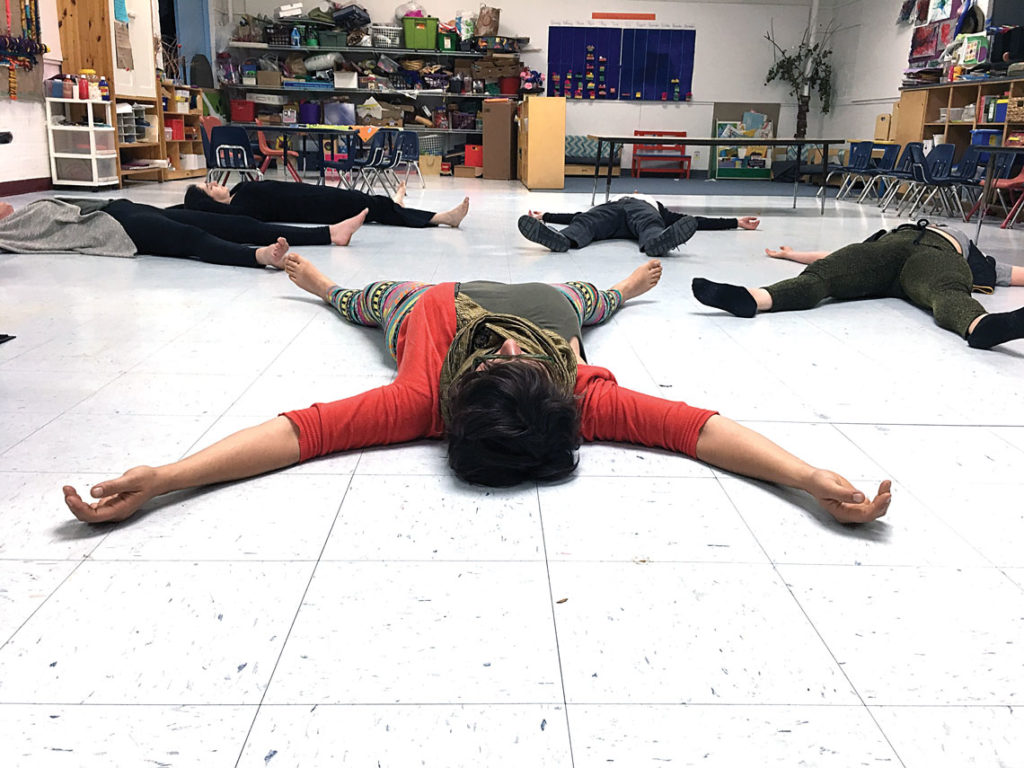
For the past several years, the Silverlake Independent Jewish Community Center (SIJCC) has been bringing together artists across disciplines for what might be called extreme collaboration — the piecing together of original multimedia exhibitions and performances that challenge and explore central concepts in Judaism.

This year’s theme is as broad as it is timely: truth. Four artists — dancers Andrea Hodos and Alexx Shilling, designer Betsy Medvedovsky and composer Brendan Eder — were tapped to spend about four months digging into Scripture and daily news to try answering the question: How can you discern what the truth is?

The work inspired by this journey will be installed at SIJCC’s performance space, The Box, on June 28-30, with an artists talk on the evening of June 29.

The SIJCC launched the project, known as Culture Lab, in 2013. Other groups of Los Angeles-based artists have addressed the disparate themes like oil, disguise and sacrifice through interactive mixed-media art installations and performance pieces. The artists are selected through a peer nomination process.

The SIJCC gives the artists structure, financial support and a studio space during the program, which had been on hiatus for two years while more funding was secured. This cycle of the lab was funded by the Los Angeles County Board of Supervisors through the Los Angeles County Arts Commission’s Community Impact Arts Grant.

A major challenge for the artists is that none of them is in charge of the project, creating a deeper level of collaboration and conversation to bridge the divides between disciplines and artworks.

“What’s different about this project is there’s no head, there’s no leader,” Medvedovsky said. “I’ve worked with a lot of different people from different disciplines before. There was always one person in charge. It’s been a really good experience, even across our different disciplines, of creating a different language to work in.”

Entering the space, visitors to the project will experience a state of confusion, meant to reflect the current post-truth paradigm of fake news and unreliable leaders. Visitors will read headlines showing conflicting takes on the same stories. This experience will be contrasted with the revelations Moses received at Mount Sinai and handed down to the Hebrews, according to the Torah.

“The Sinai imagery became a really important part of the project,” Hodos said. “This moment of revelation, when all of the Israelites are seeing and experiencing God or truth at a pinnacle, and they still don’t get to see it all the way.”

The story of Moses and the Ten Commandments is a recurring motif in the installation that represents a defining moment for the Jewish people when “truth,” in the most profound sense of the word, is handed down from God to the people.

“There’s this clarity, there’s this belief that truth came from a higher source,” Medvedovsky said. “There’s this craving for that clarity now and wanting to have a sense of clarity in things we’re reading about or engaging with.”

The group worked with facilitators as well as religious consultants who could direct them to biblical narratives related to the search for truth. Hodos, a dancer and spoken-word artist who mainly makes work through a Jewish lens, brought her deep knowledge of Torah into the group’s conversations.

One story Hodos introduced is that of the golem, a mythical figure from Jewish folklore that is animated from clay. In some versions of the golem story, the word emet (“truth” in Hebrew) is written on its forehead. The golem could be stopped by removing the first letter of the Hebrew spelling, aleph, thus changing the inscription from “truth” to “death” (met meaning “dead” in Hebrew).

The Box at the SIJCC also is a gymnasium, and the large cavernous space was another challenge for the artists. They initially thought to cover the floor but decided to incorporate its markings into their performance.

One of the two dance performances features soundscapes written and performed live by Eder, a film composer. The audience will watch the dance through a large veil.

“We were really interested in this idea of veiling, of things being veiled — even in this moment of what was going to be as close to a complete revelation as you can get, there’s still boundaries,” Hodos said. “God keeps the Israelites away. Even Moses and God don’t fully connect.” The use of the veil, she added, “creates a space for Mount Sinai in the middle of the exhibit.”

Shilling said working with Hodos has been “illuminating” because the two have different dance processes, but both learned a great deal.

“We’re making two different dances. One will have more relationship to sacred texts and Torah. The other dance comes out of my own process of tightly scored improvisations,” Shilling said.

The artists agreed that their work isn’t meant to provide answers to the meaning of truth, but rather to invite visitors to examine their own relationship with the concept and find answers of their own.

The fifth Culture Lab will premiere at The Box @ SIJCC, located at 1110 Bates Ave., Los Angeles, at 7 p.m. June 29. Admission is free, donations are encouraged and everyone is welcome. There will be a preview from 6-8 p.m. on June 28. The work also will be on view June 30 for morning children and family activities, and from 7-10 pm. For more information, visit www.sijcc.net/culture-lab.

Culture Lab project sends artists in search of truth Read More »

Actor Ronnie Marmo puts Lenny Bruce’s life onstage

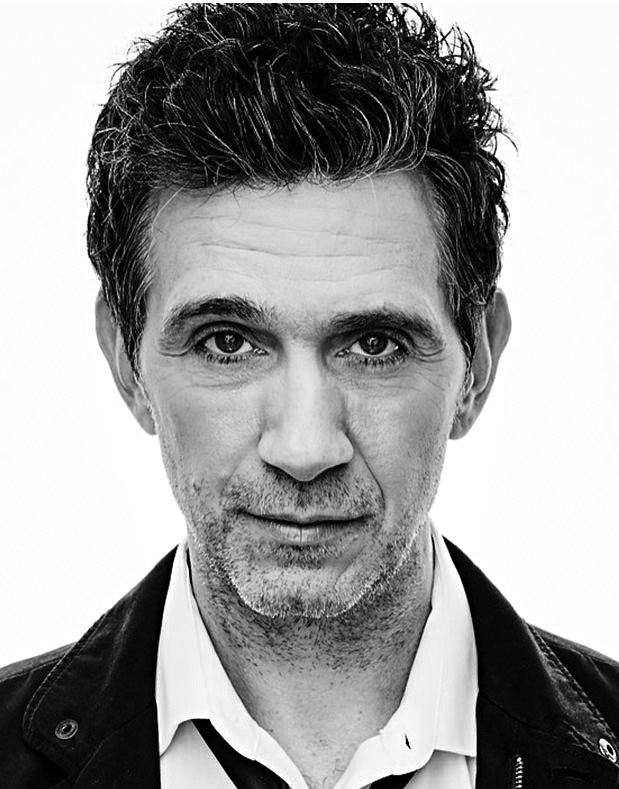
Ronnie Marmo

Leonard Alfred Schneider, also known as Lenny Bruce, was one of the most influential comedians of all time. He was arrested several times during the 1960s for using obscene language in his act, and he paved the way for today’s comedians to speak their minds onstage.

Now, Bruce’s legacy is being captured in a one-man show, “I Am Not a Comedian … I’m Lenny Bruce,” which premieres June 23 at Theatre 68 in North Hollywood.

The show stars Ronnie Marmo, who wrote the play and serves as Theatre 68’s artistic director.

“Lenny’s voice needs to be heard,” Marmo said in a phone interview. “This next generation needs to know who Lenny Bruce is and was. I love what he stood for and who he was. He was an out-of-the-box thinker and had something new and fresh to say.”

The 75-minute play follows Bruce on his journey as a young comic through his struggles with the law and drugs.

“I try to take the audience on a full experience of seeing flashes of his brilliance in his prime and also the reality of what it looked like when his life was coming to an end,” Marmo said.

Bruce was found dead on the bathroom floor of his Hollywood Hills home in 1966.

“The police found him naked, dead of an overdose, at 40 years old,” Marmo said. “The government and society didn’t know what to do with him, so they embarrassed him by propping him onto the toilet naked and releasing the pictures to the press. They were threatened by him.”

Marmo previously played Bruce in his one-man show “Lenny Bruce Is Back (And Boy Is He Pissed)” in 2005, and again in 2010. He was then approached to record the audiobook for Bruce’s autobiography, “How to Talk Dirty and Influence People,” released in 2016.

“I was asked to do it as Lenny,” he said. “That put the final nail in my coffin that it was time to introduce my play to the world.”

Over a five-year period, Marmo wrote “I Am Not a Comedian … ” with his friend Jason M. Burns, creator of the web series “Adults Only” and a New York Times best-selling author.

The show is directed by Tony Award-winning actor Joe Mantegna, who played Richard Roma in the first American production of “Glengarry Glen Ross” and stars in the “Criminal Minds” TV series. Mantegna and Marmo worked together on the movie “West of Brooklyn,” which Marmo wrote and Mantegna acted in. Mantegna was in the 2011 documentary “Looking for Lenny,” and understudied the role of Bruce in the play “Lenny.”

“I value Joe’s career and how he has navigated through [the industry],” Marmo said. “It’s taken two years to figure out our schedules, but Joe finally gave me a definitive yes on directing.”

Bruce had one child, Kitty Bruce, who gave her blessings to Marmo before he decided to go forward with the show. “Kitty heard about ‘Lenny Bruce Is Back (And Boy Is He Pissed)’ but she had nothing to do with that production,” Marmo said. “When we finally got connected, I flew out to Pennsylvania to meet her. She said people were always trying to take advantage of her dad and use his likeness and material to make money. She said that she never wanted to bother me, though.”

Today, Marmo and Kitty Bruce are still in contact. “We are very close,” Marmo said. “She’s one of my favorite people in the world. It’s a beautiful responsibility to portray her dad and I take it very seriously.”

Although Bruce was arrested and jailed nearly 60 years ago for saying the word “shmuck” onstage, Marmo said the struggle for free speech is ongoing, even when comics like Chris Rock and Louis CK say much worse things. “I felt like Lenny’s voice and his fight for freedom of speech is so relevant today, sadly. Many things change and yet it all stays the same.”

A lot of people know Bruce only as a controversial comedian, and Marmo wants his audiences to see the deeper side of the performer and, through his play, get a real glimpse into Bruce’s life.

“I feel very fortunate and blessed that I get to do this,” Marmo said. “When people hear ‘Lenny Bruce,’ they think ‘foul mouth.’ But he was such a brilliant mind, and they don’t really know who Lenny was based on an article they read. Hopefully, they will be clear on who Lenny was and why his work is still necessary.”

“I Am Not a Comedian … I’m Lenny Bruce” premieres June 23 at Theatre 68, 5112 Lankershim Blvd., North Hollywood. Performances are at 8 p.m. Fridays and Saturdays, and at 3 p.m. Sundays. General admission is $25.

Actor Ronnie Marmo puts Lenny Bruce’s life onstage Read More »

Lola Marsh to bring intimate, folkish sound to L.A.

With a whistle on their lips and a bit of sunshine in their pockets, members of the Israeli band Lola Marsh will be coming to Los Angeles to spread their homegrown take on indie folk and pop music.

Making its debut June 28 at the Bootleg Theater, the band, fronted by singer-songwriter and ukulele-playing Yael Shoshana Cohen, and songwriter and guitar player Gil Landau, is musical proof that while many things coming out of Israel are about politics and conflict, some things offer ways to get through those challenges.

Part of the band’s charm comes from its folkish sound, but that’s not to say its music, which captures the longing for things like feeling inspired and the pain of saying good-bye, is always easy listening.

On its new album, “Remember Roses” (Universal), a listener can find songs with English lyrics that share the wonder of holding onto a bit of sunshine even after acquiring “bruised and battered” wings (“Stranger”), the complexities of living in a world that has grown too large (“You’re Mine”), and a view into the hall of self-critical mirrors that may exist in one’s mind (“You’re Mine”).

Recently, its single “Wishing Girl,” which opens with a whistled hook, was featured on NPR.

“I need to get ready for it,” Cohen said about performing the song live, explaining that to get its several bars of whistling right, she needs to focus on her breathing and swallowing.

Cohen and Landau, who live in Tel Aviv, were born and grew up in Israel. Landau is from the Tel Aviv area; Cohen, who lived in Singapore and Africa as a child, spent much of her childhood in the small, central Israel town of Kochav Ya’ir.

Though their sound is aimed at a world audience — two singles from the “You’re Mine” album released in 2016 totaled 10 million streams on Spotify, mostly in the U.S., according to Vents Magazine — Cohen and Landau said they were influenced by the music they listened to while coming of age in Israel.

“There’s a lot of Israeli music that I grew up on,” Landau said. “Arik Einstein is the best. He’s like the Israeli Elvis. He’s an idol of every Israeli man, I think.”

Cohen, a fan of Israeli folk music, also listened to Shalom Hanoch, considered the father of Israeli rock.

“When I was younger, I listened to rock music and psychedelic,” she said. “Then, in my 20s, I discovered [English singer-songwriter] Nick Drake and Crosby, Stills & Nash. I found this world and it blew my mind.”

Cohen said she also enjoyed the music of Esther Ofarim, an Israeli singer, who has gained an international following. And trips in her family’s vehicle were a musical influence as well. “We would always play classical music in the car,” she said.

Both musicians said they love Simon & Garfunkel.

The Israeli duo, who knew each other before performing together, joined to play music at a birthday party for Landau in 2011. Shortly after they formed the band in 2013, they were joined by Mati Gilad (bass), Rami Osservaser (guitar, piano), Dekel Dvir (drums) and Ido Rivlin (keyboards). When asked if the band’s name had any special meaning, Landau said simply that it “found us,” and just sounded good to them.

Stories behind the band’s lyrics are more revealing.

“Almost all of my lyrics are autobiographical,” Cohen said. As an example, she cited the lyrics of “Hometown,” which speaks of “Saturday night sing-alongs,” and the “sweet smell of fields.”

Cohen remembered vividly the times spent sitting and singing with her family, as well as days she spent living in Kochav Ya’ir, a place where she “could jump from my window and into the fields” and meet up with friends.

The reference in “Remember Roses” to “sitting on the shoulders of my father,” is also based on an early memory. As a child, Cohen said, her father often traveled abroad and “we didn’t see him a lot. So the rare moments that I was with him were especially precious to me.”

Other lyrics, like those on “She’s a Rainbow” — “She’s a rainbow, and I am a difficult man” — might suggest Cohen and Landau have a relationship beyond their musical collaboration. “No, not necessarily,” Landau replied when asked. “We will keep it mysterious,” Cohen added.

On the band’s recordings, the personal lyrics, expressed through Cohen’s emotionally edged singing, mix with an often feel-good and warm accompaniment to create an intimate sound.

Even with the challenges of amplification and larger venues, the band tries to maintain a close relationship with the audience. “We have these big, cinematic, wide kind of songs; and by their side, intimate songs. It’s important for us to be intimate, even in a big place,” Cohen said.

That approach is especially important to the band when it performs in a place filled with tension, like Israel.

Cohen said her wish is that the people coming to their performances “will forget about their daily lives, or what they were supposed to do before the show — that they will just be with us and maybe take the melodies with them,” and even “start to whistle.”

Lola Marsh will perform at 8:30 p.m. June 28 at the Bootleg Theater, 2220 Beverly Blvd. For tickets and more information, go to http://www.bootlegtheater.org/event/1481868-lola-marsh-los-angeles/.

Lola Marsh to bring intimate, folkish sound to L.A. Read More »

L.A. hosts first national Persian rabbinical conference

Iranian rabbis from Southern California and across the country gathered in Irvine on June 5-6 for the first national Persian American Rabbinical Conference to discuss issues of intermarriage, the preservation of Iranian-Jewish traditions and efforts to reach out to a younger generation.

The historic conference was hosted by the Los Angeles-based Persian Rabbinical Council (PRC), a loosely organized group set up in recent years of nearly a dozen Orthodox Iranian rabbis who head synagogues and religious schools in the Pico-Robertson area and the San Fernando Valley. The conference culminated in a June 7 banquet dinner at Nessah Synagogue, an Iranian congregation in Beverly Hills, that was attended by more than 30 people.

According to the online registration for the Nessah gala, the goal of this conference was to strengthen and empower the community. “We will focus on fighting assimilation, motivating our youth to participate in the future of our community and solidarity with our brethren in Israel. Our mission is to bring our people together, fostering unity and cooperation amongst the leadership of our community throughout the world,” it states.

Nessah’s chief rabbi, David Shofet, who also is recognized as the primary leader of the Iranian-Jewish community, praised the group’s efforts.

“I believe this conference was very positive because our Jewish community, whether living in Iran or the United States, has always worked hard to maintain our traditions,” he said. “The goal of this conference was for the rabbis to understand the issues we are facing, how to better serve the community’s needs, how to maintain our ancient halachah from Iran and to keep Judaism alive.”

Shofet said the group of Iranian rabbis in attendance also hailed from New York, Atlanta, Baltimore and Dallas, with diverse educational and career backgrounds.

“I was impressed by the rabbis who attended the conference because they were not just religious scholars, but some of them were also physicians, pharmacists and businessmen who have real-world experiences and are aware of the day-to-day challenges the community faces,” he said.

This conference of Iranian rabbis is a first for the community, which hasn’t had any formal organizing for religious customs and traditions since its members’ arrival in the United States more than 40 years ago.

Numbering 80,000 strong before the Islamic Revolution, the Jews of Iran were one of the world’s oldest Jewish communities and adhered to a traditional Sephardic form of Judaism while living in Iran for centuries. After the radical Islamic regime’s execution of Jewish community leader and businessman Habib Elghanian in May 1979, Jews first began fleeing Iran en mass for Israel, the U.S. and Europe.

After their arrival in the United States, many Iranian Jews in Los Angeles and New York joined an array of Ashkenazi synagogues from different denominations of Judaism since the community did not yet have any formal religious organizations established in the U.S.

Today, after nearly 40 years since their arrival in this country, community leaders estimate that roughly 45,000 Iranian Jews live in Los Angeles, 25,000 live in New York and another 2,000 elsewhere in America. Local Iranian-Jewish community leaders estimate that roughly 5,000 to 8,000 Jews still live in Iran and adhere to their ancient Sephardic traditional form of Judaism. 

L.A. hosts first national Persian rabbinical conference Read More »

Chloé Pourmorady Ensemble to visit Skirball

Of the countless folded paper wishes and hopes stuck between the massive stones of Jerusalem’s Western Wall — ostensibly, mail for HaShem — Chloé Pourmorady’s prayer may be unique.

Three years ago, at Judaism’s holiest site, she prayed for a musical ensemble of her own. As an accomplished violinist and vocalist, she envisioned a group that would embody the meaning of “ensemble”: disparate musical elements from various countries and traditions, blended so seamlessly and beautifully that the whole is more than the sum of its parts, and the resulting music becomes a transformative experience both for listeners and the musicians.

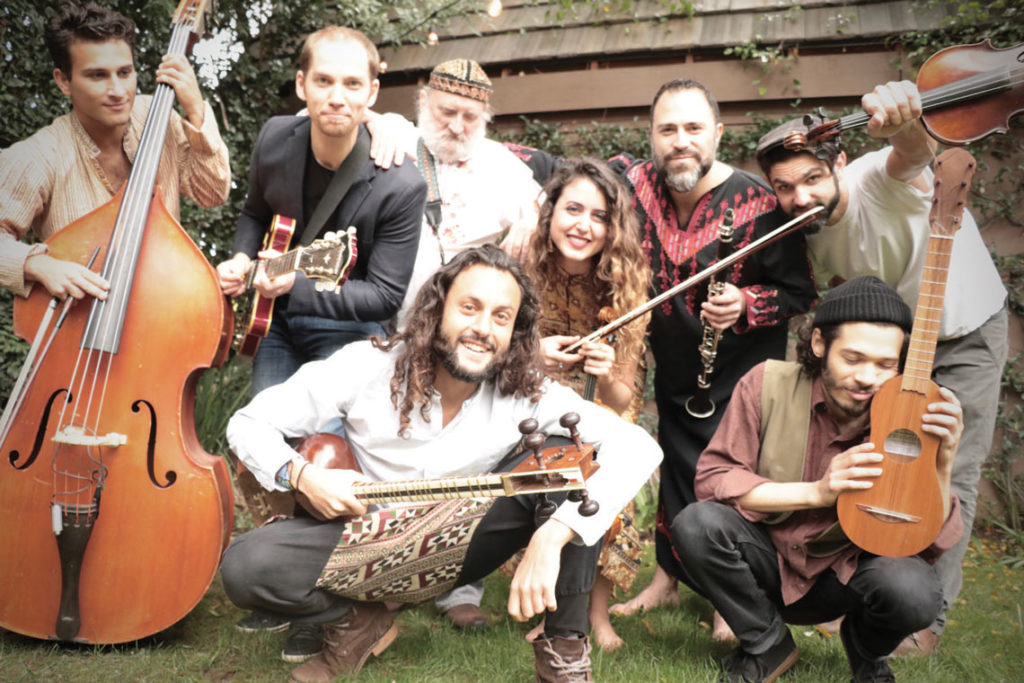
Not long after that moment at the Wall, her prayer was answered. Pourmorady, 27, formed The Chloé Pourmorady Ensemble, performing music and lyrics as infectious as childlike joy or as deep and soulful as liturgical melodies, drawing inspiration from Persian, klezmer, Sephardic, gypsy and Middle Eastern sources.

In fact, Pourmorady — born in Los Angeles — has roots in the Middle East.

“I’m first-generation American,” she told the Journal in her parents’ Westwood home before a rehearsal for a June 27 concert at the Skirball Cultural Center. Her parents are from Iran and left in 1979 after the revolution. She grew up in Los Angeles, attended Sinai Temple through the eighth grade, gaining a strong Jewish education.

“I’ve always felt as if I was brought up in two different countries,” she said. “Inside of my house was one country, and outside it was a different country. Inside my house it feels creative, warm — an old, traditional atmosphere. But outside, I’m reminded that I’m in America. In my house we speak Farsi and English, and the aromas here at home —  a lot of cardamom, a lot of turmeric, saffron; those three, the holy trinity. I feel that my music is like that too, that mix of smells that blend into a pleasant whole.”

Pourmorady said her greatest influence has been her father, Kourosh Pourmorady, an attorney and self-taught musician and lyricist.

“He’s really inspirational to me, and we create music together, so he wrote the lyrics, the poetry for a lot of the music you’re going to hear at this concert,” she said. “As we create together, the Persian roots are there, the Persian feeling is there. But then with the music, I bring elements from other cultures and I mix it with his lyrics. So it’s a really interesting fusion of styles that you wouldn’t typically hear.”

Pourmorady said she owes her integration of different musical styles to her extensive travels. Whether it’s Spain, Portugal, Greece, Hungary, the Balkans, Czech Republic, France, Italy or elsewhere, she said, she absorbs musical ideas. In Granada, Spain, she was deeply moved by a woman singing a Sephardic song. Pourmorady then folded Ladino songs into her own work and was happily surprised to learn that her father’s family has Sephardic roots, dating back nine generations to Toledo, Spain.

“I needed to travel and experience life in order to express my own music,” she said. “And you really hear that in the music I play, you hear these different places and cultures.”

When she returned from Israel, Pourmorady began to assemble her ensemble. She already had a small group when she crossed paths with Daniel Raijman, a 32-year-old guitarist and arranger who was born in Israel and grew up in Argentina, where he regularly performed jazz and tango. They met at Sinai Temple when both were performing music for High Holy Days events.

“When I first heard her, I didn’t just want to sit and listen,” Raijman said. “What I wanted to do was join in, jump in and play music with her ensemble.”

Raijman plays guitar in the ensemble and also works on arrangements and orchestrations. “Normally, Chloé has a clear idea where she wants to go with each song,” he said. “She comes in with a melody, and we decide how it’s going to be handled — which part fits the clarinet best, which part the guitar. … We all rehearse and keep adapting until we have it in the shape we want.”

Pourmorady said that when the ensemble began to perform, those who attended the first few concerts were mostly from the Persian-Jewish community. During the past year, however, the audiences, like the music, have been more and more diverse. The Skirball concert will feature Cantor Liran Kohn of Baba Sale Congregation.

“It really adds a lot that people [in the ensemble] come from different backgrounds,” Pourmorady said. “Everybody comes from somewhere else, with different training and traditions. The group is extremely diverse, musically and culturally, but when we’re all in the same musical moment, which happens a lot, when we all mesh, it feels as if we’re all just flowing together.”

The Chloé Pourmorady Ensemble will perform at Skirball Cultural Center at 8 p.m. June 27. For tickets and more information, go to www.bit.ly/chloeskirball.

Chloé Pourmorady Ensemble to visit Skirball Read More »