fbpx

May 30, 2017

Ari-Graynor

The Jewish shows, stars and themes of summer TV

Members of the tribe populate this summer’s offerings — on camera and behind the scenes — in broadcast and cable shows about the lives of millennials and comedians, an infamous scandal, Holocaust survival and the joys of getting old.

“THE WIZARD OF LIES”

In his 30-year career, Hank Azaria has racked up impressive credits in film (“The Birdcage,” “Quiz Show”), theater (“Spamalot”) and television, winning Emmys for “Tuesdays With Morrie,” “The Simpsons” (four times) and “Ray Donovan.” This season, he won raves for playing the titular baseball announcer in the IFC comedy “Brockmire,” already renewed for Season Two.

Now, in “The Wizard of Lies,” HBO’s dramatization of Bernie Madoff’s $65 billion Ponzi scheme scandal, he plays Frank DiPascali, Madoff’s (Robert De Niro) chief lieutenant.

“It’s a terrible tragedy that touched so many lives. The movie shows how hard it was on the family, living in the center of that,” said Azaria, who revealed a long-ago connection to the Madoff story — he went to summer camp with Mark Madoff (Bernie’s late son). “I hadn’t seen or spoken to him since we were 14 years old. But I knew him fairly well back then, well enough to be fairly affected by the whole thing,” he said.

In preparation for the part, the actor read accounts of the case and spoke to the FBI agents who had interviewed DiPascali, who pleaded guilty to 10 counts relating to the Madoff case and died in 2015 while awaiting sentencing. “They gave me information not only on what he said but how he said it. He happened to be very good with numbers, more capable than your average criminal, and morally ambiguous,” Azaria said. “He was uniquely suited to perpetrate a scam like this.”

He pronounced working with De Niro “every actor’s dream. It’s like playing basketball with Michael Jordan,” the sports-loving Knicks, Mets and Jets fan said.

Born in Queens, N.Y., Azaria, 53, has Sephardic-Jewish roots in Spain via Greece. He grew up eating Sephardic foods at Passover and hearing his elders speaking Ladino. But as proud as he is to be Jewish, he wasn’t raised in an observant family. He didn’t attend Hebrew school and was tutored as a bar mitzvah, like his friends.

He first felt a connection to Judaism when he took a Yiddish literature class at Tufts University. “I learned about Jewish life and identity from the shtetl to America through the lens of studying Sholem Aleichem, Philip Roth, Isaac Bashevis Singer and Bernard Malamud. I never thought about how assimilated I was and am until I took that course,” Azaria said.

Today, he lives on Manhattan’s Upper West Side, “steeped in Jewish culture.” His son Hal, who will turn 8 on June 6, attended a Jewish preschool, although his mother is not Jewish. “We expose him to both traditions and we’ll let him decide later in life,” Azaria said.

Reflecting on his own childhood, Azaria said he discovered his talent for mimicry early on. “But I didn’t make the connection that mimicking could be part of a career till my late teens and 20s, once I started acting in college,” he said. He’s been putting those skills to use by voicing multiple characters on “The Simpsons,” including favorites Moe and Professor Frink, since 1989.

Azaria’s wish list for the future includes more theater, a trip to Italy, and working with directors Martin Scorsese, Steven Spielberg and Steven Soderbergh. He had a great experience making the recent film “Norman” with Richard Gere and director Joseph Cedar. But pointing out the “tremendous creative freedom” that cable television allows, he said he’s most at home working on projects like “Brockmire” (which he produces), “Ray Donovan” and “The Wizard of Lies.”

“Just in the last few years, I’m starting to feel that I know what I’m doing,” Azaria said. “Not only feel like I have some expertise, but I really enjoy it and I think it’s shown up in
my work.”

“The Wizard of Lies” is playing now on HBO.

“I’M DYING UP HERE”

https://www.youtube.com/watch?v=6kye0QwGX9E

Ari Graynor is known for comedies like “Nick & Norah’s Infinite Playlist” and “What’s Your Number?” but had never done stand-up before she landed her latest role in “I’m Dying Up Here.” In the Showtime series, Graynor plays Cassie Feder, a Jewish woman from Texas who is trying to make it in the Los Angeles comedy scene in the early 1970s.

“Even though it’s set in the ’70s, it feels like a mirror to today. A lot of the issues they were confronting are the same,” she said.

To prepare for the role, Graynor read books — including William Knoedelseder’s, which inspired the series — and watched routines by comedians such as Elayne Boosler, Richard Pryor and Robert Klein.

“The main difference between playing and being a stand-up is the material isn’t coming from myself. Even though I had to stand onstage and tell jokes, I had a bit of a cushion of having a character to play,” Graynor said. “But it’s definitely scary when you’re standing in front of 100 people, extras or not. There’s no place to hide.”

Graynor welcomed the chance to challenge herself with Cassie, whom she described as “strong and tough and vulnerable and sad. She’s going through a loss and is trying to find her voice and be better at what she does.” Her Jewishness is often referred to, “but what I like about it is it’s not the basis of her identity. It’s just one of the facets of who she is,” Graynor said. It’s the first role in which Graynor has let her naturally curly hair run free.

The Boston-born daughter of a Lithuanian-Jewish mother and a father who was raised Catholic but converted to Judaism, Graynor, 34, said she feels “very connected to the traditions of Judaism and I feel very Jewish in a lot of ways, yet I’m not religious. I did have a bat mitzvah and have gone to some very casual services. But I don’t actually know that much about the religion.”

Graynor made her acting debut in a first-grade play “and knew right then that it was what I wanted to do,” she said. She did community theater, got an agent, and the summer before her senior year in high school, she was cast as Caitlin Rucker in “The Sopranos.” 

There have been other highlights on both stage and screen since then in dramas and comedies. And while she doesn’t consider herself a comedian, she learned how to get laughs doing plays like “Brooklyn Boy” and Woody Allen’s one-act “Honeymoon Motel” portion of the three-play production “Relatively Speaking.”

Going forward, Graynor wants to push past her comfort zone and continue challenging herself. “That’s where I feel most alive and engaged,” she said. She has written two screenplays and hopes to direct one and possibly act in the other. She wants to develop and produce projects and “work with smart, engaged, creative people who really care about what they’re putting in the world and why.”

In her personal life, she’d like go to Israel with her mother, refresh her darkroom skills and, eventually, have “a really solid partnership” and kids. “Traveling, reading, writing, theater, art, expression, the relationships with the people in my life and new experiences make me feel joy,” Graynor said. “I want to learn as much as I can about the world so I can be a mirror for it as an actor, as a writer and as a human.”

“I’m Dying Up Here” premieres June 4 at 10 p.m. on Showtime.

“IF YOU’RE NOT IN THE OBIT, EAT BREAKFAST”

Why do some people live active, happy, productive lives into their 90s and beyond? Is it just fortunate genetics, or is it something more? The HBO documentary “If You’re Not in the Obit, Eat Breakfast” explores that question by spotlighting celebrities and civilians who are thriving in their ninth and 10th decades.

Talent manager and producer George Shapiro, 86, got the idea by watching his energetic uncle (and client) Carl Reiner, 95, maintain an active writing, appearance and social schedule. Reiner readily agreed to interview his friends Mel Brooks, 90, Norman Lear, 94, and Dick Van Dyke, 91, about aging well.

The roster soon expanded to include Betty White, 95; Kirk Douglas, 100; a nonagenarian yoga teacher; and a 101-year-old marathon runner. Longevity expert Dan Buettner weighs in, as does Jerry Seinfeld. (Shapiro manages the comedian and produces his TV shows, going back to “Seinfeld.”) Tony Bennett, 90, performs “The Best is Yet to Come.”

The film is filled with words of wisdom from the likes of fashion icon Iris Apfel, 95, and funny anecdotes, including Seinfeld’s story about getting Reiner’s autograph when he was 8 years old. “It changes the perception of people in their 90s getting old and being decrepit,” Shapiro said.

All the participants in the documentary, completed last year, are alive and well, with the exception of pianist Irving Fields and actor Fyvush Finkel.

Shapiro believes “having fun, being with friends and family, having the joy of creativity contributes enormously to sticking around longer. Interests are very important; so is keeping your mind and body active,” he said, rattling off a list of projects on his and his clients’ schedules. Fittingly, Reiner’s latest book, due in June, is titled “Too Busy to Die.”

Shapiro hopes those who watch “Obit” are inspired and encouraged by it.

“If you asked me three years ago if I would like to live to 100, I’d say, ‘No, thank you,’ ” he said. “Now I have a completely different attitude.”

“If You’re Not in the Obit, Eat Breakfast” premieres June 5 at 8 p.m. on HBO.

“YOUNGER”

In the TV Land series “Younger,” about young career women in New York, Jewish actress Molly Bernard plays quirky fashion publicist Lauren Heller, also Jewish.

“There are some episodes where Lauren is a wildly, explicitly Jewish princess, and others where it’s not the focus, it’s just how she moves through the world,” Bernard said.

As the fourth season begins, “pansexual” Lauren is struggling “with her identity and her heart,” questioning whether to stick with the nice Jewish doctor she’s seeing, Bernard said. Meanwhile, “she continues to come up with wild, creative solutions to everybody’s problems.”

Bernard said she loves playing a character who is “totally over the top and brave, and unconditionally loves herself,” but revealed that initially she had trouble understanding Lauren “because she was so different from myself. Now the gap is getting smaller. I’m learning from her: I have more confidence than I’ve ever had,” she said, adding that it helped her dive into another Jewish role.

After one appearance in Season Three of “Transparent,” she will return in several episodes of the Amazon series as the younger version of Judith Light’s Shelly in flashbacks. “She has a really complicated arc this year,” Bernard said.

Bernard was raised “culturally Jewish” in New York by her late paternal grandparents, actor and acting teacher Joseph Bernard, who co-founded the Lee Strasberg Institute, and his wife, Bina, the first female district leader in Manhattan. “I was not bat mitzvah. The ‘Hot Mitzvah’ episode of ‘Younger’ was the one I never had,” she said. “I love celebrating Passover and Chanukah. I want to go to temple more.”

Bernard, who got her bachelor’s degree from Skidmore College and her master’s degree from the Yale School of Drama, credits her grandfather for inspiring her love of acting and academics. “He gave me this gift of fearlessness and joy and intellect. He formed who I became,” she said.

Back in New York after Yale, she thought she’d become a “downtown theater person.” Instead, she has a higher-profile career in TV and film, including good supporting roles in “The Intern” and “Sully.”

Her wish list now includes indie films, a Broadway show, and working with directors Wes Anderson and Woody Allen. On the personal front, she wants to go to Paris, spend more time with loved ones and have a family — eventually.

“I love kids,” she said. “But I think I need a few more years of therapy before I’m ready to be a mom.”

“Younger” premieres June 28 at 10 p.m. on TV Land.

“SHALOM ITALIA”

Italian brothers Bubi, Andrea and Emmanuel Anati survived the Holocaust by hiding in a cave in a forest in Italy. Seven decades later, the trio traveled from Israel back to Tuscany in search of the cave. Filmmaker Tamar Tal Anati (“Life in Stills”), Bubi’s daughter-in-law, begged to document the adventure, not knowing what, if anything, they’d find. “Shalom Italia,” the product of that 2013 trip, provides the answer.

“I realized that it really didn’t matter if they’d find the cave or not because the essence is the search and the dynamic between the brothers,” Tal Anati said via Skype from her home in Tel Aviv. “Each of them remembered the [childhood] experience differently, and I was fascinated by the way they deal with it now.”

She explained that the brothers didn’t see themselves as Holocaust survivors because “they weren’t in Auschwitz. They didn’t go through that horror.” But they nevertheless had to live like animals in the woods, with little food. “It’s still a trauma and it affected the rest of their lives.”

Emmanuel, the curmudgeonly archaeology professor, now 87, had the hardest time coping with those memories, “but he’s opening up more now, when we have post-screening discussions with the audience,” the director noted. In contrast, physicist and rock climber Andrea, 85, is the optimist and Bubi, 77, is the nurturer, “always taking care of everyone,” she said. “I wanted to show their true characters.”

Shooting in the dense forest was difficult and navigating with camera equipment treacherous. Anati worried that the elderly brothers, especially Emmanuel, might fall. But the payoff was big: On their last day, as daylight waned, they located the site of the cave. A few months later, 11 Anati family members returned to the spot, with a sign to mark it.

Tal Anati, who currently is shooting a TV series about female pilots-in-training in the Israeli air force, differentiated “Shalom Italia” from similar documentaries because of its various perspectives and its lighter, hopeful tone.

“People have said it’s so optimistic,” she said. “The message is about life, not about death.”

“Shalom Italia” premieres July 24 on “POV” on PBS stations.

Also Premiering

Sarah Silverman’s latest comedy special, “A Speck of Dust,” premieres May 30 on Netflix, which will launch the wrestling comedy series “GLOW,” starring Alison Brie, on June 23. Also on Netflix, Emory Cohen (“Brooklyn”) stars opposite Brad Pitt in “War Machine,” a satirical drama set in Afghanistan (May 26). 

Howie Mandel returns to judge the 12th season of “America’s Got Talent” (May 30, NBC), and Ian Kahn continues to portray George Washington in the fourth and final season of the Revolutionary War drama “Turn: Washington’s Spies” (June 17, AMC). Season Three of “Difficult People” with Julie Klausner and Billy Eichner premieres Aug. 8 on Hulu, and Amazon Prime’s “The Last Tycoon,” starring Matt Bomer as a Jewish producer loosely based on Irving Thalberg, will premiere sometime in July. “The Strain,” starring Corey Stoll, begins its fourth and final season on FX on July 16.

The Jewish shows, stars and themes of summer TV Read More »

8 interesting films to see this summer

Some of this summer’s more notable films explore Middle East terrorism, World War II battles and global warming, while others tell the life stories of seminal figures in music and photography. And there’s a bittersweet movie that is mainly in Yiddish to top it off.

“CITY OF GHOSTS”

The campaign to expose the ISIS takeover of Raqqa, a Syrian city on the Euphrates River, is the subject of “City of Ghosts.” Using their cellphone cameras, a small collection of amateur journalists, who call their group “Raqqa is Being Slaughtered Slowly (RBSS),” photographed the atrocities by ISIS troops bent on establishing a caliphate in the city. These citizen reporters then uploaded the footage to the internet for the world to see what was happening in their homeland.

In the production notes, filmmaker Matthew Heineman is quoted as saying he learned of the group in 2015, made contact with it, gained its members’ trust and began filming interviews with them and using their videos and stills. “I knew almost immediately that I wanted the spine of the story to be deeply personal verité footage, captured as the activists escaped Syria after the assassination of several members by ISIS.

“Since ISIS took over the city in March 2014, journalists have been unable to enter the region, enabling the caliphate to control the narrative of what is happening inside the city with its slick propaganda videos. So, RBSS’ footage — including some that has never been released — provides a unique, up-close and visceral window into daily life in Raqqa,” he said.

The film traces the RBSS movement back to the Arab Spring of 2011, when Raqqa was a center of protests against the regime of Syrian President Bashar Assad. Some 15 friends began reporting on the protests, using their phone cameras and their computers.

Then, in 2014, ISIS troops rolled into the city and quickly instituted a reign of terror, with public executions (shootings and beheadings) and dead bodies strewn on the streets. But, wanting to project an image of a peaceful, beautiful life in the city, ISIS produced increasingly sophisticated videos, disseminating them largely for recruitment purposes.

In reaction, the small band of lay reporters formed RBSS, a website and social media presence, and went undercover to record the brutality. When it became dangerous, some fled to Turkey, then to the relative safety of Germany, where the documentary shows them continuing to receive footage from secret operatives in Raqqa and to post the images on the internet.

“The contrast of ISIS’ videos, which proclaim a fully functioning and prosperous state, with those of RBSS, which captured the dysfunction and violence of everyday life, is shocking. In a sense, it’s a war of ideas, a war of propaganda, a war being waged with cameras and computers, not just guns,” according to Heineman’s statement in the press notes. The filmmaker adds that the film’s themes broadened beyond the war into “the immigrant experience, the strength of brotherhood, and one’s haunting relationship with trauma.”

In one particularly horrific section, the group member named Hamoud watches a video of his father, who is tied to a post, being shot to death by ISIS. Although Hamoud remains stoic, blood begins spurting from his mouth.

Todd McCarthy, in his Hollywood Reporter review, writes, “Heineman offers up a double portrait of devastation, of a truly destroyed city and of partially decimated survivors, leaving the viewer with an empathetic sense of deep sorrow.”

“City of Ghosts” opens July 14.

“CHURCHILL”

https://www.youtube.com/watch?v=sVOzMZ4IrMA

A largely unknown view of former British Prime Minister Winston Churchill is presented in Jonathan Teplitzky’s World War II drama, “Churchill.” The action takes place just days before D-Day, the Allied invasion of Europe at Normandy, on June 6, 1944.

As the film opens, Churchill (Brian Cox) is strolling near the seashore and suddenly has a vision of the water running red with blood. The movie portrays Churchill’s unwillingness to accept the Allies’ invasion plans, fearing catastrophic losses, together with his own emotional issues and depression.

During an interview with the Journal while on another shoot in Australia, Teplitzky said he was invited onboard the “Churchill” project late in the movie’s development and was very drawn to the story.

“In many ways, in my view, his personal struggles only made his public and political achievements all the more remarkable and substantial, because he stops being a myth and we can see him more as a human being with human flaws,” the director said.

Cox re-creates Churchill’s physicality and his speech patterns, but Teplitzky said he and the actor wanted much more. “Brian and I both wanted a complex and deeply layered character, one whose humanity, vulnerabilities and flaws reveal themselves to us and the audience. We wanted to use the iconic stuff, the physical look and mannerisms, his speech rhythms, etc., as a doorway into this intimate human portrait. His big obsession, I think, comes from guilt in his role in a number of operations, and in particular Gallipoli, which resulted in massive loss of life.”

Churchill was a commander at the Battle of Gallipoli, a World War I disaster that cost hundreds of thousands of British, French, Australian and New Zealand casualties.

“But by now in 1944, with the U.S. in many ways running the Allied war effort, Churchill was somewhat sidelined, so it diluted his influence and ability to enforce change,” Teplitzky said. “This coupled with his depression, the two working off each other and fueling each other, was a big factor in his psychological state. I also think there is an element in the film which is about a man getting old and questioning his relevance.”

Churchill’s reservations about D-Day led him to clash openly with the supreme Allied commander, U.S. Gen. Dwight D. Eisenhower (John Slattery), as well as British Gen. Bernard Montgomery (Julian Wadham) and other officers. The prime minister succumbs to one of his periodic attacks of depression and self-medicates by drinking excessively.

It is his strong, assertive wife, Clementine (Miranda Richardson), feeling overlooked and marginalized by her husband, who reminds Churchill that Eisenhower, Montgomery and the others have a great deal of war experience — just as he has.“Don’t complain when someone tells you the truth,” she says.

Ultimately, Churchill is reconciled to D-Day, and when the Allies start winning, he broadcasts a speech over the BBC, telling the nation they have pushed back the Nazis. He states this is not a war for glory, but a war for freedom in which England will never surrender.

Teplitzky believes the film still has much to say about contemporary issues. It explores a man “at the center of momentous events, who presents a flawed but brilliant personality and the way such a personality impacts on people’s lives. We can only understand and learn from history if we look at it from many points of views, not just from a prescriptive and often conservative angle.”

“Churchill” opens June 2.

“LONG STRANGE TRIP”

The documentary “Long Strange Trip“ examines another form of personal demons as it chronicles the 30-year run of the iconic rock group the Grateful Dead and the troubled life of one of the band’s co-founders, Jerry Garcia.

Some audiences may find the four-hour length, broken by an intermission, somewhat intimidating, but the group’s die-hard fans, known as Deadheads, undoubtedly will hang on every word. In addition to many interviews, the film is replete with archival footage, photos, macabre cartoons centered on images of death and, of course, the music.

However, director Amir Bar-Lev, a fan of the band since he was 13, is quoted in the promotional materials as saying he wanted the film to appeal to an audience beyond Deadheads.

“For decades, when Deadheads were pressed as to what was so special about the band,” he states, “they could simply answer something along the lines of, ‘I can’t explain it. You have to go to a show to understand.’ I wanted to challenge myself to do better than that, so I reached out to the most articulate people I know around the Dead scene.”

Just as the band’s music was largely improvisational, the film has the feel of being loosely structured. Band members, a music producer, Garcia’s daughter and others offer unique perspectives on the band and its fans.

The band itself was eclectic, with the original members coming from various musical traditions, so the Dead’s music encompassed jazz, R&B, folk, blues, rock ’n’ roll and other genres.

Garcia, the group’s de facto leader, eschewed the idea of being in charge and envisioned the band as a collective with no preset rules. The disparate bunch he assembled in 1965 was called the Warlocks at first, but when they learned another band had the same name, they became the Grateful Dead, a phrase they found in the dictionary. Early on, they began using the mind-altering drug LSD and soon moved to the Haight-Ashbury district in San Francisco, home to the burgeoning Beat-influenced counterculture of the period.

From there, the film follows the band’s unsuccessful first steps under contract to Warner Bros. Records, its eventual recording triumphs and its decision to focus on being a touring band. There is footage of the now legendary performance at London’s Lyceum Theatre on May 23, 1972, during which Garcia performed a guitar solo of “Morning Dew” with tears running down his face.

But things ultimately got out of hand due to the group’s lack of structure, as well as the unwieldy party atmosphere that evolved among the fans.

There also was heavy drug use. Garcia became increasingly isolated and dependent on heroin until, in 1995, at age 53, he died in his sleep of a heart attack at a rehab center in Marin County.

In the press notes, Bar-Lev responds to a question about whether he was aware that the history of the Dead in many ways mirrors the history of America in the second half of the 20th century. The filmmaker answers by referring to what he calls Garcia’s “radical pluralism” and pointing to the “traveling counter-cultural city” that the band inspired.

He concludes, “It all strikes me as quintessentially American. The Grateful Dead are the musical Statue of Liberty.”

“Long Strange Trip” opens May 26.

“THE B-SIDE: ELSA DORFMAN’S PORTRAIT PHOTOGRAPHY”

On a softer level, we have filmmaker Errol Morris’ homage to 80-year-old portrait photographer Elsa Dorfman. With this documentary, Morris departs from his usual weightier fare. His past projects examined such figures as former Secretary of Defense Robert McNamara, who admits his mistakes regarding the Vietnam War in “The Fog of War: Eleven Lessons From the Life of Robert S. McNamara,” and Fred A. Leuchter (“Mr. Death: The Rise and Fall of Fred A. Leuchter, Jr.”), an adviser to prisons on executions who wrote a report denying that gas chambers were used for mass murder at Auschwitz.

With “The B-Side,” Morris has crafted a gentle, sweet work that becomes something of a memoir for Dorfman, one of the last photographers working in an analog format when most photography has gone digital. As the movie progresses, she brings out photograph after photograph and reminisces about her life and work.

After college, Dorfman got a job in New York as a secretary at Grove Press, and there she met famous Beat Generation writers and poets, including Allen Ginsberg, who became a lifelong friend and frequent photographic subject.

As a self-described “nice Jewish girl” from Massachusetts, Dorfman says in the film that the New York world of artists was too much for her, so she returned to Cambridge and went into teaching. It wasn’t until she was 28, in 1965, that she started taking pictures — and in the early1980s, she began using Polaroid’s giant 20×24 camera, shooting large color portraits.

Although Dorfman never garnered the fame of such photographers as Richard Avedon, Milton Greene or Annie Leibovitz, she nevertheless photographed many luminaries in addition to Ginsberg, including poet, painter and activist Lawrence Ferlinghetti, essayist Anaïs Nin, musician Bob Dylan, poet W.H. Auden, and radical feminist and writer Andrea Dworkin.

She also took a series of self-portraits and added captions at the bottom of the photographs. On her cyberjournal, Dorfman writes: “I make self-portraits on my birthday and every now and then when I have only one shot left in the case of film. (I think it is good for me to experience what my subjects are going through — and it is wild to see how I have changed.)”

Whenever she photographed paying clients, she shot two exposures. The customers would choose the one they liked and she would keep the other one, which she dubbed “the B-Side,” hence the film’s title.

Unfortunately, Polaroid went bankrupt and stopped making film for the 20×24 camera. So, as the movie was being shot, Dorfman was facing retirement.

She sums up her approach by saying on her cyberjournal that she doesn’t try to uncover people’s souls. “As a photographer I am not interested in pointing my camera at the pathos of other people’s lives. I don’t try to reveal or to probe. I certainly don’t try to capture souls. (If any soul is revealed, it’s mine.)

“For me the key word is ‘apparently.’ All I hope my photographs say is this person lives and this person was here.”

“The B-Side: Elsa Dorfman’s Portrait Photography” opens June 30.

ALSO OF INTEREST

“An Inconvenient Sequel: Truth to Power” — This film is a follow-up to the 2006 Oscar-winning documentary “An Inconvenient Truth,” in which former Vice President Al Gore made his case for the need to reverse global warming. The sequel tracks the progress made in addressing climate change. The documentary follows Gore as he continues to inspire people to get involved in the movement for alternative, safer forms of energy. Opens July 28.

“Dunkirk” — Here is another World War II film. This one focuses on the evacuation of 300,000 British, French, Belgian and Dutch soldiers from the beaches of Dunkirk, France, in May 1940, as the Nazis invaded. The Allied soldiers were saved with the help of every available British military and civilian ship. Director Christopher Nolan is quoted in Variety as saying, “Dunkirk and the legend of it is something that British people grow up with — it’s in our DNA.” Opens July 21.

“13 Minutes” — Returning again to the second world war era, this movie from Germany is based on the true story of a free-spirited German carpenter, Georg Elser, who planted a bomb set to go off during a speech given by Adolf Hitler on Nov. 8, 1939. But Hitler unexpectedly left 13 minutes before the explosion, and eight unintended victims were killed. Although Elser acted alone, the heads of the Gestapo and the Criminal Police believed he was part of a larger plot and had him tortured, hoping to get the names of co-conspirators. When no names were forthcoming, Elser was sent to the Sachsenhausen concentration camp and then to Dachau, where he ultimately was executed. Opens June 30.

“Menashe” — Loosely based on the life of its star, Menashe Lustig (a YouTube comedian), the movie takes place in Brooklyn’s Chasidic community and is filmed almost completely in Yiddish. The title character, who works in a kosher supermarket, has become a widower and, according to tradition, cannot raise his son without a woman in the house. Pressured either to find a wife or let his married brother-in-law raise the boy, Menashe struggles to prove himself worthy of being a parent. Opens July 28.

8 interesting films to see this summer Read More »

Past-Life

Holocaust is passed down and always present in ‘Past Life’

The parents ate sour grapes and the children have rotten teeth.”

That line from the film “Past Life” summarizes the story’s exploration of the Holocaust’s effect on subsequent generations.

The movie is the first in a trilogy planned by writer-director Avi Nesher, one of Israel’s foremost filmmakers. “The other two stories also deal with the way the past affects the present, true to the Faulkner quote, ‘The past is never dead. It’s not even past.’ Both stories also feature complex relationships between parents and children — an arena where the past plays a particularly important part,” Nesher said in a recent interview.

The film is based on the book “Can Heaven Be Void?” by Holocaust survivor Baruch Milch, one of the movie’s main characters (played by Doron Tavory). Nesher also used information supplied by Milch’s daughter, Ella Milch-Sheriff, a renowned musician and composer, who contributed to the film’s haunting score.

As the movie begins, it is 1977, and Sephi Milch (Joy Rieger), the role based on Milch-Sheriff, is a vocal soloist at a concert in West Berlin. During the reception that follows, a much older woman (Katarzyna Gniewkowska) accosts Sephi and accuses her of being the daughter of a murderer. The woman is with her son (Rafael Stachowiak), a famous composer, who apologizes, saying his mother had a hard time during World War II.

The incident sets a series of events in motion, as the sensitive Sephi and her hard-nosed sister, Nana (Nelly Tagar), begin a quest to uncover painful secrets about their father’s past, especially about what he did while hiding from the Nazis in Poland. Their investigation and what they uncover could well cause a cataclysm in their family. An aura of suspense accompanies the twists and turns of revelations from a dark history.

As the son of Holocaust survivors himself, Nesher said he relates to the story. He explained why he tackled this subject.

“I feel that I live in a country which is trapped in its past and, most particularly, in its traumas,” the director said. “Israel is an extraordinary nation, which has [had] incredible achievements in its 69 years of existence, and yet the trauma of the Holocaust is still used by Israeli politicians in order to justify political maneuvers that do not necessarily serve the greater Israeli good. National traumas [such as slavery in America] can only be solved culturally, and cinema is a great catalyst for initiating such a process.”

The Milch family lives in Israel, and Baruch, a gynecologist, is drawn as a toughened man who was hard on his daughters, especially on Nana, whom he beat when she was young. The real-life Baruch Milch revealed his own embittered nature through his book, in which he wrote his personal Ten Commandments, such as “Though shalt have no other God before yourself,” “Do not have faith — the sky is empty,” “Toughen your heart and do not heed it” and “Do not get close to people, and do not bring them close to you.”

“Baruch is a man who believes that we live in a tough, cruel world, and you cannot afford to display any weakness, or kindness, or magnanimity. He expects the world out of his daughters. He wants them to achieve great things and, in a way, accomplish what history prevented him from accomplishing,” Nesher said. He added, “For me, the central themes of this film are the acceptance of humans as flawed beings and the inevitable conclusion of this acceptance, which is forgiveness.”

Another theme in the film is sexism. Sephi wants to be a composer, but her chauvinistic instructor discourages her, saying there are no female composers of any note. Ultimately, she triumphs.

All in all, Nesher believes his film’s core issues are relevant today, especially in his area of the world.

“As an Israeli, I feel that I am part of a battle between two people [Jewish and Palestinian] who carry a very heavy emotional load regarding the past and are out for ‘justice,’ ” he said. “I believe that, in this case, justice is a dangerous and impractical concept — forgiveness is the first step toward coexistence. Each side can develop a compelling argument as to why they are ‘right’ and the other side is ‘wrong’ — but that will translate to much future bloodshed.”

As for what Nesher would like audiences to take away from his film, he said, “I would like people to think of their own past and how it shapes, for better or for worse, their own present.”

“Past Life” opens in Los Angeles on June 2.

Holocaust is passed down and always present in ‘Past Life’ Read More »

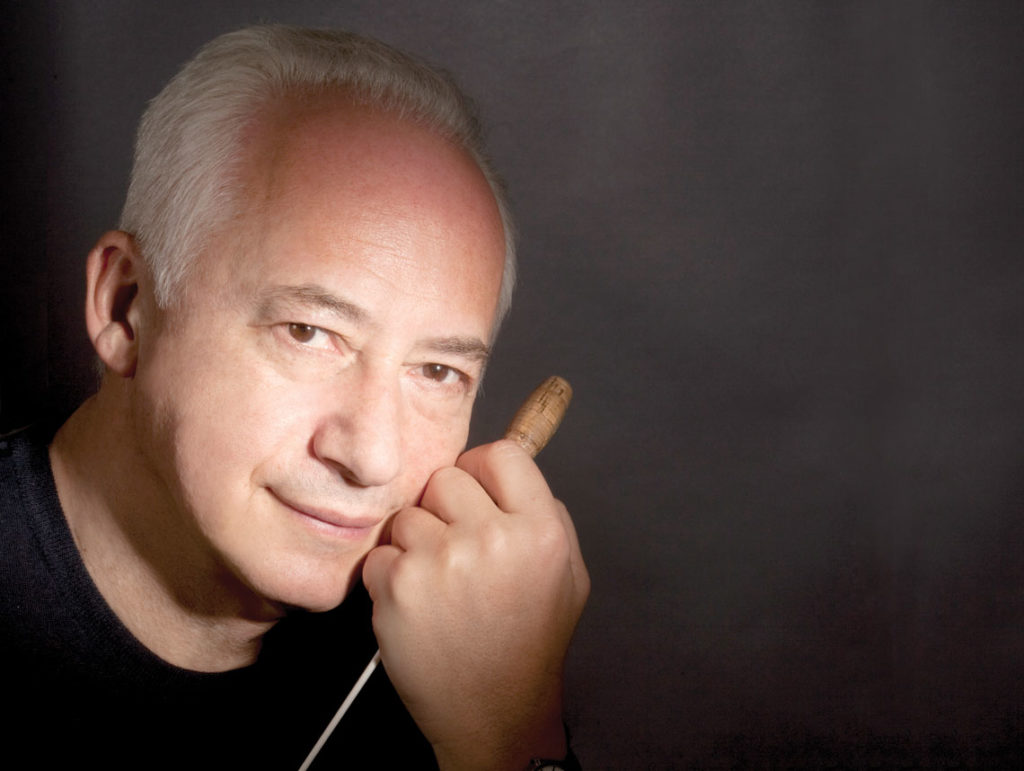
Vladimir-Spivakov

Russian violinist Vladimir Spivakov brings company for return to U.S.

America welcomed Russian violinist Vladimir Spivakov from the start. After his United States recital debut in 1975, critics compared him to Jascha Heifetz and David Oistrakh. A Chicago Tribune reviewer wrote,  “He has everything.”

But even though Spivakov has maintained a solo career — including a recent recital tour in Spain — conducting began taking up more of his time after he founded the Moscow Virtuosi Chamber Orchestra in 1979.

In just a few years, Spivakov, who remains the ensemble’s principal conductor, earned the respect of no less a figure than Leonard Bernstein, who presented him with one of his batons.

“It was a very valuable gift — his blessing for my conducting career,” Spivakov said recently as he prepared to lead the Moscow Virtuosi on its upcoming North American tour, which includes a stop at the Wilshire Ebell Theatre in Los Angeles on June 10. “I still carry it and use it to this day.”

The Moscow Virtuosi consists of some 30 musicians, with a string section known for conveying a plush warmth that is characteristic of Russian orchestras. But Spivakov said the sound of the ensemble changes depending on the score.

“We perform Bach and Mozart with a more contained, classic sound than we play [Astor] Piazzolla,” Spivakov said, referring to the Argentine tango composer. “This is a matter of good taste, professionalism and appropriateness.”

The conductor said the musicians, who originally included the most talented students of Oistrakh and cellist Mstislav Rostropovich, “look much younger” these days. “But the unified pure tone, spotless technique, tight vibrato and deep appreciation for the composer’s underlying meaning is still there. Call it the Russian sound, or maybe it is just the Russian classical school.”

Spivakov said the Moscow Virtuosi grew out of his love for chamber music. “This was not just any orchestra,” he said. “All of the musicians were soloists or first chairs in the major orchestras in Russia, the crème de la crème of the Russian classical music scene at that time.”

The conductor said the orchestra had been scheduled to make its U.S. debut in 1980, but because of the Soviet invasion of Afghanistan and the U.S. boycott of the 1980 Summer Olympics in Moscow, that tour was canceled. The U.S. debut came seven years later.

For Spivakov, that was not the first time politics attempted to silence his music-making. In November 1976, his Carnegie Hall recital became the setting for an aggressive protest by American-Jewish militants against the Soviet Union’s treatment of its Jewish citizens. During his performance of Schubert’s Sonata in A minor, a man ran down the aisle shouting in Russian, ‘Remember the Soviet Jews,’ and in the middle of his next piece, Bach’s solo Chaconne in D minor, another militant splattered Spivakov with a paint bomb.

“The irony of it all is that I am Jewish,” Spivakov said. “At the time, it was an international scandal, but it reminds us how hard the situation was in Russia for Jews 40 years ago.”

Spivakov, who was born in the Urals in 1944, said being Jewish in the Soviet Union was difficult. “My parents were born in Russia, but growing up in the Soviet Union, being Jewish was forbidden. Me and other Jewish boys in my neighborhood got beaten up really hard for just being Jewish, and that was really hard to comprehend.”

After one particularly bad incident, Spivakov said he decided to learn a sport to become strong enough to hold his own in these fights. “I chose boxing and still practice this sport sometimes to keep in shape,” he said.

He added that although he doesn’t observe any religion, “I do identify myself as Jewish, feel proud of the country of Israel and love performing there.”

After years of providing young musicians with expensive instruments and opportunities to perform abroad, sometimes with the Moscow Virtuosi, Spivakov started the Vladimir Spivakov Charity Foundation in 1994.

“We practically had no organizations in Russia working with kids,” he said. “Since its inception, our foundation has helped over 20,000 kids. We get thousands of letters from all over Russia asking for help, and not necessarily related to music. We also helped with medical assistance. There is no law in Russia that gives a tax break to charities or to people who contribute to charities, so there is not financial incentive to help, like in the U.S.”

For his Ebell Theatre program, Spivakov, who also will perform as a soloist, will present a mix of entertaining and challenging works, including Mozart’s Divertimento No. 1 in D major (K. 136) and Shostakovich’s Chamber Symphony in C minor (Op. 110a) — an orchestral arrangement by Rudolf Barshai of Shostakovich’s String Quartet No. 8 dedicated “to the memory of victims of fascism and the [second world] war.”

The concert also includes charming orchestral pieces by Grieg and opera hits sung by Russian star soprano Hibla Gerzmava.

Max Bruch’s prayerful adagio “Kol Nidrei” for cello and orchestra, featuring young Israeli cellist Danielle Akta, follows Shostakovich’s Chamber Symphony.

For Spivakov, who has three daughters, Akta’s presence is a hopeful sign for the future of music. For him, music-making these days is all about investing in future generations. Indeed, Spivakov’s foundation helped the 14-year-old Akta, who already is a veteran performer of Bruch’s “Kol Nidrei,” which is based on Hebrew melodies.

Akta first learned and performed “Kol Nidrei” when she was 10. A few months ago, she performed the piece in Poland at a cemetery where people who had been executed are buried.

“I played in memory of the Holocaust victims,” Akta said from Berlin, where she is studying at the Barenboim-Said Academy.  “The piece feels so strong and deep. I am taking many of the moments from that concert and ceremony with me for all my life.”

Akta’s relationship with the Moscow Virtuosi began in 2013, when she was awarded a grant from Spivakov’s foundation. She already had won several cello competitions and performed abroad and in Israel. Akta was 12 when she made her debut with the Israel Philharmonic Orchestra.

“She is an extraordinary talent and also a very inspirational young lady,” Spivakov said. “Her love of music, creative freedom and mature sound make us all treat her like a grown-up peer, although she is just a kid.”

Last year, Spivakov’s foundation also awarded Akta an expensive Italian cello and bow. “That cello is definitely a part of me,” she said.

While Spivakov continues to enjoy a solo career — his last U.S. recital tour was in 2012 with pianist Olga Kern — he also is the principal conductor of the National Philharmonic of Russia, president of the International House of Music in Moscow and artistic director of the music festival in Colmar, France, which he founded in 1989.

“I am wearing a lot of hats,” he said, “and there is less time for my solo career. But I still try to practice daily and really love my instrument. Violin is my life.”

Vladimir Spivakov and the Moscow Virtuosi Chamber Orchestra, with Hibla Gerzmava and Danielle Akta, will perform on June 10 at 7 p.m. at the Wilshire Ebell Theatre, 4401 W. Eighth St., Los Angeles. For more information, call (323) 939-1128 or visit ebella.org.

Russian violinist Vladimir Spivakov brings company for return to U.S. Read More »

BDS, back to front

The BDS phenomenon is not new.

Prior to Israel’s declaration in 1948, a boycott was initiated in 1882 against the Jews of Europe.

The sole purpose was to isolate and destroy their social, economic and intellectual lives as advocated by the Anti-Jewish Congress in Dresden 1882. In the Austro-Hungarian Empire, the slogan “Don’t buy from Jews” was deemed illegal, so they changed their slogan to “Buy from Christians only.”

When Hitler came to power in 1933, Nazi guards stood in front of Jewish shops and offices of Jewish doctors, lawyers, and engineers, denying entry and assaulting their clients.

The Polish government followed suit. Occasionally these boycotts ended in pogroms such as at Przytyk. The boycotts went hand in hand with the government’s encouragement of Jewish emigration. Clergy like the priest Stojalkowski publicly supported the boycotts, not unlike Bishop Tutu and some other churches that today promote the boycott of the Jewish State.

The Arab League started a boycott of “Jewish products and manufactured goods” in 1945 which was formalised in 1948 with the establishment of the Arab League’s Central Boycott Office in Damascus. The boycott was total and included blacklisting of firms that did business with other firms doing business with Israel.

Thus, companies such as British Aerospace, Shell, BP and major banks, joined Germany’s Telefunken, BASF and Siemens in complying with the boycott. Norwich Union Insurance Society dropped Lord Mancroft, a Jew, and former government minister, from its Board of Directors.

All of this prior to the occupation.

In 1977, Congress prohibited US companies from complying with the Arab boycott. Most countries however continued to comply.

In 2001, the anti-Israel BDS movement was formed to isolate and ultimately destroy Israel, since wars were unsuccessul. The boycott extended to academia and entertainment. Thus, Tutu tried to block the Cape Town Ballet from performing in Tel Aviv and Roger Waters of Pink Floyd continues to pressurise entertainers from visiting Israel.

Many BDS supporters maintain that they only boycott West Bank products. However in my conversations with such people, they admit to boycotting all Israeli products as they ”cannot be sure if these products might be linked in some way to the West Bank.” An Israeli soldier in Ma’ale Adumim eating an ice cream manufactured in Tel Aviv would be such a link.

The fact that many computer, cell phone, bio-medical technologies, pharmaceuticals, IT security, water and clean energy technologies were developed in Israel is an inconvenient fact and makes these selective BDS advocates hypocritically absurd.

BDS advocates use Israeli products each day.

Yet there is a case for BDS.

The same EU countries that uniquely insist on “Occupied West Bank” labels for Israeli products, rushed to sign huge deals with Iran that has one of the highest execution rates in the world. In 2014, Bishop Tutu, together with Kofi Annan, visited Iran, grinning in photo ops with their leaders. They praised arch terrorist and “Death to America and Israel” supreme leader, Ayatollah Khomeini.

Their visit occurred during a “normal” fortnight of about 40 executions that included Iranian poet Hashem Shabaani.

If Tutu, academics, entertainers and BDS leaders like Mohamed Desai in South Africa who goose stepped in front of Jewish students and wrote that “Hitler was right in what he did,” have a need to BDS, they should focus on the Palestinian leadership.

The PA violates the 1989 UN Convention on the Rights of the Child and its Child Soldiers Protocol.

Activists need to BDS the Palestinian leadership that ruthlessly exploits and abuses children who are rewarded to kill Jews.

They need to BDS the PA that praises suicide bombers as young as 13. Some 160-plus small children as young as 7, have been crushed to death, forced to build Hamas terror tunnels with their tiny bodies.

The criminal Palestinian leadership has trashed the aspirations and dreams of an entire generation.

They need to BDS the PA for the ongoing honor killings of women which violate the Declaration on the Elimination of Violence against Women.

Instead, Norway, whose trade unions support the BDS, paid for the Palestinian Women’s Centre, named after Dalal Mughrabi who murdered 38 Israelis.

Gays flee for their lives to Israel. In Gaza they are punished by being thrown off the tops of buildings. Journalists, human rights activists and critics are tortured in jail—another good reason to BDS.

Activists need to BDS President Abbas in the 12th year of his 4-year presidency who cannot account for billions of dollars that disappeared. The Palestinians receive more aid than any other cause in history, including post-war Germany which worked hard to rebuild itself.

Abbas the multi-millionaire refugee leader cries all the way to the bank having made victimhood into a lucrative business.

Munib al Masri, worth some $5 billion, enjoyed a close bond with Arafat, and lives an opulent lifestyle outside Nablus. This “refugee,” supports the BDS against Israel.

Another BDS target could be Jibril Rajoub, jailed for terrorism, who continues to encourage the kidnapping and killing of Israelis on PA TV. He also said, that had the Palestinians obtained nuclear weapons they would use them.

Rajoub, who criticised the proposed minute’s silence for the murdered Israeli athletes at the Munich Olympics, heads the Palestine Football Association and Palestine Olympic Committee.

BDS advocates need to focus on the Palestinian leaders whose terrorism led to thousands of checkpoints in airports around the world. Thanks to them, toothpaste tubes are confiscated and millions experience the humiliation of having to hold up their pants while clutching their belongings after their jackets, shoes and belts were removed.

The ruling CDU party in Germany has deemed the BDS campaign to be antisemitic, reminiscent of their Nazi past. Spain, France, and all 50 states in the USA have legislated against the BDS.

BDS activists who need a cause, should therefore rather focus on the murderous kleptocracy, the PA.

One of the Ten Commandments states,”Thou shalt not steal.” This also applies to stealing the truth.

Ron Jontof-Hutter is a Fellow of the Berlin International Centre for the Study of Antisemitism and the author of the satirical novel,”The trombone man: tales of a misogynist.”

BDS, back to front Read More »

How to make blintzes: A video tutorial


FOR THE BLINTZES:

– 1 cup flour
– 2 tbsp. sugar
– 1/2 tsp. vanilla extract
– 1/2 tsp. salt
– 3 eggs
– 1 1/4 cups whole milk
– 1 tbsp. vegetable oil

FOR THE FILLING:

– 1 lb. ricotta cheese, at room temperature
– 2 tbsp sour cream or mascarpone
– 3 egg yolks
– 3 tbsp. sugar
– 1/2 tsp. lemon zest
– 1/2 tsp. vanilla extract

1.  Combine crepe batter ingredients in blender or bowl and mix until smooth.  Let rest a half hour.

2.  Combine filling ingredients in mixer or bowl and blend until smooth. (Use good quality ricotta.  If very moist, drain in cheesecloth-lined colander; set inside pan for a few hours or overnight in refrigerator)

3.  Heat a non-stick crepe pan or 8 inch skillet.  Rub with oil or butter.  Add ¼ cup batter and tilt pan to spread batter thin.  Cook until set then flip.  Cook until dry, then turn out onto plate.  Repeat until all the batter is used.

4.  Spread 2 or 3 tbsp. of filling along bottom of crepe.  Roll up into a cylinder, tucking ends in before you finish rolling. Repeat until all the crepes are filled.

5.  Heat one tbsp. vegetable oil in a skillet, Add crepes 2-3 at a time and cook on each side until golden. Serve with a dollop of sour cream and fresh berries.

Makes 10–12


How to make blintzes: A video tutorial Read More »

Blintz

Frozen blintzes are for cowards, so here’s how to make them from scratch

Don’t get me wrong. I have at least four boxes of (Streit’s?) cheese blintzes gathering a third layer of permafrost in my freezer right now. I bought them before the glatt marts could jack up the prices because this is not my first go-round, folks. This is my life.

However! I do not expect to unpackage them this holiday. Or, perhaps, ever. That is because after making my own blintzes with the following recipe I have settled on the conclusion that frozen blintzes are for cowards. You can whip up a batch homemade so easily that to buy the little kosher hot pockets from the store would be to impugn—nay, swear off—your integrity in the kitchen.

Not to mention that the frozen kind never cook evenly and don’t taste that great to begin with. Have I ever had a positive frozen blintz experience? The short answer is no. The long answer is, has anyone? Nothing like biting into a blackened potatoey crust that you are certain is cooked all the way, only for the cool dispassion of stubborn icicles to greet you in the interior. Come on now. Let’s just make them from scratch.

First: go shopping!

Here’s what you need that you might not have: good ricotta cheese, sour cream, a lemon, and blueberries. (I take it you have vanilla.) Everything else is below:

You will need:

…for the crepes

1 cup flour
2 tbsp sugar
1/2 tsp vanilla
1/2 tsp salt
3 eggs
1.25 cups whole milk
1 tbsp vegetable oil

…for the filling

1 lb ricotta cheese (get the good stuff)
3 tbsp sour cream or mascarpone
2 egg yolks
3 tbsp sugar
1/2 tsp lemon zest
1/2 tsp vanilla extract

…for the win

hella blueberries
a tablespoon (or less!) of sugar

Also get out: a big round frying pan, a saucepan, a mixing bowl, a strainer and a stick of butter to play around with.

After you have all your ingredients together, start by making the crepe batter. Take all the ingredients from the first half and whisk them together in a bowl. This should be a relatively thin liquid, thin enough to drip off the whisk when you hold it over the bowl but thick enough that it doesn’t all run off immediately. Okay, now let it sit.

[The life hack here is to double this part of the recipe and save half the batter for breakfast, when you can cook up crepes any other way you like. Thank me later.]

Next, take a look at the ricotta. Is it good and wet, dripping like a baby fresh out the bathtub? In that case, let it towel off in a colander to drain some of that excess liquid. (You can also dry it out in the fridge.) We’re not trying to make soggy blintzes. That’s what Big Kosher wants us to do.

[It’s important, here that we’re pronouncing ricotta “ree-coatt-ah.” It enhances the taste, I guarantee it. Make sure to get that double ‘t’ sound.]

When the ricotta is ready and at room temperature, combine the filling ingredients in a separate bowl and blend until smooth. You should have a nice, heavy whip going.

Okay, now you’re ready to make the crepes!

Heat a non-stick crepe pan or 8 inch skillet.  Grab that stick o’ butter and slather the pan with it. The pan should froth about it as you are merely teasing the main event. So, deep breath at this point. Next is the part where you showcase your elegance and prove your worth as a chef: pour about a quarter-cup of batter into the frying pan as you tilt the pan to spread the batter thin. You’re making broad, thin circles here, about seven or eight inches in diameter.

It should cook in a flash — no more than twenty seconds on each side if your pan is hot enough. Throw it on a plate to cool and repeat. Make a bunch of these and kill the batter, unless you wisely doubled the recipe for later, in which case kill half of it.

All set? Now take the action to the countertop. Spread a crepe out onto a flat surface (cutting board is fine), and drop a couple of tablespoons’ worth of filling into the bottom third of the crepe. Don’t worry about spreading it out—it’s easier to roll up into a lil’ burrito this way. Roll the bottom flap over the filling and tuck it under, then fold over the side leaves, then roll the whole thing forward like a sleeping bag. Honestly, just make a lil’ burrito. Repeat until all the crepes are filled.

Now heat up that pan and smother it with butter again. (Hey, diets don’t count on chag!) Throw your Hungarian blintzes on there 2-3 at a time and cook on each side until golden. Then you’re done.

Oh yeah! Blueberry sauce: take all those blueberries, throw them in a pot, and throw some sugar on top of it, and then just cook it until you get this oozing pot of succulence that looks like it does on the frozen box of Streit’s blintzes. That takes like 10 minutes? Tops.

I have no idea how many this makes because I eat them as I go. Rob, whose recipe this is, says it’s good for about a dozen. Happy Shavuot!

Edited to add: this recipe makes about eight blintzes.

Frozen blintzes are for cowards, so here’s how to make them from scratch Read More »

Jared Kushner: What you need to know about the scandal engulfing Donald Trump’s son-in-law

Jared Kushner was once hailed as the key to Donald Trump’s surprise election victory.

Now Trump’s son-in-law and senior adviser is at the center of the biggest controversy plaguing the administration: its ties to Russia.

Kushner is facing heat following reports of two meetings with figures close to Russian President Vladimir Putin. Democrats say his White House role should be diminished. Republicans, most crucially his father-in-law, are backing him up.

Confronting scandal — and overcoming it — is nothing new for the real-estate scion turned presidential aide.

Kushner is an observant Jew and, like JTA, he’ll likely be offline for Shavuot on Wednesday and Thursday. By the time the Jewish holiday ends, new reports may render this story outdated.

But at least for now, here’s what you need to know about Jared Kushner.

He is being investigated for his meetings with Russian officials.

Kushner is now at the center of the investigation into whether Trump officials colluded with Russia to sway the outcome of the presidential election. At issue are two meetings he had in December, during the Trump administration’s transition period: one with Sergey Kislyak, Russia’s ambassador to the United States, and the other with Sergey Gorkov, who runs a Russian state-owned bank and is close to Putin. The meetings were first reported in March.

Last week, the Washington Post reported that the meeting with Kislyak focused on setting up a back channel between the Trump transition team and Moscow. As opposed to official communications with other countries, a back channel aims to avoid oversight by the U.S. government. Kushner reportedly proposed using Russian communications facilities for the back channel, but it was never established.

It’s not entirely clear why Kushner met with Gorkov. The New York Times suggests it could be part of Kushner’s attempt to create a direct line between the transition team and Putin. A Reuters report said the meeting could have concerned lifting U.S. sanctions against Russia. The bank said in a March statement that Gorkov met with Kushner in his capacity as a businessman.

Asked for comment, the U.S. national security adviser, H.R. McMaster, told reporters that back-channeling was normal.

“We have back-channel communications with any number of individual [countries],” he said. “So generally speaking, about back-channel communications, what that allows you to do is communicate in a discreet manner.”

That may be true, former FBI agent Frank Montoya Jr. told PBS, “but that’s usually when you are the government in power.”

If it is true that Kushner suggested they use the Russians’ own secure communications system to conduct their discussions, “this is something that just is beyond the pale for professionals,” added John Sipher, who served in the CIA in Russia and Eastern Europe.

He may not have broken the law, but Kushner’s meetings spell trouble for the White House.

As with many pieces of the Trump-Russia affair, there is a fine line here between “illegal” and “sketchy.” No one at this point is alleging that Kushner broke the law. But with suspicions swirling around Trump’s ties to Russia, it doesn’t help the president that his closest adviser and son-in-law is a focus of the investigation.

Kushner has been given a wide range of responsibilities in the Trump White House, from restructuring the federal government to achieving Middle East peace. He was one of the architects of Trump’s recent foreign trip, which especially in its visits to Saudi Arabia and Israel went smoothly and mostly gaffe-free.

Critics of Trump who may be experiencing Schadenfreude as a result of his son-in-law’s tribulations are also worried that it could hobble Kushner, who along with his wife, Ivanka Trump, are portrayed as moderating influences on the president. In the White House, Kushner reportedly has promoted fighting climate change and supporting LGBT rights. Kushner has also been called a restraining influence on Trump’s inflammatory tweets and statements.

Kushner has experience in weathering scandal.

If Kushner comes out of this maelstrom unscathed, it won’t be his first time getting past personal drama in the public eye.

When Kushner was a 24-year-old law student, his father was sent to prison for filing false tax returns, making illegal campaign donations and retaliating against a witness. Kushner took over the family real-estate business, purchased the Observer, a New York real-estate and culture newspaper, and bought 666 Fifth Ave. for $1.8 billion in the most expensive purchase ever of a New York City office building. All the while he visited his father in an Alabama prison every week.

And when Kushner fell into debt from the Fifth Avenue buy, he pulled a Trumpian move, aggressively renegotiating his obligations until he salvaged the investment.

“It is very helpful to him that he’s constantly underestimated,” Ken Kurson, a former Observer editor and friend of Kushner’s, told New York magazine. Real-estate attorney Jonathan Mechanic told New York that during the debt negotiations, the Kushners “lived through turbulent times, and not only did they live, they thrived.”

Kushner has also gained a reputation for seeking payback. He allegedly pushed the Observer’s staff to report negative articles about his business rivals, though none was ever published. He also reportedly shut out New Jersey Gov. Chris Christie, an early Trump supporter, from the administration. A decade earlier, Christie was the U.S. attorney who sent Kushner’s father to prison.

Kushner still has Trump’s support.

In the wake of last week’s news, the Democratic National Committee is calling for Kushner’s security clearance to be revoked until the Russia investigation concludes. While California Rep. Adam Schiff, the ranking Democrat on the House Intelligence Committee, didn’t call for suspending the security clearance, he said it should be reviewed.

“You have to ask, well, who are they hiding the conversations from?” Schiff told ABC’s “This Week,” regarding the back-channel reports.”If these allegations are true and he had discussions with the Russians about establishing a back channel and didn’t reveal that, that’s a real problem in terms of whether he should maintain that kind of a security clearance.”

Republicans, however, are defending Kushner. South Carolina Sen. Lindsey Graham said on CNN that the back-channel report “makes no sense” because such a clandestine channel would almost certainly be surveilled by U.S. intelligence. Tennessee Sen. Bob Corker, chairman of the Senate Foreign Relations Committee, called for reserving judgment until Kushner testifies before Congress.

Regardless of those attacking and defending him, it appears Kushner still has the support of his boss.

“Jared is doing a great job for the country,” Trump said in a statement to The New York Times on Sunday evening. “I have total confidence in him. He is respected by virtually everyone and is working on programs that will save our country billions of dollars. In addition to that, and perhaps more importantly, he is a very good person.”

Jared Kushner: What you need to know about the scandal engulfing Donald Trump’s son-in-law Read More »

Trump wants to sell lots of weapons to Saudi Arabia. Why are Israel (and its friends) keeping quiet?

The year was 1981 and the director of AIPAC was calling for a “showdown” with the Reagan administration, saying “This country is being held hostage to the whims of the Saudis.”

At issue was the sale to Saudi Arabia of AWACS, aircraft with radar-enabled surveillance capabilities that at the time were state of the art.

The American Israel Public Affairs Committee, then helmed by Tom Dine, famously lost the battle but won the war: President Ronald Reagan got the necessary congressional backing to secure the sales to Saudi Arabia, but AIPAC had drawn enough blood from a powerful and popular executive that from then on the Israel lobby became known as a force to be reckoned with.

Some 35 or so years later, another massive sale to Saudi Arabia is set to go, valued at $110 billion, and it also includes combat aircraft and sophisticated radar technology. President Donald Trump made the sale a signature accomplishment of his Middle East tour last week.

But this time, neither AIPAC nor Congress are putting up much of a fight.

The defense purchase was part of a broader trade pact that Trump in Saudi Arabia, the first leg of his inaugural trip overseas as president, called a “landmark agreement.”

“We will be sure to help our Saudi friends get a good deal from our great American defense companies, the greatest in the world,” he said in a May 21 speech in Riyadh to the Gulf Cooperation Council.

Pro-Israel groups do have concerns, but no one is running to the ramparts just yet. AIPAC wants Congress to exercise its oversight capability, the lobby’s spokesman, Marshall Wittman, told JTA.

“We believe Congress should closely scrutinize such arms sales to ensure they do not undermine Israel’s security in a dangerous and volatile region,” he said.

The Zionist Organization of America, the lone major Jewish group expressing reservations about the sale, was nonetheless circumspect in outlining what it said were its “serious concerns.”

“ZOA appreciates and echoes the good U.S. intentions related to the weapons sale to the Saudi Kingdom,” its May 22 statement said.

Citing Secretary of State Rex Tillerson, ZOA said “the deal is intended to enhance the Saudis’ ability to counteract and combat ‘malign Iranian influence and Iranian-related threats which exist on Saudi Arabia’s borders’ and to bolster the Saudi Kingdom’s ability to ‘contribut[e] to counterterrorism operations across the region.’”

So what are the differences between 1981 and 2017?

On the surface, much is similar. But there are changes in circumstance that may be driving the reluctance to confront Trump. Let’s review.

Iran as a threat

Reagan’s predecessor, Jimmy Carter, first proposed a major combat aircraft sale to Saudi Arabia as part of the Cold War. The bipartisan strategy for decades had been to squeeze the Soviets by arming U.S. allies.

By the time Reagan assumed responsibility for the relationship with Saudi Arabia, containing Iran became a factor. The 1979 revolution had installed an Islamist regime whose default was hostility to the West, particularly to the United States.

The ancient rivalry between Sunni Islam, centered in Saudi Arabia, and Shia Islam, predominant in Iran, took on a political hue almost as soon as the new Iranian regime was installed. Ayatollahs in Iran delivered broadsides against Saudis from the outset, and complained about Saudi treatment of Iranian pilgrims during the annual hajj to Mecca.

Saudi Arabia and the United States – already close – shared a new interest in keeping Iran from expanding its influence in the region.

That calculus remains in place nearly 40 years later. The difference is that Iran has sought to become a nuclear power, and one, moreover, with tens of thousands of troops battle hardened by the country’s seemingly endless engagements in the region. Whereas Israel in the 1980s saw Saudi Arabia mostly as a troublemaker with plenty of oil money, it now sees it as a partner with a vital interest in stopping Iran.

“It’s a testament to how much has changed in the last decade, that the Israelis don’t quite see the Saudis as enemies any longer,” said Jonathan Schanzer, the vice president at the Foundation for Defense of Democracies think tank. “They’re certainly not allies, but I’m not sure they even see them as adversaries.”

How solid is the House of Saud?

In the late 1970s and early ’80s, the Israel lobby’s principle objections to the sale of AWACs and other arms to the Saudis was twofold: Can you trust these guys? The Saudi regime was (and is) Islamist, and its alliance with the West was one of convenience, and not of shared values. And even if you can trust these guys, can you trust them to survive, given the fragility of the regime?

“In moments of crisis, when the security and the survival of the Royal Family and its regime are clearly at stake, the Saudis inevitably turn to the United States,” the Anti-Defamation League said in a 1982 report. “Between such crises, however, the Saudis try to pursue policies that serve anti-American purposes, weaken the West, play into the hands of the Soviets, and strengthen pro-Soviet, anti-American forces in the Arab world.”

Arab regimes were inherently unstable, or so went the argument: Saudi’s King Faisal was assassinated by an Islamist relative in 1975, extremists seized the Grand Mosque in Mecca in 1979 and were ousted only after a bloody siege, and an Islamist gunman killed Egyptian President Anwar Sadat in 1981 for making peace with Israel. Handing the Saudis a cache of sophisticated arms seemed reckless if anti-American radicals could one day seize them.

Concerns about the commitment of the Saudis and other Gulf Arab governments to the alliance with the United States flared after the 9/11 attacks in 2001, when it emerged that 15 of the 19 attackers were from Saudi Arabia, and that al-Qaida was funded to a great degree by private Saudi and Persian Gulf money.

Those concerns have abated as Saudi Arabia and other Gulf states have cracked down on terrorist financing. Additionally, the Islamic State’s emergence as a terrorist entity with the potential not just of disrupting established Arab states but replacing them has intensified Saudi efforts to confront terrorism.

Have the concerns about the stability of the Saudi regime similarly abated?

Not at all.

“The potential for regime change in Saudi Arabia remains,” Schanzer said. “What happens if you have an Arab Spring scenario in the same way Israelis were deeply concerned with Morsi inheriting the largest Arab air force?” Mohammed Morsi, a Muslim Brotherhood leader, was elected president of Egypt in 2012 and ousted in a pro-Western coup in 2013.

Moreover, the threat of weapons delivered to friendlies falling into the hands of enemies has been freshened by that very phenomenon in the Syria civil war.

Israel and the pro-Israel lobby are less vocal now about the threat of an Islamist takeover in part because Israeli Prime Minister Benjamin Netanyahu is deeply invested in the informal alliance between Israel and the Sunni Arab states, said Douglas Bloomfield, a political columnist who in the 1980s was a top AIPAC lobbyist.

“Don’t forget Bibi has established his own relationship with the Saudis,” Bloomfield said, using Netanyahu’s nickname, “and doesn’t want them to think he’s running in opposition to what he wants them to spend their money on” — that is, confronting Islamists and Iran.

Israel’s qualitative military edge

It’s long been pro-Israel doctrine that an Israeli military capability sufficient to defeat enemies is not enough, that there needs to be enough of a gap between Israel’s capabilities and those of its enemies to prevent an outbreak of war.

In 1982, the Israeli ambassador to Washington, Moshe Arens, bluntly warned that the arms sales to Saudi Arabia and other Arab states would “erase” Israel’s qualitative military edge.

After Trump announced the new sales to Saudi Arabia, Israel’s energy minister, Yuval Steinitz, delivered a similar warning.

“We have also to make sure that those hundreds of billions of dollars of weapons to Saudi Arabia will not, by any means, erode Israel’s qualitative edge because Saudi Arabia is still a hostile country without any diplomatic relations and nobody knows what the future will be,” he said, according to Newsweek.

But Steinitz’s statement was an outlier. Two factors have changed since the 1980s: The Soviet Union, a major arms supplier to Israel’s enemies, is gone; and maintaining Israel’s qualitative military edge has been a matter of U.S. law since 2008 — Israel has recourse to Congress if there is any concern.

American jobs

The boost that arms sales would deliver to the U.S. economy is a key feature of the pitch to sell arms to the Saudis, as it was in the early ’80s.

Decades ago, the pro-Israel lobby cast that appeal in sinister terms. Arms salesmen who “talked of jobs, of black ink for the aerospace industry and of recycling petrodollars” are “a thousandfold more telling adversaries (of the Jewish people) than juveniles painting swastikas on Jewish buildings,” the Anti-Defamation League’s director at the time, Nathan Perlmutter, said in 1982, as the AWACS story was ongoing.

Now, not so much. Why? In The Atlantic last week, military theorist Andrew Exum outlined an array of reasons why the arms sale is a winning — and sellable — strategy for the Trump administration. Among them: It’s business for the companies and workers who make the weapons; the Saudis and other Gulf states will become invested in American strategic interests because they are reliant on Americans for replacement parts, and arms sales “drive down the cost of our own weapons and thus the amount of money U.S. taxpayers have to spend on defense instead of other priorities like, say, the State Department, school lunches, or housing subsidies.”

The pro-Israel lobby

AIPAC stood up to a popular and recently elected president in the early 1980s. Why is it reticent to take on an unpopular and recently elected president in 2017?

For one thing, AIPAC 35 years ago had a Democratic U.S. House of Representatives eager to take on a Republican president. This time, the White House and both houses of Congress are Republican. Moreover, after two years of tensions between AIPAC and the Obama administration over the Iran nuclear deal, AIPAC is only now gingerly rebuilding its ties with the Democratic Party. Notably, among the handful of Congress members who have raised (qualified) concerns about the sales are Democrats who stood with the lobby during the Obama years, Reps. Eliot Engel, D-N.Y., and Ted Lieu, D-Calif., and Sen. Rand Paul, R-Ky., an outlier among his Republican colleagues known for his wariness of entrenching America in the Middle East.

Perhaps most salient is how AIPAC takes its cues from Israel’s government on which battles to pick. Netanyahu, who clashed with Obama, has been unstinting in his cultivation of Trump, and the president’s son-in-law, Jared Kushner, seen as one of the U.S. officials closest to Israel, helped negotiate the Saudi deal.

“I think Bibi is probably telling people ‘sheket bevakasha,’” the Hebrew phrase meaning “Quiet please,” Bloomfield said. “Don’t upset Trump.”

Trump wants to sell lots of weapons to Saudi Arabia. Why are Israel (and its friends) keeping quiet? Read More »

gal-gadot

Lebanon calls for ban of ‘Wonder Woman’ film because lead actress Gal Gadot is Israeli

Lebanon’s Economy Ministry has filed a request to ban the upcoming film “Wonder Woman” because its star, Gal Gadot, is an actress and model from Israel.

A Lebanese security official told CBS News on Tuesday that the required committee of six Lebanese ministries has yet to take up the request.

At least one advance screening of the film is scheduled for Wednesday in Beirut, according to CBS.

Lebanon is officially at war with Israel and bans Israeli products. Lebanese citizens are not allowed to travel or have contact with Israeli citizens.

The film is still scheduled to be released in the United Arab Emirates, Qatar and Kuwait on Thursday. It will be released June 22 in Oman and June 29 in Bahrain.

Gadot, 32, does not shy away from touting her Israeli heritage. She praised the Israeli military in a widely shared Facebook post during the 2014 Gaza War.

Lebanon calls for ban of ‘Wonder Woman’ film because lead actress Gal Gadot is Israeli Read More »