
A Theology of Caring by Rabbi Karen B. Kaplan
[Ed. Note: As this blog entry is published, it is Erev Shavuot 5777. We will celebrate the holiday beginning tonight. The story around Shavuot is the arrival at the sacred space, that place where the divine will reveal itself to us. Like Shabbat, the holiday also creates a sacred space in time. This article touches on another way of seeing sacred space, and seems appropriate for this moment in our calendar cycle. For that reason I connected it with this holiday. We at Expired and Inspired, and all of the staff and principals at Kavod v’Nichum wish a Chag Shavuot Sameach to all who are celebrating, and many opportunities to enter into sacred space to all. — JB]
[Ed. Note: Rabbi Karen B. Kaplan has written for Expired and Inspired multiple times. She is a chaplain, and author of several books. Here, she offers us a few brief thoughts that deal with caring – something that is at the heart of the work of the Chevrah Kadisha and those who perform Shmirah. — JB]
Whenever we undertake a caring act, it zips open a portal in God’s abode and God springs into our material world. Every time this happens, God’s energizing presence spills over into our world and transforms it into a safer, more welcoming and more meaningful one.
A funeral chapel is a sacred space and in its official capacity it reminds mourners to recognize and enter a higher world and respond to its influence. But we do not need physical spaces such as a cemetery for our caring behaviors to invite God along for the ride. Each caring act itself, whether in a chapel or elsewhere, powers up an invisible, portable sanctuary between you and the recipients of your care. This might happen in a botanic garden, a hospital, an airport lounge, a diner. In that moment, God is taking a front-row seat in your spur-of-the-moment sanctuary.
Thus every caring act such as dressing the dead, guarding the body, attending the funeral and comforting the mourners is a cooperative venture between us and The Holy One of Compassion. Each act constructs a sacred space, and in this sacred space, spiritual healing flourishes both for you and for those you serve.
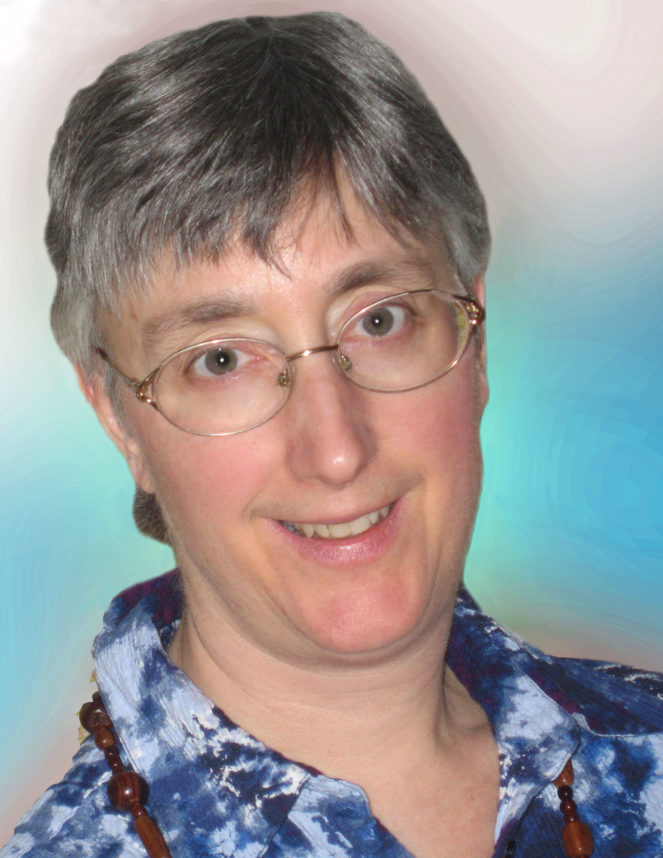
Rabbi and board certified Chaplain Karen B. Kaplan is author of Encountering the Edge: What People Told Me Before They Died (Pen-L Publishing, 2014) a series of true anecdotes capped with the deeper reasons she chose her vocation. For more details including reviews, you can go to the publisher’s page or to amazon.com. There is also an audio version of Encountering the Edge: the Audiobook. Comments to the author are welcome by email or via her blog, Offbeat Compassion.
___________
KAVOD v’NICHUM CONFERENCE
Registration for the 15th North American Chevrah Kadisha and Jewish Cemetery Conference, June 18-20, in San Rafael, California, is still open.
Our conference will have intensive workshops on Introduction to Taharah, Infection Control, Communicating about difficult Taharot, Modifying Taharah, Taharah Stories as well as exploring traditional Taharah liturgy, Navigating Taharah Liturgy – A Play, and Taharah liturgy in Maavar Yabbok.
We’ll have an exciting series of workshops on Jewish cemetery issues, including Green Cemeteries, Cremation, Perpetual Care Fund Investments, Record Keeping and Acquiring New Cemetery Property.
What’s different this year is an evolving theme – expanding the work of the Chevrah Kadisha and the Jewish Cemetery by encouraging conversation about end of life plans with the Conversation Project; end of life decision-making with Dr. Jessica Zitter, and communicating about how we die with Dr. Dawn Gross.
There’s much more – see our Preliminary conference program.
Consider a Sunday morning pre-conference field trip to Gan Yarok – an environmentally conscious Jewish Green Cemetery.
Sunday afternoon from 2-5, Sam Salkin, Executive Director of Sinai Memorial Chapel, will facilitate an intensive session on starting & managing a community funeral home. Let us know if you are interested in this session. Attendance is by advance reservation only.
Tuesday afternoon after the conference Sinai Memorial Chapel will facilitate a tour of Gan Shalom Cemetery, a Jewish cemetery with an interfaith section. Again, let us know if you are interested – Attendance by advance reservation only.
And there is an extension to the conference! Gamliel Institute students, and others by approval, can remain for an additional day to participate in the Gamliel Institute Day of Learning. We will have three extraordinary teachers presenting on a variety of texts and concepts that are of interest. This is a fantastic opportunity to study with some of the very best instructors in a small group setting during a twenty-four hour period. Students, contact us to RSVP; if you are not a Gamliel student, contact us to seek approval of the Dean to attend.
Register for the conference now.
We have negotiated a great hotel rate with Embassy Suites by Hilton, but rooms are limited; please don’t wait to make your reservations. We also have home hospitality options – contact us for information or to request home hospitality. 410-733-3700, info@jewish-funerals.org
Questions? Email info@jewish-funerals.org or call 410-733-3700.
______________
TASTE OF GAMLIEL
In 2017, Kavod v’Nichum and the Gamliel Institute are again sponsoring a six-part “Taste of Gamliel” webinar series. This year’s topic is From Here to Eternity: Jewish Views on Sickness and Dying.
Each 90 minute session is presented by a different scholar.
The June 25th session is being taught by Dr. Laurie Zoloth, well known author, teacher, and scholar.
Taste of Gamliel Webinars for this year are scheduled on January 22, February 19, March 19, April 23, May 21, and June 25. The instructors this year are: Dr. Dan Fendel, Rabbi Dayle Friedman, Rabbi Sara Paasche-Orlow, Rabbi Richard Address, Rabbi Elliot Dorff, and Dr. Laurie Zoloth.
This series of Webinar sessions is free, with a suggested minimum donation of $36 for all six sessions. These online sessions begin at 5 PM PDST (GMT-7); 8 PM EDST (GMT-4).
Those registered will be sent the information on how to connect to the sessions, and will also receive information on how to access the recordings of all six sessions.
The link to register is: http://jewish-funerals.givezooks.com/events/taste-of-gamliel-2017.
More info – Call us at 410-733-3700 or email info@jewish-funerals.org.
Click the link to register and for more information. We’ll send you the directions to join the webinar no less than 12 hours before the session.
________________________
GAMLIEL INSTITUTE COURSES
LOOKING FORWARD: UPCOMING COURSE
Gamliel Institute will be offering course 2, Chevrah Kadisha: Taharah & Shmirah, online, afternoons/evenings, in the Fall semester starting September 5th, 2017.
CLASS SESSIONS
The course will meet on twelve Tuesdays (the day will be adjusted in those weeks with Jewish holidays during this course). There will be an orientation session on Monday, September 4th, 2017. Register or contact us for more information.
REGISTRATION
You can register for any Gamliel Institute course online at jewish-funerals.org/gamreg. A full description of all of the courses is found there.
For more information, visit the Gamliel Institute website, or at the Kavod v’Nichum website. Please contact us for information or assistance by email info@jewish-funerals.org, or phone at 410-733-3700.
____________________
DONATIONS:
Donations are always needed and most welcome to support the work of Kavod v’Nichum and the Gamliel Institute, helping us to bring you the conference, offer community trainings, provide scholarships to students, refurbish and update course materials, expand our teaching, support programs such as Taste of Gamliel, provide and add to online resources, encourage and support communities in establishing, training, and improving their Chevrah Kadisha, and assist with many other programs and activities.
You can donate online at http://jewish-funerals.org/gamliel-institute-financial-support or by snail mail to: either Kavod v’Nichum, or to The Gamliel Institute, c/o David Zinner, Executive Director, Kavod v’Nichum, 8112 Sea Water Path, Columbia, MD 21045. Kavod v’Nichum [and the Gamliel Institute] is a recognized and registered 501(c)(3) organizations, and donations may be tax-deductible to the full extent provided by law. Call 410-733-3700 if you have any questions or want to know more about supporting Kavod v’Nichum or the Gamliel Institute.
You can also become a member (Individual or Group) of Kavod v’Nichum to help support our work. Click here (http://www.jewish-funerals.org/money/).
___________
MORE INFORMATION
If you would like to receive the periodic Kavod v’Nichum Newsletter by email, or be added to the Kavod v’Nichum Chevrah Kadisha & Jewish Cemetery email discussion list, please be in touch and let us know at info@jewish-funerals.org.
You can also be sent an email link to the Expired And Inspired blog each week by sending a message requesting to be added to the distribution list to j.blair@jewish-funerals.org.
Be sure to check out the Kavod V’Nichum website at www.jewish-funerals.org, and for information on the Gamliel Institute and student work in this field also visit the Gamliel.Institute website.
RECEIVE NOTICES WHEN THIS BLOG IS UPDATED!
Sign up on our Facebook Group page: just search for and LIKE Chevra Kadisha sponsored by Kavod vNichum, or follow our Twitter feed @chevra_kadisha.
____________________
SUBMISSIONS ALWAYS WELCOME
If you have an idea for an entry you would like to submit to this blog, please be in touch. Email J.blair@jewish-funerals.org. We are always interested in original materials that would be of interest to our readers, relating to the broad topics surrounding the continuum of Jewish preparation, planning, rituals, rites, customs, practices, activities, and celebrations approaching the end of life, at the time of death, during the funeral, in the grief and mourning process, and in comforting those dying and those mourning, as well as the actions and work of those who address those needs, including those serving in Bikkur Cholim, Caring Committees, the Chevrah Kadisha, as Shomrim, funeral providers, in funeral homes and mortuaries, and operators and maintainers of cemeteries.
_____________________
A Theology of Caring by Rabbi Karen B. Kaplan Read More »