fbpx

April 12, 2017

Brown bag it: DIY paper bag roses

I’m not wild about silk flowers. They scream “grandma” to me. (Sorry, bubbe.) But I do love artificial flowers made from paper. Because they are so stylized, they are more of an art piece than “fake” flowers. The fact that they obviously are not real makes them glorious.

Among my favorite artificial flowers are giant cabbage roses made from brown paper bags. They look dramatic, and no one would believe they’re actually brown bags.

What you’ll need:

– Lunch-size brown paper bags
– Rit dye
– Rubber gloves
– Scissors
– Hot glue gun
– Wood skewers

bag roses1

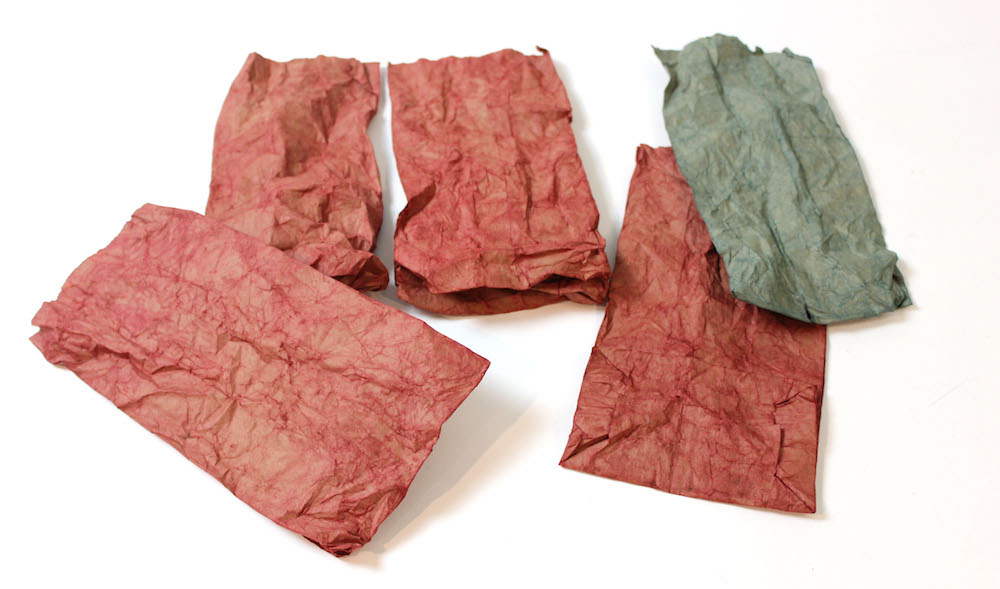
1. Place the paper bags one at a time in a dye bath of about 1 part dye and 2 parts water. I selected red dye for the petals and green dye for the sepals. (Oh, remember that rubber gloves are your best friend here.)

bag roses2

2. Lay the paper bags out on plastic covering to dry overnight. For each rose, you’ll need four bags of the color of your choice and one bag that’s green.

bag roses3

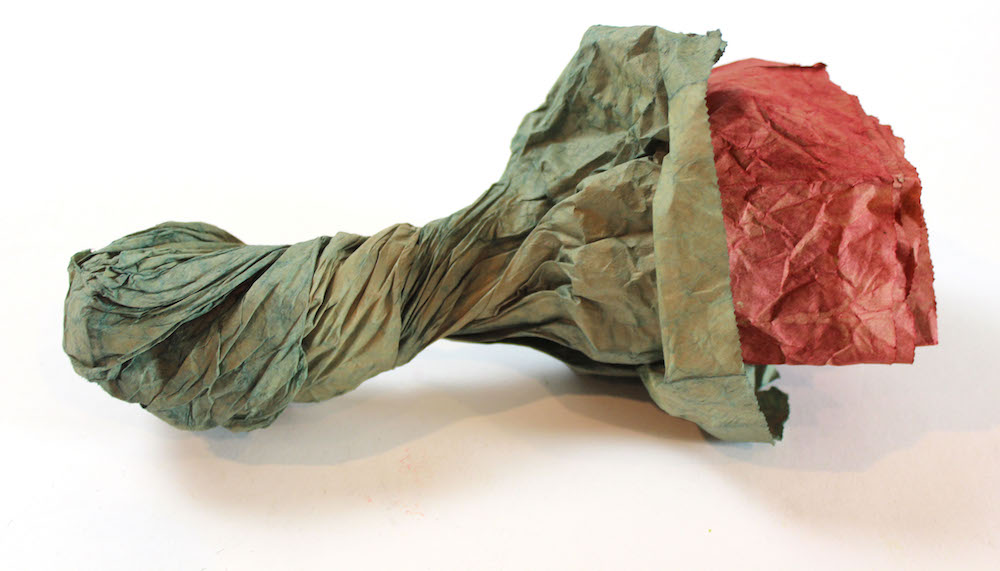
3. You’ve heard of double bagging. Here, you will be “quintuple” bagging, with the green bag on the outside and the four red bags on the inside.

bag roses4

4. Twist the bags together tightly so you have what looks like a handle. It should be starting to resemble a rose, or at least the torch the Statue of Liberty holds.

bag roses5

5. Peel back the green bag. Tear it in a few places so that it looks like the sepals of a rose.

bag roses6

6. Peel back the red bags one at a time, starting from the outside in. You can leave the layers as is or tear them to create petals. And just as the inner petals of real roses are more closed, keep the innermost red bag scrunched up.

bag roses7

7. The rose looks finished — but wait! There’s a second rose hidden in there. Cut the green stem at the base of the rose with a good pair of scissors. Seal the cut edge with hot glue. Then put a wood skewer into the base for a stem if desired.

bag roses8

8. And that piece you cut off? As with the first rose, unroll the layers and make another rose out of that. Yeah, you’ve got this project in the bag.


Jonathan Fong is the author of “Walls That Wow,” “Flowers That Wow” and “Parties That Wow,” and host of “Style With a Smile” on YouTube. You  can see more of his do-it-yourself  projects at jonathanfongstyle.com.

Brown bag it: DIY paper bag roses Read More »

Wilshire Boulevard Temple to hold public reading of Wiesel’s ‘Night’

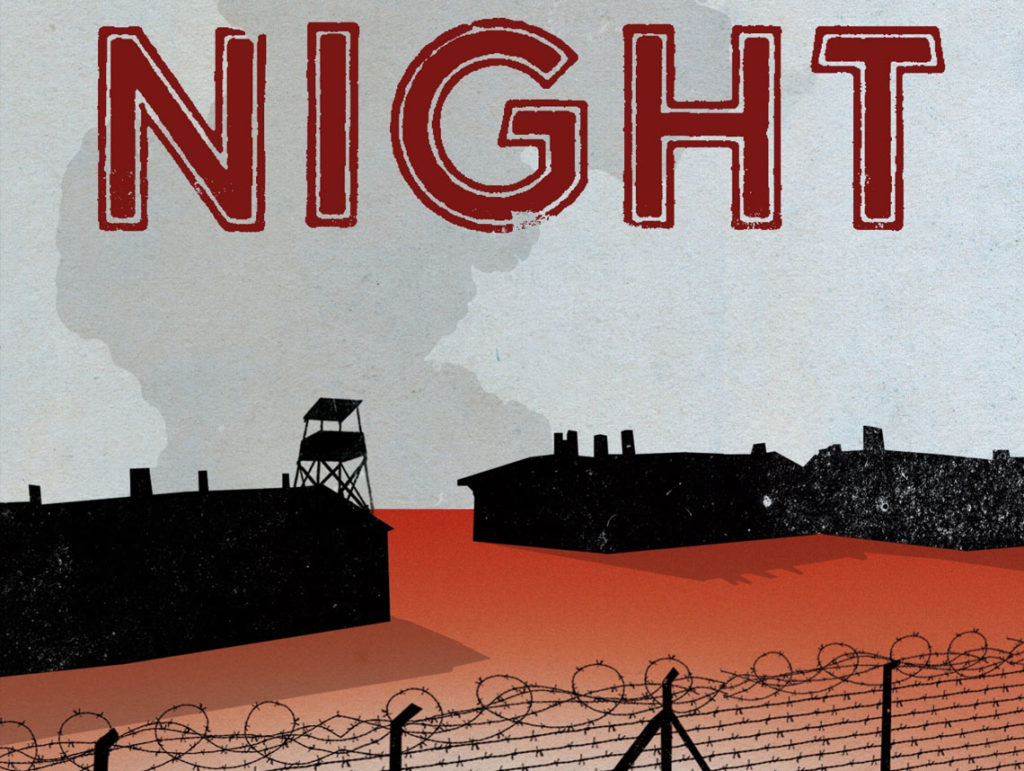
Wilshire Boulevard Temple (WBT) will host a public reading of Elie Wiesel’s “Night” at its Koreatown campus on the evening of April 23. The reading will coincide with Yom HaShoah, an international day of Holocaust remembrance, the first since Wiesel’s death in July.

Among the dozens of celebrities and public figures tapped to read from the harrowing account of Wiesel’s Holocaust experience are actor Tom Hanks, author and talk show host Tavis Smiley, Rabbi David Wolpe and journalist and producer Tom Teicholz. The list also includes Holocaust survivors, politicians and interfaith leaders.

WBT Rabbi Susan Nanus said her friend, television movie producer Linda Kent, who frequently collaborates on synagogue events, told her about a reading from the landmark memoir at the Museum of Jewish Heritage in January. She quickly decided, “We should do it, too.”

She said the people who were invited to participate were deeply honored and enthusiastic. As she and Kent began to prepare a list of readers, she reached out to Writers Bloc Presents, a local nonprofit that holds events dedicated to books and literature.

“We’re living in frightening times, and we should be looking at history and great writers to see the relationship between the past and now,” said Andrea Grossman, founder of Writers Bloc Presents. “So when Susan Nanus emailed me about this program, I jumped at it.”

The two met at Factor’s Famous Deli on Pico Boulevard and began to draft, with Kent, a list of celebrities and leaders from a broad range of Los Angeles faith and civic communities.

The diversity of the participants underscores the evening’s themes of “unity and memory and tolerance and remembering what happened — how evil triumphs when good people do nothing,” Nanus said. “That’s really what it’s all about.”

Among others scheduled to participate in the reading are Rabbi Laura Geller, Rabbi Steven Leder, Rabbi Karen Fox, Jewish Journal columnist Danielle Berrin and attorney E. Randol Schoenberg. The list also includes leaders from other faiths, including Mohammed Akbar Khan of the King Fahad Mosque in Culver City, acclaimed choir director Diane White-Clayton of Faithful Central Bible Church in Inglewood and Sikh scholar Nirinjan Khalsa.

Actors and filmmakers set to join the reading include Hanks’ wife, Rita Wilson; Michael Tolkin; Mike Burstyn; Eric Roth and Rain Pryor. Local government officials slated to participate include former Los Angeles County Supervisor Zev Yaroslavsky, Los Angeles City Controller Ron Galperin and Beverly Hills Mayor Lilli Bosse, a daughter of Holocaust survivors. Consul General of Israel in Los Angeles Sam Grundwerg also is set to read a passage.

Other scheduled participants include Korean community leader Hyepin Im; oncologist Gary Schiller, a son of Holocaust survivors; novelist and Jewish Journal columnist Gina Nahai; 2016 MacArthur Fellow Josh Kun; and Los Angeles Times film critic Kenneth Turan.

Each participant will read approximately two to three pages of the text, Nanus said.

“It’s always great, wonderful to hear a terrific actor read, so … it will be wonderful to hear Tom Hanks and Rain Pryor and Rita Wilson,” Grossman said. “But it will also be interesting to hear the children of Holocaust survivors or Holocaust survivors themselves tackle this book. It’s difficult reading and it’s a difficult memory.”

More information and tickets are available at wbtla.org/night.

Wilshire Boulevard Temple to hold public reading of Wiesel’s ‘Night’ Read More »

Surprising results revealed in survey of Latino Jews living in U.S.

“Latino Jews” — who are they?

That was a question posed by a study carried out in late 2015 by David Ayon, senior strategist for the opinion research group Latino Decisions. Requisitioned by an arm of the American Jewish Committee (AJC) and underwritten by the Ford Foundation, the survey probed focus groups of Latino Jews who live in five U.S. cities — Los Angeles, Miami, New York, Chicago and Houston. Ranging in age from 22 to 78, more than 60 participants were asked in-depth questions about identity, national attachments and community engagement.

The results were presented on the AJC website last year and have been shown to groups around the country, including one in Los Angeles on March 28 that included diplomats from Latin American countries as well as Southern California Latino and Jewish leaders. The inquiry, Ayon said, was unique in that it placed, at the center of the research, “a small but thriving population” of approximately 200,000 Latino Jews now living in the United States.

Most Latino Jews are cut from the same cloth as the majority of U.S. Jews — descendants of Yiddish-speaking Ashkenazi Jews who left Central and Eastern Europe in the late 19th century or early decades of the 20th century — but immigrated to Latin America instead of the United States. The term “Latino Jews” also includes some Sephardic Jews, those who left Turkey and other countries in the Levant after World War I and immigrated to Latin America.

Jews, both Ashkenazi and Sephardi, who settled throughout the continent, from Mexico to Argentina, soon adopted Spanish as their language (or Portuguese in Brazil), built synagogues, started Jewish social clubs, opened businesses, became professionals and often have played prominent roles in the civic, economic and artistic life of their adopted countries.

In recent decades, sometimes because of political or economic turmoil, many Latino Jews have left Latin America and immigrated into the U.S. (as well as Israel and other countries.) As a result, Ayon said, the Latino Jews who took part in the survey’s focus groups have undergone a “double Diaspora.”

For Dina Siegel Vann, director of the AJC’s Belfer Institute on Latino and Latin American Affairs, the most surprising part of the survey focused on the question, “Who are Latino Jews?” Presented with seven identity choices — American, Hispanic, Immigrant, Jewish, Latina/o, Latin American and Latin-American country of origin (e.g., Mexican, Argentine, etc.) — participants registered their preferences, in order: Jewish, 95 percent; Latin-American country of origin, 69 percent; Latin American, 51 percent; Latino/a, 44 percent; immigrant, 41 percent; Hispanic, 34 percent; and American, 31 percent.

“This tells us a number of things,” Siegel Vann, who grew up Jewish in Mexico City, told the Journal. “No. 1, that Jews in Latin America, even in Argentina, with the largest concentration of Jews in any Latin American country, felt like ‘insider-outsiders’ — one foot in, one foot out. The first marker of identity for them was Jewish, not the country they came from. They did not say ‘I’m an Argentine.’ No, no, no. They said, ‘First of all, I’m a Jew.’

“That tells me that the [Jewish] community might have felt they were integrated into the life of the country where they lived, but, at the end of the day, we’re all insider-outsiders.”

Siegel Vann pointed out that the focus group results indicate these same Latino Jews, after immigrating to the U.S., once again feel they are insiders-outsiders. Even though more than 80 percent are U.S. citizens, and most of the rest are permanent residents, fewer than 1 in 3 identifies as American. “In previous generations … it was a moment of pride to say you were American, but now that’s changed,” she said.

There are reasons why Latino Jews in the U.S. don’t feel American, Siegel Vann said. In L.A. or Miami, which have large concentrations of Latino Jews, there’s less pressure to integrate into American life. More significant is that even though Latino Jews felt they had good reasons to leave Latin America, they often did so with regrets, in contrast to previous generations of immigrants to the U.S. Some Latino Jews still own property in Latin America, and almost all have family and friends there. As a result, most still identify with the Latin American country they came from (69 percent) rather than as American (31 percent).

Siegel Vann said when earlier generations of Jews came to the New World from Lithuania or Poland, for example, they were eager to shed that past identity. “But Latino Jews who have come to the U.S. over the last 30 years don’t feel that,” she said. “Most express appreciation that the Latin American country where they lived took them in, opened their doors and permitted them to have a good life.”

Besides establishing who Latino Jews are, Ayon said, the survey aimed to consider how this “unique group can leverage their main identities to build domestic, global and transnational bridges.” The implication is that Latino Jews, at least from the focus group sample, have education, money and a strong connection to Israel but haven’t yet been sufficiently integrated into mainstream Jewish organizations.

Siegel Vann said it is in everyone’s interest for that to happen. She said the survey report recommends that the “experiences [of Latino Jews], their personal and professional relationships and their passion for Israel can help advance any number of [Jewish] organizational programs or efforts.” She added that her institute already has launched a number of cooperative Jewish and Latino programs focused on three issues.

“One, immigration reform,” she said. “Immigrants are this country’s lifeline, so we think it’s important to pass immigration reform now. The second issue is hate crimes and hate rhetoric, as they apply to both Latinos and Jews. And the third issue is foreign policy, the relations between the U.S. and Mexico, and U.S. policy toward Israel.”

Siegel Vann said the political and social importance of Latinos in the U.S. is growing. Latinos and Latino Jews “don’t generally inhabit the same spaces, but we have to come together and become aware of the commonalities, the linguistic, cultural and historical ties the two communities have. Latino Jews could play an important role in being the link between Jews and Latinos, so what we’re trying to do is create more and more spaces for this interaction and cooperation to happen.”

Surprising results revealed in survey of Latino Jews living in U.S. Read More »

Tuna Garbanzo Bean and Sumac Salad

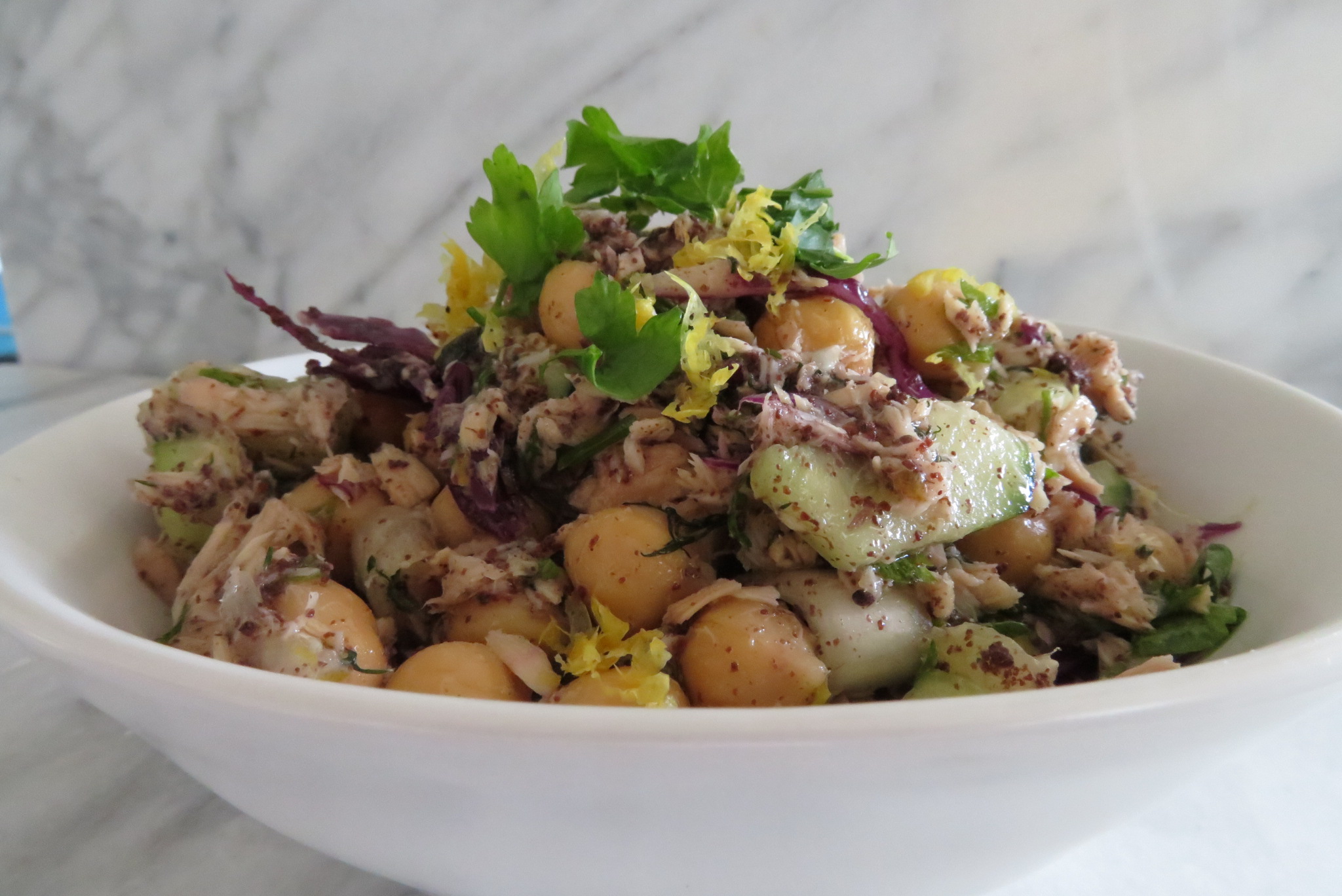
I know I’ve said this before, but it’s time to say it again: necessity is the mother of invention. This Tuna Garbanzo Bean and Sumac Salad recipe is something that I invented when I absolutely thought I had nothing to eat in the house. What I did have was a couple of cans of Costco tuna, waaay up in my pantry along with a can of garbanzo beans. And in my fridge, I found wilted dill and parsley from last week’s Passover cooking class. I had a couple of lemons, because if I don’t have lemons, then I’m really a slacker. And truth be told, the only reason I had red cabbage was because InstaCart delivered the wrong thing. 

Tuna garbanzo bean and sumac salad

But there’s nothing I would change about this salad, and I think it’s perfect for a potluck, a buffet, or a family-style lunch. Or to feed your employees while you work (which is why it was so urgent that I found something to eat in my house.) 

If you’ve never zested a lemon, you can do it with a microplane. It adds a pop of Italian summer to the salad. Sumac is a Middle Eastern spice that has a tangy taste that’s delicious on all kinds of salads. Good to keep in the house. And there you have it! 

Tuna Garbanzo Bean and Sumac Salad

  • 1 can of organic garbanzo beans
  • 2 7oz cans of olive oil packed tuna (I get Italian tuna from Costco)
  • 1 large cucumber, peeled and roughly chopped
  • 1/8 cup of fresh dill, chopped
  • 1/8 cup of fresh Italian parsley, chopped
  • a handful of red cabbage, chopped VERY THINLY
  • juice and zest of 2 lemons
  • 1/2 cup of olive oil
  • 2 tablespoons of sumac
  • salt & freshly ground pepper to taste – the amount of salt you need will depend on whether or not your beans are salted, and how salty your tuna is.

1. Put it all together in a large bowl, and mix thoroughly!

Tuna Garbanzo Bean and Sumac Salad Read More »

The priceless value of Meals on Wheels

Once a week, our 22-year-old son with developmental disabilities participates in a great mitzvah — he helps deliver food to the home of an elderly client of the Culver City Meals on Wheels (MOW) program. This gives the Meals on Wheels client a chance for some unconventional companionship as well as a nutritious meal, and it gives the adults with developmental disabilities the chance to be of service, instead of always being the recipient of someone else’s charity.

Volunteering with MOW is part of our son’s community-based day program at ETTA, a Los Angeles-based nonprofit affiliated with OHEL Children’s Home and Family Services. ETTA adult participants go out with staff members in small groups and rotate through various community service options, which include running a café at the Westside Jewish Community Center, helping with the student store at Shalhevet High School and volunteering at the National Council House, in addition to the MOW activity.

It truly boggles my mind that these programs, and the other 91 MOW programs in Los Angeles County, many affiliated with churches or local community groups, now face an uncertain financial future under the proposed Trump administration budget.

As part of the overall reduction in nonmilitary domestic spending, that budget eliminates two community development block grants received by states and cities, which, in turn, provide funding to many local Meals on Wheels programs. Because MOW is a network of thousands of independently run groups that receive different amounts of money from states and cities, it is unclear exactly what will happen in Los Angeles County. But if those block grants are gone, there will be less money for this lifeline program. Another big cut could come from the Older Americans Act Nutrition Program, operated by the Department of Health and Human Services, which is set to receive close to an 18 percent cut. Until all the details are known, it is unclear how these proposed federal cuts will affect Meals on Wheels programs in the region, but experts tell me there will be real human consequences.

I recently had the chance to hear Sister Alice Marie Quinn, founder and executive director of the St. Vincent Meals on Wheels Nutrition program, speak as part of its 40th year anniversary outreach. With a professional education as a registered dietician, Quinn came to Los Angeles originally as the assistant director of the dietary department of St. Vincent Medical Center. She realized that many poor and elderly people who lived near the hospital were not eating right, and she decided to help them by making stew for 83 seniors at a local church hall one evening in 1977. Over time, that program grew, becoming St. Vincent Meals on Wheels, which now is the largest Meals on Wheels program in the country, feeding close to 3,500 people a day.

She explained that MOW in America was modeled on a British program started after World War II, when many seniors couldn’t get out of their homes to go grocery shopping because their neighborhoods had been bombed so heavily. The British used hot bricks to keep the food warm on the journey from the central kitchen to the clients’ homes.

As good-humored as she is inspiring, Quinn talked about her fundraising strategy. She said her order, the Daughters of Charity of Saint Vincent de Paul, was founded in 1833 to help poor people in Paris. In order to fund their work, the founders asked the French royalty for donations.

“So, in Los Angeles, I decided that meant I needed to go to Hollywood,” she said with a twinkle in her eye.

Her latest celebrity connection is musician LL Cool J, who is working with the “Lip Sync Battle” TV show he hosts to help her raise funds. Although St. Vincent Meals on Wheels’ current budget of $7.6 million is privately funded by donations from a “robust direct mail” annual campaign, along with foundation and corporate grants, it still would be impacted by any government cuts, as other, smaller MOW groups more dependent on government funding would have to reduce their services, leading to more referrals and clients for St. Vincent MOW to serve.

Jewish Family Service of Los Angeles (JFSLA) annually provides 9,500 homebound seniors and disabled adults with nutritious kosher frozen meals, which are microwavable and easy to prepare. This program, which gets significant funding from the Older Americans Act Nutrition Program, would be hurt by the proposed government cuts. As Nancy Volpert, JFSLA’s director of public policy, said of the proposed cuts, “At the end of the day, less government funding will translate into fewer meals served.”

And as Quinn pointed out, “Sometimes the visits are even more important than the meals,” as volunteers or staff have the chance to interact daily with the elderly or disabled client and can observe if other medical or social services are needed.

For my son and his friends at ETTA, those weekly visits are as empowering for them as they are essential for the MOW clients.


MICHELLE K. WOLF is a special needs parent activist and nonprofit professional. She is the founding executive director of the Jewish Los Angeles Special Needs Trust. Visit her Jews and Special Needs blog at jewishjournal.com/jews_and_special_needs.

The priceless value of Meals on Wheels Read More »

Poll finds majority of Americans concerned about Anti-Semitism

More than half of Americans are concerned about anti-Semitism and more than three-quarters are concerned about violence against Muslims, the Anti-Defamation League (ADL) found in two new public opinion polls.

The results show that a majority of Americans, 52 percent, are concerned about violence in the U.S. directed at Jews, and 76 percent are concerned about violence directed at Muslims. The ADL based its findings on 1,500 interviews conducted last October and 3,600 in January and February.

Jonathan Greenblatt, the ADL chief executive, said he was heartened by the survey results, showing that people are concerned about Jews and Muslims.

“We conducted two polls to ensure that we fully understood the mood of the country,” he said in a statement. “The good news in this research is that today a large majority of Americans do not subscribe to common anti-Semitic stereotypes. It’s also encouraging that a record number of Americans are concerned about violence against the Jewish and Muslim communities, and are troubled at how intolerance has infected our politics.”

The polls are part of ADL’s continuing research into anti-Jewish attitudes under the ADL Global 100, a project begun in 2014 to establish a worldwide index of anti-Semitic attitudes.

Released on April 6, the new surveys measured, among other things, perceptions of President Donald Trump and whether he holds prejudiced views. A third of respondents agreed with the statement “Donald Trump holds anti-Semitic views,” while half disagreed. The remaining 17 percent “don’t know,” said Todd Gutnick, vice president of communications at the ADL.

The surveys also found that 14 percent of the American population holds anti-Semitic beliefs.

Nearly half of Americans, 49 percent, said Trump could have done more to discourage anti-Semitism, the survey found, and more than 8 in 10 Americans, 84 percent, said they believe it is important for the government to play a role in combating anti-Semitism, up from 70 percent in 2014.

A majority of Americans, 52 percent, are concerned about violence in the U.S. directed at Jews, and 76 percent are concerned about violence directed at Muslims.

The polls also examined anti-Semitism in politics and whether “Americans believe there was more anti-Semitism in the 2016 election than previously.” Nearly half of those surveyed, 47 percent, said there was more and 39 percent said the level was no more than in previous campaigns.

Last October, the ADL released “Anti-Semitic Targeting of Journalists During the 2016 Presidential Campaign,” a study that concluded that although Trump may not be the cause of anti-Semitism, people who were responsible for spreading hate online often were supporters of Trump as a candidate.

Regarding Muslims, the survey found that 59 percent of respondents agree that “Donald Trump holds anti-Muslim views,” and 64 percent said they do not believe the government is doing enough to ensure their safety.

Perceptions of Trump bias against Muslims may be due, in part, to his efforts to use executive orders to bar individuals from Muslim-majority countries from entering the United States. Federal judges have twice stuck down his orders.

“It’s discouraging to know that Muslims and other minorities feel unsafe. Clearly, there is still a lot of work to do,” Greenblatt said.

Overall, the survey found that 34 percent of American Muslims hold anti-Semitic views, compared with 55 percent of Muslims in Europe and 75 percent in Middle East/North Africa.

The poll’s release comes on the heels of several incidents of vandalism targeting Jewish cemeteries and waves of bomb threats that have targeted Jewish community centers, schools and other institutions, including ADL offices, across North America over the past several months.

Authorities arrested two people in connection with the bomb threats, all of which turned out to be hoaxes: Juan Thompson, a discredited journalist in St. Louis who was apparently seeking revenge against an ex-girlfriend; and Michael Kaydar, an Israeli-American teenager who his lawyer said may suffer from mental illness.

The ADL was one of several organizations that compiled data on the more than 150 bomb threats that targeted Jewish centers.

The ADL has been polling anti-Semitic attitudes in the U.S. since 1964. Later this month, the organization plans to release an audit of 2016 anti-Semitic incidents, drawing on data from ADL regional offices, including ADL Pacific Southwest, which serves Los Angeles.

The October survey, conducted by Marttila Strategies, has a margin of error of plus or minus 3 percent. The more recent poll, conducted by First International Resources, had a margin of error of 1.6 percent for the general population and 3 percent for American Muslims.

Poll finds majority of Americans concerned about Anti-Semitism Read More »

Matzah Bruschetta

Improvisational Passover Appetizer: Matzah Bruschetta! Because I’m just too Italian for plain Jewish food, or so I think. And it was a huuuuge hit at Seder last night. Since I couldn’t really rub the “bread” with fresh garlic, as is traditional, I roasted the tomatoes with a little garlic, and thyme too. Enjoy the matzah mania!

Ingredients:

1/3 cup of olive oil + more for brushing the on matzah and drizzling afterwards
1 pint of organic cherry tomatoes
2 cloves of garlic, chopped
1 tablespoon of thyme
1 1/2 teaspoons of kosher salt
2 “balls” of burrata cheese
2 standard size pieces of matzah – regular, spelt, or gluten free
10 freshly chopped basil leaves

Directions:

For tomatoes:

Position oven rack in center to lower third of oven.
Put oven broiler on high.
Cut tomatoes in half and place them on a baking sheet on top of parchment paper.
Drizzle generously with olive oil, sprinkle with chopped garlic, a hearty pinch of salt and several hearty pinches of thyme.
Using your fingers, mix the tomatoes up in the oil, garlic and herbs.
Lick your fingers. You want them to taste good and even a bit over-salted and over-“herbed” because much will burn off in oven.
Put tray in oven and cook for about 7-10 minutes, opening oven at times to give the pan a shake to roll tomatoes around.
The tomatoes are done when the skins begin to bubble and even burn and tomato juices begin to burst.
Let tomatoes rest while you prepare the matzah and burrata.

For matzah:

Turn oven to bake at 400 degrees and line a baking sheet with parchment paper.
Carefully break the matzah into bite size pieces, approximately 1 inch by 2 inches. It’s okay if they’re not perfect
Brush the pieces of matzah on each side with olive oil and sprinkle with kosher salt
Place them on the pan and bake for 10 minutes. Remove from oven.

To assemble:

Cut the burrata into thin slices. It will get messy. It’s okay.
Top each piece of matzah with a piece of burrata.
Sprinkle with salt.
Put two tomatoes on top and crush down gently with a fork.
Drizzle with olive oil. Top with freshly cut basil.

For more recipes or to take a class with Elana, visit mealandaspiel.com

Matzah Bruschetta Read More »

It’s time to reclaim religion

This is a transcript of a speech delivered at TEDWomen 2016.

I was a new mother and a young rabbi in the spring of 2004 and the world was in shambles. Maybe you remember. Every day, we heard devastating reports from the war in Iraq. There were waves of terror rolling across the globe. It seemed like humanity was spinning out of control.

I remember the night that I read about the series of coordinated bombings in the subway system in Madrid, and I got up and I walked over to the crib where my 6-month-old baby girl lay sleeping sweetly, and I heard the rhythm of her breath, and I felt this sense of urgency coursing through my body. We were living through a time of tectonic shifts in ideologies, in politics, in religion, in populations. Everything felt so precarious. And I remember thinking, My God, what kind of world did we bring this child into? And what was I as a mother and a religious leader willing to do about it?

Of course, I knew it was clear that religion would be a principal battlefield in this rapidly changing landscape, and it was already clear that religion was a significant part of the problem. The question for me was, could religion also be part of the solution? Now, throughout history, people have committed horrible crimes and atrocities in the name of religion. And as we entered the 21st century, it was very clear that religious extremism was once again on the rise. Our studies now show that over the course of the past 15-20 years, hostilities and religion-related violence have been on the increase all over the world. 

But we don’t even need the studies to prove it, because I ask you, how many of us are surprised today when we hear the stories of a bombing or a shooting, when we later find out that the last word that was uttered before the trigger is pulled or the bomb is detonated is the name of God? It barely raises an eyebrow today when we learn that yet another person has decided to show his love of God by taking the lives of God’s children. In America, religious extremism looks like a white, anti-abortion Christian extremist walking into Planned Parenthood in Colorado Springs and murdering three people. It also looks like a couple inspired by the Islamic State walking into an office party in San Bernardino and killing 14. And even when religion-related extremism does not lead to violence, it is still used as a political wedge issue, cynically leading people to justify the subordination of women, the stigmatization of LGBT people, racism, Islamophobia and anti-Semitism. This ought to concern deeply those of us who care about the future of religion and the future of faith. We need to call this what it is: a great failure of religion.

But the thing is, this isn’t even the only challenge that religion faces today. At the very same time that we need religion to be a strong force against extremism, it is suffering from a second pernicious trend, what I call religious routine-ism. This is when our institutions and our leaders are stuck in a paradigm that is rote and perfunctory, devoid of life, devoid of vision and devoid of soul.

Let me explain what I mean. One of the great blessings of being a rabbi is standing under the chuppah, under the wedding canopy, with a couple, and helping them proclaim publicly and make holy the love that they found for one another. I want to ask you now, though, to think maybe from your own experience or maybe just imagine it, about the difference between the intensity of the experience under the wedding canopy and maybe the experience of the sixth or seventh anniversary.

And if you’re lucky enough to make it 16 or 17 years, if you’re like most people, you probably wake up in the morning realizing that you forgot to make a reservation at your favorite restaurant and you forgot so much as a card, and then you just hope and pray that your partner also forgot.

Well, religious ritual and rites were essentially designed to serve the function of the anniversary, to be a container in which we would hold on to the remnants of that sacred, revelatory encounter that birthed the religion in the first place. The problem is that after a few centuries, the date remains on the calendar, but the love affair is long dead. That’s when we find ourselves in endless, mindless repetitions of words that don’t mean anything to us, rising and being seated because someone has asked us to, holding onto jealously guarded doctrine that’s completely and wildly out of step with our contemporary reality, engaging in perfunctory practice simply because that’s the way things have always been done.

Religion is waning in the United States.

Across the board, churches and synagogues and mosques are all complaining about how hard it is to maintain relevance for a generation of young people who seem completely uninterested, not only in the institutions that stand at the heart of our traditions but even in religion itself. And what they need to understand is that there is today a generation of people who are as disgusted by the violence of religious extremism as they are turned off by the lifelessness of religious routine-ism.

Of course, there is a bright spot to this story. Given the crisis of these two concurrent trends in religious life, about 12 or 13 years ago I set out to try to determine if there was any way that I could reclaim the heart of my own Jewish tradition, to help make it meaningful and purposeful again in a world on fire. I started to wonder: What if we could harness some of the great minds of our generation and think in a bold and robust and imaginative way again about what the next iteration of religious life would look like? Now, we had no money, no space, no game plan, but we did have email. So my friend Melissa and I sat down and we wrote an email, which we sent out to a few friends and colleagues. It basically said this: “Before you bail on religion, why don’t we come together this Friday night and see what we might make of our own Jewish inheritance?”

We hoped maybe 20 people would show up. It turned out 135 people came. They were cynics and seekers, atheists and rabbis. Many people said that night that it was the first time that they had a meaningful religious experience in their entire lives. And so I set out to do the only rational thing that someone would do in such a circumstance: I quit my job and tried to build this audacious dream, a reinvented, rethought religious life which we called IKAR, which means “the essence” or “the heart of the matter.”

Now, IKAR is not alone out there in the religious landscape today. There are Jewish and Christian and Muslim and Catholic religious leaders — many of them women, by the way — who have set out to reclaim the heart of our traditions, who firmly believe that now is the time for religion to be part of the solution. We are going back into our sacred traditions and recognizing that all of our traditions contain the raw material to justify violence and extremism, and also contain the raw material to justify compassion, coexistence and kindness — that when others choose to read our texts as directives for hate and vengeance, we can choose to read those same texts as directives for love and for forgiveness.

I have found now in communities as varied as Jewish indie startups on the coasts to a women’s mosque, to Black churches in New York and in North Carolina, to a holy bus loaded with nuns that traverses this country with a message of justice and peace, that there is a shared religious ethos that is now emerging in the form of revitalized religion in this country. And while the theologies and the practices vary very much between these independent communities, what we can see are some common, consistent threads between them.

I’m going to share with you four of those commitments now.

The first is wakefulness. We live in a time today in which we have unprecedented access to information about every global tragedy that happens on every corner of this Earth. Within 12 hours, 20 million people saw that image of Aylan Kurdi’s little body washed up on the Turkish shore. We all saw this picture. We saw this picture of a 5-year-old child pulled out of the rubble of his building in Aleppo. And once we see these images, we are called to a certain kind of action.

My tradition tells a story of a traveler who is walking down a road when he sees a beautiful house on fire, and he says, “How can it be that something so beautiful would burn, and nobody seems to even care?” So too we learn that our world is on fire, and it is our job to keep our hearts and our eyes open, and to recognize that it’s our responsibility to help put out the flames.

This is extremely difficult to do. Psychologists tell us that the more we learn about what’s broken in our world, the less likely we are to do anything. It’s called psychic numbing. We just shut down at a certain point. Well, somewhere along the way, our religious leaders forgot that it’s our job to make people uncomfortable. It’s our job to wake people up, to pull them out of their apathy and into the anguish, and to insist that we do what we don’t want to do and see what we do not want to see. Because, we know that social change only happens when we are awake enough to see that the house is on fire.

The second principle is hope, and I want to say this about hope. Hope is not naive, and hope is not an opiate. Hope may be the single greatest act of defiance against a politics of pessimism and against a culture of despair. Because what hope does for us is, it lifts us out of the container that holds us and constrains us from the outside and says you can dream and think expansively again, that they cannot control in you.

I saw hope made manifest in an African-American church on the South Side of Chicago this summer, where I brought my little girl, who is now 13 and a few inches taller than me, to hear my friend Rev. Otis Moss preach. That summer, there had already been 3,000 people shot between January and July in Chicago. We went into that church and heard Rev. Moss preach, and after he did, this choir of gorgeous women, 100 women strong, stood up and began to sing: “I need you. You need me. I love you. I need you to survive.” And I realized in that moment that this is what religion is supposed to be about. It’s supposed to be about giving people back a sense of purpose, a sense of hope, a sense that they and their dreams fundamentally matter in this world that tells them that they don’t matter at all.

The third principle is the principle of mightiness. There’s a rabbinic tradition that we are to walk around with two slips of paper in our pockets. One says, “I am but dust and ashes.” It’s not all about me. I can’t control everything, and I cannot do this on my own. The other slip of paper says, “For my sake the world was created.” Which is to say, it’s true that I can’t do everything, but I can surely do something. I can forgive. I can love. I can show up. I can protest. I can be a part of this conversation. We even now have a religious ritual, a posture, that holds the paradox between powerlessness and power. In the Jewish community, the only time of year that we prostrate fully to the ground is during the High Holy Days. It’s a sign of total submission. Now, in our community, when we get up off the ground, we stand with our hands raised to the heavens, and we say, “I am strong, I am mighty and I am worthy. I can’t do everything, but I can do something.”

In a world that conspires to make us believe that we are invisible and that we are impotent, religious communities and religious ritual can remind us that for whatever amount of time we have here on this earth, whatever gifts and blessings we were given, whatever resources we have, we can and we must use them to try to make the world a little bit more just and a little bit more loving.

The fourth and final is interconnectedness. A few years ago, there was a man walking on the beach in Alaska, when he came across a soccer ball that had some Japanese letters written on it. He took a picture of it and posted it up on social media, and a Japanese teenager contacted him. He had lost everything in the tsunami that devastated his country, but he was able to retrieve that soccer ball after it had floated all the way across the Pacific. How small our world has become. It’s so hard for us to remember how interconnected we all are as human beings. And yet, we know that it is systems of oppression that benefit the most from the lie of radical individualism.

Let me tell you how this works. I’m not supposed to care when Black youth are harassed by police, because my white-looking Jewish kids probably won’t ever get pulled over for the crime of driving while Black. Well, not so, because this is also my problem. And guess what? Transphobia and Islamophobia and racism of all forms — those are also all of our problems. And so too is anti-Semitism all of our problems. Because Emma Lazarus was right.

Emma Lazarus was right when she said until all of us are free, we are none of us free. We are all in this together. And now somewhere at the intersection of these four trends — of wakefulness and hope and mightiness and interconnectedness — there is a burgeoning, multifaith justice movement in this country that is staking a claim on a countertrend, saying that religion can and must be a force for good in the world.

Our hearts hurt from the failed religion of extremism, and we deserve more than the failed religion of routine-ism. It is time for religious leaders and religious communities to take the lead in the spiritual and cultural shift that this country and the world so desperately need — a shift toward love, toward justice, toward equality and toward dignity for all. I believe that our children deserve no less than that.


SHARON BROUS is founder and senior rabbi at IKAR Los Angeles

It’s time to reclaim religion Read More »

Jewish silence in the face of atrocities in Chechnya?

In recent days, reports have emerged about authorities in Chechnya rounding up scores of gay men, imprisoning them, beating them, with many dead.  Reports are now coming to light of concentration camps where gay men are being held and subjected to brutality, torture and murder.  Apparently, this deplorable treatment is in response to the application of a Moscow-based gay rights group to hold Pride parades in the region. Chechen authorities are denying these claims.  Alvi Karimov, a Chechen spokesman told Interfax, “You cannot arrest or repress people who just don’t exist in the republic. If such people existed in Chechnya, law enforcement would not have to worry about them, as their own relatives would have sent them to where they could never return.”

These reports of purging, murder, brutality and erasure are disturbing enough in themselves.  But this Passover, I am struck by another disturbing reality:  American ignorance of this issue in general, and Jewish ignorance in particular. Of course, we are living in times where our news cycle is overwhelmed with rising threats over Syria, North Korea and Russia.  At home, our media is beset over the latest scandal du jour in connection with the presidency.  It is indeed very difficult these days  to notice what is happening in a small republic in the north Caucasus mountains.

But we cannot afford not to notice.  If we have been paying attention to the meaning of our Passover seders, we know that we ourselves are a people who were brutalized, oppressed and murdered simply for being who we are.  We have gathered as families and communities, telling our story of having been refugees of slavery.  And we emerge from our seders with a clarion call to invite ‘all those who are hungry to come and eat’ together with us.  The beginning of our ethics, and our very Jewish identity, lies in our ability to empathize and to act on behalf of all those who still know the oppression that we have known.  And after the Holocaust, with Chechen authorities rounding people up, putting them in concentration camps, and murdering them, the silence of the Jewish people on this issue is unconscionable.

A danger inherent in the Passover experience is to read the Haggadah only in tribal, particularist terms:  God’s unique love and rescue of our people vindicates our people alone, and denigrates all other peoples.  That danger extends to all the times that we fail to see the story of who we are reflected in others, simply because those others are so different from ourselves.  I once spoke to an American Jewish woman who was a young mother during the years of the Second World War.  I asked her if she knew at the time about the internment of Japanese Americans, and she answered yes.  When I asked her what she thought about that internment during those years, she responded that there was a war going on!  She felt that it was not the time or place to speak out against such a thing, and frankly, it didn’t occur to her at the time to speak out.

The essence of Passover is that we, ourselves, were the ‘other.’ We, ourselves, were the ones whose plight was ignored by those who might speak up.  To be Jewish is to be, eternally, the other.  And in a very real sense, all those who are oppressed and erased must become a part of our people.  The gay men in Chechnya may seem so far away and other to us.  But in this case, they literally are us, as the story of the Jewish people is, and always has, included the story of LGBT people.

The good news is that our people do respond so often when called upon to speak out on behalf of the oppressed.  Organizations like HIAS and others are doing great work to raise awareness and to act on behalf of refugees and others in dire need of our help.  The challenge, however, is to endeavor to notice those who have escaped our attention–perhaps because their plight feels too far beyond our reach, or their stories too ‘other’ and different from anything we can relate to.  The most Jewish thing we must do, however, is to speak out and act on behalf of the very ones who seem the most ‘other’ to us.  It is only through their redemption that our own redemption from slavery can truly become complete.


Gil Steinlauf is a prominent Conservative movement rabbi in Washington, DC.  His opinions are his own.

Jewish silence in the face of atrocities in Chechnya? Read More »

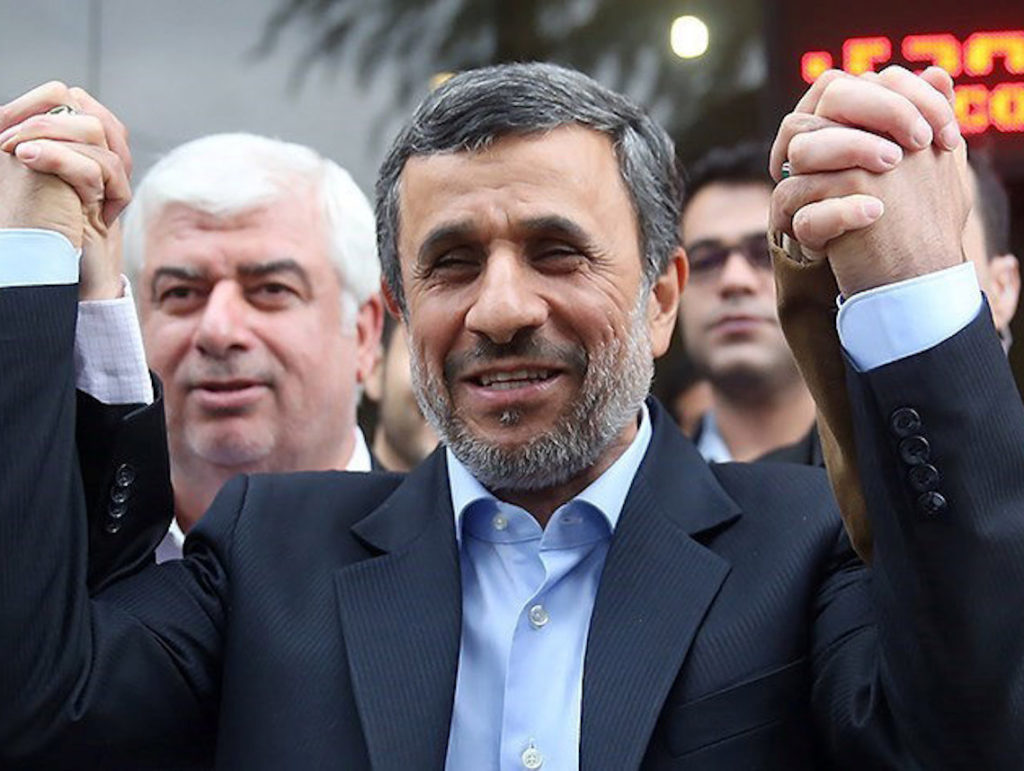
Mahmoud Ahmadinejad makes surprise entry into Iran’s presidential race

Mahmoud Ahmadinejad filed to run in Iran’s upcoming presidential election, defying the wishes of the country’s supreme leader that he not seek to return to the office.

Associated Press journalists watched Wednesday as stunned election officials processed the former hardline president’s paperwork. When he was head of government from 2005 to 2013, Ahmadinejad repeatedly questioned the Holocaust, called for Israel’s destruction and expanded Iran’s nuclear program.

Following Supreme Leader Ayatollah Ali Khamenei’s recommendation in December that Ahmadinejad stay out of the race, moderate President Hassan Rouhani was seen to have a wide-open path to reelection. Ahmadinejad unexpected move could challenge that perception.

Ahmadinejad previously said he would not run and would support his former Deputy Hamid Baghaei, who also registered on Wednesday. At a press conference shortly after registering, Ahmadinejad called Khamenei’s comments “just advice,” and described his move as helping Baghaei.

“His advice does not prevent me from running,” he said. “There is extensive pressure on me from dear people of different walks of life as their small servant to come to the election.”

Ahmadinejad, who under Iranian law became eligible to run again after four years out of office, remains a divisive figure. Massive protests spurred by his disputed 2009 election were violently suppressed, with thousands of people detained and dozens killed. Two of his former vice presidents have been jailed for corruption since he left office.

During Ahmadinejad’s administration, Iran faced heavy international sanctions against for its nuclear program, which Western countries said aimed to develop weapons. Iran has claimed the program is for peaceful purposes.

Rouhani, who has yet to formally register to run for reelection, signed an agreement with world powers to limit Iran’s uranium enrichment in exchange for sanctions relief. Registration remains open until Saturday. Iran’s Guardian Council of clerics and jurists vets all applicants and will announce an approved list of candidates by April 27.

Mahmoud Ahmadinejad makes surprise entry into Iran’s presidential race Read More »