
I saw the blinking light on my answering machine and listened to the frantic voice of my girlfriend, Debbie, as I put the groceries away.
“Heeeeeelp! Jason says he doesn’t want to do his bar mitzvah anymore. We’ve got the date and the place, I’ve hired the DJ and he’s already begun to prepare. He’s making me crazy. What should I do? Call me.”
Wow, what a bummer, I thought to myself.
I really wasn’t sure what to say in response to Debbie’s S.O.S.
What would I have done if my son had said, “No, thanks, Mom. I just don’t want one.”
Would I have forced him to do it anyway, because I knew that he would be sorry later?
Probably, until an experience I had recently completely changed my mind about when is the right time to have a bar or bat mitzvah.
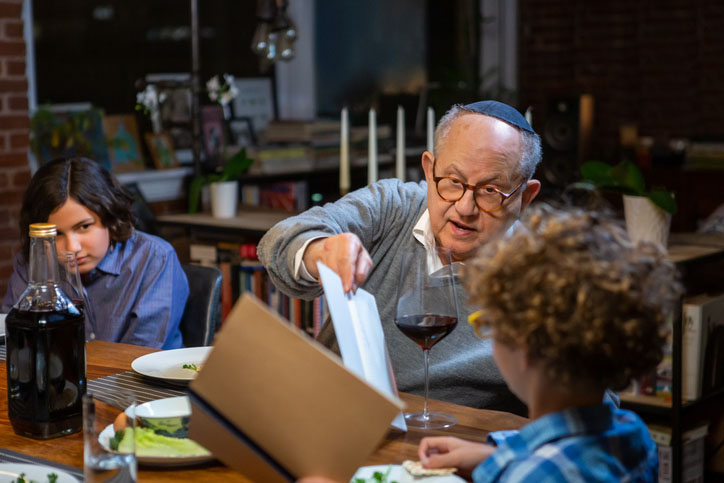
In Hebrew the words bar/ bat mitzvah literally mean “son/daughter of the Commandments.” It is an ancient Jewish ritual dating back to the first century C.E., marking the religious and legal coming of age of a Jewish male at 13 and of a Jewish girl at 12. In the Jewish tradition, the bar mitzvah marks the transition from boyhood to manhood in terms of Jewish communal prayer life, enabling the child to be counted as part of the minyan (the quorum of 10 adults Jewish males necessary for certain prayers) and permitting him to read from the Torah. On an individual level, it establishes the age of legal responsibility and obligation to follow all the commandments.
But what happens later in life to the many Jews who grow up without having a bar or bat mitzvah?
I found out when I was asked to work with a group of Jewish college students who expressed an interest in having one. As I listened to the students share their stories about why they hadn’t done it earlier in their lives, I realized how lucky I was to be able to be a part of their journey. Some, like Debbie’s son Jason, just didn’t want one when they were younger. Others came from interfaith families where it wasn’t an option or from Jewish communities to which they didn’t feel connected. But each one now had a personal desire to learn more about Judaism in order to understand his or her relationship to faith, Jewish traditions, God and Israel.
We studied Jewish history, holidays, ethics, rituals, liturgy and prayers while building a trusting and genuine spiritual community. We shared holidays, birthdays, news about boyfriends, exam anxiety and weight gain. I watched them struggle with questions of faith and heard them talk about doubt, guilt and fear as they actively sought out meaning in and from Judaism.
Our year culminated in a Shabbat morning service where each student read from the Torah and offered a d’var Torah, a personal teaching, about something important that he or she had learned or grappled with during the year.
Anyone who had ever struggled with issues of faith, God or family was able to glean both wisdom and inspiration from my students that day. Individually and as a community of learners, they had engaged in the type of serious Jewish study that would now enable them to become responsible Jewish adults. And that, in a nutshell, is the crux of what it means to become a bar or bat mitzvah.
At the end of the service, I offered my students the following words, which I shared with my friend Debbie in the hope that they might offer her a different perspective on Jason’s reluctance to have a bar mitzvah.
“Being Jewish is not like being in a race. You don’t have to worry about getting to the finish line or keeping pace with other runners. There is no record or timekeeper, other than your innermost self, to mark your spiritual growth and progress.
“Being Jewish is about making the journey, about finding your own stride, about determining your own path. It is about taking that leap of faith and crossing through waters of doubt, discomfort and fear in order to better understanding yourself, your family, your traditions, your culture, your ethics, your history, and your people. And it is in this way, when you are ready, that you will come to appreciate your uniqueness as an individual and your special destiny as a member of the Jewish people.”
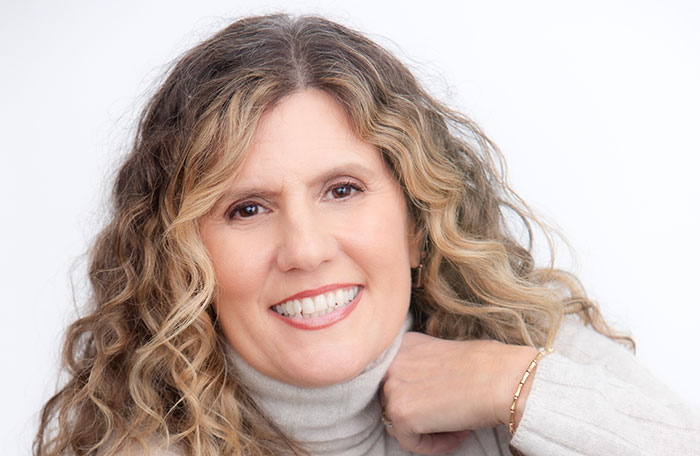
Amy Hirshberg Lederman is a nationally syndicated columnist, Jewish educator, public speaker and attorney. She can be reached at alederman@cox.net.
















 More news and opinions than at a Shabbat dinner, right in your inbox.