

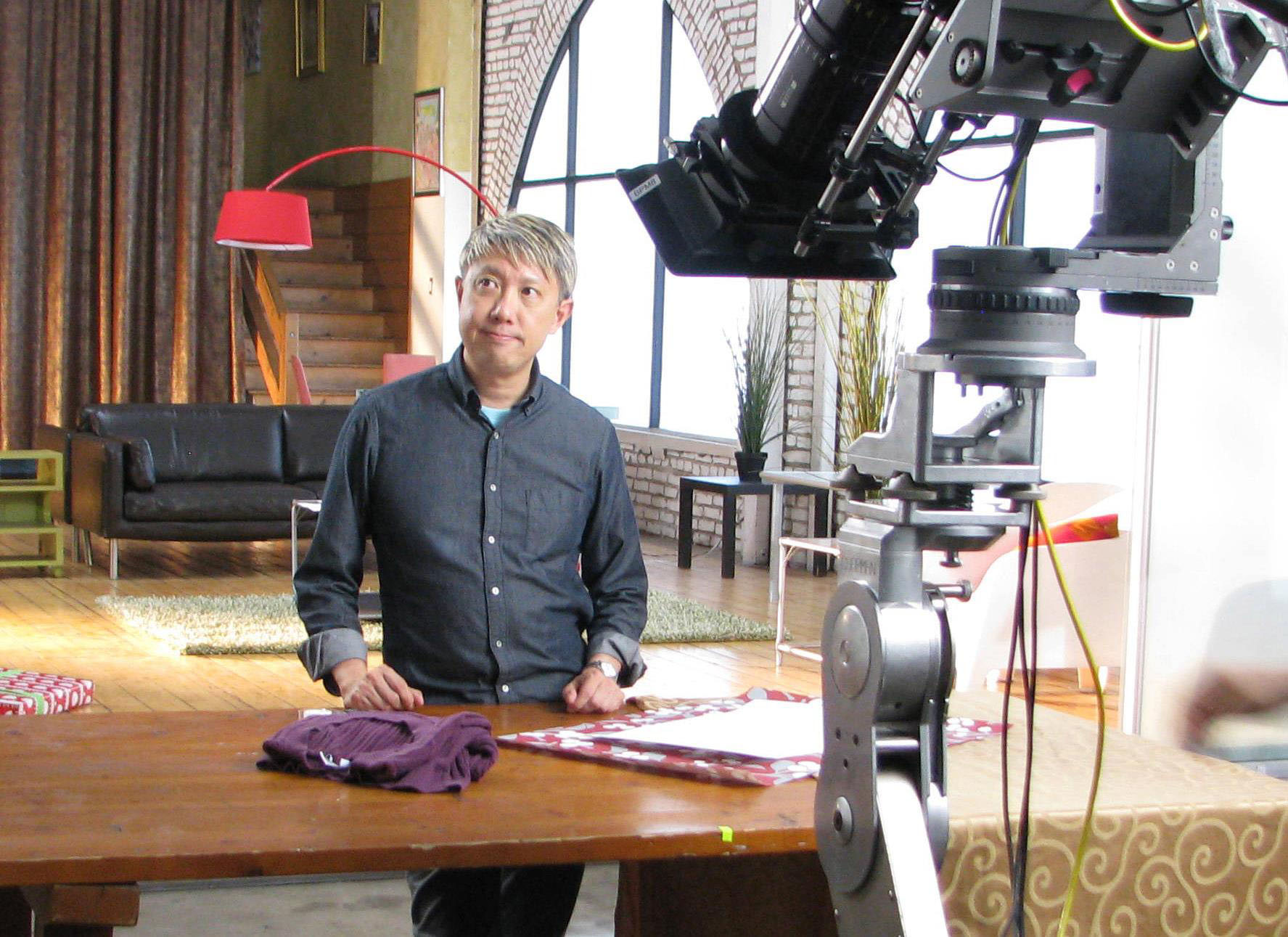
Have you ever wanted to get your home redecorated on a television show? Several years ago, I was actually cast as an on-camera designer for a cable home makeover series.
It was a fun being on the show, and I enjoyed the challenge. Besides the demands of decorating a room under a strict budget and a tight timeline — all while smiling for the camera and making sure I didn’t have lettuce stuck in my teeth from lunch — I had to please the producers as well as the homeowner. The experience helped me to be better at thinking of solutions on the spot, making fast purchasing decisions, and holding clients’ hands to assuage their fears.
The makeover show also taught me some valuable lessons about design that have greatly influenced how I approach decorating.
Color transforms a room
I’ve always loved color. But for makeover shows, a paint job is the most important ingredient of a good “before and after” video montage. Without a pop of color, there is simply not big enough of a difference. And we’re not talking a nice shade of tan here. The more vibrant the color, the more dramatic the reveal.
But I also learned from filming the show that people can respond very negatively to color, especially when they’ve been used to white or off-white walls for so long. On one episode, I had painted a room a rich shade of green that I thought felt very “zen.” However, the homeowner stole a peek at the room before it was ready, and she freaked over the new color. To help get her “green light,” if you will, to continue with the makeover, I showed her other color swatches she could choose from. She eventually chose another green color that was really quite similar to the one I had first chosen. The homeowner loved this new green, but I think that one of the reasons why was she had time to get used to the room not being white anymore.
Now when I work with design clients, I warn them that there is a chance they may hate the color when it first goes on the wall because they aren’t used to it. With that warning, they usually end up loving it.
Clutter ruins the shot
Nothing looks worse on camera than clutter. The first time I was ever on television, my home was featured on HGTV, and the host took me under her wing to show me how things looked through the lens. She pointed to a bookshelf full of tchotchkes that was on the playback monitor and said, “Look how busy that looks. The camera picks up everything.” I never forgot that. We get used to the clutter in our lives and don’t even notice it anymore. But the camera sees it and accentuates it.
When I started doing television makeovers, I was keen to make sure clutter disappeared. I didn’t accomplish this by putting everything in the driveway while we filmed. That would be cheating. Instead, I purchased bookcases and cabinets so that everything had its place. In fact, all of my on-screen clients were short on storage spaces. They actually piled things up on the floor rather than stashing them away. I have a saying: “If there’s room for junk, there’s room for bookcases.” Organizing clutter and hiding it in cabinets resulted in some spectacular before and afters.
The same goes for my “real life” decorating clients. I find that a trip to IKEA — or a similar furniture store — for a storage shopping spree is often the first step in decluttering and beautifying a home.
Good design solves a problem
Perhaps for dramatic purposes, there was always a decorating dilemma I had to solve in each of the television makeovers I did. One person wanted her “girly” bedroom to be more adult. One needed a garage converted into a home office. Another person who worked out of his home needed his living room to be a comfortable meeting space for clients.
But even though these challenges were put in the script to create a more interesting show, they reminded me that good design isn’t about making things pretty, it’s about making things better. Having concrete goals in mind in these home makeovers actually made the task easier because it narrowed down the possibilities. I knew exactly what the problem was, so I was able to create a solution.
When redecorating a space, we need to think of how it fits into one’s lifestyle. What is working about it, and what isn’t? How can the design help with the space’s intended use?
I once designed an office space for a therapist who specializes in teens. My objective was to create a welcoming space that was calming for the young clients, but also reassuring for their parents. Everything I chose, from the wall colors to the style of furniture to the accessories, was geared toward those intentions in mind. Having the quandary of making the space suitable for teens resulted in a much better design than if I were creating an attractive, but generic, office.
Personality is everything
When casting for homeowners who needed makeovers, the producers looked for people with big personalities. It made for more interesting television. And you know what? It made for more interesting design. I had one on-screen client who was a poet who exuded warmth and positivity. She was one of those people who made you feel good just by talking with them. So even though my initial assignment was to create an office space for her, I gave the space a dual purpose as a meditation room, decorating the walls with life-affirming lines from her poetry so she would be surrounded by positive insights as she worked. It captured who she was.
I’ve seen a lot of home makeover shows where they create beautiful rooms, but the spaces end up looking alike in every episode because they don’t reflect the homeowners’ unique personalities. That’s why I encourage people not to decorate their home so they look like a page from a furniture catalog, but to create a space that shows off who they are — quirks and all. You are not generic; your home shouldn’t be, either.
Sometimes it takes a village
On television, with the magic of editing, we tried to make it look like it was easy for me to redo someone’s space in a matter of hours — by myself. But the reality is there was an entire team of people behind the scenes doing all the work, from painting to carpentry to furniture moving. In fact, I didn’t do any of those things because it was against union rules. For example, the painter would paint the whole wall, and then they’d film me holding the paintbrush doing the finishing touches.
The lesson here that I try to impart to do-it-yourself decorators is to give yourself a break. If you can’t finish your home project in a weekend, don’t worry about it. You’ll finish it when you finish it. When I’m decorating, either in my own home or for a client, I don’t have the resources of an entire television construction crew doing all the work for me. You don’t, either. So feel good in knowing that, considering you’re doing it on your own, you’re very much a design star.

































