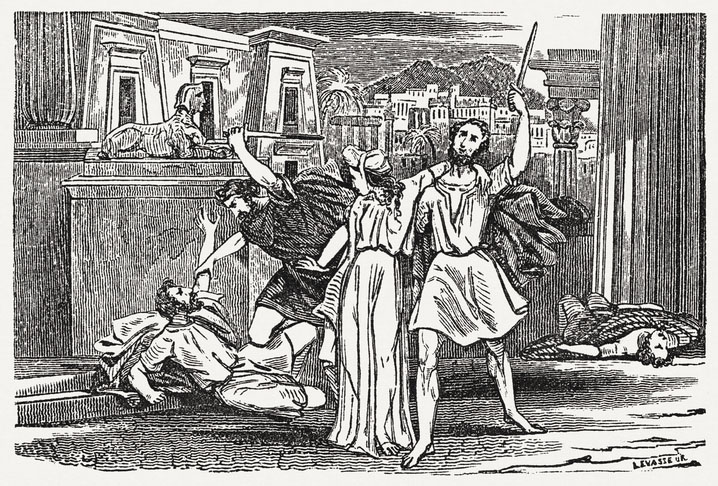
“Then the officials shall address the troops, as follows… ‘Is there anyone who has planted a vineyard but has never harvested it? Let him go back to his home, lest he
die in battle and another harvest it. Is there anyone who has paid the bride-price for a wife, but who has not yet married her? Let him go back to his home, lest he die in battle and another marry her'” (Deuteronomy 20:5-7).
When I read these verses of this week’s Torah portion, I immediately thought of our long-time congregant whose young cousin, Noam Mayerson, was killed in Lebanon this summer. Because Noam was to be married in three months, he would have been one of those troops who fell into the biblical category of “paying a bride-price, but who has not yet married.”
There are times when I stand under a chuppah to officiate at a wedding that a wave of melancholy washes over me — a feeling quite out of place when surrounded by lilies and lace. The ceremony is so hopeful and beautiful. But I can’t help but be reminded that the future is unscripted and there are so many troublesome variables. I pray with all my might for the couple. But I look around, and often see the silently warring in-laws, or the empty chair where a parent should be, the glimmer of sadness just under the joy, and I wonder what will unfold far down the petal-strewn aisle, where will the long recessional lead.
In a 2002 interview with Bill Moyers, Israeli author David Grossman said, “The future is very dubious. We have, as Jewish people in Israel, an enormous past and a very strong and vital presence. But there is not a real inherent sense of having a future. You know, when I read here in the papers that America is planning its wheat harvest for the year 2025, it sounds perfectly natural and normal. But no sane Israeli will make plans for 10 years ahead from now. When I even say it I feel that kind of pang in my heart as if I violated a taboo by allowing myself too much quantities of future. So it’s really there, you know. You feel like you’re walking dead men.”
I think of Noam Mayerson and his grieving fiancée. I think of David Grossman’s 20-year-old son Uri, who was killed in combat two weeks ago. Then of all the soldiers, is there really any one of them who is exempt from the categories listed in Shoftim? Is there any one of them who has not planted a vineyard, who has not found love?
I realize suddenly that this passage is not only about soldiers going to war. It is about us. You have a vineyard. You have planted the seedlings of an idea, a dream you once had. A book you wanted to write. A painting you can see in your mind’s eye. A plan you made. A brochure you picked up. A friend you’ve been meaning to call. A reconciliation you are mustering the courage to make. Every day you initiate plantings, but postpone the harvest for another day, sometime in the dubious future.
In a couple of weeks we will commemorate the fifth anniversary of Sept. 11. In the months that followed Sept. 11, people started telling each other “I love you,” more than ever. There was an international “What am I waiting for?” urgency to love.
How do we honor the soldiers and the civilians who have perished during this last month? How do we embrace the memory of the American soldiers who are dying in Iraq every week, whose pictures no longer appear in the papers?
This summer, standing at Rabin Square in Tel Aviv, I looked at the words of the song that had been folded neatly in Rabin’s pocket when he was assassinated, his own blood seeping through the page: “Nobody will return us from the dead dark pit. Here, neither the joy of victory nor songs of praise will help…. Sing a song for peace with a giant shout! Don’t say ‘the day will come,’ bring the day….”
We honor them by bringing the day.
Begin harvesting the vineyard today.
Pick up the phone.
Write the first word.
Take the first step.
Join. Belong.
Bring the day.
We don’t know what there will be in time. But we do know what we have for the time being.
For the time being, live, sing, shout, harvest, love, build, dream, realize, reach out your hand, donate dollars, embrace and keep planting.
Bring the day when Israel has the luxury of planning its 2025 wheat harvest. When there is never “too much quantities of future.”
Bring the day when, as it says in Psalm 126, “They who sow in tears shall harvest with songs of joy.”
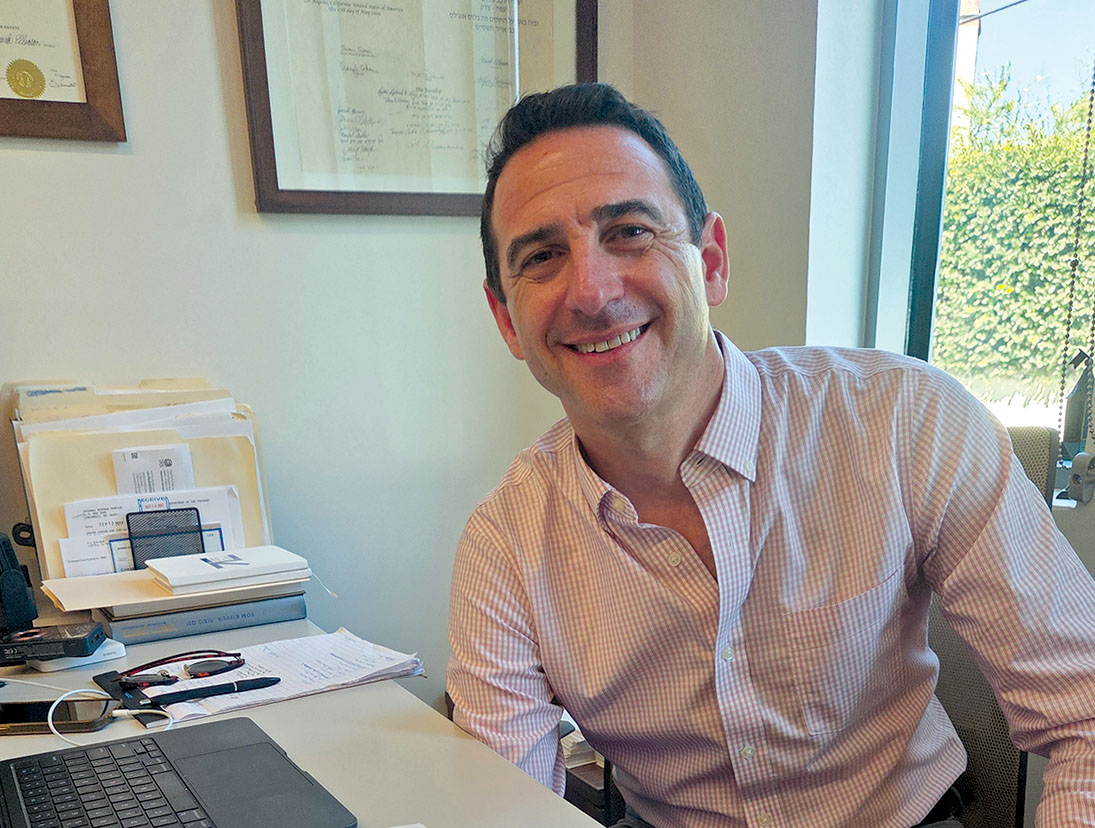
Zoë Klein is a rabbi at Temple Isaiah.