fbpx

U.S. college students learning coding in Israel

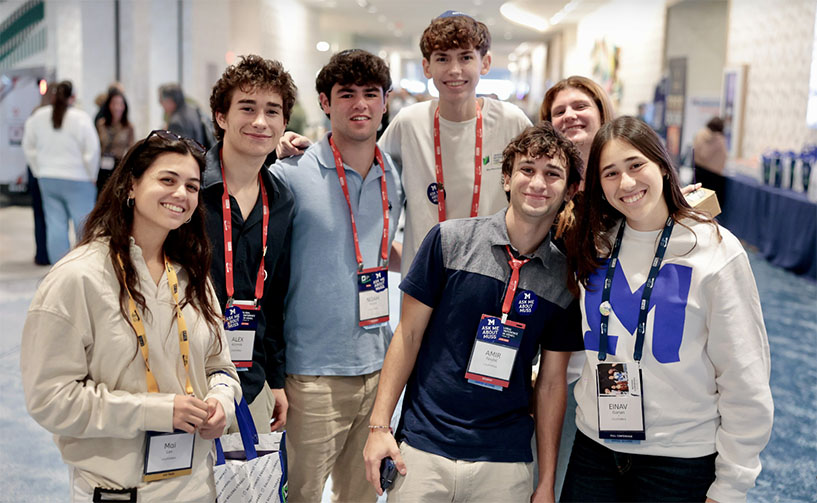
During winter semester break, 40 select college students from the United States are in Israel on TAVtech, a nonprofit coding and entrepreneurship fellowship connecting them to Israel’s startup scene while teaching them impactful skills and exposing them to cutting-edge technology.
[additional-authors]
January 11, 2017

During winter semester break, 40 select college students from the United States are in Israel on TAVtech, a nonprofit coding and entrepreneurship fellowship connecting them to Israel’s startup scene while teaching them impactful skills and exposing them to cutting-edge technology.

“This program takes place in Israel because we want students to be exposed to the most incredible startup ecosystem and most incredible story of startups that exists in the world due to the culture of the Israeli people and story of the State of Israel,” TAVtech CEO Phil Hayes said.

“If you are to understand why Israeli technologies are so successful in fields like machine learning, you have to come here and see the various forces at play that make this such a hotbed of innovation,” he said.

About 300 students applied for the second cohort of TAVtech, yielding 40 participants from a range of majors at schools including Harvard, UC Berkeley, New York University, Brown, Cornell and Georgetown.

“We choose applicants based on what kind of positive impact they can have with the skills they will learn, and their passion for learning these skills,” Hayes said.

Based at Barclay’s Rise Tel Aviv fintech (financial technology) accelerator from Dec. 21 to Jan. 22, the fellows are learning to code and listening to presentations from Israeli experts such as Michael Eisenberg of Aleph venture capital fund, attorney Oded Har-Even and Israel Cleantech Ventures partner Jack Levy.

Fellows who already are advanced in computer science are delving into topics such as cybersecurity, big data and machine learning.

TAVtech heavily subsidizes the cost of the program in partnership with Onward Israel and several foundations and federations, primarily Boston’s Combined Jewish Philanthropies.

The students, not all of whom are Jewish, also spend time in Jerusalem, southern Israel and Haifa.

“After the program, we keep students engaged in our community and help them make a positive impact,” Hayes said. “We pair them with volunteer opportunities to teach computer skills to underprivileged students. We also help them find mentors and potential funders if they decide to start a venture that makes a social impact.”


Did you enjoy this article?
You'll love our roundtable.

Editor's Picks

A Night of Gratitude Honoring Dennis Prager

Latest Articles

Print Issue: What Happened? | November 13, 2026

A story of bipartisan support that gradually became a story of one-party support, until it flips entirely and becomes once again a story of consensus – this time, of bipartisan opposition.

Why Are We Even Here?

When we’re tempted to ask, Lamah zeh anochi? — Why am I here? What’s the point? — we can remind ourselves of the extraordinary goodness that exists in the world. And, even more importantly, we can become part of it.

Leo David Honored as FIDF Gala Raises

Throughout the years, David has donated millions of dollars to numerous causes, but FIDF has always held a particularly special place in his heart.

What If Jewish Americans Just Showed Up?

We mourn on Oct. 7, but Nov. 8 gave us something to celebrate: a community that showed up, on its feet, public and proud. Now we need to make that response a habit.

Genocide and International Relations

The book casts its net far and wide, from debates within the field of research itself to the analysis of genocidal events across the past century.

A Concrete Case for Hope

Over the last month, Americans and Israelis voted in elections that were consequential to the characters of both countries. For many, these elections represented inflection points, signaling the directions their respective societies will take moving forward.

AIPAC Isn’t the Problem. It’s Part of the Solution.

The future of the U.S.-Israel relationship will not be secured by winning one more primary. It will depend on whether Americans understand why Israel matters, why Jewish self-determination is legitimate, and why the alliance benefits both nations.

The Last Signer

Carroll, having helped swing Maryland toward independence, was elected to Congress on July 4, and signed the Declaration in August, the only Catholic among the signers and the only one to add his estate to his name.

More news and opinions than at a Shabbat dinner, right in your inbox.