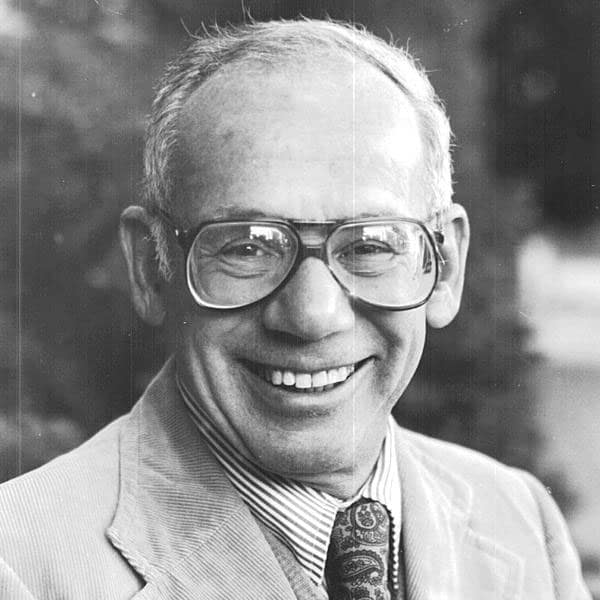
In the opening scene of the documentary “Torn,” an official asks an elderly man for his name, and he replies, “Romuald-Jakub Weksler-Waszkinel.”
This name encapsulates the fate of Jakub (Yankele) Weksler, born 1943 in Lublin, Poland, to Jewish parents during the Holocaust years and adopted by a Christian Polish family to save his life. At 17, the one-time Yankele enters a seminary and eventually becomes Father Romuald Waszkinel, a Catholic priest.
As his Polish mother lies dying, she tells the 35-year-old priest that — like thousands of other Jewish children hidden by Catholic families and in convents during the war — he was born a Jew.
In the remainder of “Torn,” Israeli filmmaker Ronit Kertsner documents a man’s struggle to reconcile two faiths that he sees as one, but which the Christian and Jewish outside worlds view as mutually exclusive beliefs.
The man’s internal struggle is given external expression in his small bedroom, where a painting of Jesus is flanked by an engraving of the Shema prayer and a small menorah. Adjacent are faded photos of his Jewish and Christian mothers.
Over the years, the priest’s conviction grows that he must go to Israel to study Hebrew, and in his mid-60s he arrives at Sde Eliyahu, an Orthodox kibbutz, to enroll in its ulpan (intensive Hebrew-language program).
But here, as in Poland, Weksler-Waszkinel’s insistence that he is both Jewish and Catholic stumps even the generally sympathetic kibbutzniks and Israeli bureaucrats.
For one, Israel’s Law of Return, which grants automatic entry to any Jew, does not apply to those practicing a different faith, and no Christian monastery in Israel will accept him in their own ranks.
Weksler-Waszkinel, now known as Yaakov, is at first indignant (“You mean secularists like Marx and Trotsky are Jews, but not me?”), then agrees to forgo saying Sunday Mass at a church in Tiberias, but he refuses to take the final step.
“I can deny everything [about Catholicism], but not Jesus,” he proclaims, but adds later, “I am convinced the God of Israel loves me, as I love Him.”
As Yaakov continues his struggle, his great friend is the American-born chief rabbi of Poland, Michael Schudrich, who becomes the mediator between Yaakov and his would-be Israeli compatriots.
One unforgettable picture symbolizes Yaakov’s duality. As he approaches the Western Wall in Jerusalem, he carefully adjusts his priestly Roman collar, and then his embroidered kippah.
Currently, Yaakov works as an archivist at the Yad Vashem Holocaust Memorial in Jerusalem and appears happy, filmmaker Kertsner said. He has been officially classified as a “permanent resident,” which allows him three years to decide whether to apply for Israeli citizenship.
Kertsner said that of the many thousands of Jewish children saved by Poles during the Holocaust, she knew of no other instance of a born Jew becoming a priest.
She brings a special empathy to the subject of her documentary. “When I was around 35, I learned that I had been adopted as a child, and then I went through a severe identity crisis,” she said.
Her American parents moved after World War II to Israel, where Ronit was born in 1956. She started, and continues, her career as a film editor, partly due to the influence of her uncle, the American actor David Opatoshu. As producer of “Torn,” she decided to also direct it when no one else wanted the job.
Her other documentaries — “Menachem and Fred,” “I, the Aforementioned Infant” and “The Secret” — also deal with identity crises. Asked if she plans on doing any feature films, she answered, “Why should I, when real life is so fascinating?”
The Los Angeles Jewish Film Festival will screen “Torn” on Aug. 10 at the Museum of Tolerance as part of its “Midsummer Night’s Film Festival” series. The film starts at 7:30 p.m., followed by a panel discussion with Rabbi Marvin Hier, founder and dean of the Simon Wiesenthal Center; the Rev. Alexei Smith, director of the Office of Ecumenical and Interfaith Affairs of the Archdiocese of Los Angeles; and director Kertsner. Rabbi Mark S. Diamond, executive vice president of the Board of Rabbis of Southern California, will serve as moderator.
For tickets or information about the screening, please call (800) 838-3006 or visit www.lajfilmfest.org. For more background on “Torn” and its director, visit www.go2films.com.