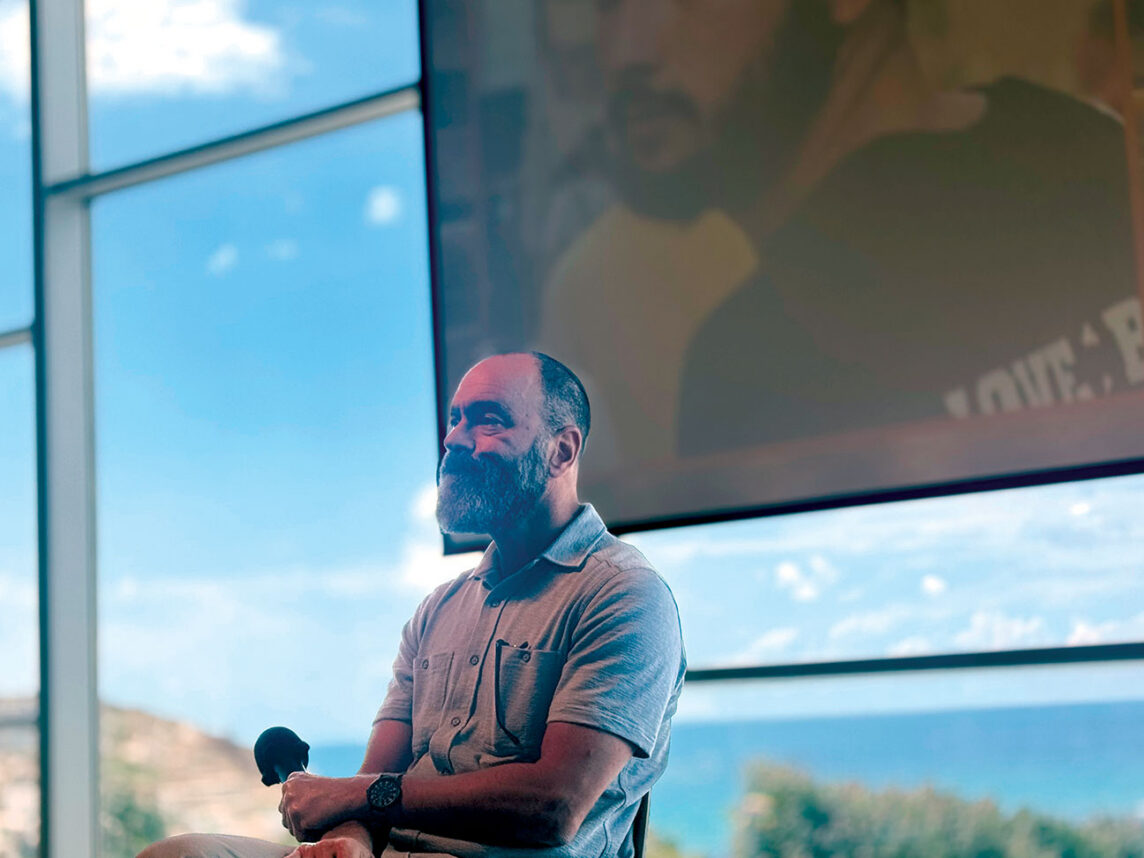
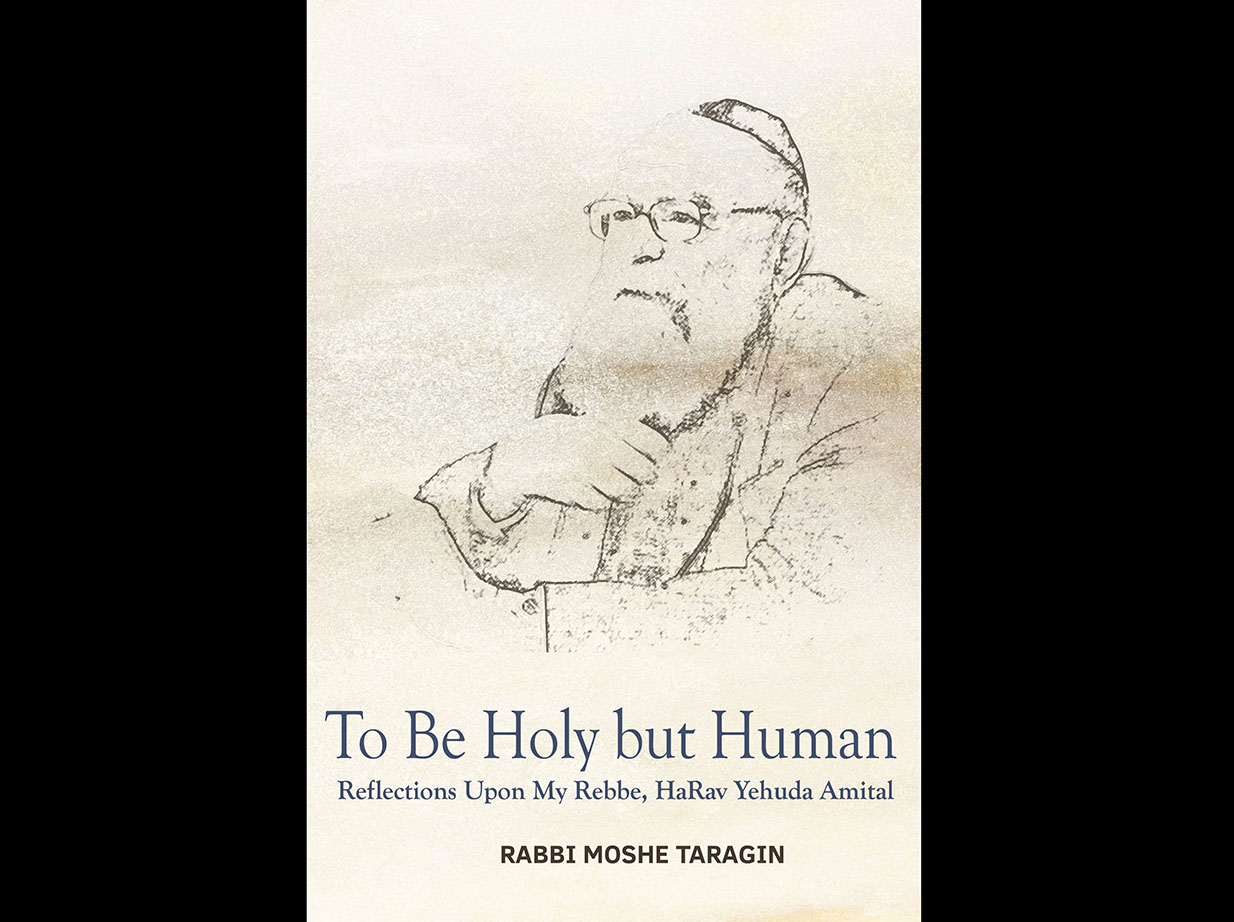
Amidst fraught debates in Israel over the role of Haredi rabbinic leadership in discouraging students from serving in the IDF comes a new moving intellectual biography of an inspiring Religious Zionist rabbi who offered a different model. “To Be Holy But Human: Reflections Upon My Rebbe, HaRav Yehuda Amital,” by Rabbi Moshe Taragin, a teacher in Yeshivat Har Etzion, is a rich and rewarding meditation on a fascinating and impactful figure.
Amital, born Yehuda Klein in Oradea, Romania, survived the Holocaust as a young man and moved to British Mandate Palestine in 1944 at the age of twenty. During Israel’s War of Independence, he fought in Latrun and in the western Galilee. Pursuing a career in the rabbinate, Amital was deeply committed to the balance of Jewish learning and commitment to defending Israel’s biblical homeland. He formulated the idea of a “Hesder yeshiva,” in which students both undertake serious Torah study and serve in the Israeli army. Following the Six Day War, he founded Yeshivat Har Etzion, which he would lead for the next forty years. Roughly twenty years before Rabbi Amital’s death in 2010, the Hesder program, now replicated in multiple yeshivot throughout the country, won the Israel Prize for its contributions to Israeli society.
Taragin’s volume is not a conventional academic history of his mentor. Rather, it offers a compendium of warm and wise anecdotes and lessons he learned studying under Amital.
Take, for example, Rabbi Amital’s twist on a much-quoted moral insight. The adage, Taragin writes, “goes something like this: ‘First I tried to change the world. When that didn’t go as planned, I focused on changing my family. And when that didn’t work, I retreated inward to change my own inner life.” Rabbi Amital, Taragin recounts, would object to this formulation, dismissing it as superficial. Amital explained, per Taragin, that “people often begin by trying to change themselves, but when that proves difficult, they shift their focus to changing their family. When that fails, they turn their attention to changing the world. Rav Amital recognized that this was more than just a pattern of behavior; many people outwardly appear to be world-changers, making a significant impact, but in truth, they may be using their external successes as a substitute for deeper, personal growth or meaningful family relationships” which they struggle at. Rabbi Amital would stress, therefore, the importance of developing individual maturity and a sense of family responsibility first, before seeking to preach ethical improvement to others.
Taragin also notes the intellectual flexibility possessed by Rabbi Amital, seemingly lacking in those rabbis at the center of contemporary Israeli debates over enlistment. “Rav Amital was handed a draft of a book someone had written about his thought,” Taragin writes. When asked about it, Rabbi Amital said he “didn’t like it, because it presented him as having changed his mind” about certain topics. But then, Amital paused, decided he did like it – he had changed his mind about the project. The ability to reconsider, and adapt accordingly, Taragin concludes, is another characteristic of this uniquely humble and open-minded thinker.
This balance of building a solid foundation within one’s self, while allowing for adaptability and growth, is fittingly reflected in a metaphor Amital was fond of invoking.
In the agricultural practice of grafting, Taragin recounts Amital teaching, “a healthy, strong but fruitless tree is used as the foundation, and a fruitful tree, like a cherry or lemon tree, is grafted onto it. This process allows the fruit-bearing tree to thrive by drawing strength and immunity from the base tree. To him, this symbolized a profound truth: the lofty can only rise when firmly anchored in the solid and steadfast. Fruit-bearing branches must be grafted onto sturdy fruitless trees, deeply rooted and unyielding to the winds. Likewise, transcendent and sophisticated religious experiences cannot endure without the bedrock of simple, grounded acts that provide stability and strength.”
While neither Taragin nor Rabbi Amital likely originally intended these teachings to inform debates over Haredi participation in the defense of Israel, the timing of the book’s recent release seems fitting, and perhaps might inspire flexibility in those holding out from joining in Israel’s fight. After all, while those arguing against participation in the army do so in the name of protecting religious study, Rabbi Amital argued, and lived, a different framework. It was, and is, one in which lofty study emerges from individuals with a deeply rooted sense of responsibility for the Jewish family, seeking to strengthen its national project, starting with their own selfless acts in protection of our people.
Rabbi Dr. Stuart Halpern is Senior Adviser to the Provost of Yeshiva University and Deputy Director of Y.U.’s Straus Center for Torah and Western Thought. His books include “The Promise of Liberty: A Passover Haggada,” which examines the Exodus story’s impact on the United States, “Esther in America,” “Gleanings: Reflections on Ruth” and “Proclaim Liberty Throughout the Land: The Hebrew Bible in the United States.”