Running a television show is the sort of job that rarely leaves you with free-time on your hands, but during the writers’ strike of 2007, “24” executive producer Howard Gordon suddenly found himself with just that – free time, and no scripts to write. So he decided to try his hand at a novel instead. Gordon’s debut effort, an international thriller titled “Gideon’s War,” hits shelves this month.
Jewish Journal: Why a novel after so many years as a TV Writer?
Howard Gordon: It’s actually less sudden than it may appear. I’ve always wanted to write a novel. I wrote a short novel for my thesis in college with Joyce Carol Oates as my adviser. When the strike happened, I decided to take the opportunity to explore and flex those muscles again.
JJ: How did you find the novel-writing experience compared to the collaborative effort of scripting a show?
Gordon: It’s a little akin to show-running. Actually, I take that back, it’s profoundly different. It’s much lonelier. The terror was far more acute. I’d become used to relying on others; I genuinely feared not finishing the novel. It was a real learning process for me. Having a great editor and a great agent helped, and so did the flexible deadline.
JJ: You seem to be drawn to writing about spies and international intrigue. What about that world speaks to you?
Gordon: I’m fascinated with foreign policy, especially with how we (America) represent ourselves internationally, how we project our power. I thought briefly about joining the State Department when I graduated from college. I currently serve on the Pacific Council on International Policy, and the Homeland Security Resiliency Task Force, so it’s important to me. It also appeals to me as a genre.

JJ: The protagonist of your novel, Gideon Davis, is in many ways the opposite of Jack Bauer when it comes to dealing with conflict. Gideon’s brother, Tillman, seems to share more of the same views as Bauer when it comes to handling terrorism, while Gideon’s more of a pacifist. Which approach are you sympathetic to?
Gordon: I identify with Gideon more than Jack. He tries to talk his way out of things, like I do. He seeks the peaceful approach, until he’s forced to act. Conflicts between brothers have always interested me – Cain and Abel, Joseph and his brothers, even a movie like “The Fighter.” I love how things swing from sibling love to sibling rivalry.
JJ: So your book is named “Gideon’s War,” and much of the action centers around an oil rig called The Obelisk; in the Bible, Gideon is one of the Judges, and he fights a war with the Midianites and destroys the altar of Baal. Baal is often associated with Obelisks. Coincidence?
Gordon: Completely! I didn’t even realize it until I was googling the book one day and made the connection. Maybe it was a subconscious thing.
JJ: The novel seems tailor-made for a film adaptation, any plans for that?
Gordon: I’m still considering it. I didn’t write the novel with that in mind, but obviously if an opportunity comes along, I’d have to think about it.
JJ: Any other projects in the pipeline?
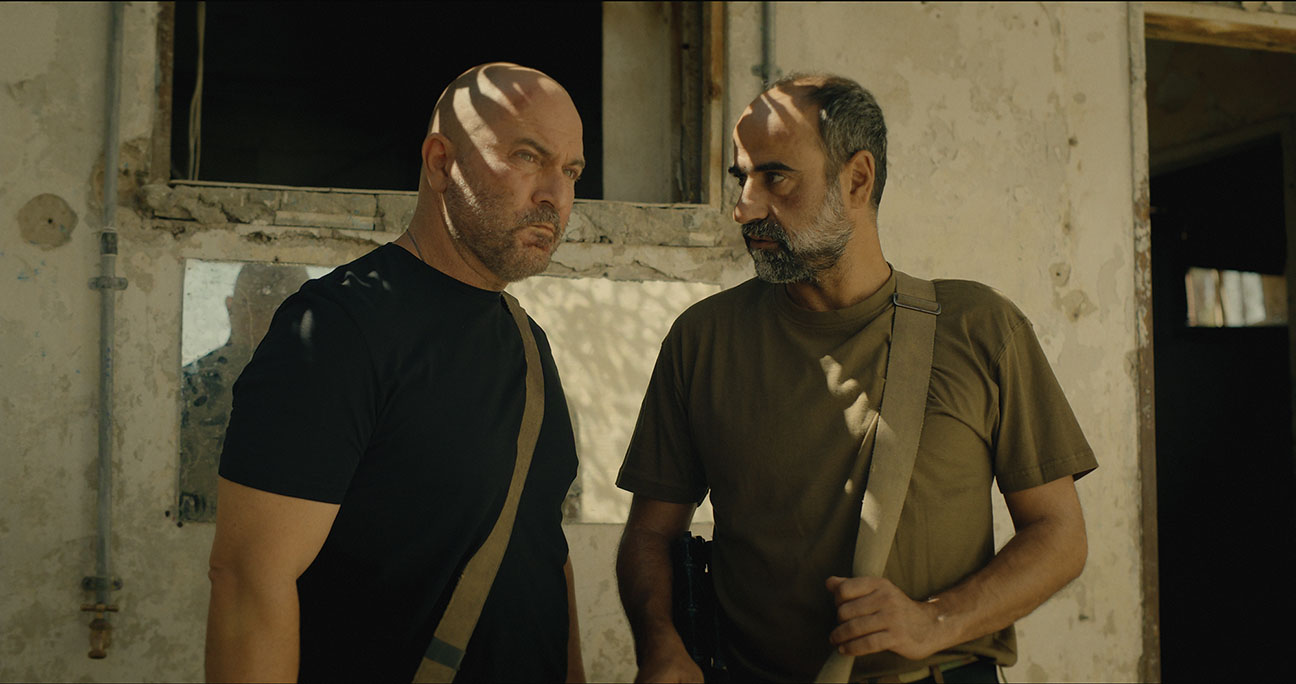
Gordon: I’m shooting a pilot in North Carolina for Showtime. It’s called “Homeland,” and it’s based on an award-winning Israeli TV show. So you can hopefully look forward to seeing that soon.