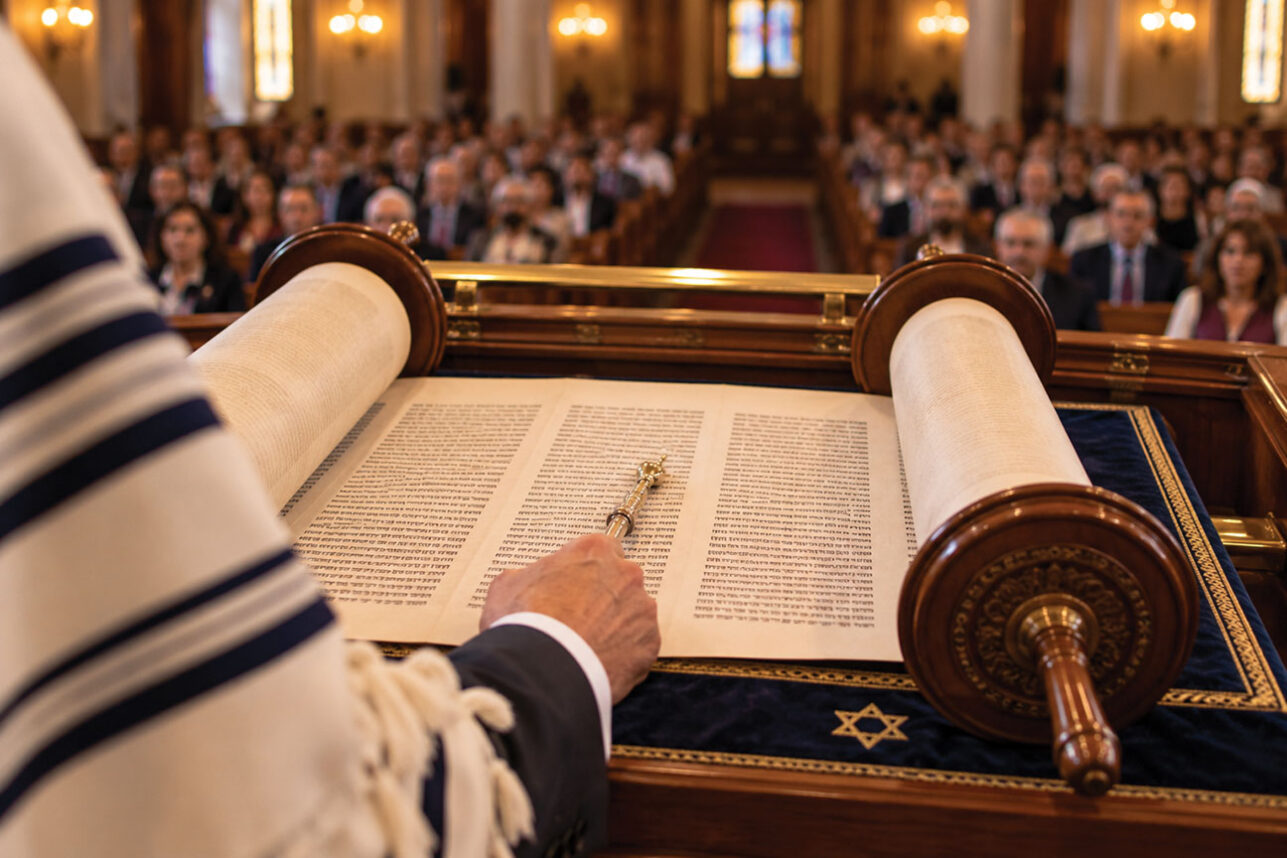
While in his mid-30s, author Seth Rogovoy began what he calls “a mostly self-directed study of Jewish scripture”—the Bible, Talmud, the mystical writings constituting the Kabbalah, the traditional prayer liturgy.
At first, he couldn’t figure out why some of it seemed familiar. “This wasn’t an echo of previous learning of Jewish texts—of that, I had next to none,” Rogovoy says in his book “Bob Dylan: Prophet, Mystic, Poet” (Scribner, $26).
As a teenager during the 1970s, Rogovoy studied the lyrics of songwriter-singer Dylan (born Robert Allen Zimmerman in 1941) as his sacred texts. By then, Dylan had become famous and influential across the secular culture, but Dylan’s intensive Jewish upbringing in northern Minnesota rarely reached public consciousness.
The epiphany arrived unexpectedly, as epiphanies tend to do: “There was a significant overlap between the torah of Dylan and the Torah of Moses,” Rogovoy says.
A couple of examples:
Ezekiel relates a vision of angels in the book of Prophets. “The soles of their feet…their appearance was like fiery coals, burning like torches” states the translation used by Rogovoy. That called to mind Dylan’s song “The Wicked Messenger,” which contains the lyrics “The soles of my feet, I swear they’re burning.”
In another Biblical passage, God tells Moses “No human can see my face and live.” In the 1983 song “I and I,” Dylan sings “One says to the other, no man sees my face and lives.”
Throughout the 300-plus pages of Rogovoy’s book, the examples abound. Rogovoy did not interview Dylan while researching the book, so the evidence of Jewish scripture influencing Dylan’s songwriting is circumstantial. But as accomplished lawyers know, circumstantial evidence can accomplish its mission as well as direct evidence if enough circumstantial evidence exists.
Moving beyond Dylan’s lyrics, Rogovoy also places the contemporary singer-songwriter in the context of Jewish performers. (Rogovoy’s previous book is “The Essential Klezmer: A Music Lover’s Guide to Jewish Roots and Soul Music.”) The most memorable Dylan antecedent is Eliakum Zunser, a Jew born in Lithuania during 1836. Zunser launched his career as a badkhn, defined by Rogovoy as “a folk artist who worked primarily as a wedding emcee in Jewish Eastern Europe.” According to Rogovoy’s research, Zunser “became a pioneer of original Yiddish protest songs in the 1860s and 1870s, which eventually led to his becoming the most popular Jewish folksinger of his time, by building a new kind of protest music atop a foundation of folk tradition.”
Rogovoy never suggests that Dylan has heard of Zunser, much less relied on him as a model. Still, the historical resonances are fascinating.
For readers who care little about the Jewish influences on Dylan’s songwriting, Rogovoy’s book is nonetheless a fine text for understanding Dylan’s life, inside and outside recording studios and stage performances. Sure, plenty of other critical analyses purporting to explain Dylan’s artistry have been published, and so have several worthy full-life biographies. But those I have read do not greatly surpass Rogovoy’s book. His skillful writing style, his decades of close Dylan study from a devoted fan’s perspective, his biographical research combine to make the book attractive to non-Jews and, for that matter, non-Christians.
Is Dylan a born-again Christian? Rogovoy hears that question frequently. His stock reply: Who knows?
“In any case, it’s beside the point,” Rogovoy says. Although famously private about his private life, Dylan has issued enough on-the-record comments “to support any viewpoint—he’s Jewish, he’s Rastafarian, he doesn’t believe in any religion,” Rogovoy states. Maybe Dylan finds his deity in music, his religion in his songs, Rogovoy speculates. That formulation should serve any Dylan listener well.
Steve Weinberg’s favorite Dylan song, “License to Kill,” is not even mentioned in Rogovoy’s book.