

November is a splendid month for Angelenos who like to keep up with new books and meet the people who write them.
With Kristallnacht on Nov. 9 as a grim reminder, Daniel Jonah Goldhagen will evaluate the continuing horrors of genocide, while Ayaan Hirsi Ali will analyze the global threats posed by Islamic extremists.
In line with Veterans Day, Jason Fenton will discuss his book documenting the role of American and other foreign volunteers in Israel’s War of Independence.
Daniel Jonah Goldhagen
In his international best-seller, “Hitler’s Willing Executioners” (Vintage, 1997), former Harvard political scientist Goldhagen proposed that the Holocaust was not merely the work of Hitler and a small cadre of Nazi fanatics, but was willingly carried out by ordinary Germans, indoctrinated by a long history of anti-Semitism.
Now, in “Worse Than War: Genocide, Eliminationism, and the Ongoing Assault on Humanity” (PublicAffairs), Goldhagen broadens the historical landscape of the last century to record the “eliminationist” mass murders of Armenians, Cambodians, Bosnian Muslims, Tutsis, Darfurians — and the list goes on.
Looking at the sheer numbers, the “Worse Than War” title appears justified. According to the author’s calculations, between 127 million to 175 million people were killed in 20th century genocides, not counting the starvations under Stalin and Mao’s depredations in China.
Perhaps to make certain that his readers are wide awake, Goldhagen’s first sentence in the book reads, “Harry Truman, the 33rd president of the United States, was a mass murderer. He twice ordered nuclear bombs to be dropped on Japanese cities.”
As I read this jaw-dropping sentence, I was reminded of a learned British historian who, around 1938, wrote a book proving conclusively that Hitler did not represent a threat to Europe and, internally, only wanted to limit Jewish influence in Germany.
If the scholar had left his Oxford study and spent one day on the ground in Nazi Germany, he would have come to different conclusions, one reviewer observed.
The latter observation illustrates one of the problems later historians face in looking at earlier historical events. They may be privy to all subsequent documents and may be the keenest of analysts — as Goldhagen is — but they simply cannot relive or recreate the mood, the emotions, the gut feelings of the earlier time.
Goldhagen argues that Japan was, in effect, beaten and would have surrendered without dropping atomic bombs on Hiroshima and Nagasaki.
This may or may not be valid, but the almost unanimous popular conviction at the time was that Japan could only be beaten by an invasion of the homeland, which might cost up to a million American casualties.
Had that occurred, and it came out that Truman could have prevented such deaths by dropping atomic bombs, he would not only have been impeached, but also probably lynched.
If I may be allowed a personal note, I was an infantryman at the time and, after seeing action in France and Germany, was being shipped back to the States to prepare for the anticipated invasion of Japan. Had I been killed in the invasion, as seemed not unlikely, I would have never forgiven Truman.
It is patently unfair to judge a book by its first sentence. In more than 600 pages, Goldhagen does yeoman’s work in analyzing the types and causes of genocides, including the demonization of clearly identifiable groups, which supposedly must be eliminated in self-defense to assure the survival of the perpetrators.
The author argues that such “eliminationism” is not inherent in human nature and can be prevented by political means. Perhaps if not by the feeble United Nations, than by an alliance of democracies ready to intervene forcefully at the first threat.
What seems to be missing in the equation, as critic Adam Kirsch of Tablet Magazine points out, is the “mystery of [human] evil.” As history has shown endlessly, any given people, under the “right” circumstances and leadership, are capable of slaughtering any perceived internal or external enemy.
Goldhagen will speak and field questions at the Simon Wiesenthal Center’s Museum of Tolerance on Nov. 9, starting at 7 p.m. Also to be featured are excerpts from the upcoming PBS documentary by Jay Sanderson of the Jewish Television Network, who accompanied Goldhagen on some of his travels and interviews.
Admission is free, but advance reservations are required. For reservations, call (310) 772-2527.
Ayaan Hirsi Ali
, she questioned the West’s comprehension of Islam and the roots of terrorism, as well as America’s devotion to the concept of multiculturalism.</p>
<p>She also argued that there was little basic difference between the outlooks of “moderate” and “extremist” Muslims.</p>
<p>Asked last week whether her earlier feelings about the West’s incomprehension in the face of Islamic threats had changed, she seemed even more pessimistic than a year ago. </p>
<p>“I felt safer under President Bush than now,” she said. “But basically, nothing has really changed. In Pakistan, there is continuing anarchy and [President Mahmoud] Ahmadinejad is determined that Iran will become a nuclear power.</p>
<p>“At the same time, European governments give lip service to opposing Islamic terror, but when you ask for concrete action, they say no,” she said.</p>
<p>Now a United States resident and a Fellow at the American Enterprise Institute, a conservative think tank, Hirsi Ali will speak Nov. 9 at 7:30 p.m. at the American Jewish University, and will be interviewed by AJU President Robert Wexler. </p>
<p>Admission is $20. For information or registration, call (310) 440-1246.</p>
<p>
<b>Jason Fenton</b></p>
<div style =)
 anti-tank unit.</p>
<p>Years ago, he started collecting stories, recollections and photos about the members of his own unit. Gradually, he expanded this hoard to include the feats of other Machalniks on the ground, in the country’s nascent air force and in the navy.</p>
<p>Then came more photos, maps, newspaper clippings, historical timelines and, best of all, lots of personal reports and reminiscences from the volunteers, who, like the fabled Kilroy of World War II, were there when it counted.</p>
<p>The result of this 15-year labor is the book “Strength and Courage: The Untold Story of the Machal Volunteers Who Helped Win Israel’s War of Independence” (Protomet Media).</p>
<p>At times, the story’s thread gets a bit jumbled, but the book has the intimacy and freshness of a G.I. bull session, told by the men in the foxholes and cockpits, rather than the four-star generals in the rear.</p>
<p>A considerable number of the volunteers, especially in the air force, came from Los Angeles, and readers may be surprised to discover what some elderly acquaintance did in the brave old days.</p>
<p>Fenton will speak at noon on Nov. 15 at Sephardic Temple Tifereth Israel in Westwood, during a Veterans Day Lunch sponsored by the Jewish War Veterans. No charge for veterans who served in the U.S. armed forces. </p>
<p>For information and reservations, call (310) 475-7311.</p>
</div>
</div>
<div class=)











Avinu Malkeinu — A New Poem
Our Parent, our Sovereign – I’m embarrassed to tell You we have not been great.
The Genocide Lie: When a Libel Becomes a Label
The thing with labels is that they stick. That is a good thing for a group like the Nazis, but to nonchalantly slap the “genocide” label on Israel and its supporters is criminal.
A Bisl Rosh Hashana ~ Not Your Typical New Year
Rosh Hashana is reserved for soulful transformation: Resolving to be something different in the Jewish new year.
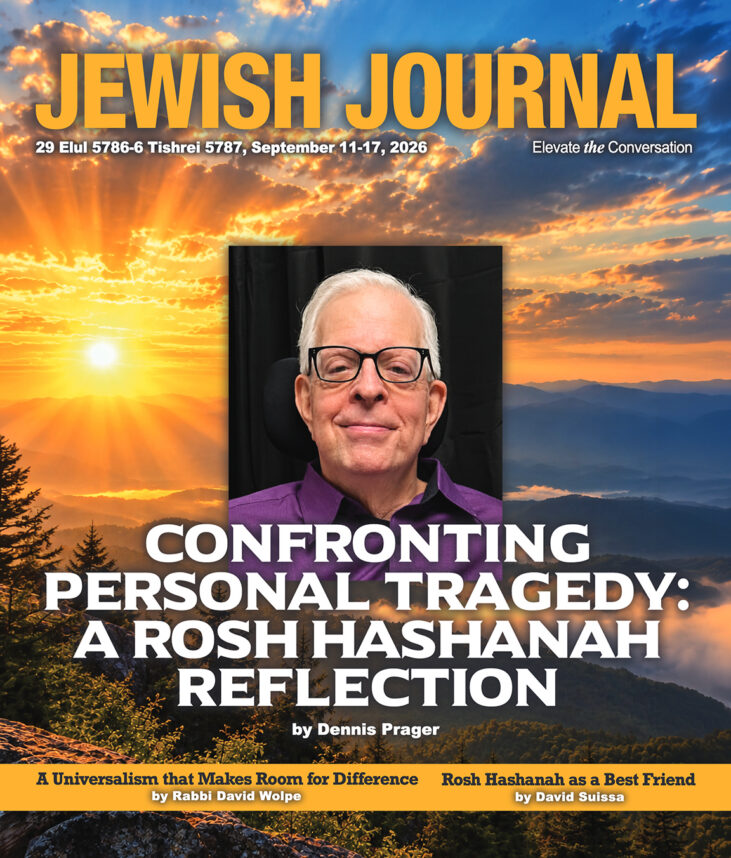
Print Issue: Confronting Personal Tragedy: A Rosh Hashanah Reflection | September 11, 2026
These are among the themes of Rosh Hashanah: Who will live and who will die? Who will suffer and who will prosper? And if I may add a couple of questions of my own: Who will be grateful and who will be ungrateful? Who will complain and who will create?

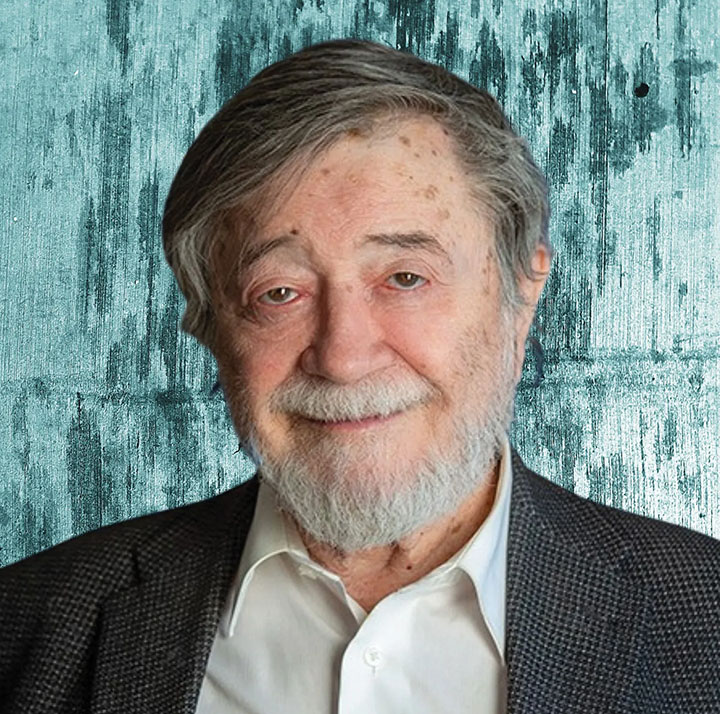
Happy Birthday, Judea Pearl
One thing I am sure of: Judea is inarguably a proud Jew, a steadfast member of this multimillennial Jewish Peoplehood. The other is that I love the man, plain and simple.
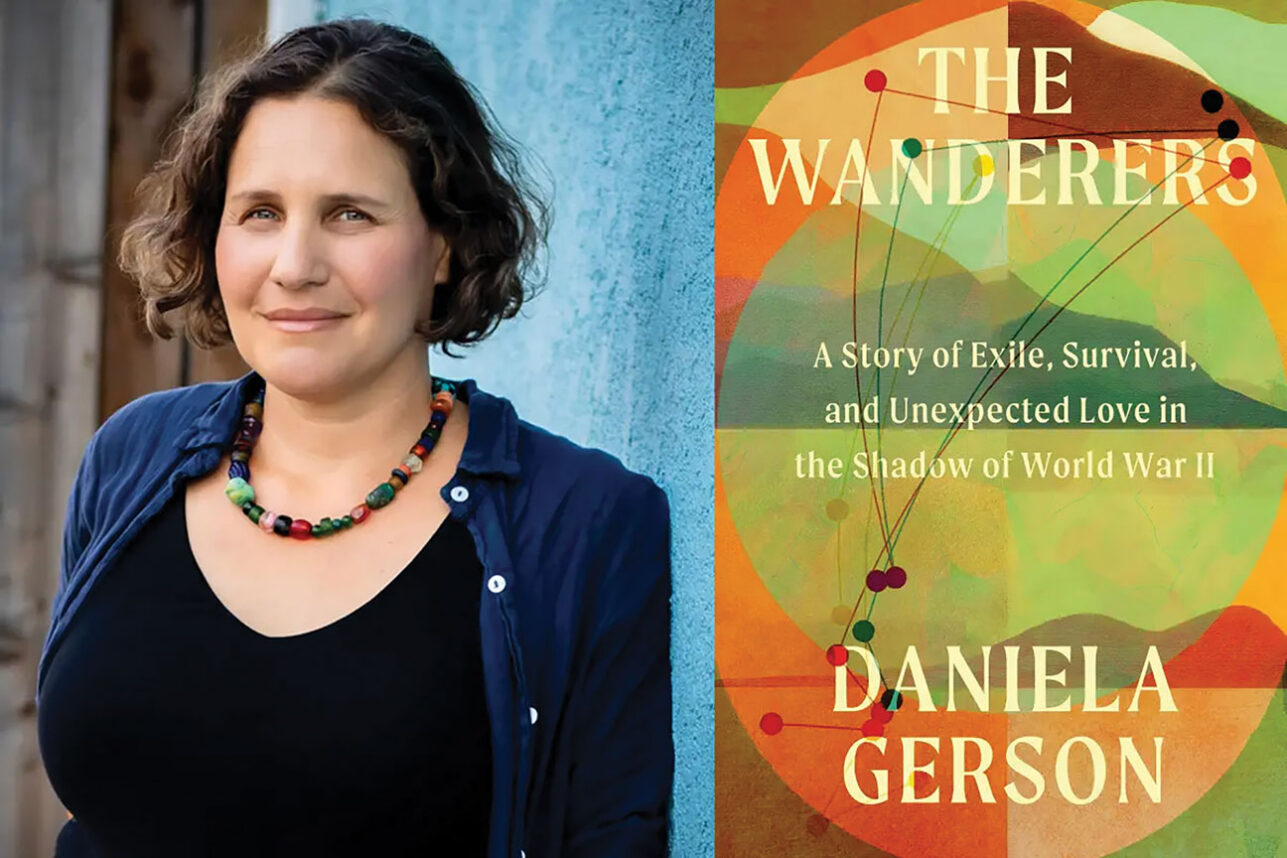
Exiled from Zamosc, Survival in the Far-Off Lands
Daniela Gerson’s “The Wanderers” is all that you can ask for from a book. Meticulously researched, exquisitely told, it is an adventure story spanning more than 80 years, even a love story.
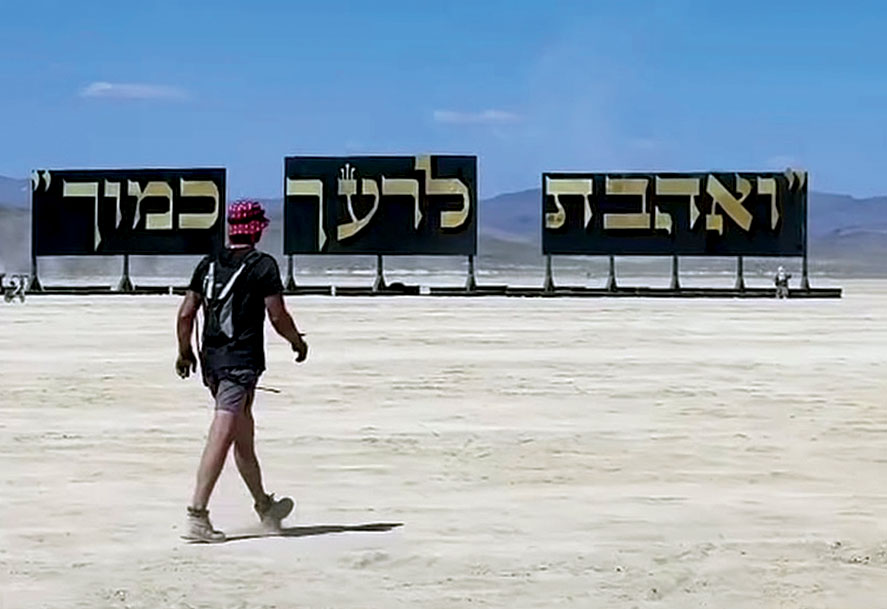
At 6:29 A.M., to Honor Nova, the Music Stopped at Burning Man
The project was organized by the Nova Tribe Community Association, the nonprofit created after Oct. 7, by producers of the Nova festival to support survivors and bereaved families and commemorate those murdered.
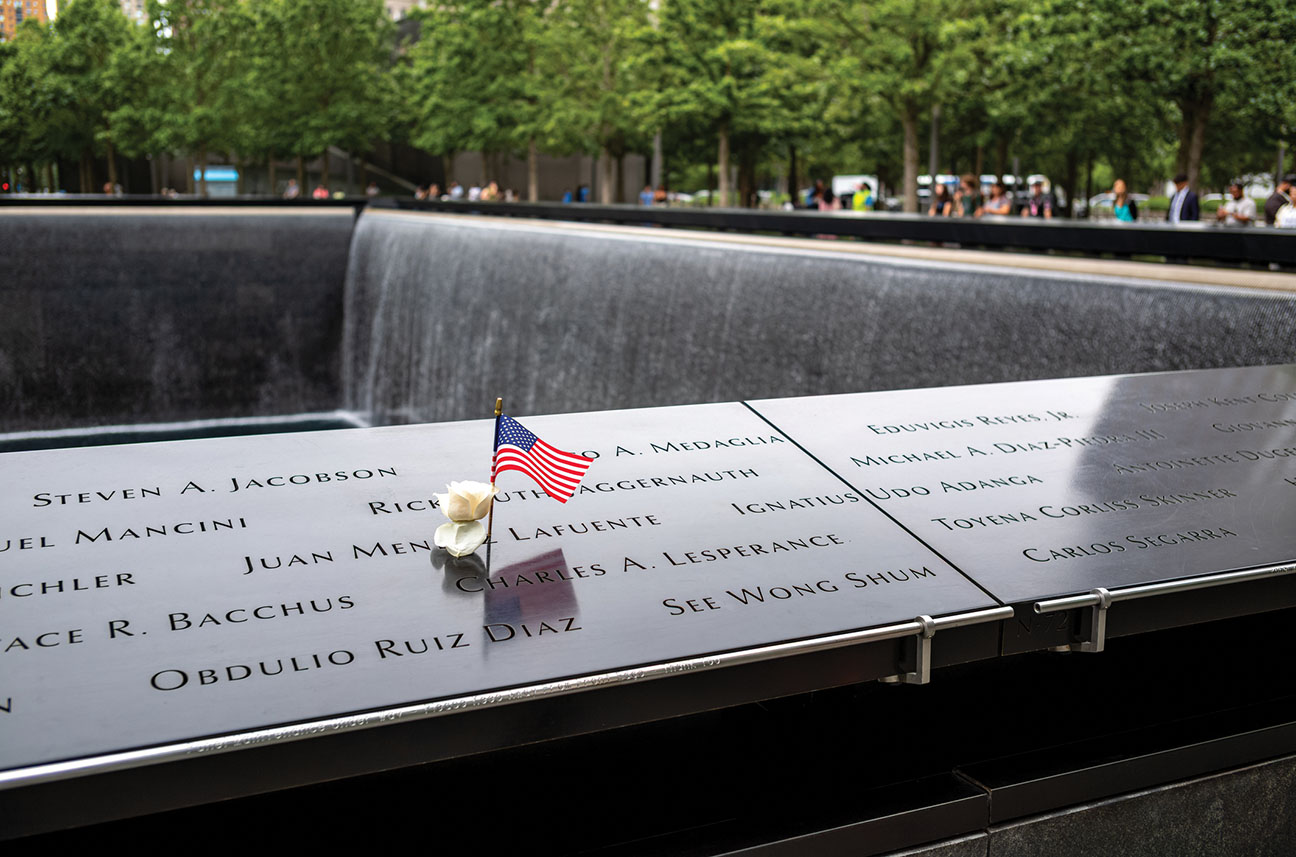
9/11 Didn’t Make America Immune to Strategic Surprise
Assume the next surprise attack is only a matter of time, and use that time to make it harder to carry out and less catastrophic when it comes.
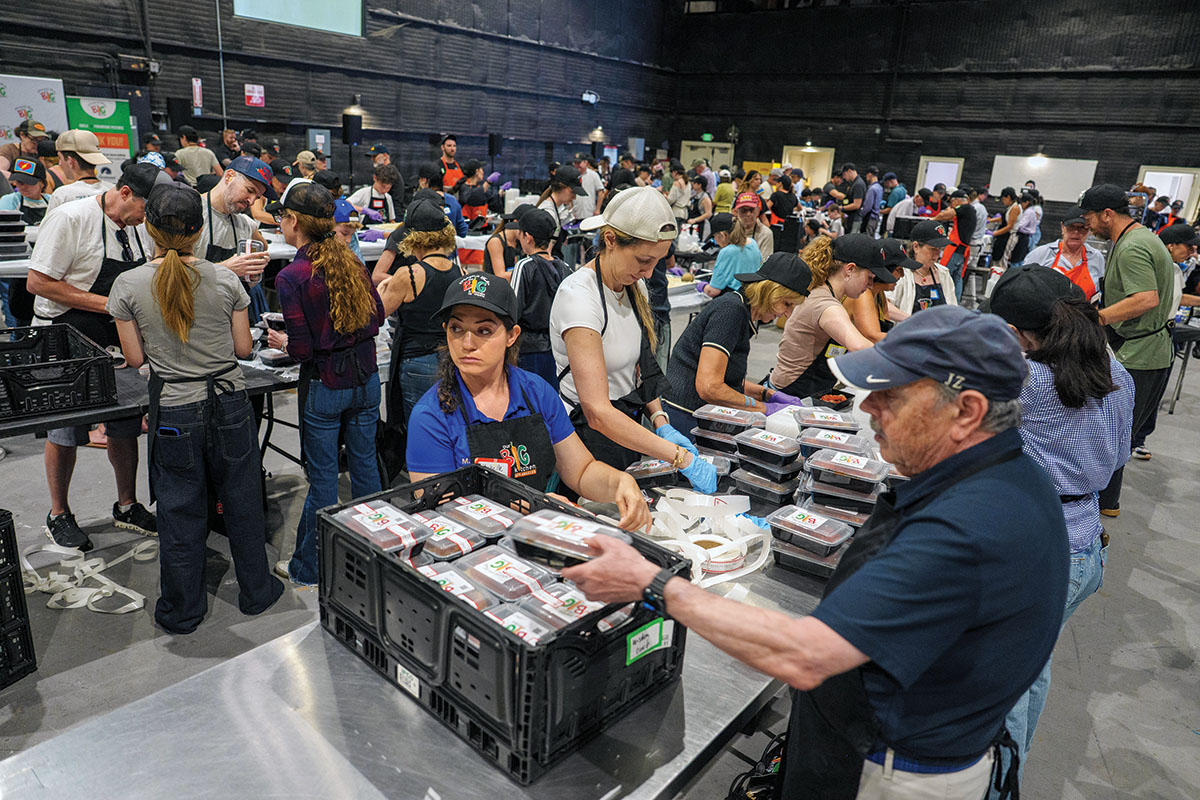
More Than Just a Meal: Bringing People Together at OBKLA
OBKLA has welcomed more than 80,000 volunteers, including students, synagogue and church groups, corporate organizations, top leadership teams from companies such as Netflix and Amazon and, of course, celebrities.

The Shofar Blower
Through poetic reflections, Torah wisdom and personal stories, Salem explores the shofar as a tool for mindfulness, healing, surrender and inner transformation.
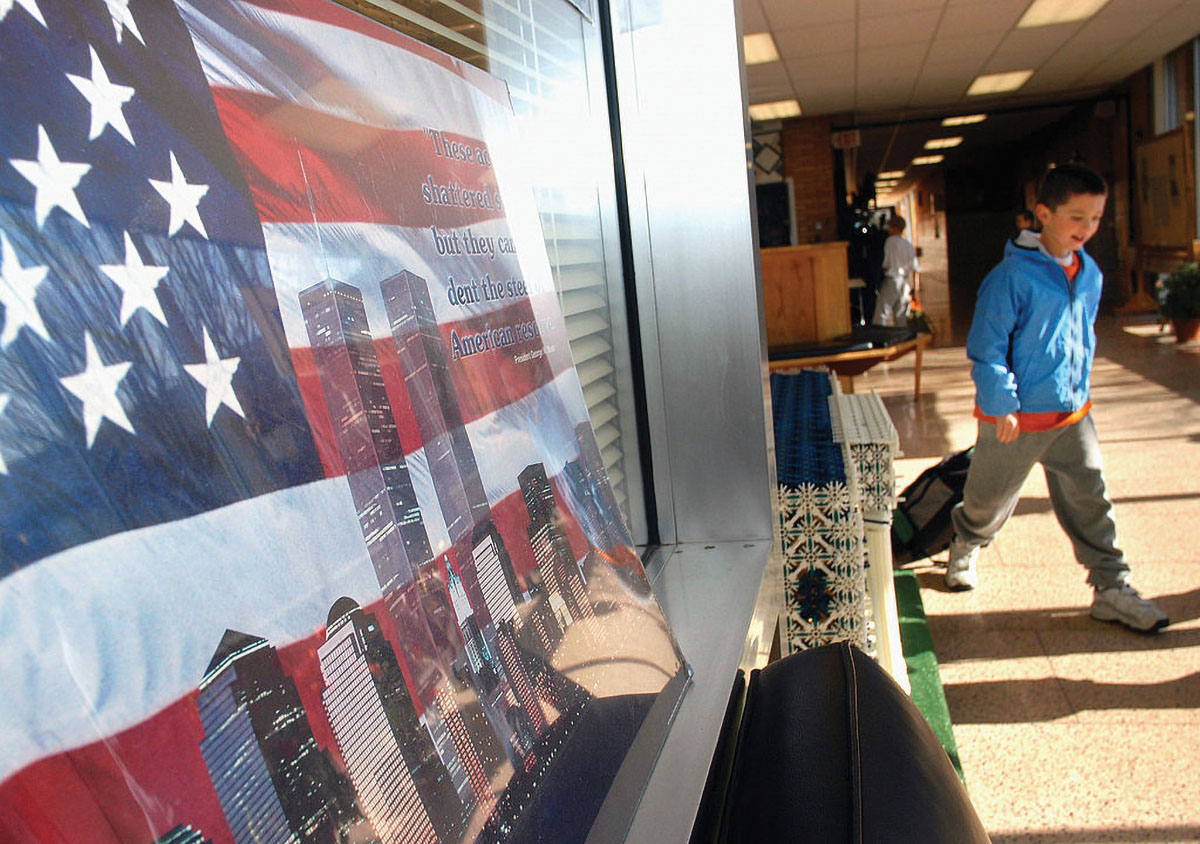
Political Activists Are Erasing September 11 in K-12 Education
Islamist terrorism remains a threat to the United States, the West, and the Jewish people. We cannot allow the history of September 11 to be twisted into an indictment of the society that was attacked.

Table for Five: Rosh Hashanah
God Remembers


Sweet Devotion: An Apple Cake Recipe
I’m telling you that there’s something special about this apple cake and the way that it just melts in your mouth.
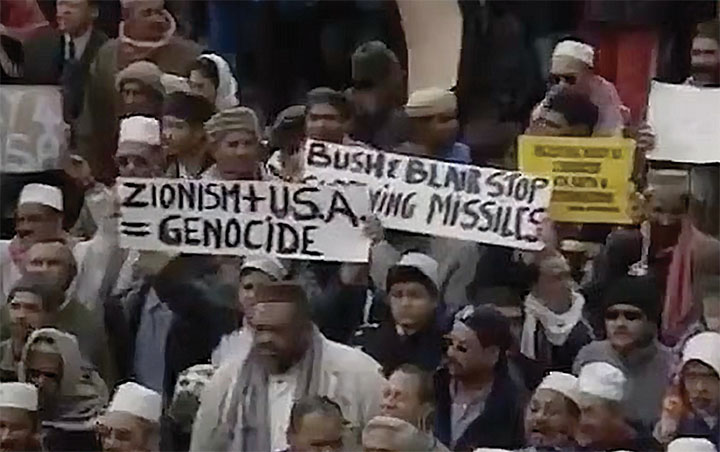
Beware: the Durban Delirium Trumped the Essential Lessons of 9/11
This ideological pogrom eerily mapped out the antizionism mania that has now hit America’s shores, using the noble fights against racism, colonialism and oppression for ignoble ends.