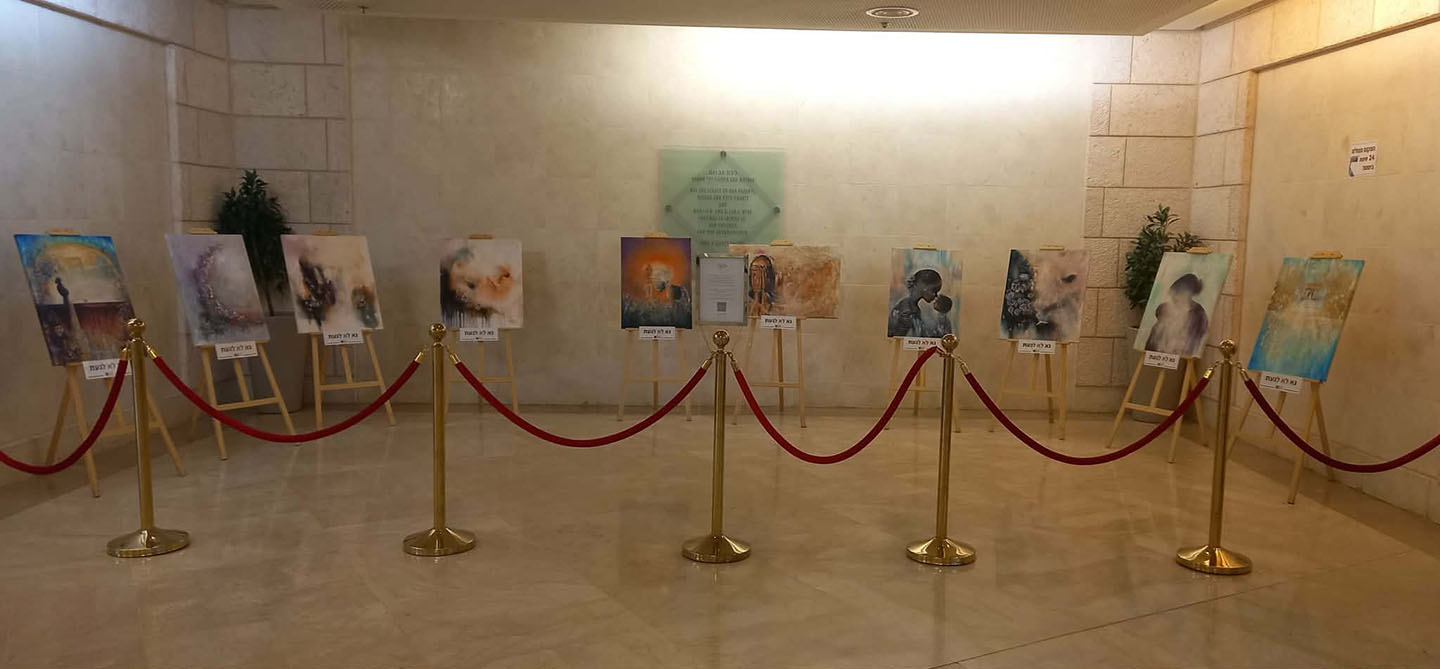
"A Cry for Peace," by Debora Gillman, a Park Labrea resident artist, is being featured on Tower 49 at Park Labrea. It is a colorful 16-by-25 foot banner in the Sixth Annual "L.A.’s Tallest Art Exhibition" and serves to promote "Art in The Park 2002," a citywide, all-day art event that will take place on Sunday, May 5.
"’A Cry for Peace’ is the first of a series of paintings that resulted from Sept. 11," Gillman said. "It was the kick-off painting for the ‘Red, White & Blue’ exhibition currently on view in Tower 50. The colors in the dove of peace represent our many differences. They work well in the painting, just as our differences in real life ought to work well together, and be points of interest and friendship, rather than issues of diversity," she added. "The tear falling from the dove’s eye emphasizes our true cry for peace in these daunting times."
Gillman has worked in human relations at the Anti-Defamation League for 25 years. Her strong belief in equal rights and justice for all peoples is evidenced in her art, as well as by her dedication to community service.
The event will raise money for Camp Ronald McDonald for Good Times, which offers children who have cancer the chance to experience the activities of a camp, adapted to meet the special needs of the campers.
For more information, please contact the Park Labrea Arts Council (323) 549-5583.