Woodstock would not have been possible were it not for Max Yasgur, the dairy farmer who leased his land in Bethel, N.Y., for the festival when the previously secured site fell through. The son of Russian-Jewish immigrants, Yasgur was a conservative Republican but he believed in the message of Woodstock, and told the crowd, “I think you people have proven something to the world.”
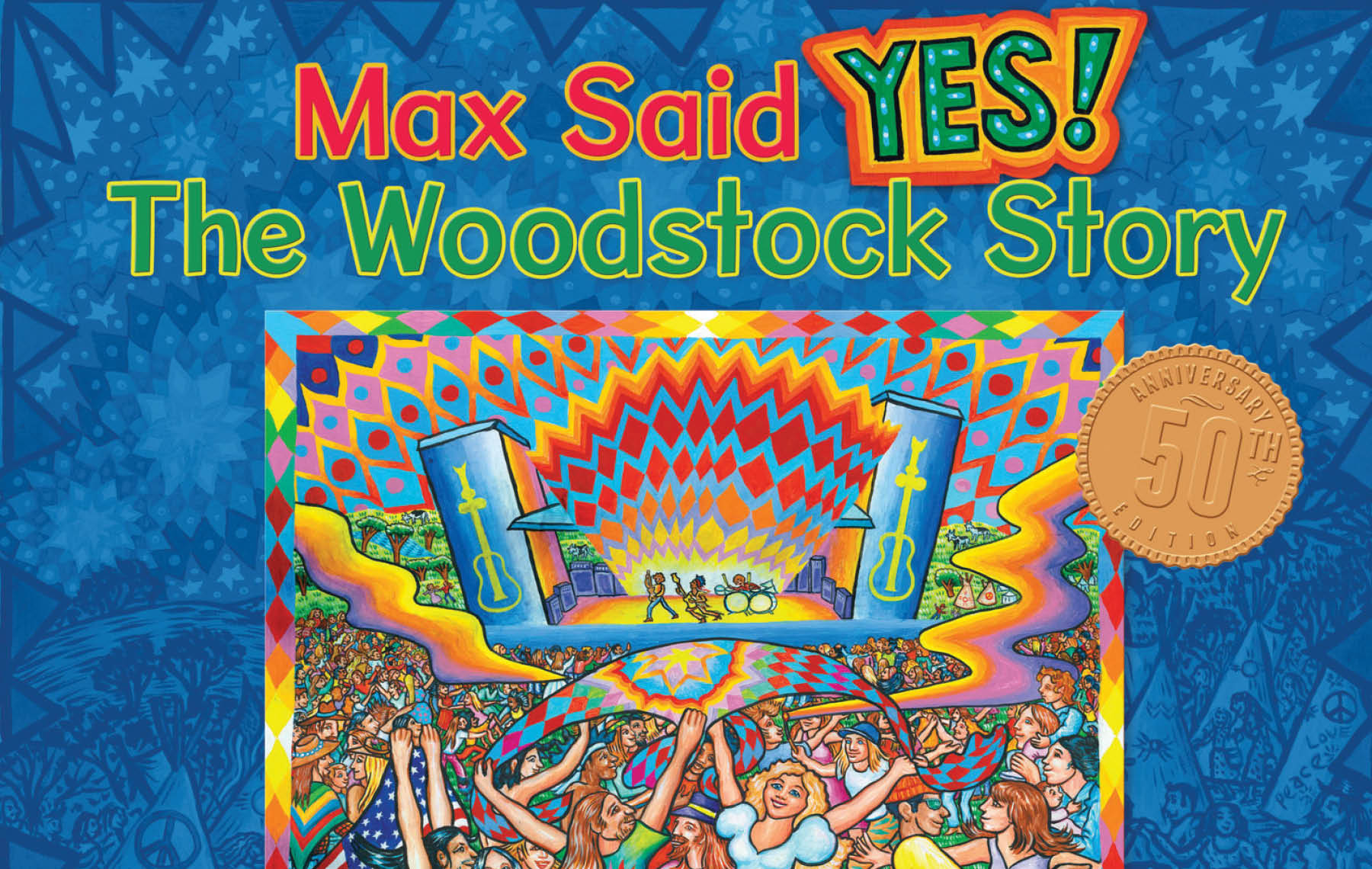
Max’s cousin Abigail Yasgur (they share a paternal great-grandfather) and her husband, Joseph Lipner, published the children’s book “Max Said Yes! The Woodstock Story” in 2009 for the event’s 40th anniversary, and it has been reissued for the 50th. With a square format designed to evoke a vintage album cover, its colorful illustrations are by Jewish artist Barbara Mendes.
Yasgur, who was 15 during Woodstock and living in Pennsylvania, never met Max, who died in 1973 at 53. But she obtained his widow Miriam’s blessing to write the book. She felt that Max’s story held a great message for children about generosity and openness. “Max felt strongly about the First Amendment and free expression. I don’t know if he shared [festival attendees’] vision but he liked their energy, and desire to make the world a better place. He wanted these kids to have a concert,” she said.
Modern Orthodox Jews and members of the B’nai David-Judea congregation, Yasgur and Lipner draw a parallel between Max’s story and the biblical Abraham opening his tent to strangers. “These are incredibly Jewish values — opening up your land and giving hospitality to everyone,” Lipner said.
The two met at Harvard, where Yasgur got her master’s degree in library science, and Lipner was enrolled at the law school. They married in 1990 and have three children, Emma and Max, who live in New York, and Rose, an NYU student. Lipner is a judge who writes on the side, and Yasgur, the former director of the now-shuttered Jewish Library of Los Angeles, is an artist and does nonprofit work.
“Max Said Yes!” is their first collaboration, and the couple plans to make several appearances on behalf of the book to coincide with the anniversary. “Woodstock brought almost half a million people together, living with music in peace,” Yasgur said. “The message is still relevant, and we want people to learn that from the book.”
“Max Said Yes!” is available online.