
When the Pasadena Playhouse opened in 1917, it took over an abandoned burlesque stage, but this year, as the theater marks its centennial, it is attracting a more discriminating audience.
The Playhouse’s façade bears the proud title, “Official State Theatre of California,” an honor conferred by the state legislature in 1937, after the company performed the canon of 36 Shakespeare plays on a single stage for the first time in the United States.
Recently, however, the venerable institution had fallen on hard times. In 2010, it led for bankruptcy and though it survived, two years ago, the Los Angeles Times proclaimed that the Playhouse was “struggling for survival.”
At that point, Danny Feldman came aboard with the title of producing artistic director and the assignment to right the listing ship.
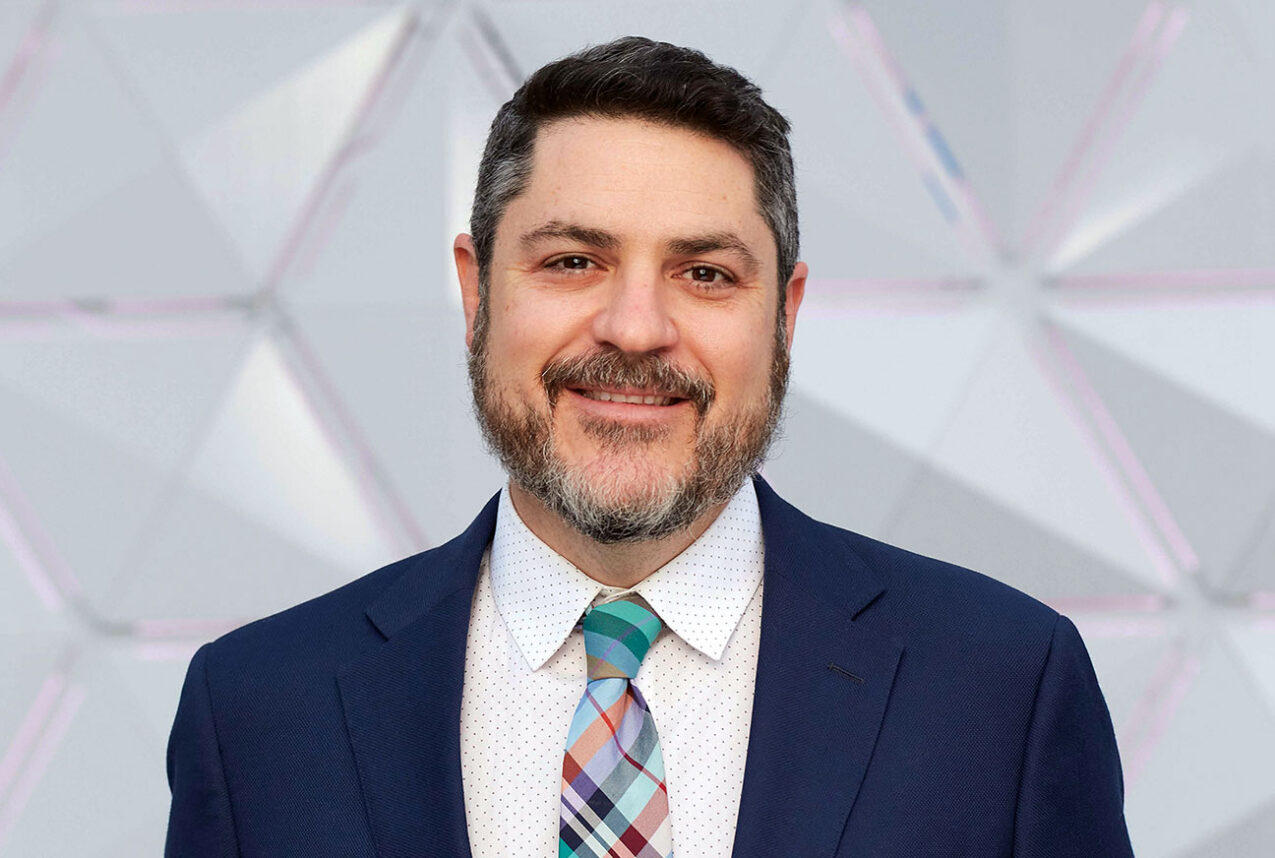
“I was the first new leader in 20 years, and I saw my job as rebuilding the Playhouse for the next 100 years,” Feldman, 38, said in a phone interview.
Asked for a diagnosis of the Playhouse’s current state of health, Feldman said, “We had a [financial] surplus the past year and we’ll have one next year.”
Feldman grew up in West Hills in the San Fernando Valley in a “culturally Jewish” family, with an Israeli-born father and American mother, and studied at the Kadimah Hebrew Academy.
When he accepted the Playhouse position, he was aware — like most Angelenos — of Pasadena’s reputation as a city settled and run by WASPs who did not particularly welcome Jewish newcomers.
Pasadena was initially settled in the 1870s by wealthy families from the East Coast and Midwest looking for warmer winter climes. The new community prided itself on its reputation as a bastion of white Protestant culture, which enacted restrictive covenants to try and stay that way.
One of its leading citizens, Robert Millikan, Nobel Laureate and president of Caltech, lauded Pasadena as “the western-most outpost of Nordic civilization.”
However, over the past 50 years, Pasadena, like most of the rest of the country, has become more diverse and so has the Playhouse’s theatrical productions. Where once plays revolved mainly around the romantic and other tribulations of the upper classes, the upcoming season reflects Feldman’s more adventurous taste.
Opening the new season on Sept. 5 is the regional premiere of “Native Gardens,” a new comedy by Karen Zacarias and directed by Jason Alexander. The play centers on two neighboring families in Washington, D.C., whose feud over their respective gardens and common fence line escalates into a “war of the hoses.”
On Oct. 17, the ghostly “Woman in Black” opens, and arrives in Pasadena directly from London’s West End. The show has been keeping audiences on the edge of their seats for 28 years.
Scheduled for next February is “Ragtime,” whose scenes of poor Jewish and other immigrants seeking a new life in America are seen by Feldman as “wildly relevant” to the present.
Feldman also is reaching out to neighboring Jewish communities, particularly the Jewish Federation of San Gabriel and Pomona Valley. For instance, for the annual Holocaust Remembrance Day, the Federation’s Jewish Community Players join the Playhouse actors for a presentation appropriate to the occasion.
Among the strongest supporters of the Playhouse is the Jewish community of Pasadena. Feldman said the reason for that affinity is that the theater is about contesting ideas and “arguing is in our DNA.”
For tickets and information, call (626) 356 – 7529.