Monika Hertwig was 1 year old when her father, Amon Goeth, was hanged as a war criminal in 1946, after a trial by a Polish court.
Goeth, memorably portrayed by Ralph Fiennes in Steven Spielberg’s movie “Schindler’s List,” was the sadistic SS commandant of the Plaszow forced-labor and concentration camp, who relaxed by shooting down inmates from the balcony of his villa.
Helen Jonas-Rosenzweig was picked among the prisoners by Goeth as his maid and was brutalized for two years. She survived, thanks to Oskar Schindler, and lives in the United States.
Now, more than 60 years later, the two women are the unlikely protagonists of the feature documentary “Inheritance: A Legacy of Hatred and the Journey to Change It,” to premiere at the Los Angeles Film Festival.
The two women’s first meeting, in the film, is memorable. They stand, holding hands, in front of the Plaszow memorial stone, which recalls the murderous brutality of one woman’s father and the suffering of the other.
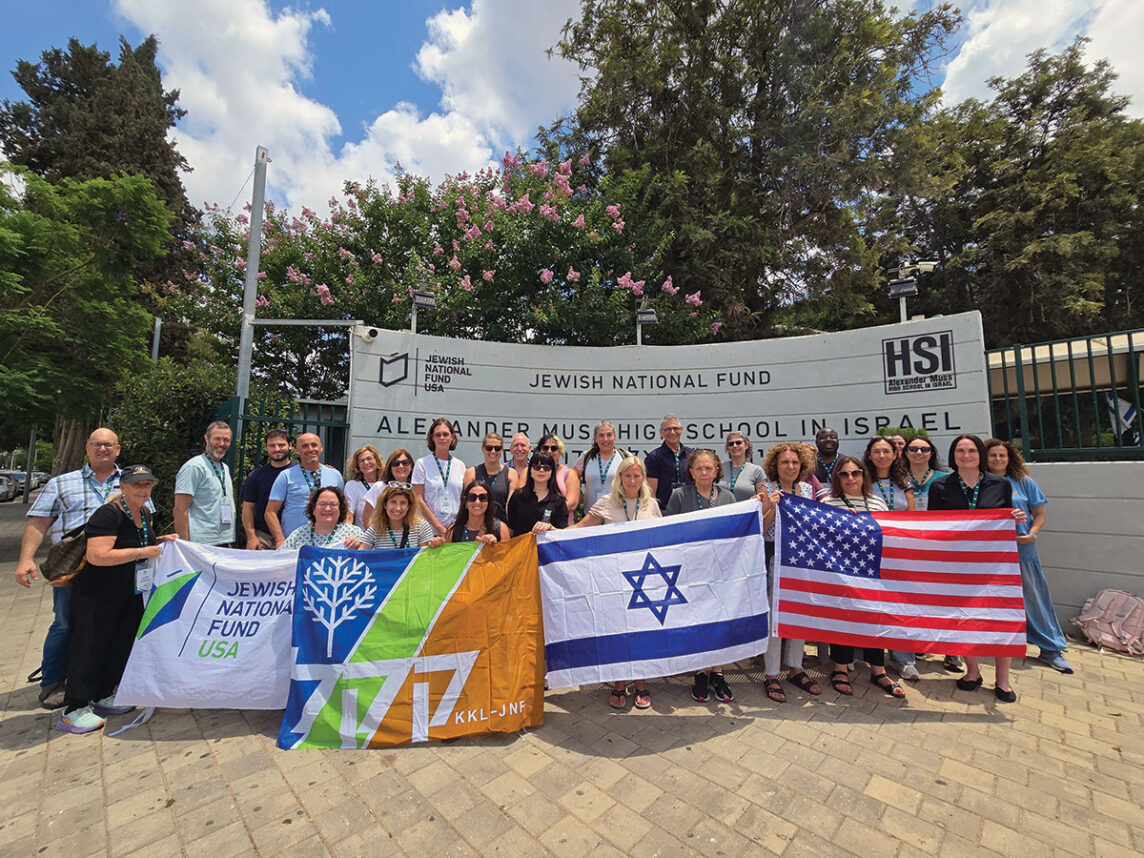
Until she was 13, Hertwig believed that her father had died as a war hero and said she was devastated when she learned the truth. She previously traveled to Plaszow with a group of Israeli students and two survivors.
“Inheritance” is the creation of James Moll, a longtime Spielberg associate and co-founding director of the Shoah Foundation, who won a 1999 Oscar for “The Last Days,” a documentary about five Hungarian Holocaust survivors.
Moll was producing additional material for the “Schindler’s List” DVD, he recalled in an –interview, and needed permission to use some photos of Goeth.
“I tracked down Monika, called her on the phone, and the first thing she said was ‘I am not like my father,'” said Moll, now president of Allentown Productions. “It struck me then that one side of the Holocaust that has never been explored was the impact on the children, grandchildren and even great-grandchildren of the perpetrators.”
Hertwig had been told by her mother about the Jewish maid in the Goeth household, and told Moll she would like to talk to her. Jonas-Rosenzweig was understandably reluctant to meet the daughter of the “monster” she had served, but eventually agreed.
Goeth’s 60-year old daughter is now active educating German children, including her grandson David, about the Holocaust.
“This is my work,” she says. “You can’t change the past, but maybe you can do something about the future.”
The “Inheritance” screening schedule is: June 25, at 2:15 p.m., Crest Majestic Theatre, 1262 Westwood Blvd., Westwood; June 27, at 5 p.m., Italian Cultural Institute, 1023 Hilgard Ave., Westwood; June 29, at 7:30 p.m., Laemmle Sunset 5, 8000 W. Sunset Blvd., West Hollywood.
For ticket information, call 866-345-6337 or visit www.Lafilmfest.com. For more background about the film, visit www.allentownproductions.com.
Fest Puts Spotlight on Israel
Just a month after the unprecedented Israel film day at Cannes, the Los Angeles Film Festival (June 22-July 2) will host an “International Spotlight: Israel” series — proof of Israeli cinema’s growing global profile. The subtitled movies often critique aspects of Israeli society, following the current trend: Dalia Hager and Vidi Bilu’s drama, “Close to Home,” for example, depicts unenthusiastic female soldiers in the current intifada; while Bubot Niyar’s documentary, “Paper Dolls,” follows struggling gay Filipino immigrants who care for invalids by day and perform in drag at night. (Both movies won awards at the 2006 Berlin Film Festival.) Gil Karni’s doc, “Troubled Water” chronicles the rise and turbulent fall of a Jewish settlement in the Gaza Strip. For information, visit www.lafilmfest.com. — Naomi Pfefferman, Arts & Entertainment Editor