

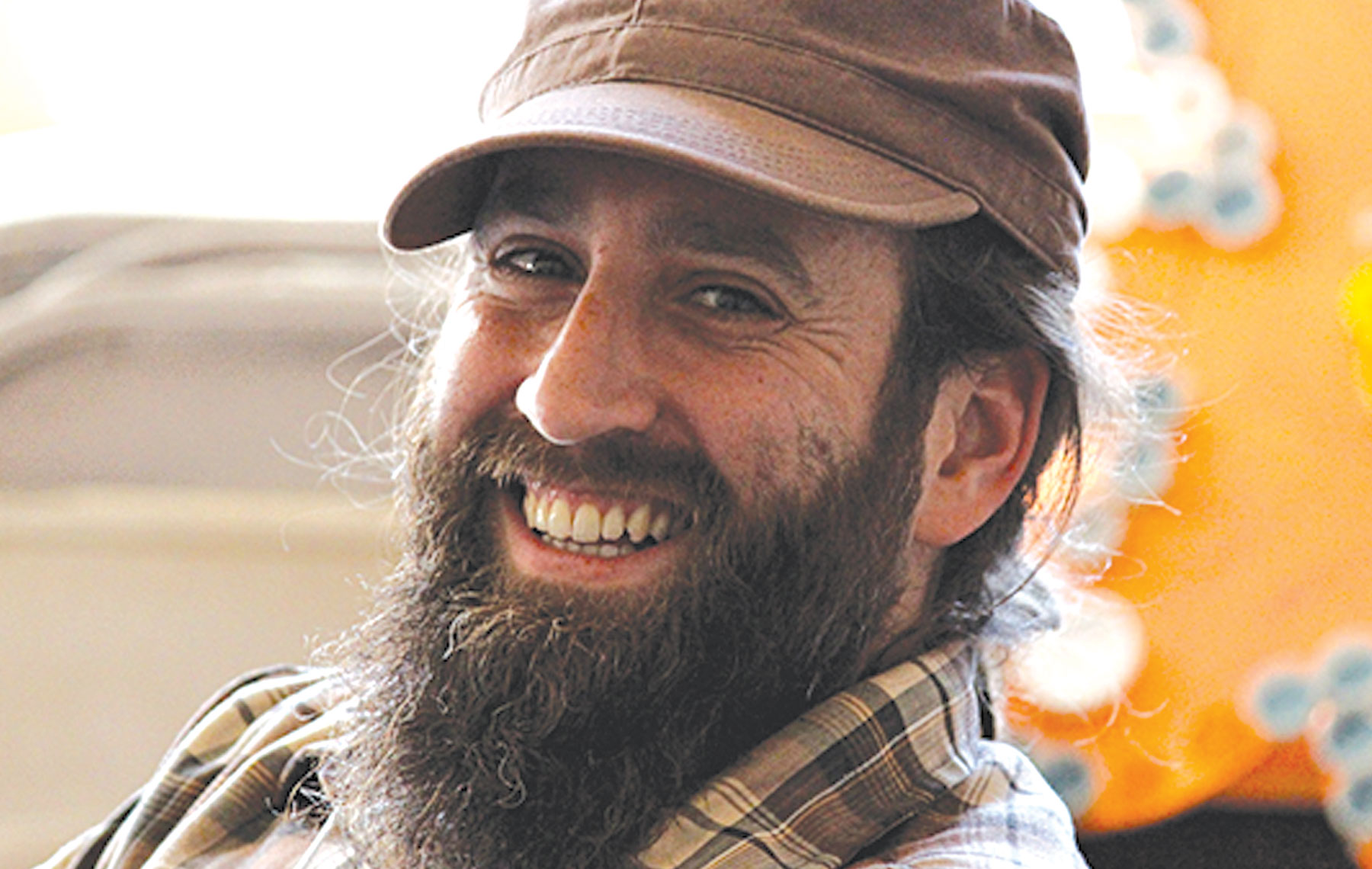
When you combine deep passion for environmental issues, agriculture and Judaism, you have Nati Passow. As the co-founder and executive director of the nonprofit Jewish Farm School in Philadelphia, Passow works to be a force for positive change, based on Jewish agricultural and religious traditions. The Jewish Farm School uses Jewish history and traditions and applies them to the modern world.
A graduate of the University of Pennsylvania with a double major in religion and environmental studies, Passow spoke with the Journal about why his passion for environmental food justice is an intrinsic part of Judaism.
Jewish Journal: What led you to start the Jewish Farm School?
Nati Passow: In 2002, after college, I went to work at the Isabella Freedman Jewish Retreat Center in Connecticut – a Jewish environmental center. Jewish day schools would bring their students to do several activities related to forest ecology, nature and Judaism. [Our] group of educators all lived together on campus. I got to meet other people with similar interests in environmentalism and Judaism. I was there for two years. For a couple of years after I left, I would go back to visit. That’s how I connected with other folks and we got the idea to create the Jewish Farm School.
JJ: How did you translate your vision into reality?
NP: There was this guy, Mark Barnett, who had a similar idea. He wound up not being able to do it because he was in law school, but he had this 30-page proposal that he gave us, and in 2005 a group of five or six of us decided to launch the organization. That really just meant buying the website. Our thought was that we would just start running programs and see where it took us.
JJ: Where did it take you?
NP: We’ve become pretty entrepreneurial about it and have grown [into] a full-fledged organization. It’s been a full-time job for me since 2008. Since 2013, we’ve scaled back on rural work and focused more on urban agriculture, urban sustainability and food justice. The Jewish agricultural tradition is built on the most repeated idea throughout the Torah: “We shall not oppress the stranger.”
JJ: How does this caveat pertain to food justice?
NP: The blueprint for a just and equitable sustainable society was an agriculturally based society, where most people were farmers. In Judaism, there is little separation between agricultural laws and other laws. We were strangers in the land of Egypt. That’s a powerful notion for me. We drew on our ancestral experience of being slaves in Egypt to design our own society, where we alleviate and address pain, suffering and injustice.
An example is leaving the corners in the fields for those who don’t have fields of their own. We are compelled to create a society focused on the needs of the most vulnerable. One of our main tasks is to bridge the gap between ancient laws and bring them into a contemporary context.
JJ: How are you doing that?
NP: We partner with the JCC (Jewish Community Center) in Northeast Philly, which is one of the last remaining pockets of working class and poor Jewish communities. They have a Jewish meals-on-wheels program, and we helped them to expand their garden-growing capacity. This allowed them to grow more healthy, organic produce to distribute to their clients. We also work closely with communities impacted by food injustice, where there are no supermarkets. We recruit and mobilize volunteers to help out on farms serving those communities where it’s harder to get fresh produce.
JJ: Even though your programs are steeped in Jewish tradition, you state that everyone is welcome. Is that reflected in your programming?
NP: Absolutely. It varies by program. Our volunteers are probably 50-50 Jews and non-Jews. Our shtetl program teaches practical skills of sustainability, such as compositing, beer brewing and cheese making, and we tie in a Jewish connection. Our newest program is a study group that looks at texts and academic articles about Jewish history and how the Jews have been related to the land at different times.
JJ: Has Judaism always been an important part of your life?
NP: Yes. I grew up in a Modern Orthodox community and I went to a Jewish day school. Although I don’t identify as Orthodox anymore, Judaism always played a strong role in my life in various forms. Certainly over last 13 years or so, it’s been part of my main focus professionally.
JJ: What kind of impact has the Jewish Farm School had on the Jewish community?
NP: We’re still a relatively small organization, but we have over 500 people coming through our programs each year, and it’s been growing. There’s definitely an impact on the local level, because there aren’t that many other organizations in the Philly area doing similar work at the nexus of Judaism and the environment. We act in solidarity with other local initiatives to address food injustice. A lot of our impact on the Jewish community is on a personal level. We’ve had participants who had experiences with Judaism that weren’t so great. One thing we’ve been able to do is present Judaism to them in a way that is new, even though we draw on older traditions. We make connections for them that they didn’t know existed.
Allison Futterman is a freelance writer living in Charlotte, N.C.

































