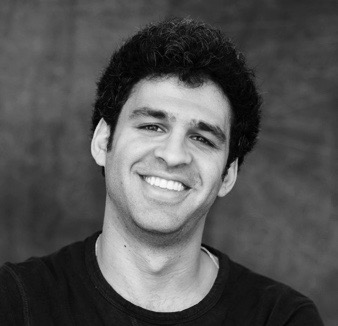
If the name Fred Sands sounds familiar, that’s because it was once ubiquitous on real-estate signs across Southern California. That was before Sands sold his business, Fred Sands Realtors, to Coldwell Banker in 2000.
Today, the 75-year-old Wilshire Boulevard Temple congregant, who lives in Bel Air with his wife, Carla, serves as chairman of Vintage Real Estate, a company that purchases regional shopping malls in distress and transforms them into successful enterprises.
Philanthropy is his other business: In 2012, he donated $500,000 to his synagogue, and he recently donated what he described as “many millions of dollars” to endow the Fred Sands Institute of Real Estate at the Graziadio School of Business and Management at Pepperdine University. The school honored him June 24 with a gala event at the Beverly Wilshire Hotel, and a week later he participated in an hourlong, freewheeling conversation with the Journal at his Brentwood-based office about shopping malls, his love of music and Donald Trump running for president. An edited version of that interview follows.
Jewish Journal: Why did you decide to give a donation to Pepperdine?
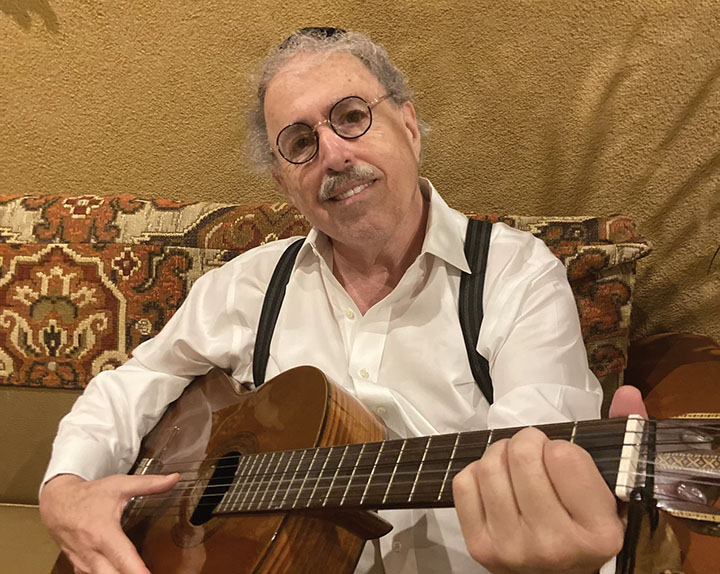
Fred Sands: Pepperdine is a wonderful school, and they are going to have a real-estate program [like USC and UCLA do] now. [Pepperdine President] Andrew Benton, he is an amazing man. At the [June 24] event, he got on the stage and rocked: singing, playing guitar — the president!
JJ: Did you rock out?
FS: Yeah, absolutely. In many facets.
JJ: Do you play anything?
FS: No.
JJ: But you enjoy music?
FS: I like rock. I like classical. The Hollywood Bowl — you have classical and you also have jazz. I love blues and jazz. I love music. … I love James Brown. I saw James Brown at the Hollywood Bowl. Quite a life, the rockers. Getting arthritis these days, but they perform well. Look at the Rolling Stones.
JJ: How do you feel about the new program at Pepperdine being named after you?
FS: I have mixed feelings. When I sold my company, I said to Coldwell Banker, “In a year, it’s a transition away from Fred Sands.” I got tired of being so well known. It was great for restaurant reservations, but I said I wanted to be out of the limelight. … But Benton said, “It’s got to be the Fred Sands Institute of Real Estate.” So, I’m back in the limelight again, but not in the same way as before.
JJ: Do you think a mall can be used to revitalize neighborhoods? Have you seen that happen?
FS: [Yes, in] Carson. We bought a mall during bad years and turned it around, and Carson has improved. We just got them a 12-screen movie theater. They hadn’t had a theater in 30 years, and it sort of revitalized the neighborhood, and it’s good. People shop; go to the movies and restaurants.
JJ: What do you think of an outdoor mall versus an indoor mall?
FS: Every mall we own is an outdoor mall, and people said they are not building them anymore, that they are going to go away. Every one [of the 12] we bought, we turned them around. We are still turning them around. It’s good.
JJ: Who are people you respect in the real-estate world?
FS: [Westfield Corp. Co-CEO and TRIBE Media Corp. Chairman] Peter Lowy is someone I admire. I really admire his father [Frank Lowy]. That’s a story — his formal education ended at age 13. … He was hiding from the Nazis, would go out at night and steal food for his mother. He then went to Israel, fought the Arabs, went to Australia, opened a deli. There was land behind it called the West Field and he built a whole shopping center, and the rest is history. He became the second-wealthiest man in Australia. … His story is amazing.
JJ: What are your thoughts on real-estate mogul Donald Trump running for president?
FS: He’s a joke. He likes the publicity because that’s how he lives. He’s not really a real-estate guy. He licenses his name and surrounds himself with publicity. And he might show up in the polls right now, but that’s going to go away.
JJ: He’s not really a real-estate guy?
FS: He’s done some deals in his life but has made his money off of licensing fees. Trump this, Trump that, and he gets fees on his business.
JJ: What’s next for you?
FS: To continue to take care of my health. I work out almost everyday. I’ve had some issues not taking good care of myself, so from now on, it’s working out every day. It’s all fun. Philanthropy, good friends. Going to see people out in Malibu this weekend. It’s all good. It’s all good.