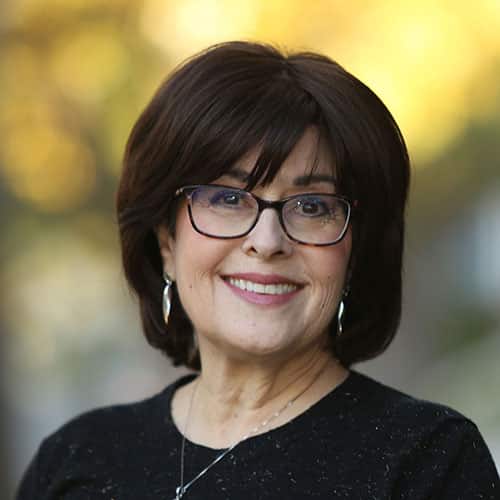
Los Angeles has just bid farewell to one of its most acclaimed and popular Torah teachers.
Over the past 11 years, Shira Smiles’ intellectually rich and multifaceted shiurim (classes) on the weekly parsha, Navi (prophets) or other books of chumash became magnets for Jewish women thirsty for learning. The appropriately named Smiles began as a teacher with Ashreinu Learning Network, but her remarkable passion and insights quickly increased demand for her classes. Eventually, more than 200 women learned with Smiles each week in venues throughout the city, including the Valley.
At a recent dessert reception honoring her on the eve of her family’s aliyah (immigration to Israel), Smiles admitted that the decision to move to Israel had been "agonizing." Although she and her husband, Rabbi Feivel Smiles, had originally moved to Los Angeles without family or many friends, she said after so many years, "Our hearts were in both places. We felt a tug of war between love and desire for Eretz Yisrael and also for everything we were doing in this community." The Smiles also wanted to make the move while their two daughters (ages 4 years and 10 months) are still young enough to adapt easily.
Although Smiles is Orthodox and only lectures to women, she has dazzled non-Orthodox audiences as well. Rabbi Toba August, associate rabbi and educational director at the Conservative Temple Adat Shalom in West Los Angeles, said that learning with Smiles over the past three years transformed her work.
"Shira introduced me to sources and texts that I had never heard of before, including some Chassidic texts and works of mussar [ethics]," August noted. "For every class she gave, she prepared handouts with four to five pages of sources. She always presented several levels of understanding for the material she was teaching."
As a result of what she learned, August changed the tone of her sermons from what she called "intellectual and pedantic" to that of "trying to help people open their hearts and look at their moral structure. I would take one nugget from her class, and then relate it to my congregants. And people kept coming back for more."
Eileen Wohlgelernter began hosting two of Smile’s weekly shiurim in her Beverlywood home more than eight years ago. Despite her yeshiva education, studying with Smiles honed Wohlgelernter’s skills in studying Torah texts. "We would cover so many sources, from Rashi all the way through more modern sources such as Rav Hirsch. It was like a roller coaster ride of learning. She would show us one interpretation, and then turn it on its ear with another commentary."
While Smiles always delivered an intellectual one-two punch, that was not the crux of her shiurim. "She gave us the message that Yiddishkayt is about values and growth, and she was able to do that with a wide variety of women. Some women simply left work in the middle of the day to come and hear her," Wohlgelernter said.
August agrees. "Her classes weren’t only about gaining knowledge, they were about having your neshama [soul] touched. One of her major themes was that each of us was put here for a unique mission. She challenged us to articulate what were we doing here? What were we doing for God? Her classes helped inculcate the most enlightened form of behavior. For example, if somebody coughed during class, someone else jumped up to bring her water. If someone came in late, someone made sure she had a chair. Shira always said, ‘Don’t wait to get a call that someone needs help. Just show up.’ I changed as a result."
In her farewell remarks at the dessert reception, Smiles reiterated this theme. Quoting a Midrash, she told her audience, "I have tried to impart this important idea of v’asetem atem, you have created yourself. There is tremendous potential in each of us to create ourselves, to make something wonderful of ourselves. What are we doing with our potential?" Smiles acknowledged that for her, expansion of her own potential could only come by moving to Israel, where she has accepted a teaching position at the Darchei Binah seminary. "For me, there is so much more to grow," she said.
Smiles kept a grueling teaching schedule here in Los Angeles. In addition to teaching 11th-grade girls at Yeshiva University Los Angeles, she gave six other classes throughout the week, including one in the La Brea area on Shabbat that drew about 100 women. She has also written three teachers’ guides for Jewish texts that are now used by educators worldwide. Now that their teacher is in Israel, many of her former students continue to learn together each week, "a true and fitting legacy," as one student observed. While new teachers are being hired, it is an unenviable task to follow in Smiles’ footsteps. "I feel bereft," August said. "I don’t know how she’ll be replaced. It’s been a blessing to learn with her. She’s very rare."