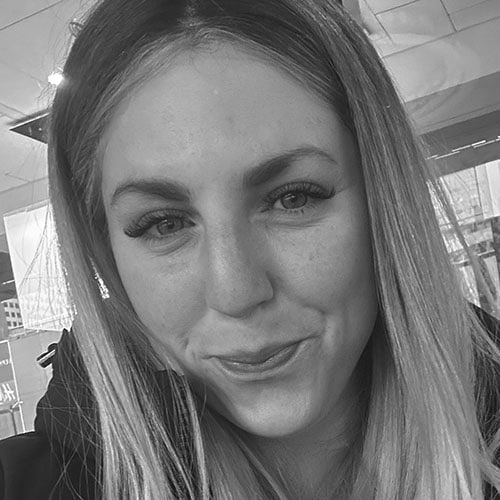
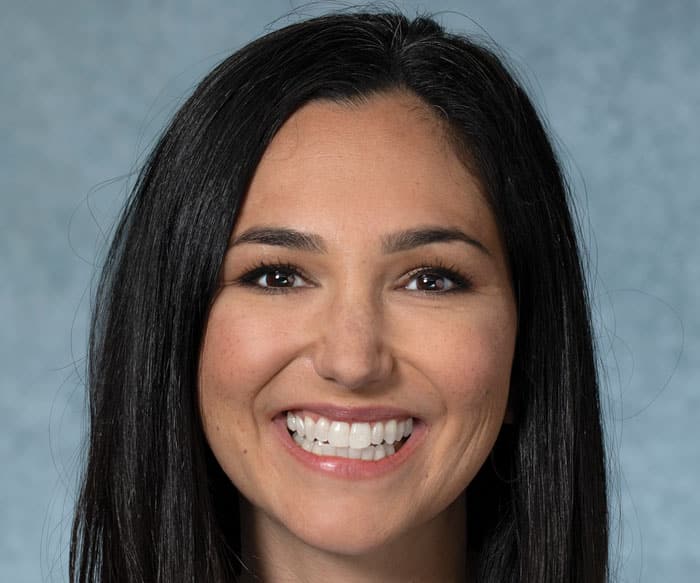
Rabbi Sarah Barukh met a hospital chaplain for the first time around 15 years ago.
“I promptly kicked them out of my room,” she said. “I said, ‘No, thank you.’” Barukh assumed that the chaplain was Christian, and she’s a committed Jew. “I incorrectly thought that they were there to proselytize me or they had ill intent,” she said.
Looking back, the rabbi, who is a supervisor in training for the Cedars-Sinai Clinical Pastoral Education Program and a chaplain herself, laughs about it.
“It was comical because I very much identify with my title of chaplain,” she said. “A chaplain is someone who is trained to have sensitivity and provide support for people in need cross-culturally, often in a multi-faith context. They support individuals in their search for hope, meaning, purpose and connection.”
Barukh, who grew up in Los Angeles, has always loved being there for those in need. In college, she was considering majoring in art or dance therapy. “I wanted to do something in the therapeutic realm where I could help people,” she said.
Today, in her role at Cedars-Sinai, Barukh trains clergy members and laypeople from all different religious backgrounds to provide spiritual care for individuals who are ill or in crisis. She trains approximately six students per cohort, which ends up being 18 students over the course of a year. The hospital has a strong relationship with rabbinical schools as well. “Many rabbis bring what they learn back into their work in their congregation,” she said. “I’m excited to help them deepen their skills.”
While Barukh has a passion for people, she didn’t know that it would result in her becoming a rabbi. She grew up in an Iraqi-Indian Jewish household, and her family celebrated Shabbat and went to synagogue every week.
When she was 12 and walking to a family event, she had a sudden epiphany. “I told my cousin I wanted to be a rabbi when I grow up,” she said. “She told me, ‘I think you mean rebbetzin.’” Barukh’s cousin didn’t know that there were female rabbis. “It wasn’t the cultural norm when I was younger,” Barukh said. “But I’m married to Rabbi Matt Shapiro of Temple Beth Am, so I am also a rebbetzin.”
Barukh became ordained through the Ziegler School of Rabbinic Studies at American Jewish University and was an educator at her alma mater, Los Angeles Hebrew High School. She was also a chaplain intern at Cedars-Sinai and Children’s Hospital Los Angeles.
The rabbi’s day-to-day work is rewarding because she has the ability to train leaders who will support members of their community, no matter what situations they’re facing.
“So much of what we do is about self-refinement and having self-awareness,” she said. “I’m excited to help support spiritual leaders cultivate those skills.”
“When you’re at someone’s bedside, you’re navigating life with them. Chaplains are there for birth up until the end of life. We see everything. To be a witness to that and partner with people is really awe-inspiring.“
While Barukh loves her job, it does come with emotional challenges; the pandemic as a healthcare worker and parent to young children was especially hard on her. Still, the rabbi doesn’t shy away from it. She wants to be there for people in their toughest moments. It’s her life mission. “When you’re at someone’s bedside, you’re navigating life with them,” she said. “Chaplains are there for birth up until the end of life. We see everything. To be a witness to that and partner with people is really awe-inspiring. I have a real passion for supporting people on their unique life journey.” ■
Fast Takes with Sarah Barukh
Jewish Journal: What’s your favorite Jewish food?
Sarah Barukh: Hamud, a tomato-based stew with squash, mint, golden raisins and chicken. It’s a sweet and sour dish you serve with rice.
JJ: Do you have a certain prayer you turn to in a time of need?
SB: The last paragraph of the Amidah really speaks to me: “My God, guard my tongue from evil, and my lips from speaking deceitfully. To those who curse me let my soul be silent; let my soul be dust to all. Open my heart to Your Torah, and Your commandments, let my soul eagerly pursue.”
JJ: What does your perfect day look like?
SB: A day where I have time to do things with the people I love: my husband and my three sons. I would play as many card games with my kids as they want or read them stories or take them to play basketball or soccer. I would want to slowly cook a dinner and get a leisurely cup of coffee with my husband. The gift of time would be the perfect day.