fbpx

November 3, 2022

Gerbers Honored, JNF-USA Brunch, Mayoral Forum

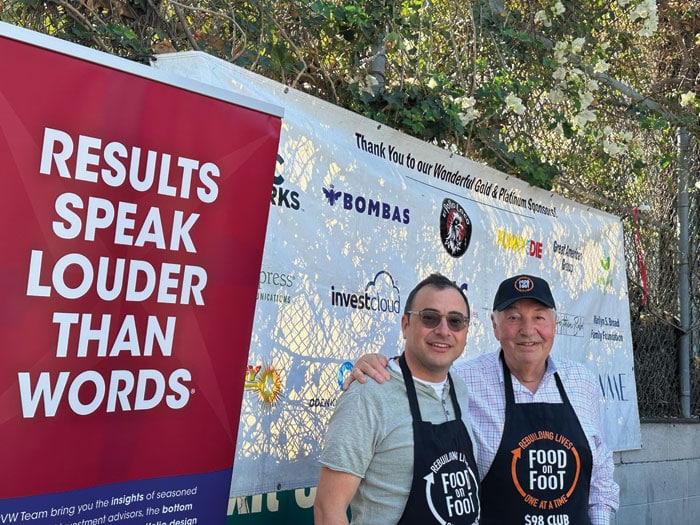
Community-oriented father-and-son Selwyn and Jonathan Gerber were honored at the recent “Unbanquet” by Food on Foot, an organization that assists the homeless with food, clothing and life-skills training. 

Hundreds of homeless were given food and clothing at the event., with the opportunity to reclaim their lives.

When asked about his deep-rooted and longtime support of Food on Foot, Selwyn said: “In my faith, the greatest obligation that one has on this planet is to engage in acts of charity. The highest act of charity is to enable people to feed themselves and to become self-sufficient.”

The Gerbers are members of the organization’s $98 Club, which provides a monthly donation for those who are unhoused and empowers the homeless with tools toward securing food, jobs and housing.  They have been involved with the organization for more than a decade. 

Selwyn and Jonathan Gerber are chairman and president, respectively, of investment management firm RVW Wealth.


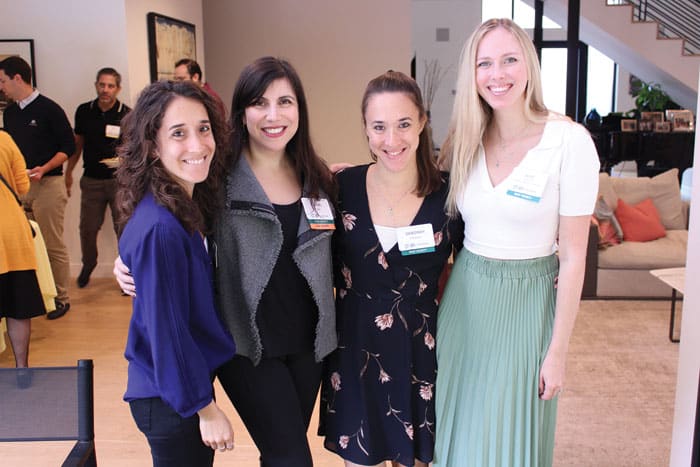
From left: JNFuture LA Immediate Past President Sarah Herman; Rachel Kaye; Deborah Herman; and JNFuture LA President Alice Sherman. Courtesy of JNF-USA

On Oct. 16, Jewish National Fund-USA (JNF-USA) hosted a JNFuture Root Society appreciation brunch at the home of the organization’s greater Los Angeles co-presidents, Susie and Fred Toczek, in celebration of the Jewish holiday of Sukkot.

Taking the Jewish concept of Ushpizin (visitors) to the next level, the Toczeks, two of Los Angeles’ most prominent philanthropists, invited the organization’s major donors ages 22-40 into their Sukkah for food, socializing and a program showcasing how their investment in JNF-USA is leading to a brighter, more prosperous future for the land and people of Israel.

Attendees also heard from incoming Los Angeles JNFuture President Alice Sherman, who emphasized the importance of JNF-USA’s game-changing initiatives. 

“What an honor to be president of JNFuture in Greater LA,” she said. “As a young professional and dedicated member of Women for Israel’s Chai Society, I hope to inspire others to find their passion in our great causes too, such as bringing the world together through food and culture at our Galilee Culinary Institute by JNF in Israel’s north, or through education at our World Zionist Village in the south.”


Spectrum News Anchor Alex Cohen and L.A. Mayoral Candidate Rick Caruso. Photo by Ryan Torok

Less than two weeks before the Nov. 8 election, the Jewish Federation of Greater Los Angeles—in partnership with the Anti-Defamation League and American Jewish Committee—hosted a virtual mayoral forum featuring Rep. Karen Bass and businessman Rick Caruso.

The Oct. 26 event provided the candidates the opportunity to voice where they stand on issues critical to the community. 

“Jewish Angelenos inhabit nearly every corner of this city,” L.A. Federation President and CEO Rabbi Noah Farkas said at the outset of the program. “We, a diverse, Jewish community, are deeply vested in the outcome of this election.”

During the nearly 90-minute discussion, featuring separate interviews with the two mayoral candidates, evening moderator and Spectrum News Anchor Alex Cohen interviewed Bass and Caruso about issues including antisemitism, homelessness and their personal values. 

After each candidate was interviewed, they took questions from those gathered in-person at the Federations’ headquarters. The crowd included L.A. Federation Chairman Albert Praw, Federation Board Member Cece Feiler, ADL Regional Board Member Nurit Robin, ADL Regional Director Jeffrey Abrams and AJC Regional Director Richard Hirschhaut.

“It is not an overstatement to say that this evening’s candidate forum was the very best of a very long and difficult, particularly in these recent weeks, election season for our city,” Hirschhaut said at the conclusion of the event. 

The AJC leader then encouraged those from home to exercise their sacred civic duty and vote. 

Gerbers Honored, JNF-USA Brunch, Mayoral Forum Read More »

Why Fear God?

The Torah states repeatedly that we should fear God. Why fear? That sentiment is so out of keeping with our modern sensibilities. It seems harsh, counterintuitive: Why fear a loving God?

The Torah does emphasize loving God as well, but there is at least an equal emphasis on fear. The concept of fear of God appears five times in Leviticus alone. Since Talmudic times, our sages have grappled with this issue and arrived at deeply insightful conclusions. Importantly, the Hebrew words “yirat shamayim” can mean “fear of Heaven” but also have other connotations.

In “Yirat Shamayim in Jewish Thought,” Warren Zev Harvey points out the term’s manifold possibilities. He suggests that the concept is the Talmudic response to the Greek belief that freedom is achieved by freeing oneself from fear of the gods. Judaism, on the other hand, embraces the idea of fearing God.

Fear is viewed positively because it reflects an attitude: One’s moral behavior is in one’s control and so one can choose moral virtues. If humans have agency in the moral realm, then we can choose, or not, to govern ourselves according to Divine will. That means that what is really under discussion is better translated as an awareness of the Divine imperative and respect for transcendent truth.

Harvey notes that renowned Bible scholar Nehama Liebowitz considered fearing God a “universal ethical principle,” a “regulatory ethical principle between individuals of different nations, and in particular, between ruling nationals and the minorities.” 

Similarly, the philosopher Emmanuel Levinas asserts that yirat shamayim does not refer to fear of punishment but rather, in Harvey’s words, “a sobering awareness of one’s infinite ethical obligations to other human beings, and in this awareness God is revealed.” According to Levinas, then, the concept is as much about our relationship with one another as it is about our relationship with God.

A modern reader may understand this emphasis on yirat shamayim as relating to a transcendent authority for moral and ethical behavior. We live in a secular culture where many are indifferent or even hostile to religion. And not without reason: Institutional religion has not covered itself in glory over the centuries. Furthermore, lack of religion does not imply a lack of moral and ethical values. Secular people can be as good as, if not better than, religious people.

But a wholesale rejection of religion invites a world of self-centeredness, a lack of the ethical core that was born of religious teachings. The fact that religious institutions have often not lived up to their own ideals does not undermine the value of those ideals. The Torah’s mitzvot are not nullified because some of its practitioners betrayed the message.

Parshat Shoftim (Deuteronomy 17: 18-20) commands a king to write two Torah scrolls and to read from them every day “so that his heart not become haughty over his brethren.” At a time when Pharaohs considered themselves gods, this is an extraordinary demand. The purpose is that the king be reminded that he is not a god and that he treat others as commanded in the Torah, giving all citizens respect and dignity.

With no fear of God, with no transcendent and eternal moral values, people have no barrier to committing whatever evil they want. Instead, other fears take its place: conspiracy theories in which dark forces try to control the world and fear of the “other,” those unlike us, lead to racism and antisemitism.

Rabbi Bradley Shavit Artson points to an instructive detail in the Moses story. Pharoah orders the midwives to the Jews to murder Jewish newborn boys. He was the mightiest of tyrants, but the “midwives, fearing God, did not do as the king of Egypt had told them; they let the boys live” (Exodus 1: 5-21). How could they exhibit such extraordinary courage if they didn’t believe more in the eternal power than the temporal one?

Interviews after World War II with the righteous who saved Jews in Europe revealed that many did so because they were religious Christians who were guided by spiritual and moral considerations. Like the midwives of Egypt, they made the only possible choice — to save life instead of allowing it to be destroyed.

In “The Great Partnership,” Rabbi Jonathan Sacks explores the idea of religion as essential to society’s moral and ethical functioning. He points out that what made “Abrahamic monotheism unique is that it endowed life with meaning.” When a society “loses its religion, it tends not to last very long thereafter. It discovers that having severed the ropes that moor its morality to something transcendent, all it has left is relativism, and relativism is incapable of defending anything, including itself.” 

For Sacks, it is an optical illusion that we can abandon belief in God and leave nothing unchanged. The ramifications of a civilization without religion are profound. We live in a complex, quickly changing world with countless preoccupations and concerns. It is easy to dismiss religion without realizing that its loss only compounds the problems of our troubled world instead of healing it.


Dr. Paul Socken is Distinguished Professor Emeritus and founder of the Jewish Studies program at the University of Waterloo. 

Why Fear God? Read More »

Don’t Think About Infinity – A poem for Parsha Lech Lecha

Please look heavenward and count the stars,
if you are able to count them.” And He said to him,
“So will be your seed.. -Genesis 15:5

There are things I have no ability to comprehend.
The number of stars in the sky –
I lost count before I glanced up.

The number of grains of sand on Earth –
I know it must be finite, but even
a single beach breaks me.

The concept of infinity –
Yeah, but what’s after that?

Space, the edge of the universe –
What would I find if I took one step further?

Even a Rose Bowl filled with people –
a mere sixtieth of six million.
Could I ever shake every one of their hands?
Know even a fraction of their stories?

There are people who came before me
who made it so I could exist who
I will never know.

And people yet to come
(assuming this all holds out)
whose ears may never hear my name.

It may be best not to think about it.
This infinity, this overuse of the word
forever.

I sit here, evidence of the promise.
I am one of the stars.
I am one of the seeds.

The promise kept.


God Wrestler: a poem for every Torah Portion by Rick LupertLos Angeles poet Rick Lupert created the Poetry Super Highway (an online publication and resource for poets), and hosted the Cobalt Cafe weekly poetry reading for almost 21 years. He’s authored 26 collections of poetry, including “God Wrestler: A Poem for Every Torah Portion“, “I’m a Jew, Are You” (Jewish themed poems) and “Feeding Holy Cats” (Poetry written while a staff member on the first Birthright Israel trip), and most recently “I Am Not Writing a Book of Poems in Hawaii” (Poems written in Hawaii – Ain’t Got No Press, August 2022) and edited the anthologies “Ekphrastia Gone Wild”, “A Poet’s Haggadah”, and “The Night Goes on All Night.” He writes the daily web comic “Cat and Banana” with fellow Los Angeles poet Brendan Constantine. He’s widely published and reads his poetry wherever they let him.

Don’t Think About Infinity – A poem for Parsha Lech Lecha Read More »

A Bisl Torah – Do You See It?

On a recent neighborhood walk with my children and their classmates, my son’s friend called out, “Do you see it?” His mom and I looked around and didn’t understand what he was referencing. But the child smallest in height pointed upwards. He drew our attention to an abandoned bird’s nest sitting on top of a traffic sign. He repeated, “Do you see it? Do you see the bird’s nest?” We both shook our heads, amazed by his abilities to see what we obviously could not.

God’s directive to Abraham is to go to a land that God will show him. Sforno, an Italian Biblical commentator explains that Abraham had to continue forward until God pointed out in a heavenly vision the place where Abraham should eventually settle. Until God revealed the destination, Abraham shouldn’t remain stagnant or complacent. Rather, he should prepare himself for that which God needed him to see. In other words, God asked Abraham to keep his eyes open.

But this also means, we can’t rely only on ourselves to see God’s blessings. On our spiritual journeys, wonders exist up and down, every which way. Whether it is through studying Torah, listening to the stories of a grandparent, or following the gaze of a child, our eyes are meant to be open. Our destination will be revealed but we can’t expect to arrive if we’re stuck, eyes closed, unwilling to hear God’s voice.

Do you see it? Our journeys are exponentially richer when we open our eyes to the sanctity of God’s world.

Shabbat Shalom


Rabbi Nicole Guzik is a rabbi at Sinai Temple. She can be reached at her Facebook page at Rabbi Nicole Guzik or on Instagram @rabbiguzik. For more writings, visit Rabbi Guzik’s blog section from Sinai Temple’s website.

A Bisl Torah – Do You See It? Read More »

The Problem of Skin Color: University of Chicago Goes All In On Pigmentation

No matter how hard I try, I can never change my skin color. That’s true for every human on earth. If you stereotype me because I’m a brown-skinned man from Morocco, you reduce me to my skin pigmentation. In that mode, you never even need to speak to me– my skin color is all you need to know.

This is why a “colorblind” society has long been an American ideal. We ought to be judged by the fluid uniqueness of our individuality, not by something we can never change.

This seems so obvious it’s almost embarrassing to bring it up. But I bring it up because of a new course offered at the University of Chicago titled, yes, “The Problem of Whiteness.” It’s not even the history or analysis of Whiteness, it’s the problem of Whiteness.

The word “problem” gives the agenda away. Instead of instilling a sense that we are bigger than our skin colors, that we can transcend what we can’t change and focus on what we can change, the educators at the University of Chicago would rather harp on the “problem” with something immutable.

It’s hard to imagine anything more deadening to the mind than fixating on the immutable. Imagine being a White student and spending a semester learning about the “problem” with something you can’t fix. Imagine being a Black student and learning the same thing.

Rene Descartes must be turning in his grave. It’s now “I’m White, therefore I am,” or “I’m Black therefore I am,” and so on. In this reductive mindset, we are no longer vibrant human beings learning to think for ourselves; we are, first and foremost, members of a racial identity group.

Racial hero Martin Luther King would likely see a course like “The Problem of Whiteness” as a step backward.

“For critics of identity politics on the left and right,” Coleman Hughes wrote in The Wall Street Journal in 2019, “King’s appeals to common humanity over racial division are a rebuke not only to white supremacy but also to the racial ideology of today’s progressives.”

King’s ideology, above all, was to appeal to our common humanity and our human agency. He’d have a hard time today with that message.

As Hughes writes: “King’s dream of a colorblind America—where the content of our character matters more than the color of our skin—is hampered by progressives’ focus on checking white privilege and stoking black grievance.”

A university should stoke critical thought, not critical grievance. Grievance nourishes politics; thought nourishes education. If I’m defined by my racial identity, how much is left to think about besides just fighting for my “side”?

Skin color is not just reductive; it also opens up vexing questions. If we’re going to discuss the “problem” of whiteness, for example, is it not fair to also include the good things Whites have produced? Neither one is appealing, because it lumps all whites in one group. Lumping people into racial political groups, rather than allowing them to choose their own, is what sets societies back.

“With regard to the role that racial identity should play in politics,” Hughes writes, “King was unequivocal: First and foremost we are human beings, not members of races… Even when fighting explicitly racist policies, he deployed universal principles rather than a tribal grievance narrative.”

What’s especially galling is that the modern obsession with racial identity is not curing racism but helping mostly the lucrative “anti-racism” industry, where consultants can charge up to $20,000 a day for helping universities devise courses like “the problem of whiteness.” In that industry, the more we focus on skin color, the more money they make.

Perhaps a more enlightening course would be titled, “The Problem of Skin Color.”

The Problem of Skin Color: University of Chicago Goes All In On Pigmentation Read More »

A Moment in Time: “Avoiding Collision”

Dear all,

We learned earlier this week about the discovery of three asteroids that are in “close proximity to earth.”  Nasa experts have assured us that the asteroid most likely to cross earth’s orbit will not endanger the earth at all.

I read this and thought about life. I thought about love and friendships, family and community.

What do we do when we fear we are on a collision course in our relationships?

How do we shift our trajectory?

What words or actions can minimize a potential impact?

Do we dig in our heels or do we show vulnerability?

There’s no easy answer.  And at any given moment in time, our thoughts may shift.  But at the end of the day, avoiding the collision allows us to embrace new possibilities while opening doors to a new beginning.

With love and Shalom,


Rabbi Zach Shapiro

A Moment in Time: “Avoiding Collision” Read More »

No More Excuses—Time for Berkeley to Act

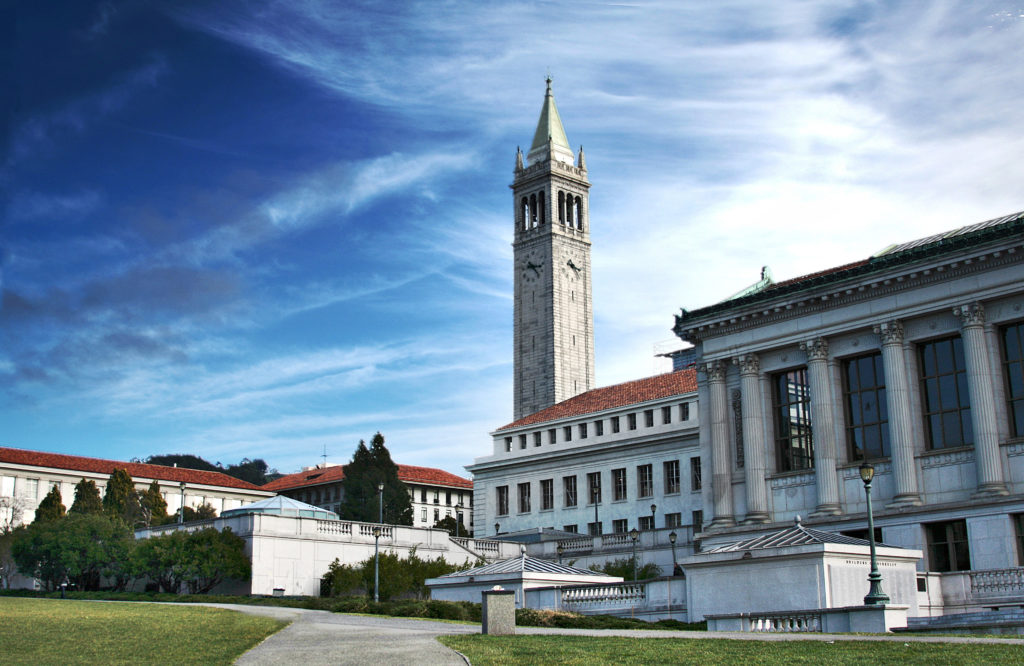
Ever since some student groups at Berkeley Law School signed a pledge to exclude anyone that supports the existence of a Jewish state, there has been a very public debate about the legality of these so-called “Jew-Free” zones. In response to widespread criticism, the groups, led by Students for Justice in Palestine, issued a statement claiming that the bylaw was not antisemitic because it “does not attack Jewish people or faith.” 

The dean of the law school chose to ignore what the statement actually said, accepting this fairly thin excuse and writing that: “[A]t this stage, all some student groups have done is express their strong disagreement with Israel’s policies.” 

From a legal perspective, the dean (and the school) gave undo credence to the mischaracterization of the decision to exclude all Zionists as based on political viewpoint discrimination as opposed to anti-Jewish sentiment. Too bad the antisemites’ own attorney couldn’t help herself from saying more, thereby blowing that flimsy excuse completely out of the water.

Liz Jackson, a senior staff attorney at Palestine Legal, which represents SJP, recently clarified the position of the groups she represents, explaining that she knows “Some students say that their Jewish identity is so deeply identified with Zionism that this effectively discriminates against them, but that’s their subjective view and choice about how they understand their own Jewish identity.”

Here is the problem with that statement: Jewish people, and only Jewish people, get to define what is and is not part of their Jewish identity—not antisemitic groups like Palestine Legal or SJP. And for the vast majority of Jewish people across time and space, Zionism is and always has been an integral part of their Jewish, often their religious, identities. That does, in fact, transform that particular kind of Zionism into a category protected by state and federal civil rights law, whether SJP likes it or not. 

Discriminating against a Jewish person or group just because they are Zionist is illegal because Zionism is demonstrably not just a political movement. For thousands of years, Jews across the world have prayed to God at least three times a day (and often more) for a safe return to Zion. The Pentateuch itself references this ancient Jewish hope while the Prophets and Writings repeatedly record this ambition. More than half of the biblical commandments are specifically tied to the land of Israel, and doctrinally, belief in and hope for the return to Zion is part of the 13 Principles of Jewish Faith. 

Jews were Zionists before there were Muslims, and even before there were Christians. In multiple places throughout the New Testament, the yearning for redemption is expressed in terms of the by-then-already-classic formulation of Jewish Zionism (see e.g., Matthew 21:5 and John 12:15), while the Quran itself is quite clear about the long history of Jews in the Holy Land—and especially in Jerusalem. (See, for example, Surah Bani Isra’il, verses 1-7). While it is true that the Jews were twice expelled from their ancient kingdom of Israel, it is also true that they never fully left: Despite the fairly recent antisemitic lie casting Jews as colonialist outsiders, since biblical times there has always been an indigenous Jewish community living in the eternal Jewish homeland. In the late-19th and early-20th centuries, Jews from around the world came to buy and cultivate land to further expand those existing Jewish communities that had remained in Israel as a continuous presence throughout all of the exiles.

But for those Jews for whom Zionism is a part of their Jewish ethnic heritage and identity, it absolutely is protected and they cannot be excluded on the basis of holding that belief.

Today, support for Zionism can take multiple forms, and mere political Zionism may not be protected, like any other political belief. Not all Zionists are Jews, and not all Jews are Zionists. But for those Jews for whom Zionism is a part of their Jewish ethnic heritage and identity, it absolutely is protected and they cannot be excluded on the basis of holding that belief. Anti-Zionism that allows for discrimination against Jewish people because of their affiliation with, affinity for, or support of the biblical/prophetic/historical/ethnic/cultural/Jewish ideal of Zionism is antisemitism. So is telling Jews what they can and can’t believe.

To be clear, it is the openly stated, on the record view of Palestine Legal and of SJP that they get to define what “Jewish identity” can include for Jewish people. And, if they feel that one or another Jewish belief should not be part of a Jewish person’s identity, they may freely discriminate against people for holding that belief, and that cannot be considered antisemitism. Should Palestine Legal, for example, decide tomorrow that keeping Shabbat or kosher observance is not really part of Jewish belief, just some Jews’ “subjective view and choice about how they understand their own Jewish identity,” then they can and should be free to discriminate against Jewish people who do observe Shabbat or keep kosher. Likewise, should they decide that taking mass is just something that some Catholics subjectively like to do but is not really part of their religion, they can freely discriminate against those Catholics who do practice the ritual.   

Nor was this a one-time accidental admission. When Jewish student leaders, the people who are ostensibly being excluded for their views, clarified that “When we say ‘Zionism,’ we mean the Jewish right to self-determination in their ancestral homeland, which is Israel … This does not say anything about the self-determination of Palestinians,” Jackson doubled-down and “expressed disagreement with that definition of Zionism.” 

Here is the bottom line: Anti-Zionists do not get to define a Jewish person’s Zionism for them, cast it as merely political, and then discriminate against them for it. 

Berkeley made clear that if this was about Jewish identity, then they would step in. Palestine Legal just said the quiet part out loud: It was always about Jewish identity, and they were always aware of it. They just don’t like that part of Judaism. Consequently, they feel they should have the right to tell the vast majority of Jews that they are wrong about their own Jewish identity, and that they better purge themselves of those beliefs or they will be discriminated against.  

There goes that “political viewpoint” excuse. Your move Berkeley.

No More Excuses—Time for Berkeley to Act Read More »

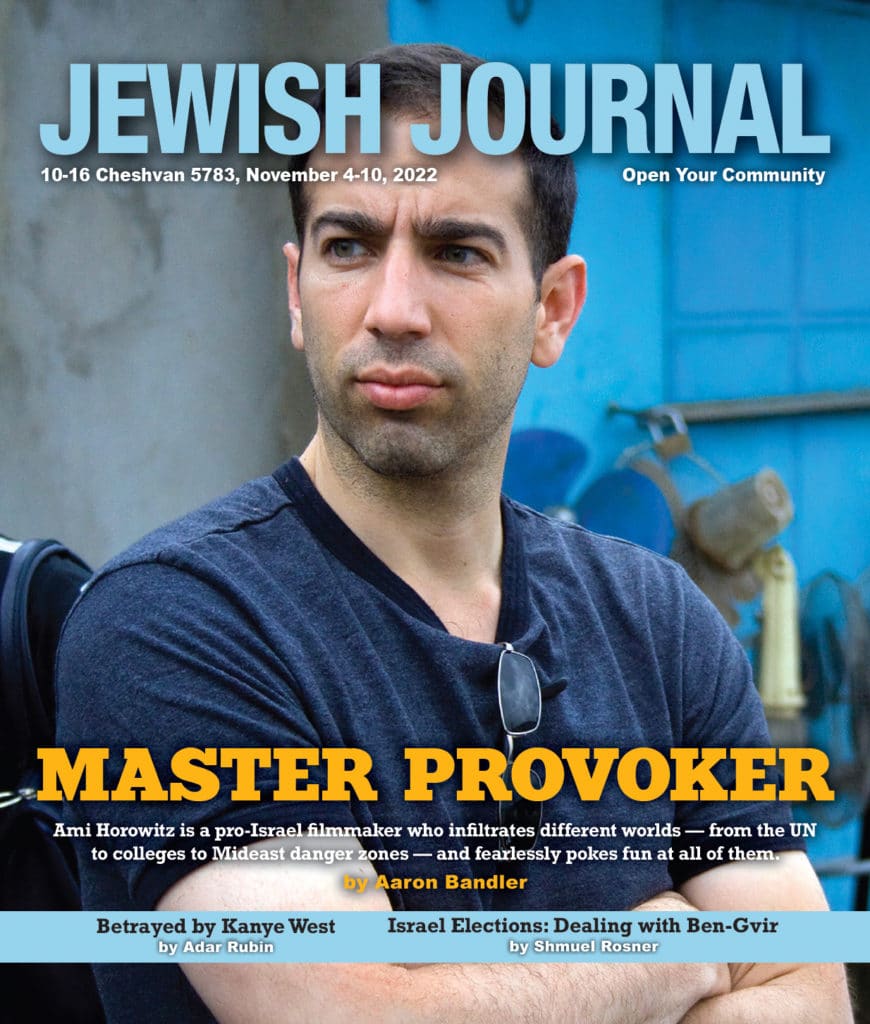
Print Issue: Master Provoker | Nov 4, 2022

CLICK HERE FOR FULLSCREEN VERSION

Print Issue: Master Provoker | Nov 4, 2022 Read More »

Rep. Karen Bass Message to the Jewish Community of Los Angeles

On Tuesday, a long, prolific and expensive race to be the next mayor of Los Angeles will be decided between U.S. Representative Karen Bass and real estate developer Rick Caruso.

Rep. Bass took the time to speak with the Journal this week about concerns from Los Angeles’ Jewish community. She began with the top of the list: antisemitism.

“The rise in antisemitism, the constant threat, it seems like it’s every weekend almost with flyers being dropped in neighborhoods,” Bass told the Journal.

Last week, which began with calls for businesses to drop their partnerships with Kanye West and the antisemetic banners draped over the 405 Freeway, Bass released a stern rebuke.

“Whether it’s found on banners unfurled over the 405, spewed from those with millions of fans, or expressed in any other form, the steep rise in anti-Semitism in our city is unacceptable, and as mayor, I will act to stamp it out and especially to combat violence inspired by hate,” Bass said in an October 27th press release. “I will bolster hate crime enforcement and will partner with the Jewish community to share their story and the diversity of their culture because education and inclusion are the antidote to hate and ignorance. I’m proud to have stood with Jewish Angelenos throughout my life and I’m honored to have the support of these community leaders.”

In her conversation with the Journal, Bass spoke about taking more than just a stand, but taking action against crime and antisemitism.

“One of the things that I want to look into is cameras—people’s Rings and other video cameras because it just seems like we should be able to track these folks down. And if the cameras that are there are not adequate, then maybe there needs to be some neighborhood cameras. I know that’s one thing that I would like to do when these kinds of things happen.”

The Bass campaign said that she “called for elevated hate crime enforcement and prevention by the LAPD” as well as “additional state and federal funding for the Nonprofit Security Grant Program to ensure that local synagogues and community organizations are equipped to prevent hate-motivated violence.”

Bass knows the area well, having been raised in Venice and the Fairfax neighborhoods. She went to Hancock Park Elementary School, Louis Pasteur Middle School at 18th and Fairfax (now the site of Los Angeles Center for Enriched Studies) and graduated from Hamilton High School. She came of age during the Civil Rights Movement, a time where Bass recalls the alliances between African-American and Jewish civil rights advocates. But one particular moment during this time that she never forgot was the first time she saw the number tattoos on the arms of one of her friends’ parents who were Holocaust survivors.

“I never ever forgot it, it’s burned in your memory, it was very shocking,” Bass told the Journal. These memories stuck with her throughout her quest to fight injustice and improve the lives of those in her community: in Los Angeles as a physician assistant and social worker, in Sacramento as a State Legislator and in Washington, D.C. as a Member of Congress.

From 2004-2010, Bass represented Assembly District 47, which then ranged from Westwood to Hancock Park to Ladera Heights, including the entirety of the Pico-Robertson neighborhood.

In the U.S. House of Representatives, Bass represented California’s 33rd district, and from 2012 through today, the 37th district. She never received any less than 80% of the vote in the General Election when running for office to represent her home neighborhood.

As Speaker of the California State Legislature and as a U.S. Representative, Bass visited Israel three times. Each visit was different, but like all elected leaders making official visits to Israel, Bass’s trips to Israel included visits to Yad Vashem. Bass’s campaign also spoke about her “efforts both to advance the U.S.-Israel relationship and to fight the scourge of anti-Semitism.”

“In 2016, [Bass] led a bipartisan effort, signed onto by 394 members of the House of Representatives, calling on President Obama to veto one-sided initiatives in the United Nations that would be detrimental to achieving a two-state solution,” the statement read. “Earlier this year, she co-sponsored a House resolution condemning the heinous terrorist attack on Congregation Beth Israel in Colleyville, Texas.”

During our conversation, she used the words “take action” a number of times. Her eagerness to do so shows, as she elaborated about the relationships she formed in Israel and her awe of its booming tech industry.

“One of the things that I talk about is Israel’s ability to preserve water, cycling and desalination,” Bass said. “It’s extremely important in California.”

If elected Mayor of Los Angeles, Southern California’s drinking water supply will certainly be a major focus over the next four years. Just last month, the Doheny Ocean Desalination Project in Orange County was approved by the California Coastal Commission. However, there are no desalination plants on mainland Los Angeles County (there is one on Catalina Island). There is little doubt that civic leaders in Los Angeles will be looking to Israel as a model for the future of California’s drinking water sustainability.

The kinship between Los Angeles and Israel is strong—being mayor of Los Angeles also means leading the flagship city in the world’s fifth largest Jewish population center (622,480). The only metropolitan areas with a larger Jewish population than the Los Angeles area are Haifa (710,600), Jerusalem (992,800), New York (2,109,300) and Tel Aviv (3,891,800).

And as mayor of the second largest city in the United States, there will be a massive spotlight on the winner of Tuesday’s election. Bass has already received a major spotlight, earning the endorsements of both President Joe Biden and former President Barack Obama. Her campaign also touts a list of more than 115 Jewish Community Leaders who have endorsed Bass for mayor.

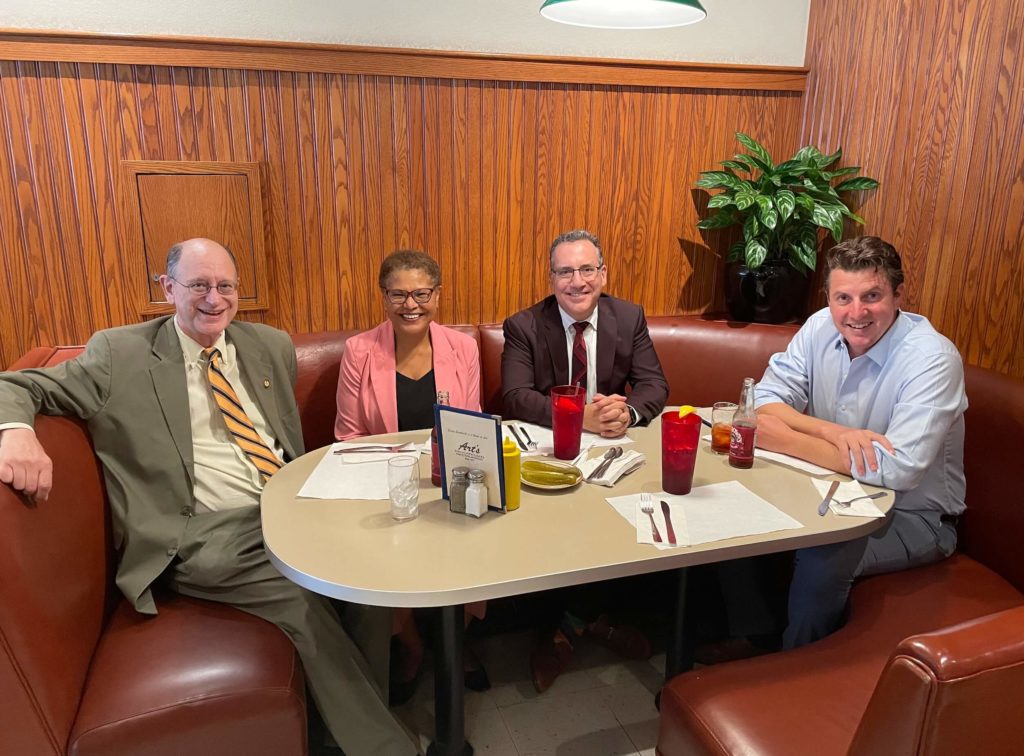
Among them are Representative Brad Sherman, State Senator Henry Stern and City Councilmember Bob Blumenfeld. Bass joined those three Valley leaders on 818 day (August 18th) to speak with them and constituents at Art’s Delicatessen in Studio City for discussions on outreach with the business community and public safety.

And then there is the topic of homelessness. Bass knows that is the top issue on the ballot for mayor. Both Bass and Caruso have complex plans to address the crisis, but have spent all of 2022 pitching a simplified version to voters. In an October 26th discussion at the Jewish Federation of Greater Los Angeles (and sponsored by the Anti-Defamation League), Bass spoke of using faith leaders as a way of addressing homelessness.

“I’ve been talking to faith leaders saying ‘if I win, I’m coming back to you because we need to have an
interfaith alliance that talks about the humanity and that opens people up. Because right now, people want to see the tents go away, but ‘build housing on my block? No no no build it someplace else!’ What that would amount to if that were to happen is that all of the affordable housing and housing for homelessness would be in lower-income areas that, frankly, are overcrowded with people living two and three families in a unit now. And inner city low-income communities cannot absorb 40,000 people and we can’t hide them, so you know we have to look at it, and so I see bringing the city together as a way to do that. But on the epic side, homelessness is issue number one, it really is, because how are we going to build these alliances if people basically think that everybody in office is corrupt?”

Ultimately, Los Angeles voters will have the final say on Tuesday, November 8th on choosing the next mayor to address antisemitism, crime, corruption and homelessness. She summarized her message to Los Angeles’ Jewish community in her remarks at the ADL event last week:

“I have devoted my life to fighting for social and economic justice, and part of that fight means always fighting against anti-Semitism and recognizing what is happening right now in our country,” Bass said. “We’ve been experiencing this for a few years now and I believe that the only way that we deal with it is by coming together and being very very aggressive I have always been fortunate to have wide support in the Jewish community and have over a hundred Jewish leaders and organizations that have supported me, that have worked with me for many many years. And so the Jewish community will always have access to me and my administration if I have the honor of earning your vote.”

Rep. Karen Bass Message to the Jewish Community of Los Angeles Read More »

Table for Five: Lech Lecha

One verse, five voices. Edited by Salvador Litvak, the Accidental Talmudist

And God said to Abraham, “Your wife Sarai; you shall not call her name Sarai, for Sarah is her name. And I will bless her; I will give you a son by her. I will bless her so that she shall give rise to nations; rulers of peoples shall issue from her.”

– Genesis 17:15-16


Rabbi/Cantor Eva Robbins
Co-rabbi, Nvay Shalom and Faculty, AJRCA

Sarai was Avram’s wife and partner as they both left the land of their birth, family, and culture. They were mavericks, risk takers, and embodied Avram’s identification as an Ivri, “one who crosses borders/boundaries.” But only Sarai had a yud as part of her name, which is a masculine marker, a prefix for future tense when referring to “he” and the first letter of God’s omnipotent name YudHayVavHay. 

Midrash teaches that Sarai took the yud, which represents the number ten, and divided it into two, representing two letters, the hay (numbering five), using one to change Avram to Avraham and the other for herself becoming Sarah. The letter hay is the female marker, so they both attain the feminine aspect of the Divine, Shechinah, as well as an essential part of God’s name and character. They proved to be faithful and devoted servants of the Holy One and would carry an essential part of the Divine as part of their identity and mission. 

What is even more remarkable, Midrash suggests that Sarah, who became an ambassador for the new and unique religion of the One hidden God, unlike the idols that were ever present in the ancient world, took the “yud,” which was once part of her original name, and bequeathed it to Joshuah. Once called Hosheah, he becomes Y’hoshuah, also bearing the Divine within him as he enters and conquers the land, fulfilling God’s promise, “she shall give rise to nations.” A name is a powerful thing!


Rabbi Elliot Dorff
American Jewish University

This is the first of many verses in the Bible that see children as a blessing. Children are our link to generations past and future, a way for parents to give further longevity to their own parents and at the same time, live beyond their own lives. It is also the way that the Jewish people and our tradition live on from one generation to those following. 

Children bring great joy to the people who are able to have children when they want them and, conversely, great distress to those, like Abram and Sarah to this point, who are not able to procreate. The commandment to procreate in Genesis 1 applies logically and morally only to those who can have children naturally. Couples certainly may use artificial reproductive techniques to try to have children, but Jewish law does not require them to do so. Adoption is also an honored option in our tradition. We in the Jewish community must support infertile couples in every way we can. 

The Jewish community is in deep demographic crisis. We are not even reproducing ourselves, let alone regaining the six million we lost in the Holocaust. Jews who can have children are strongly encouraged to do so, and older Jews – including grandparents, if possible – should help make it economically possible. Ways to achieve this include providing financial support for the Jewish education of children, informally in camps and youth groups, and formally in schools. 


Rabbi Avraham Greenstein
AJRCA Professor of Hebrew

Although the exact derivation and meaning of the name Sarai is not entirely clear, the most obvious translation is “My Noblemen.” In contrast, the meaning of Sarah is somewhat less puzzling and somewhat more fitting. Sarah means “Noblewoman.” 

The Gemara (Berachot 13a) asserts that the shift from the name Sarai to Sarah represents a shift in Sarah’s status as a Matriarch. She is no longer a noble figure and leader to only her own people; she has now become a noble leader to the entire world. Rashi clarifies that use of the possessive “my” in Sarai is an indication of particularism, whereas the name Sarah, Noblewoman, is more universal. 

Along the same lines, it may be said that the seeming shift from the plural “Noblemen” to the singular “Noblewoman” can indicate Sarah’s role as a unifier rather than as one who promotes the numerous distinctions that divide people. Indeed, Sarah is Abraham’s partner in spreading monotheism and in uniting the world through this belief. The seeming shift from masculine (Noblemen) to feminine (Noblewoman) likewise suggests that Sarah was coming into her own as a woman, a mother to Isaac and Matriarch to all of humanity. 

Sarah’s name change reflects her legacy. Sarah reminds us that we too can become noble leaders when we seek unity in preference to division and when we overlook possessing in favor of giving. Sarah puts forward the role of Jewish femininity as a model of Jewish devotion and as a productive affirmation of God’s oneness.


Laya Saul
Author of “Sisterhood of the Copper Mirrors,” founder CMGteam.org

Miracles are going to happen. Change your name, change your fortune. In this case, Sarah’s name change gives her mission even more power. The commentators suggest Sarah has become something more. She is going from Sarai (literally, “my princess”) to Sarah—the nation’s princess. And we’re not talking Disney princess. She was a real woman with real challenges to overcome, a true leader in her own right. She didn’t play a minor, passive, or submissive role. Named directly by God we see a key player, Sarah, who gave rise to nations and rulers of peoples. Sarah, our matriarch. 

What kind of thoughts went through the minds of Abraham and Sarah? The thoughts of parents at the time of conception influence the soul to be born. What did they need to do to prepare for this kind of responsibility? This was not just “you’re going to have a baby after all this time of barrenness.” This is massive. It’s life changing and even more so, world changing. 

So how is this relevant and what’s the metaphor for us? As the descendants of such a matriarch, how do we take this to a personal level? What in your life can go from barren to fertile right now? What are the thoughts you’re thinking to conceive your next step? What are the changes you can make with — and how will you take responsibility for — the gift and blessing of each new day? More miracles are going to happen. 


David Brandes
Screenwriter / producer

A child’s Hebrew name is more than just a random act of choice by the parents. According to the Kabbalah, when a child is born a spirit of prophecy, so to speak, comes over the parents and this spirit unconsciously directs them to the name they will chose. A name is in some mystical way connected to the essential spirit of the child. It will define the child throughout his/her life. 

Both Sarai and Sarah mean princess. However, as Rashi explains the name Sari refers to the individual or personal princess, while Sarah transcends the personal into “a princess for others.” By adding the “H,” a repeated letter in the ‘YKVK’ holy name of God, God is setting Sarai on a new grander trajectory. It redefines Sarai by imbuing her with God’s divine breath. It announces her newly anointed role of matriarch of nations. This new name is a gift from God as well as a responsibility. 

Table for Five: Lech Lecha Read More »