fbpx

November 3, 2022

How an Ultimate Optimist Outlived His Would-be Killers

On November 20, Joe Alexander celebrates his 100th birthday. The active West Hollywood resident, who was born in Kowal, a small town in central Poland,  can claim membership in one of the world’s tiniest clubs: After six years as a prisoner of one of the most evil schemes of the 20th century, not only did this hero of the Holocaust survive 12 concentration camps, he also gained revenge on his captors by probably outliving all of them. 

At one of his recent talks at  the Holocaust Museum Los Angeles, the 99-year-old survivor related his harrowing journey through the most perilous death camps the Nazis could devise. Dressed fashionably in a black-and-white sport coat, black shirt and necktie, the diminutive Alexander took his seat at the front of the room.  After his opening words, he never paused.

He was known in the camps, and has been known since 1949 in the United States, as an optimist. The second youngest of six children, he credits being raised in a Modern Orthodox home for his permanent sunny outlook.

Alexander was known in the camps for his optimism and steel-strong faith in God. He said his belief in doing what God wants carried him through.  Today, he is known for assuring audiences, especially students, that no matter how grim things are, they will get better.  “That belief, which I learned at home, kept me going in the camps,” Alexander said.

Unlike most men and women of his age, Alexander is regularly active, alert and participates daily in society – and not from a distance. He is the gabbai at Hollywood Temple Beth El for his longtime friend, Rabbi Norbert Weinberg. He attends every Shabbat service, removing the Torah from the Ark, and arranging the aliyot recipients.

On January 8, Beth El is planning a doubleheader gala celebrating two 100th birthdays, Alexander’s and the Conservative synagogue’s.

One of Weinberg’s favorite stories about Alexander is how his friend’s knee was shattered in a motorcycle accident shortly after the war ended. “He ignored the pain for 70 years before he decided to fix it,” the rabbi said. “Shortly after the surgery, he was up and around again.”

While Alexander remains familiar with many intimate details from 1939 until May 1945, being around this tireless man, it is easy to forget he is 100.

For the past 25 years — since the lifelong tailor retired from his military uniform shop, L.A. Uniform Exchange, on Melrose Avenue — Alexander carefully has been recounting his thousands of steps through death camps for appreciative audiences of students and adults.

No matter his optimism, he has faced more than his share of challenges. After the early days of the Holocaust, he never again saw or learned what happened to his parents and siblings. In 1995, two years before Alexander’s retirement, his wife Adele – who he had met in Harrisburg, Pa., his first stop in the States — died.

He used to deliver multiple talks a day, and now in the aftermath of the pandemic, Alexander relates his concentration camp experiences twice a week at the Holocaust Museum.

Making no obvious concessions to age, his fact-filled presentations are emotion-free. “I survived 12 camps,” he said. “I grew up in Kowal, Poland, my father was in business, and we had a very good life until 1939.

“That was when the Germans came into Poland and divided the country into two halves. We lived in the part that was annexed to the Third Reich. Every town had a Town Square, where the businesses were. We lived in the town square. 

We were given 10 minutes to get out.”

Mysteriously, three families, including the Alexanders, were overlooked. After the victims departed, Joe’s father put the seven Alexanders into two horse-drawn wagons and they headed for a town 15 miles away where relatives lived.

Within two weeks, though, 17-year-old Joe was sent to a forced labor camp.

“Everybody had to work there,” he said. “They told us on weekends we could go home. But we were building a canal. You stayed in the water, up to your knees, without boots. 

“We arrived around this time of year, October, November, like winter time. I worked there a few weeks, got blood poisoning, sores on my legs and arms. One weekend I went home. I said ‘I am not going back.’ Monday morning the police came to look for me. My dad said ‘he’s not here. He is supposed to be in the camp.’ They left, and I stayed away from home for a while. That was when they were starting to build a wall where the Warsaw Ghetto was going to be.

“After the wall was finished, they announced that all Jews living within 50, 60 kilometers had to move into the Warsaw Ghetto. We moved into the Ghetto, and you cannot imagine how miserable life was. This was a small, walled-in area with barbed wire on top. They put about 400,000 people in there.

“People were dying every day. You went out in the morning, and there were dead people on the sidewalk, in the streets, everywhere.”

The Nazi-inked identification number 142584 remains tattooed on his forearm.

Alexander kept moving camp to camp, laying cobblestones, building sewers, laying down railroad tracks. He mentioned going three days at a time “without food or facilities.”

Alexander kept moving camp to camp, laying cobblestones, building sewers, laying down railroad tracks. He mentioned going three days at a time “without food or facilities.”

Eventually, in early 1943, he wound up at notorious Auschwitz-Birkenau, his eighth stop. 

“When the train doors were opened,” he recalled, “30, 40 percent of the people were dead.

“Whoever could walk was lined up in rows of five. That was when we met Dr. Josef Mengele. He was called the Doctor of Death. 

“Dr. Mengele said there are 6 kilometers to walk through the camp. He selected people to line up on the left and said they would be leaving on trucks. He picked out sick people, old people, young kids. I was a little guy, and he picked me out to go to the left.”

Because of his experience in other camps, Alexander was shrewd enough to strategically position himself.  “Every time I had to go to work, I tried to get in with the biggest, strongest men,” he said. “Being a little guy, I figured I could get away with a lot of stuff. When I looked around here, I only saw sick people, old people, not the types I wanted to be around.”

To survive, Alexander knew he needed to make it to the right side.

One night around midnight, “I noticed Dr. Mengele had moved down the line. Had it been daytime, I could not have done it. I had to make it to the other side. Everybody on the left side was taken away in trucks. If I hadn’t gotten away in the dark that night,” said Alexander, “I would not be here this morning.”

Why has he survived? “Because this is where God wanted me to be.”

How an Ultimate Optimist Outlived His Would-be Killers Read More »

Exploring Jewish Law, Tradition and Women’s Roles

Maggie Anton writes the books she wants to read. It just so happens those books are a mix of Jewish women’s history and their evolution, along with great romance.

“My whole point is commentary and criticism on the way Jewish law and traditional Jewish texts show women’s inequality and their disadvantages, especially that women are forbidden to study Torah,” Anton told the Journal.

An award-winning author of both fiction and nonfiction, as well as a Talmud scholar, Anton never intended to be a writer. In fact the Los Angeles-based author of the award-winning trilogy “Rashi’s Daughters,” worked as a chemist at Kaiser Permanente for 40 years.

Anton believes “The Red Tent” by Anita Diamant (a modern interpretation of the biblical story of Dinah), published in 1997, opened the door to this genre, as the first “way back Jewish historical novel.”

”Jewish women are hungry for stories about Jewish heroines, and if they are historical figures, or semi-historical figures, then all the more so.” – Maggie Anton

“That’s how I knew there would be an audience for my books, because Jewish women are hungry for stories about Jewish heroines, and if they are historical figures, or semi-historical figures, then all the more so,” Anton said. 

Anton, who had been studying in a woman’s Talmud class with Rachel Adler since 1992, was fascinated with Rashi having no sons, only daughters. She wondered what life was like for them. At the time, Anton’s kids were “leaving the nest,” so she had time to speculate.

“I have no idea whatever gave me the idea that I could do this, but I was a voracious reader of fiction always,” she said. She thought it would be a fun thing to do; to take all everything she learned and turn it into a novel.

Anton remembers the impact of reading the “All-of-a-Kind Family” in elementary school, and wanted to do for Rashi’s daughters what Sydney Taylor did with her book by embedding the reader in their household.

Except Anton was going to have Rashi teach Talmud, and the readers were going to be in the room.

“One of the things that really frustrated me about Chaim Potok’s books is that they were so focused and involved with the world of Talmud, but you learn no Talmud,” Anton said. “But there’s not a line of Gemara in his books, and so I’m not doing that.”

Anton’s “The Choice: A Novel of Love, Faith, and the Talmud” takes characters inspired by Chaim Potok and ages them into young adults in Brooklyn in the 1950s. 

In “The Choice” enterprising journalist Hannah Eisen interviews Rabbi Nathan Mandel, a controversial Talmud professor, and persuades him to secretly teach her Talmud. Things start innocently enough, but soon the gloves come off as the two discover they are passionate about much more than Talmud.

“I wanted to show how Jewish law and custom regarding women’s place in the Jewish community and in Jewish ritual life has evolved,” Anton said. “I wanted to kind of show how it came about, what the problems were and how my characters learn about it and deal with it. And of course I like to get the romance in there.”

The idea for “The Choice” came during one of her book tours. When Anton travels, she stays in people’s homes and, during her downtime, explores their bookcases. One house had Potok’s “The Chosen” and its sequel “The Promise.” 

“I thought, ‘I haven’t read those in like 40 years. And if I don’t finish it, it doesn’t matter. I know how it ends,’” Anton said. 

As she started reading, Anton wondered: Where are the women? The Orthodox hero’s mother dies, and he doesn’t even remember her. The Hasidic one has a mother, who is also nameless. 

“We only see her a few times, and there’s no indication of the power that a Rebbetzin has in the Hasidic community,” she said. “The Rebbe is number one, but the women don’t go to him. They go to the Rebbetzin. And, believe me, most of the time, she can take care of their problems. She knows Jewish law, and especially women’s kind of Jewish law very well, and if there’s a problem she can’t solve, then she goes to the Rebbe.”

Around the same time, Anton read “Davita’s Harp,” Potok’s only book with a female protagonist. 

“That’s the one where she grows up in a Communist household,” Anton said. “Her father is a war correspondent, he’s killed, and then her mom remarries an Orthodox guy. [Davita] ends up in this Orthodox household, going to an Orthodox day school.”

The book takes place through Davita’s elementary school years, and ends with graduation. All the girls study prophets and songs. Davita wants to study Talmud, like the boys do, but she is not allowed.

“She devotes herself to her classes and her classwork to prove that she’s capable and worthy, so much so that she is actually entitled to win the best student award,” Anton said. 

But they don’t give it to her, because she’s a girl. The one they want to give it to is the Orthodox protagonist of “The Chosen” and “The Promise.”

“At graduation he comes over and he tells her that she deserved that award,” Anton said. “They offered it to him, and he turned it down, because he knew that she was the one that should have gotten it.”

That’s how the book ends.

Anton wondered why Potok brought him back … and then nothing. With this cliffhanger for “Davita’s Harp” Anton felt the characters were lovelorn, or at least attracted to each other, and their story was unfinished.

“At that point I had heard of Chekhov’s gun,” Anton said. “The advice to novelists and playwrights: If a gun appears in act one or chapter one, it better go off by the last act. When I saw him in there, immediately in my mind [I decided], ‘I’m going to fire Potok’s gun.’”

Anton decided to do research, write a backstory on those two mothers from “The Chosen,” and write about how the two protagonists get together. 

“What I hope people get, assuming they read Potok’s other books, is a sense of closure on this relationship between Davita and Reuven; of course I changed the names,” Anton said. “They’re going to feel satisfaction that this circle has been closed, and at least kind of [a sense of] what happened to them or what could have happened to them.”

All readers will get an education into Jewish women’s history in America, the impact of Jewish women, and how Jewish law has changed.

Exploring Jewish Law, Tradition and Women’s Roles Read More »

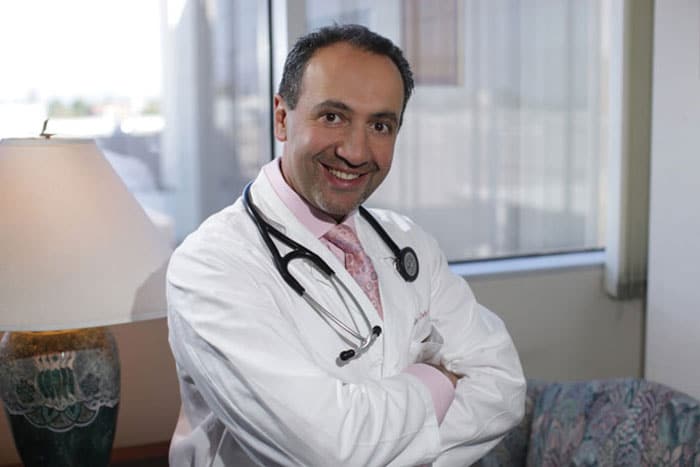
Dr. Afshine Emrani on Medical Freedom of Speech and His Iranian Roots

During the darkest days of the pandemic, Dr. Afshine Emrani’s social media posts were showing up all over newsfeeds, Twitter timelines and WhatsApp groups. He discussed his opinions on COVID – which were sometimes controversial – but he always kept an open mind and welcomed the criticism. 

“I received a lot of pushback from multiple sources, including colleagues whom I respect,” said Emrani, a cardiologist in Tarzana. “Most of the discussions were respectful. If people disagree with each other in a respectful manner and present their data, I respect them. That’s how societies function. That’s how we learn from each other. If you’re in an echo chamber, you don’t grow and learn.”

Emrani experienced firsthand the cost of not being able to speak his mind. He was born in Iran, and his father was in charge of the country’s coal mining industry – its second largest, after oil. His father helped build cities, schools, roads, hospitals and theaters. But when the Iranian Revolution hit in 1978, suddenly, he feared for his life.

“The tide changed both because he was a Jew and because he was working for the Shah,” said Emrani. “My father was rushing to save what money he had made in 30-plus years of service to his country and get his wife, mother and four little boys out of a war zone. Bullets were flying over our house and people were rioting in the front, setting cars on fire on our street.”

In the summer of 1979, the Emrani family was able to flee.

“My father got rid of everything we had and we escaped,” said Emrani. “We were some of the lucky ones.”

The Emranis lived in England for about three years and then came to Los Angeles to be among other Iranian Jews, but it was a rough transition.

“People were making fun of me, this Persian Jew who sounded British,” Emrani said. “In England, we would dress in suits as our school uniform, and when I came here, I showed up to Uni High in a suit. I was promptly told not to do that again.”

The school placed Emrani in AP biology and math, which was fitting because he always wanted to be a doctor. When he was a child, he’d dissect the nonedible parts of the meat his mother would bring home from the butcher shop. 

“I would try to figure out how it all worked,” he said. “I had this fascination to try and help people get better. I thought there was no better reward in life than to help people, and I still feel that way.” 

Emrani attended the University of California, San Diego and worked at Cedars-Sinai Medical Center as well as Kaiser Permanente before opening up his own practice, Los Angeles Heart Specialists. In his everyday work, he sees that one of the biggest public health threats is loneliness – especially among the elderly. 

“Many elderly people come to my office once a month and, believe it or not, that’s the only human interaction they have,” he said. “Some of their families don’t visit or they don’t go out. That contributes to dementia and heart disease and many other problems.”

The doctor also sees processed food and inactivity causing a number of issues.

“In our society, people live off of processed food, not off the land,” he said. “They’ll eat whatever is quick and in a wrapper or in a box. Most people are behind their computer all day and they don’t move. Between not moving and eating processed foods, they’re becoming obese and suffering from heart disease.” 

Though the pandemic is not making headlines as much anymore, Emrani is still speaking out about it. 

“For two years, we had lockdowns that were really disastrous,” he said. “Many people didn’t get their proper follow-ups or go in for routine exams. There was a lack of access to healthcare and increased loneliness and anxiety, and there was worsening obesity, drinking, smoking and mental health problems.” 

On top of everything, Emrani said that the delaying of healthcare led to a rush back once the pandemic receded.

“Many doctors are giving appointments three-to-six months out,” he said. “This further exacerbates the problems. Many doctors ended up retiring during COVID because they were burned out, and it left many patients without care.”

Emrani has been outspoken not just about COVID, but also about Assembly Bill 2098, a bill that Governor Gavin Newsom signed that targets doctors who spread COVID misinformation.

“Having escaped from Iran, where human expression was censored, the bill brings back my PTSD,” he said. “Science is based on opposition and questioning.”

He continued, “Many things labeled as ‘misinformation’ over the past two years ended up being correct. For science to function, we need people to ask questions that are the direct opposite of the main narrative. Without it, we have a failure of science.”

Like other Persian Jews, Emrani is deeply Zionist and passionate about defending Israel. Recently, he tweeted to his over 50,000 followers, “I’m a proud Zionist Jew. If you have a problem with that, you’re a racist bigot. If you’re cool with it, I love you.”

“Everything that I do is based on my Jewish beliefs. I have always taken care of everybody regardless of color or creed or religion.“ 
– Dr. Afshine Emrani 

“Everything that I do is based on my Jewish beliefs,” he said. “I have always taken care of everybody regardless of color or creed or religion. I always welcome everyone to come to my practice, and they are very comfortable because they feel my love towards them. I want them to know that my Judaism dictates that I take care of them, just like God wants.”

Simply put, Emrani is living his dream, which is to be of service. 

“My goal is to be a good Jew and help people,” he said. “As we say, saving one life is like saving the entire world.”

Dr. Afshine Emrani on Medical Freedom of Speech and His Iranian Roots Read More »

A Festival To Remember: A Bottarga Board and Recipe

The Sephardic Film Festival is always one of the most glamorous, fun and memorable events on our calendar. The vibe starts when you drive through the tall gates onto the fabled Paramount Pictures lot. Strings of twinkling lights adorn the trees, there is a long red carpet and the flash of cameras outside the theater.

Pat’s Restaurant sets up large, sumptuous buffets and there are white-shirted waiters serving champagne.

Over the years, there have been wonderful honorees, like Yehoram Gaon, Lainie Kazan, Gad Elmaleh and Emmanuelle Chriqui. One year we had the legendary Enrico Macias, who generously gave a full concert. And Hank Azaria was the nicest guy (and just loved the home-made burekas from our bake sale).

Of course, all that glamour takes hard work. Neil has always been in charge of curating the films, which means that we spend hours screening movies (some fun, some boring) to find the one gem for opening night.

Created in the late 1990’s, the first film festivals were run by the powerhouse Sarita Fields and my husband Neil Sheff and all our amazing SEC friends. I was busy with young children and would mostly help on the night of the Gala. Slowly, slowly I got more involved and have been lucky enough to run the past few festivals with Sarita.

Over the years, we have screened films telling multi-faceted stories of Sephardic Jews from around the world. Tales from Morocco to Turkey, from India to Iraq, from Syria to Rhodes and more.

I am very passionate about the Festival because the profits fund the Sephardic Educational Center in the Old City of Jerusalem. I have seen firsthand the power that these scholarships have for teens, housing Israeli soldiers, educators and Rabbis from around the world.

At this year’s Festival, which opens with a gala on November 13, and continutes from November 15-20 at the Music Hall in Beverly Hills, our Master of Ceremonies is David Suissa, amazing editor of the Jewish Journal. Nira Sayegh, one of our closest friends, staunch supporter and longtime board member of the SEC, will receive the Maimonides Leadership Award.

The Sephardic Legacy Award goes to SEC alumni Michael Morhaime, the video game creator of World of Warcraft, StarCraft, Diablo and Overwatch. As a special surprise, the Cinema Sepharad Award goes to Shaun Toub and the TV series “Tehran.”

Sharon and I hope you’ll join us for another wonderful Festival.

—Rachel

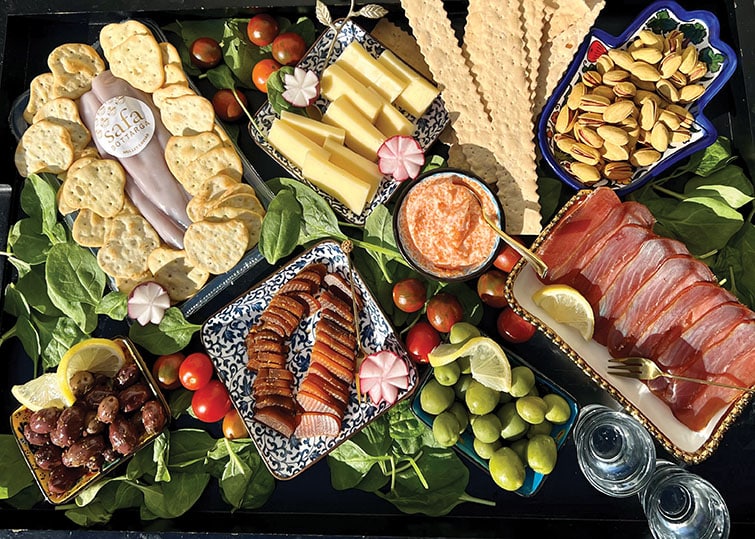
Upon our discovery that the subject of the short film showing at this year’s Sephardic Film Festival was bottarga, Rachel and I just knew that we had to tell our readers about this “kosher caviar.”

The subject of the film is 87-year-old renaissance man Dan Maslia, who teaches Sephardic cooking classes to standing room only audiences at the Or VeShalom Congregation in Atlanta (founded by Jews from Rhodes).

As a young boy, he had a job cleaning fish at a fresh foods store in Atlanta. The bones and entrails of the fish were all discarded, but he would carefully salvage the mullet roe (the sac of fish eggs) to take home to his mother and aunts and neighbors. Using a recipe brought with them from Izmir, an ancient city on the Aegean coast of Turkey, the long pouches were cleaned, salted and cured on their back porches. These immigrants called the prized delicacy “abedahu”. It was a much-loved ingredient of the Ladino Shabbat meze, alongside kalamata olives, reshas (crispy crackers) and raki (an alcohol made from twice-distilled grapes, known as the national drink of Turkey).

Many years later, he and Rabbi Robert Ischay, the beloved spiritual leader of Or VeShalom, took up the craft, making bottarga side-by-side. Nowadays, Maslia has a thriving business, shipping his bottarga across oceans and shared passion for this treasured ingredient has connected him to Sephardim all over the world.

To make our own beautiful meze board, we reached out to Julien Haggiag, owner of the incomparable purveyor of fine food products, Elyon Gourmet. He tells us that he “got into the bottarga business to escape the torturous world of fashion.”

Both he and his wife were born in France; he is of Tunisian descent and his wife is of (Turkish and Greek) Rhodes descent. Their culinary traditions share similar Mediterranean influences, but above all they share an unconditional love of bottarga. His grandmother called it damchut and her grandmother called it abedahu.

Haggiag imports Safa Bottarga, which is made in France and sells at La Grande Epicerie in Paris. He initially sold it to Los Angeles kosher markets, like Western Kosher, Glatt Mart and Elat Market. But the growing popularity of bottarga means that he has growing orders from non-kosher vendors and the venerable Santa Monica Seafood has become one of his best customers.

Bottarga is subtly salty and deliciously creamy with hints of fishiness. Known as the “truffle of the seas,” Italian chefs love to shave it into their spaghetti.

Bottarga is subtly salty and deliciously creamy with hints of fishiness. Known as the “truffle of the seas,” Italian chefs love to shave it into their spaghetti. While the best-known version comes from the Mediterranean, it is also valued in Asian cuisine. There is Japanese karasumi, Taiwanese wuyutsu and Korean eoran.

Start with a little bottarga shaved into your pasta and you’ll soon grow addicted to the flavor of this delicacy.

—Sharon

Photo by Alexandra Gomperts

BOTTARGA SPAGHETTI

4 garlic cloves, shaved or thinly sliced
½ cup extra virgin olive oil, plus 2 more
tablespoons
Pinch of red chili flakes or Calabrian Chile
1 teaspoon fresh lemon zest
1 finger of bottarga
1/2 bunch of parsley, finely chopped

  • In a small sauce pan, warm olive oil over low heat. Add garlic and sauté until golden, about 2 minutes. Remove from heat and add chili flakes and lemon zest.
  • In salted water, boil pasta according to package directions. Drain pasta, reserving 1/2 cup of water.
  • Toss the pasta in the garlic and olive oil. Slowly add the reserved water, until it appears creamy (it may not be necessary to use all the pasta water).
  • Toss in the parsley. Shave the bottarga over the pasta.
  • Finish with more shaved bottarga and lemon zest and chilli, to taste.

Sharon Gomperts and Rachel Emquies Sheff have been friends since high school. The Sephardic Spice Girls project has grown from their collaboration on events for the Sephardic Educational Center in Jerusalem. Follow them on Instagram @sephardicspicegirls and on Facebook at Sephardic Spice SEC Food. Website sephardicspicegirls.com/full-recipes

A Festival To Remember: A Bottarga Board and Recipe Read More »

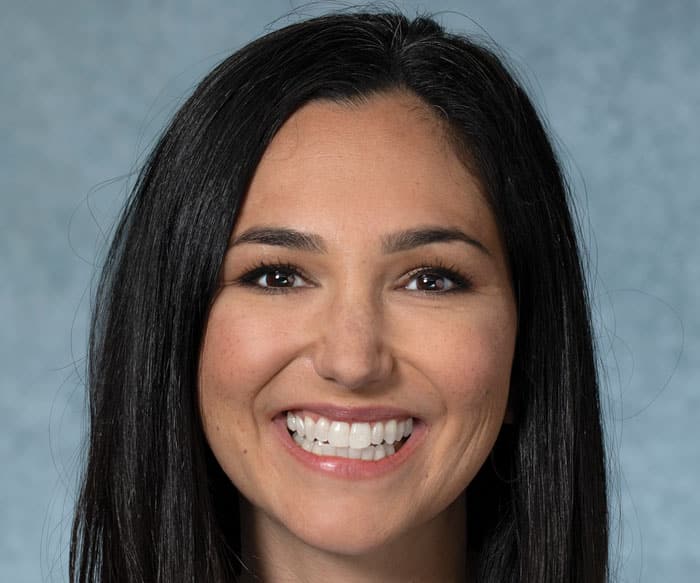
Rabbi Sarah Barukh

Rabbis of LA | Rabbi Sarah Barukh: Guiding Spiritual Leaders in the Hospital

Rabbi Sarah Barukh met a hospital chaplain for the first time around 15 years ago.

“I promptly kicked them out of my room,” she said. “I said, ‘No, thank you.’” Barukh assumed that the chaplain was Christian, and she’s a committed Jew. “I incorrectly thought that they were there to proselytize me or they had ill intent,” she said.

Looking back, the rabbi, who is a supervisor in training for the Cedars-Sinai Clinical Pastoral Education Program and a chaplain herself, laughs about it.

“It was comical because I very much identify with my title of chaplain,” she said. “A chaplain is someone who is trained to have sensitivity and provide support for people in need cross-culturally, often in a multi-faith context. They support individuals in their search for hope, meaning, purpose and connection.” 

Barukh, who grew up in Los Angeles, has always loved being there for those in need. In college, she was considering majoring in art or dance therapy. “I wanted to do something in the therapeutic realm where I could help people,” she said. 

Today, in her role at Cedars-Sinai, Barukh trains clergy members and laypeople from all different religious backgrounds to provide spiritual care for individuals who are ill or in crisis. She trains approximately six students per cohort, which ends up being 18 students over the course of a year. The hospital has a strong relationship with rabbinical schools as well.  “Many rabbis bring what they learn back into their work in their congregation,” she said. “I’m excited to help them deepen their skills.”

While Barukh has a passion for people, she didn’t know that it would result in her becoming a rabbi. She grew up in an Iraqi-Indian Jewish household, and her family celebrated Shabbat and went to synagogue every week. 

When she was 12 and walking to a family event, she had a sudden epiphany. “I told my cousin I wanted to be a rabbi when I grow up,” she said. “She told me, ‘I think you mean rebbetzin.’” Barukh’s cousin didn’t know that there were female rabbis. “It wasn’t the cultural norm when I was younger,” Barukh said. “But I’m married to Rabbi Matt Shapiro of Temple Beth Am, so I am also a rebbetzin.” 

Barukh became ordained through the Ziegler School of Rabbinic Studies at American Jewish University and was an educator at her alma mater, Los Angeles Hebrew High School. She was also a chaplain intern at Cedars-Sinai and Children’s Hospital Los Angeles. 

The rabbi’s day-to-day work is rewarding because she has the ability to train leaders who will support members of their community, no matter what situations they’re facing. 

“So much of what we do is about self-refinement and having self-awareness,” she said. “I’m excited to help support spiritual leaders cultivate those skills.”

“When you’re at someone’s bedside, you’re navigating life with them. Chaplains are there for birth up until the end of life. We see everything. To be a witness to that and partner with people is really awe-inspiring.“

While Barukh loves her job, it does come with emotional challenges; the pandemic as a healthcare worker and parent to young children was especially hard on her.  Still, the rabbi doesn’t shy away from it. She wants to be there for people in their toughest moments. It’s her life mission. “When you’re at someone’s bedside, you’re navigating life with them,” she said. “Chaplains are there for birth up until the end of life. We see everything. To be a witness to that and partner with people is really awe-inspiring. I have a real passion for supporting people on their unique life journey.” ■

Fast Takes with Sarah Barukh

Jewish Journal: What’s your favorite Jewish food?

Sarah Barukh: Hamud, a tomato-based stew with squash, mint, golden raisins and chicken. It’s a sweet and sour dish you serve with rice.

JJ: Do you have a certain prayer you turn to in a time of need?

SB: The last paragraph of the Amidah really speaks to me: “My God, guard my tongue from evil, and my lips from speaking deceitfully. To those who curse me let my soul be silent; let my soul be dust to all. Open my heart to Your Torah, and Your commandments, let my soul eagerly pursue.”

JJ: What does your perfect day look like?

SB: A day where I have time to do things with the people I love: my husband and my three sons. I would play as many card games with my kids as they want or read them stories or take them to play basketball or soccer. I would want to slowly cook a dinner and get a leisurely cup of coffee with my husband. The gift of time would be the perfect day. 

Rabbis of LA | Rabbi Sarah Barukh: Guiding Spiritual Leaders in the Hospital Read More »

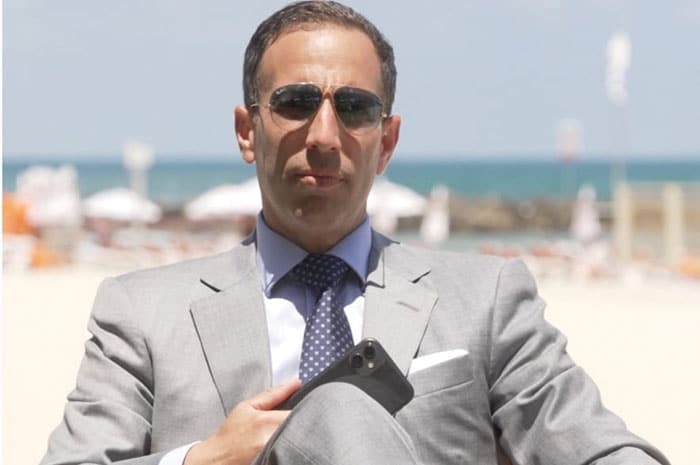
COVER STORY: Master Provoker Ami Horowitz

His latest video begins in San Francisco’s Castro District, where he talks with members of the LGBTQ+ community who are proudly anti-Israel. The video then cuts to footage from the West Bank, exposing the prevalent anti-gay sentiments in the area. After showing them this footage, members of the LGBTQ+ community who are depicted in the video begin to reconsider their stance on the Israeli-Palestinian conflict.

Videos such as this are how the politically center-right, modern Orthodox Jewish filmmaker Ami Horowitz has garnered millions of social media followers. Hailing from Los Angeles, he described himself as a “fusion of Sacha Baron Cohen, Michael Moore, and Vice” in a phone interview with the Journal. Horowitz’s videos are generally aimed at exposing what he views as “the danger of the left.” “This radical notion that our liberal democracy and economic capitalism are the seeds of evil, the West has been the seeds of evil, and we have to overturn the values of the West, to me is the single most insidious and dangerous issue and the one that I spend most of my time confronting,” Horowitz said, adding that defending Israel and exposing antisemitism flow from this line of thinking. He usually doesn’t create “baldly political” videos that take the side of Republicans or Democrats, although he has a handful of videos that do. Instead, most of Horowitz’s videos are “thematic” and “evergreen” to ensure that they are still relevant years later. His videos have gained global attention, even inspiring some executive orders from then-President Donald Trump.
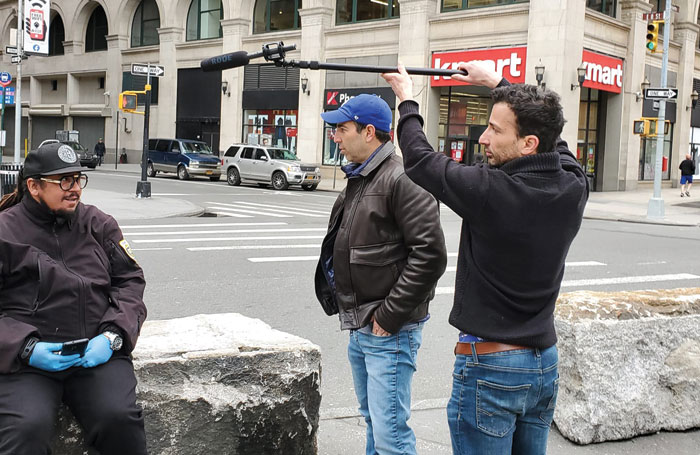
So how did Horowitz become a filmmaker? Horowitz told the Journal that he first became involved with media writing a weekly column in a local paper when he was in high school. After graduating college, Horowitz became involved in running political campaigns. He ran his first campaign at the age of 20; the campaign was for an upstart candidate for Maryland’s state controller office. The candidate lost, but he gave Horowitz “the sagest advice” that Horowitz has ever heard: “If you want to be in politics, I suggest that you leave politics, make money and come back when you have some cash. Because if you’re in politics from the beginning, you’re going to be living hand-to-mouth your entire life.” The candidate suggested that Horowitz become an investment banker, and so Horowitz moved to New York to became one, despite not even knowing what it meant to be an investment banker. “It was a continuation of this kind of thing — which has really been a hallmark of my career — of doing jobs and entering into industries that I absolutely have no experience, no qualifications and I have no business entering,” Horowitz said. 

Horowitz began reading The Wall Street Journal to learn more about investment banking, and started “cold-calling” various banks listed in the paper and eventually got his first investment banking job after “bulls—ting my way through various interviews.” Horowitz stayed in that line of work for more than a decade.

One Saturday night, Horowitz’s life changed forever after watching Michael Moore’s 2002 film “Bowling for Columbine.” 

But one Saturday night, after watching Michael Moore’s 2002 film “Bowling for Columbine,” Horowitz’s life changed forever. It wasn’t the first time he had seen it, but this time around Horowitz found himself “drifting off” and thinking about how the United Nations is “a massive, massive failure,” yet it is widely viewed as a “venerable institution working to make everyone’s life better.

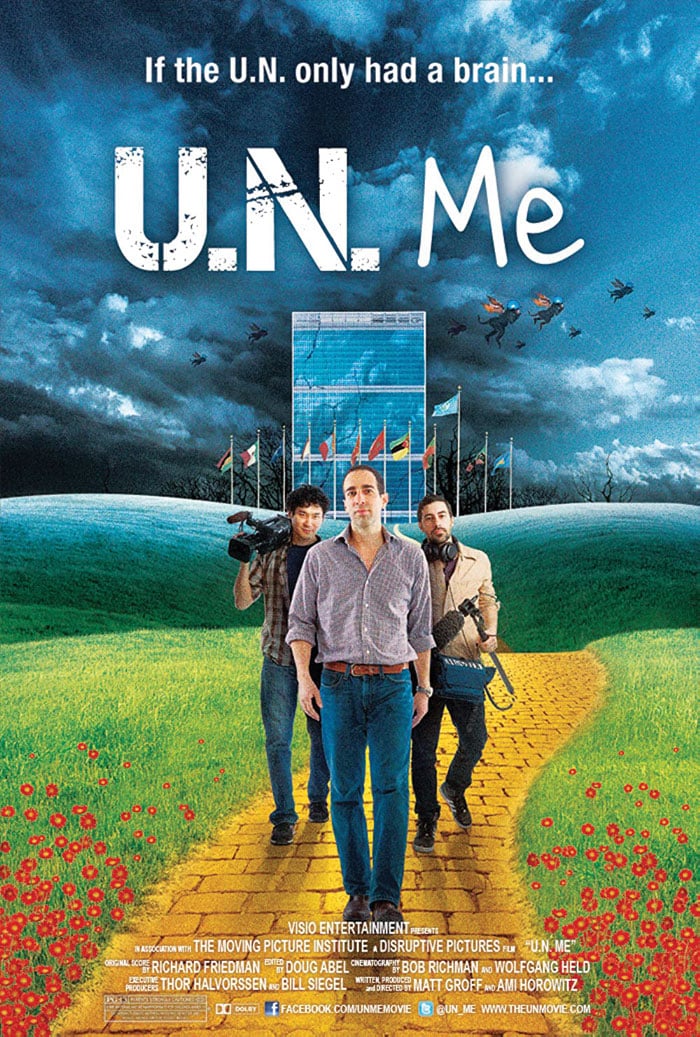
“Most people don’t realize that most of the deaths in the world — violent deaths — happened after its creation, not before, and before included World War I and World War II,” Horowitz said of the U.N. Horowitz knew he had to get his perspective out there but wasn’t sure that anyone would care about what he has to say. At the time, he would occasionally write for National Review and The Weekly Standard, but didn’t think an article for either publication would gain a lot of traction. Horowitz also thought about writing a book, but came to the conclusion that it would be far too much work to write something that no one would read. Ultimately, the answer was right in front of him on his TV: a movie about the U.N. following Moore’s “darkly comic documentary style.” Horowitz proceeded to quit his investment banking job and made his first movie, “U.N. Me.” The 2012 film was a success, and Horowitz has continued to work as a filmmaker ever since.

“U.N. Me” took six years and millions of dollars to make — far too much time and money to spend on a single topic. This prompted Horowitz to switch to shorter videos fit for social media.

However, the experience has dissuaded Horowitz from making future full-length documentaries, as “U.N. Me” took six years and millions of dollars to make — far too much time and money to spend on a single topic. This prompted Horowitz to switch to shorter videos fit for social media. “I can have my own platform. I’m not beholden to finding a studio,” Horowitz said. Plus, shorter videos are much cheaper and provide Horowitz with more freedom to focus on myriad topics at a time. So he started experimenting with differing styles: man-on-the street, hidden cameras and even traditional documentaries. He continues to use “a mix” of all three today.
Horowitz’s first short video took place in 2014, at the “hotbed of leftism,”  UC Berkeley, where two undercover cameramen filmed him while he waved an ISIS flag chanting, “Let’s kill for ISIS” and other statements in favor of the terror organization. “I figured I was going to get beat up,” Horowitz said, and yet the only responses he got were people supporting him, with one individual that Horowitz thought looked like a professor telling him, “Way to go, man.” At first, Horowitz thought that people were dismissing him as just another crazy person at Berkeley. But then he flew the Israeli flag and started expressing his support for Israel as “a beacon of democracy” that supports “minority rights.”

“The vitriol, the invective that was thrown upon me within seconds of unfurling the Israeli flag was shocking,” Horowitz said, as “people were cursing me out” and calling him a “baby killer” and a “murderer.” Some antisemitic slurs were also lobbed at him. “It was kind of like the first time where I exposed how insane the left is and, frankly, how antisemitic the left is,” Horowitz said. The video garnered 10 million views worldwide and people started to recognize him. When Horowitz visited Israel, for example, he hailed a taxi cab driver who recognized him as the man behind that Berkeley video.

Horowitz considers the Berkeley video one of the most important videos of his career. Another is his 2016 video where he is, again, on UC Berkeley’s campus and asking people what they think of voter identification laws; they all referred to such laws as racist. Horowitz pointed out that when he pressed them on why, we then “hear them spew the most racist things you can imagine: ‘Black people don’t have ID,’ ‘Black people don’t know what the DMV is,’ ‘Black people can’t get Internet.’ Just crazy racist tropes,” the filmmaker said. “And then it cuts to … me in Harlem asking Black people what they think and they go, ‘This is insane. I can’t believe people think that about us. The ignorance is overwhelming.’” The video has garnered more than 50 million views and still gathers 2-3 million views a year. Horowitz views this video as one that helped him get mainstream attention.

But perhaps Horowitz’s most impactful video was his 2016 video, “Stockholm Syndrome,” on the issue of Syrian refugees in Sweden, a country that took on the largest number of Syrian refugees per capita in Europe. Horowitz noticed a spike in rape and murder in Sweden since taking in so many refugees, and traveled to the country to explore the issue. He interviewed people on the street as well as police officers and experts. Horowitz then went to investigate what are known as “no-go zones,” which Horowitz described as being Islamic-only “enclaves.” Anyone who isn’t Islamic is told to leave, and people are attacked if they don’t. These enclaves exist only in Sweden, France and Germany, per Horowitz.

Horowitz went to a no-go zone just outside of Stockholm and, sure enough, he was immediately told to leave. 

Horowitz went to a no-go zone just outside of Stockholm and, sure enough, he was immediately told to leave. His camera crew complied, but Horowitz did not, as he was ready to ask why he had to leave. But before he could, five people then “beat the crap out of me.” “It was one of the few times I thought, ‘This is where it’s going to end. I’m going to die here,’” Horowitz said, explaining that it was a crowded area, and yet nobody interfered to break up the fight. In fact, people were pointing and laughing. Horowitz knew he had to take matters into his own hands to make it out alive, and he found an opportunity when one person came into choke him. “His neck was exposed, and I hit him as hard as I could in his neck,” Horowitz said. “I’m pretty sure that guy will never eat solid food again.” Horowitz came away from the beating with some bruising and a concussion, but no broken bones. “I got very, very lucky.”

The video drew international attention when it was released a few months later and, during a speech, Trump mentioned Horowitz’s interview with Fox News’ Tucker Carlson. Horowitz then found himself “on the front page in every newspaper on Planet Earth” the next day. “Every news outlet was discussing this video,” Horowitz said, so much so that even Jimmy Kimmel joked about it during the Oscars. Horowitz was particularly fascinated by how the media covered it, as they formed a “strawman argument” in an attempt to discredit his video. 

One such argument from The New York Times was that overall crime in Sweden was down at the time, but Horowitz never made such a claim. His claim was that rape and murder crimes had risen. They also claimed that they reached out to Horowitz for comment, but Horowitz says he never received a query from the publication. Similarly, The New York Daily News said they reached out to Horowitz, which they did at 2 a.m. EST. Their article came out four hours later. “That was when I first learned how the most ‘credible’ media institutions were not above lying to promote a political agenda,” Horowitz said.

The media also focused on the two Swedish policemen interviewed by Horowitz, both of whom had faced enough enormous controversy over their appearance in the video. The policemen claimed that Horowitz was “disingenuous” over what he was interviewing them about — which Horowitz denies — and that Horowitz never asked them about Islamic immigration. But Horowitz pointed out that the video clearly shows him asking about the issue and that both policemen directly responded to it. He posited that the policemen backed away from their statements on camera after facing enormous pressure. The video was front-and-center globally for about a week, but in Sweden the controversy over the video lasted “months” and resulted in the country changing its immigration policy. 

Remember Trump’s 2019 executive order aimed at combating antisemitism on college campuses? The impetus for the executive order came from Horowitz’s 2019 video at Duke University. He was filming a conference about Israel and the Gaza Strip that was jointly held by both Duke and the University of North Carolina (UNC). “We started hearing some of the most antisemitic things you can imagine by professors, students: ‘Jews control the world,’ ‘Jews are the ones who are creating wars and are funding wars.’ The stuff you hear from 1937 Germany,” Horowitz said. “That was shocking in and of itself.” 

But even more shocking was an Israeli-Arab rapper who performed during the conference and who called himself an antisemite — to applause — and urged the crowd to “ramp up the antisemitism,” causing crowd members to shout “Yeah!” and clap. After the video came out, the Department of Education asked Horowitz for his raw footage from the conference; the department later sued Duke and UNC over the federal grant they had received for the conference. They settled out of court, but Horowitz’s understanding is that the then-Education Secretary acknowledged that her department would have lost in court because at that time Title VI of the Civil Rights Act did not cover antisemitism. 

“People for years were setting the groundwork for this,” Horowitz said, as there were efforts to lobby both the Obama and Trump administrations to add antisemitism to Title VI of the Civil Rights Act, to no avail. But the video ultimately was the “trigger” for Trump to make the change, Horowitz said. “And that’s a legacy with my videos that I’m really most proud of, that now as a student, you — or anybody with standing — could sue a university for antisemitism. That’s so important to happen now because of how antisemitism has grown in our university systems over the years.”

And yet, this was not the first time one of Horowitz’s videos influenced a Trump executive order. Horowitz released a video in 2018 on how the United States had been subsidizing every Chinese package coming into the country to the tune of billions of taxpayer dollars under a trade agreement between the two countries. After his video came out, Horowitz was summoned to a White House meeting where he learned that Trump was going to sign an executive order canceling the agreement with China, and ultimately Trump did, in fact, sign that executive order. 

Horowitz made his latest video, which was done in a partnership with PragerU, about how the LGBTQ+ community is treated in the West Bank because “there’s this weird support that the LGTBQ community has for the Palestinians, and it’s pretty widespread. On a surface level it’s mind-boggling to pro-Israel people for the obvious reason: Israel is so good to the gay community.” 

Horowitz believes that the pro-Israel community has taken the wrong approach by highlighting Israel’s tolerance toward the LGBTQ+ community because the anti-Israel crowd has used allegations of “pinkwashing” to suggest Israel’s policies toward the LGBTQ+ community are used to deflect from Israel’s treatment of the Palestinians. Horowitz took a different approach with his video by showing just how intolerant the West Bank is under the Palestinian Authority toward the LGBTQ+ community. 

The video features interviews with imams and people on the street in Ramallah suggesting that members of the LGBTQ+ community should be jailed or murdered or “anything in between,” Horowitz said. It took him a couple of years to make, requiring him to take several trips to the West Bank, as LGBTQ+ Palestinians in the West Bank were hesitant to go on the record and put their lives and the lives of their families at risk, despite assurances from Horowitz that their identities would be protected. 

There were plenty of instances in which those who agreed to be filmed later got cold feet. But he did eventually find someone who agreed and followed through on being filmed and interviewed. “It was a numbers game,” Horowitz said. The Palestinian man, who went under the alias of “Mahmoud,” described how his uncle threatened to throw him off a bridge for being gay and that a friend of his was raped by a Palestinian cop.

When Horowitz showed his video to the anti-Israel members of the LGBTQ+ community, the emotion on their faces was palpable as they acknowledged a shift in their thinking on the Israeli-Palestinian conflict.

When Horowitz showed his video to the anti-Israel members of the LGBTQ+ /community, the emotion on their faces was palpable as they acknowledged a shift in their thinking on the Israeli-Palestinian conflict. Horowitz told the Journal he was challenged by those saying that Horowitz’s video does not exonerate, or even discuss, Israel’s treatment of Palestinians. 

“That’s a good point,” Horowitz said, “but let me ask you this … you have two sides who are in fundamental disagreement on the facts. One side says, ‘You targeted a hospital’ and one side says, ‘We didn’t.’ There’s one side or the other side, you have to take a side. You have to believe one or the other. You weren’t there, you don’t really know, you’re just listening to what each side is saying. Well, which side are you going to choose: the people throwing you parades or the people throwing you off roofs?” And when asked this question in the video, people chose the former.

The mainstream media has largely ignored Horowitz’s latest video, but it has received attention in the LGBTQ+ media. It currently has more than 10 million views.

Horowitz is proud that about a third of his audience is on the center or center-left side of the political spectrum and that every country in the world — outside of Iran because of the country’s Internet restrictions, although Iranians in the country still see them through VPNs — have seen his videos. His videos have garnered 600 million views across all platforms. “And that’s just me and my small team.” Horowitz said.

COVER STORY: Master Provoker Ami Horowitz Read More »