Should rabbis wade into the political fray with their congregants?
That was the burning question at an April 10 forum at the American Jewish University (AJU) titled, “Politics on the Pulpit: Is There A Line and Where Do You Draw It?”
The event was put on by Community Advocates, Inc.(CAI) and Jews United for Democracy and Justice (JUDJ). This event, co-presented by AJU was the 8th in the Community Conversations Series jointly founded by CAI and JUDJ.
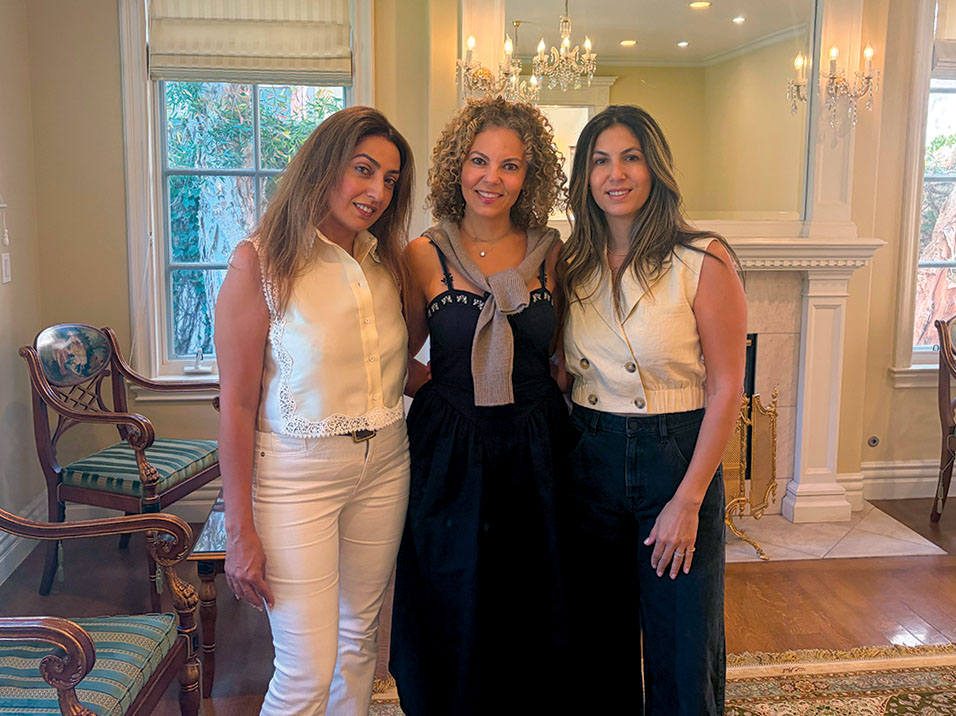
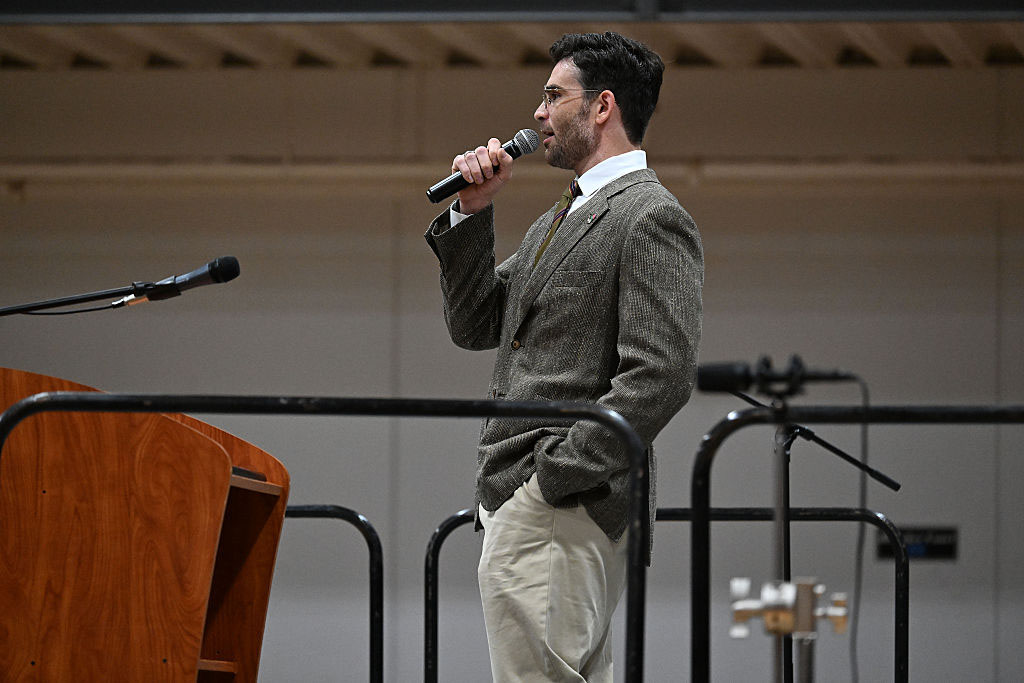
Close to 400 people attended the event to hear IKAR’s Rabbi Sharon Brous, Young Israel of Century City’s Rabbi Elazar Muskin and Temple Israel of Hollywood’s Rabbi John Rosove.
Despite the fact that they spanned the political spectrum, with Muskin and Rosove taking the center-right and -left, respectively, and Brous representing the progressive viewpoint, the conversation — moderated by AJU’s Rabbi Elliot Dorff — remained civil. The rabbis also found much to agree on. They agreed on so much, at one point Muskin joked, “I thought we were going to argue.”
Which is not to say there weren’t points of dissension. Muskin was adamant that politics has no place on the pulpit, insisting that the bimah was “sacrosanct.” If you want to know his political opinion, he said, come to his study. The law, he said, teaches that scholars should “increase the peace, not preach positions that would divide.”
Brous noted, “progressive rabbis talk a lot to progressive rabbis and Orthodox rabbis talk to Orthodox rabbis and rarely do the two meet.” She said she was glad to have a chance to change that. Her job, she said, is “not to unify [my community] but to teach them to love each other and sometimes, when we love each other, we disagree, fiercely, about important matters.”
At IKAR, she continued, “We teach Torah. And we talk about core Jewish values of human dignity … particularly when the world’s on fire. We treat each other with love, with patience, with kindness and compassion — even more so than before. As the world gets crueler and uglier, it’s up to us to be even kinder and even more decent and more truthful.”
Rosove said it is important to make a distinction between politics and partisanship. “[At Temple Israel] we don’t invite candidates to speak on the pulpit unless they’re in debate. The synagogue is not the place for that.”
Quoting Rabbi Jill Jacobs (executive director of T’ruah, a rabbinical group focused on human rights), Rosove added, “The Torah is political because it lays out a vision for a just, civil society. … It is political because a liberation struggle stands at its core. It is political because it demands that those with more wealth take responsibility for those with less. It is political because it forbids those with more power from taking advantage of those with less.”
“Immigration is not only an American issue, but a Jewish issue and it belongs everywhere. It belongs on the pulpit; it belongs in the beit midrash. It is a moral issue.”
— Rabbi John Rosove
On three issues, the rabbis were all more or less in agreement: education, Israel and immigration.
They all said they believe that government should stay out of funding private schools. “I want my children to be educated Judaically,” Muskin said, “but that’s my pocketbook.” Brous, whose three children attend day schools, said she and her husband wrestled with the choice, in part because day school gives children a stilted view of the world and also because private religious education proliferated in America in response to Brown v. Board of Education, the 1954 Supreme Court decision that ended racial segregation in schools.
“Religious Jews have always sought out ways to provide religious, private education for their children,” Brous said, “but most private schools are built on a foundation of white supremacy. That’s really a part of this conversation we can’t ignore.”
On the issue of Israel, Rosove said, “Israel has to remain democratic, pluralistic and Jewish.” The only way that can happen, he added, is through a two-state solution, but he was worried that the possibility might be slipping away.
Brous said she is “aching for the State of Israel, which was built on such profound aspirations,” but worried that Israel is “essentially at war with itself.” She said she does not believe that Israel’s safety and security should keep it from “affirming and honoring the dignity of every single person” who lives there and in the Palestinian territories.
Muskin said he will “never apologize for talking about Israel,” noting that it is the only country in the region with free, democratic elections and “we should all take pride in that.”
On immigration, Rosove quoted Emma Lazarus’ “The New Colossus” poem mounted on the inside of the pedestal of the Statue of Liberty: “Give me your tired, your poor/Your huddled masses yearning to breathe free.” “This is a value we need to teach our children,” Rosove said. “It’s not only an American issue, but a Jewish issue and it belongs everywhere. It belongs on the pulpit; it belongs in the beit midrash. It is a moral issue.”
Muskin said he feels sympathy for new immigrants, but the issue is illegality. “You can’t violate the law,” he said.
Brous responded, saying it’s hard to legally emigrate from Central America and cited the story of Sodom and Gomorrah. “They had a land where the streets were paved with gold and they did not want to share it,” Brous said. “Any visitor that would come into their land would be subjected to incredible acts of cruelty to deter them from crossing the border.” She wondered how anyone could read that story and “not think it applies to what’s happening right now.”
An audience member yelled out, “Are you running for office? Stick to the subject.” Brous responded, “We can’t shy away from discussing the issues.” The two other rabbis came to her defense, with Muskin saying, “Peace doesn’t mean uniformity. The debate has to be there.”