
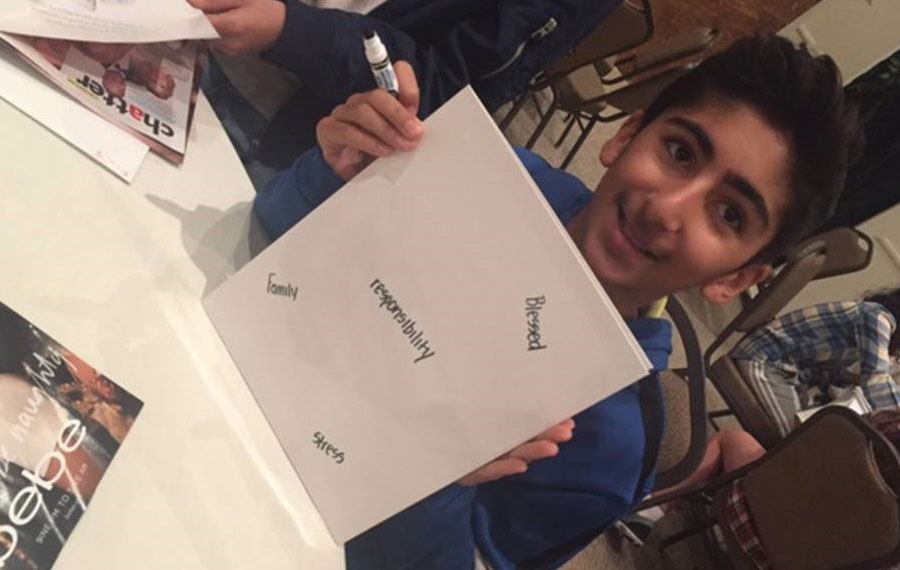
 From the L.A. pilot program
 A teenager’s role in the modern b’nai mitzvah ceremony appears clearly defined: study, perform then party. Planning for the event falls to the parents. But should this be the case?
“Our job is not just the logistics and writing the checks,” Lori Tessel, a mother of two and member of Temple Beth Am in West Los Angeles, told the Journal. “Our job is to experience the learning process together and deepen our connection to Judaism during this journey alongside our kids. That elevates the process for the entire family.”
Moving Traditions, a Jewish youth education organization, agrees. The Jenkintown, Pa.-based organization has partnered with more than 400 institutions across North America, trained nearly 1,500 educators and impacted the lives of more than 20,000 teens. Its innovative b’nai mitzvah program carves out space for parents, too.
Two years ago, Moving Traditions received a cutting-edge grant from the Jewish Community Foundation of Los Angeles totaling $200,000 over three years to bring its pilot b’nai mitzvah program to Los Angeles. It supplements staples like the recitation of the haftarah, speechmaking and the party, with weekly sessions to facilitate honest discussions about faith and adolescence among synagogue educators, clergy, teens and parents.
At Temple Beth Am, Moving Traditions partner Rabbi Yechiel Hoffman helps lead b’nai mitzvah education for 20 to 30 families a year. Hoffman has seen the benefits of the training he and his colleagues received from Moving Traditions at the outset of Moving Traditions’ pilot launch in 2016.
As pre-teens get older, communication gets more difficult. When the Jewish community can create a framework for dialogue and a space where they can hear each other and have empathy for one another, that’s crucial.” — Rabbi Daniel Brenner
“[Moving Traditions] helped us make the process much more powerful than just planning for an event,” Hoffman said. “Parents need support systems for each other and not just for party planning tips or navigating synagogue policy.”
Now, Moving Traditions is readying a national launch to expand to Chicago, Denver, Boston, New York and Philadelphia.
One of the highlights of the program is a six-part podcast Moving Traditions has produced for families. In weekly sessions, teens broach a range of topics with clergy, educators and parents about varied pressures surrounding the b’nai mitzvah process. Parents often are present to engage in free-flowing, open conversation with their teens; parent-only cohorts also discuss their concerns separate from their kids.
“The parent cohort is a huge benefit,” said Tessel, whose 12-year-old son, Elliot, will celebrate his bar mitzvah in May 2019. “I’m having conversations with parents that I normally don’t get to talk to. We have spiritual conversations about what it means to raise a teen and what the ceremony means to us.”
That type of praise from parents has become increasingly familiar to Moving Tradition’s Chief of Education Rabbi Daniel Brenner, who held a Los Angeles training for clergy and educators in August to help implement the program at their synagogues.
“That feedback makes you stop and realize this is something that’s connecting in a way parents really need,” he said. “As pre-teens get older, communication gets more difficult. When the Jewish community can create a framework for dialogue and a space where they can hear each other and have empathy for one another, that’s crucial.”
“The most rewarding part has been learning how to hold conversations with my son about values, what they mean to me and to us,” Tessel said. “We talk about that moment on the bimah. We talk about how getting there isn’t a means to an end. It’s the beginning of your life’s journey of Jewish practice — a journey we’re on together.”










 More news and opinions than at a Shabbat dinner, right in your inbox.