
“Do or do not. There is no try.”
These words from the beloved “Star Wars” character Yoda surely will sound familiar to fans of the epic space opera franchise that began in 1977 and continues to wow audiences to this day.
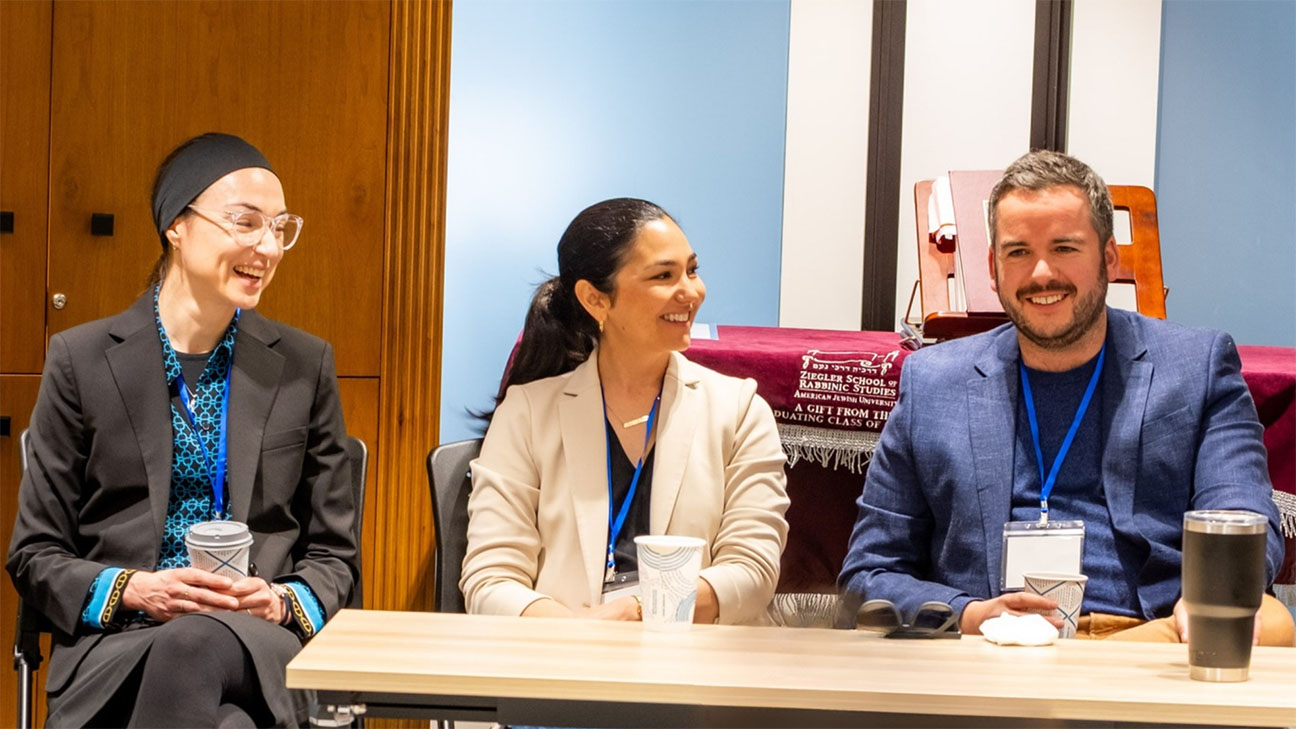
For Journal contributor Esther Kustanowitz, communications consultant Marium Mohiuddin and rapper and poet Jason Chu, they were a call to convince those who had turned out at a recent panel at Temple Beth Am that there are spiritual messages in the “Star Wars” films.
“There is enough in there that is basic and core to all belief systems,” Kustanowitz told attendees at the event titled “May the Faiths Be With You,” where Islam, Christianity and Judaism were represented by Mohiuddin, Chu and Kustanowitz, respectively.
Seated behind tables displaying enough “Star Wars” merchandise to make a fanboy or girl envious, Kustanowitz said Yoda “seems in a lot of ways to be the spiritual core.”
She noted how Yoda’s name is similar to the Hebrew word, ‘yodeah-,’ which means knowledge.
Mohiuddin said the Yoda quote, “Fear is the path to the dark side. Fear leads to anger. Anger leads to hate. Hate leads to suffering,” explains, in part, why Islamophobia exists in society today. She said it was meaningful to her to see the character of Gial Ackbar, a fleet commander in the rebel alliance in “Return of the Jedi.” “Akbar” is the Arabic word for “greatest.”
Chu, who is Chinese American, said the “Star Wars” franchise incorporates more Buddhism, Hinduism and other Eastern religions than anything else, but there is a morality prevalent in Christianity that has a through line in the “Star Wars” films.
Yoda’s name is similar to the Hebrew word, ‘yodeah,’ which means knowledge.
In addition to having religious overtones, the films are crowd pleasers that create community, a central part to any religion, Mohiuddin said. She noted how the films have brought together her and her sisters, who ordinarily do not have a lot in common.
“This is the only thing that really unites us,” she said.
Purists all, the panelists said they preferred the original trilogy, “A New Hope,” “The Empire Strikes Back” and “Return of the Jedi” to the prequels, “The Phantom Menace,” “Attack of the Clones” and “Revenge of the Sith.” They also expressed love for the latest entries in the franchise, including “The Force Awakens” and “The Last Jedi.”
Temple Beth Am Rabbi Ari Lucas, who moderated the event, said he did not have much love for the films. After clarifying he was not related to “Star Wars” creator George Lucas, Lucas said he had a hard time understanding why the films resonate so strongly with audiences.
Kustanowitz said the spirituality of the films is there for those who want to see it.
“We’re all kind of looking at things through the lens of our faith,” she said.
By the end of the evening, Lucas might have been swayed. He bid the crowd goodnight using Yoda’s unusual, beloved, syntax.
“Wonderful,” Lucas said, “you all have been.”