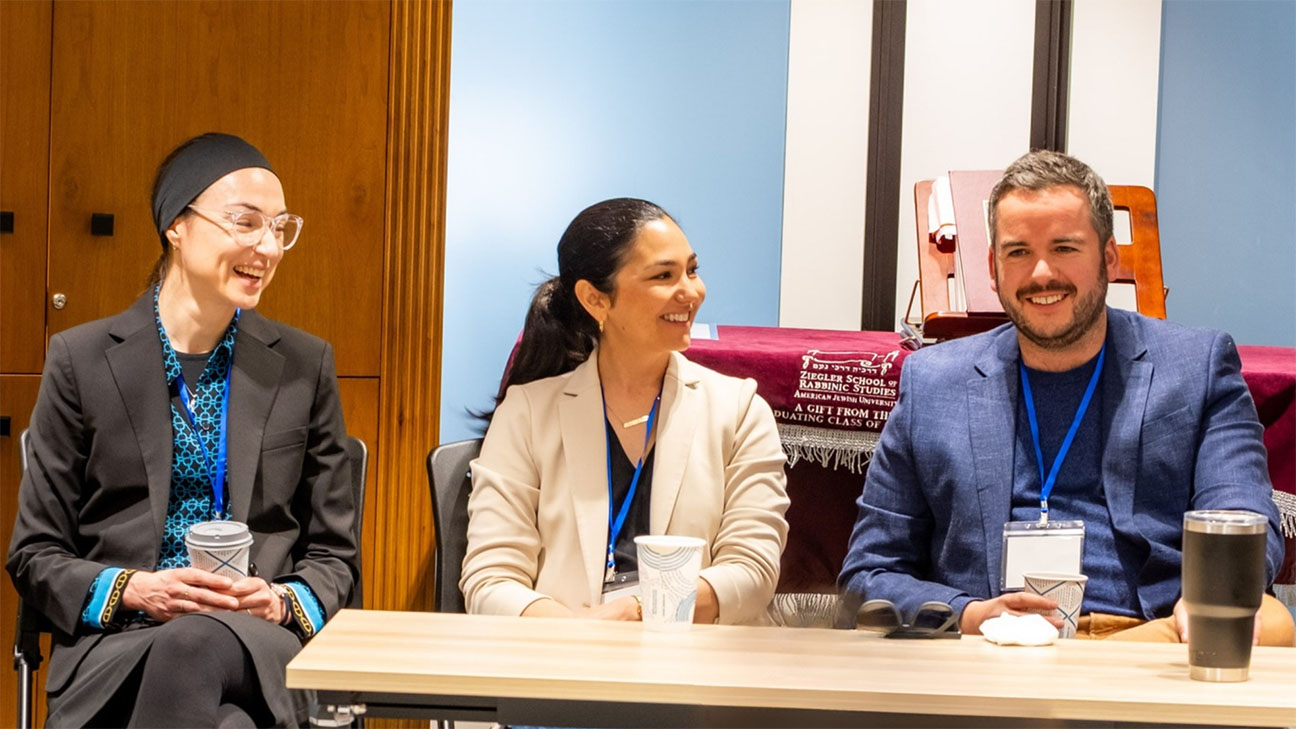
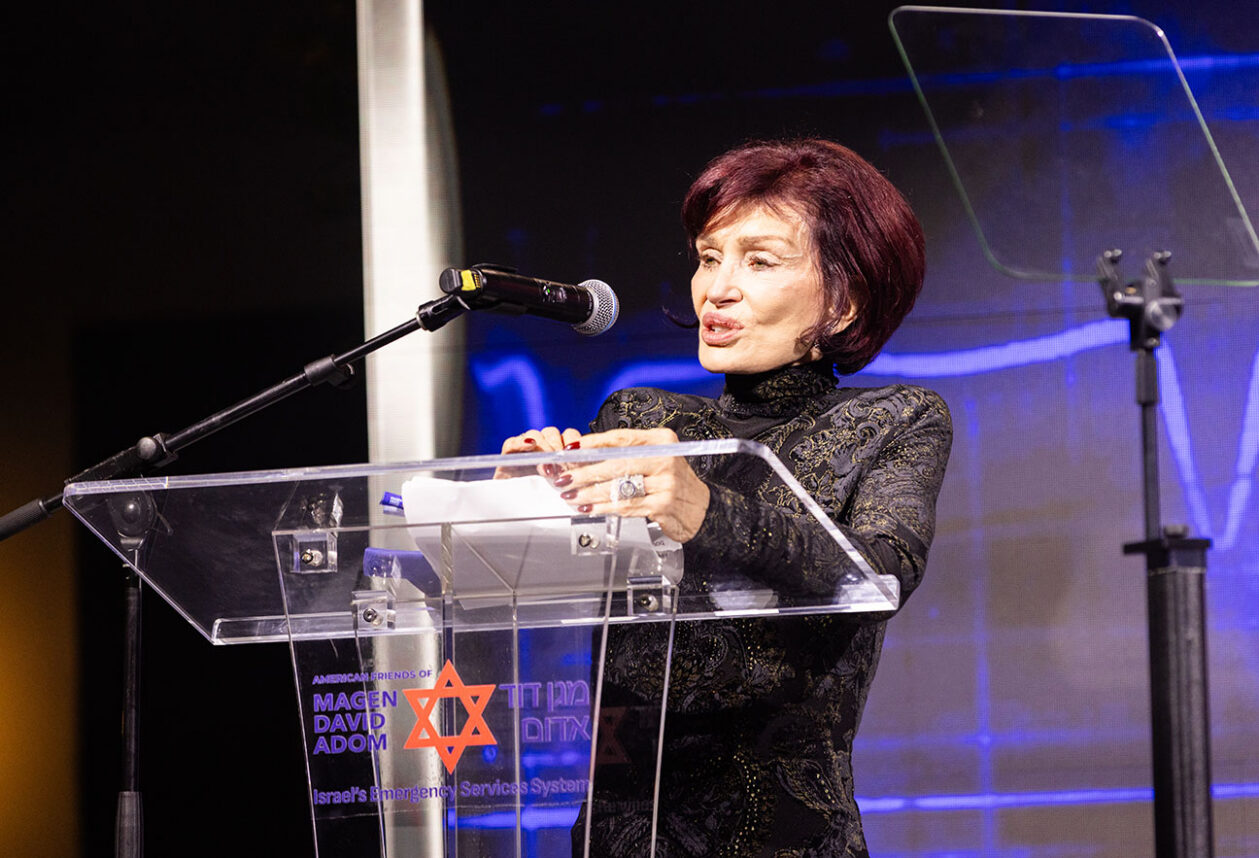
In his keynote address at the Orthodox Union West Coast Torah Convention last weekend, Judge Daniel Butler told the crowd of 300 the harrowing tale of the difficult but celebrated life of his son, Mikey.
“Mikey’s sign-off line was ‘Day by glorious day,’ said Butler, describing how Mikey spent his truncated life in and out of the hospital, coughing up phlegm in his lungs from cystic fibrosis.
Before he died earlier this year, at age 24, from lung transplant complications, Mikey graduated from Yeshiva University, where he was vice president of the student body. He was also a counselor at Camp HASC (a New York camp for children with special needs), a drummer in a band — and his story inspired hundreds of Orthodox communities across the United States to pray and do good deeds in his merit.
“We have been very, very lucky,” Butler said in his speech, referring to his family. The Butlers, who live in Pittsburgh, have four other children, two of whom have Fragile X Autism.
Butler’s speech — and his message of hope, faith in God and recognizing the silver lining in even the darkest clouds — brought much of the audience to tears and set the stage for the weekend convention, whose theme was “God’s Role in Our World: Our Role in God’s World.”
The convention is the Orthodox Union’s (OU) largest West Coast event. It draws together rabbis and lay people from all the Orthodox synagogues in the greater Los Angeles area. By bringing speakers from other Orthodox communities in the United States and abroad, the convention connects the Los Angeles community to the greater Orthodox world.
This year, 15 scholars from Israel and throughout the United States came to Los Angeles to speak, and 16 local synagogues hosted scholar-in-residence programs last Shabbat in conjunction with the convention. Organizers estimated that more than 1,000 people participated in convention-related activities, which included a dinner, book signing and 19 workshops on issues pertaining to the future of the Orthodox community.
The convention workshops tackled issues pertinent to the challenges of observing Jewish law in a modern world, such as questions about genetic engineering and cosmetic surgery. They also addressed some of the growing concerns in the Orthodox community, such as the role that the Diaspora community needs to play in Israel’s affairs, the importance of secular education and the increasing number of divorces in the community.
The convention theme was chosen as a response to a number of tragedies in the Orthodox community, including the deaths of a high school student and two young adults, said Rabbi Alan Kalinsky, the OU’s West Coast director.
“There has been tragedy in our community, and it caused a lot of people to question their own faith,” Kalinsky said. “We wanted the theme to reflect something more positive, so here is Judge Butler, whose son’s illness has been a challenging dimension for him and his wife to deal with on a daily basis, but he has always been a model of emunah [faith].”
While Butler talked about his personal journey to faith and acceptance, the other workshops took a more global view of current issues.
In the session “Is the Diaspora Doing What It Should for Israel?” Rabbi Steven Pruzansky of Congregation B’nai Jeshurun in Teaneck, N.J., argued that Jews living outside of Israel are obligated to have a strong interest in Israel’s affairs for reasons that include an obligation to help other Jews and because combating terror in Israel will also help combat terror in the United States.
On the domestic front, in the matchmaking-related workshop “If Shidduchim Are Made in Heaven Why Are There So Many Divorces?” Rabbi Daniel Alter, from the East Denver Orthodox Synagogue, argued that our current understanding of beshert — a soul mate handpicked by God — often causes people to have unrealistic expectations of marriage. Many believe that perfection is divinely ordained, and anything falling short does not need to be tolerated.
“We need better support services and training in the community [to assist married couples with their relationships],” Alter said.
“We always try to have a mixture at our conventions of Torah Lishmah — Torah at a high level [of study] — and also the practical kinds of questions of what people think about on a regular basis,” said Stephen J. Savitsky, OU president.
“I go [to the convention] for two reasons — educational and informational,” said Rabbi Harry Greenspan of Young Israel of Beverly Hills, one of the convention’s participating synagogues. “Educationally, there are some quite significant rabbinical authorities who come to these things, and they generally have very informative panels by very prominent professionals in their field. In my eyes, this is an opportunity for the Los Angeles community to connect with the big people in New York community.”