
The wild fluctuations in the stock market last week, and Americans’ fear response, has me thinking about our spiritual relationship to change.
I know it’s a little nontraditional, but the truth is, I often like to think of the stock market as a sort of mystical teacher that reflects spiritual realities about human desires and the inevitability of cycles.
This theory of mine began during the Great Recession. I happened to have an artist residency on Wall Street at the time, and this proximity made the financial world seem less irrelevant to my scrappy artist life; I began to read the newspaper’s financial section for the first time.
And then the Bernie Madoff scandal broke. At first I was interested in Madoff as a sort of modern version of the Emperor Who Has No Clothes. But as more information came out, I began to be more interested in the nuances of what happened.
In physics as in stocks, in spirituality as in lasting love, we’re reminded that what goes up must come down.
His returns, in fact, were nothing special. What was extraordinary were their consistency, a straight line going up without the jagged peaks and falls of the real market. There was a general sentiment that his investors must have been extraordinarily greedy, but this is largely unfair to his victims. I began to think that instead of reflecting his investors’ greed, Madoff’s decades-long fraud reflected something essential about the American dream, and, in fact, our human longings.
People were not necessarily looking to get rich. They just wanted a safe place to put the money they’d worked so hard to save — a safe harbor, buffeted from the ups and downs of the market, of life.
But this is impossible.
In physics as in stocks, in spirituality as in lasting love, we’re reminded that what goes up must come down. And then, most likely, it will go up again. In the words of my favorite Buddhist sutra, “It is the everlasting and unchanging rule of this world … that everything changes, nothing remains constant.”
Change is not just a basic fact of life — it’s the basic fact of life. And yet with the exception of a few dopamine-loving thrill seekers — some of whom can certainly be found on the floor of the stock exchange — we humans are generally known to resist it.
Change is destabilizing; it makes us feel unsafe. Even a relatively small shift can strike fear in our hearts. The markets plunge and investors rush to sell, even though all the experts advise against it. Not a single person is in any physical danger, yet the news is on the same sort of high alert reserved for earthquakes and train crashes.
My favorite Jewish teaching on change comes from the mystics, who envision an endless back and forth (or perhaps up and down) as the basic state of existence. They believe that the state of being alive — of being itself — is ratzo v’shov, running and returning. The world is in a constant state of transition, shuttling back and forth between divine energy and worldly matter.
Our spiritual lives echo this motion, as well. We run to God, our souls drawn to the fire of transcendence, of holiness, to change our lives and find our best selves. And then we return to our own limited self, because we must, to remain alive and in one piece. And then the process begins again.
This is how we love one another, too. Studies show that although babies thrive on being close to their mothers, they need to break eye contact after a certain period of time; if the mother does not turn away, the baby will. This continues into adulthood; although times of alienation can feel like awful emergencies, they are in fact part of the fabric of love. We run to each other, to love each other; we make ourselves anew, forgetting everything that came before. And then we return to ourselves, back home to our own particular body, our story, our limits, our needs.
Ratzo v’shov, run and return, bull and bear, sacred and mundane, coming together and coming apart and coming together again. This is what it means to be alive.
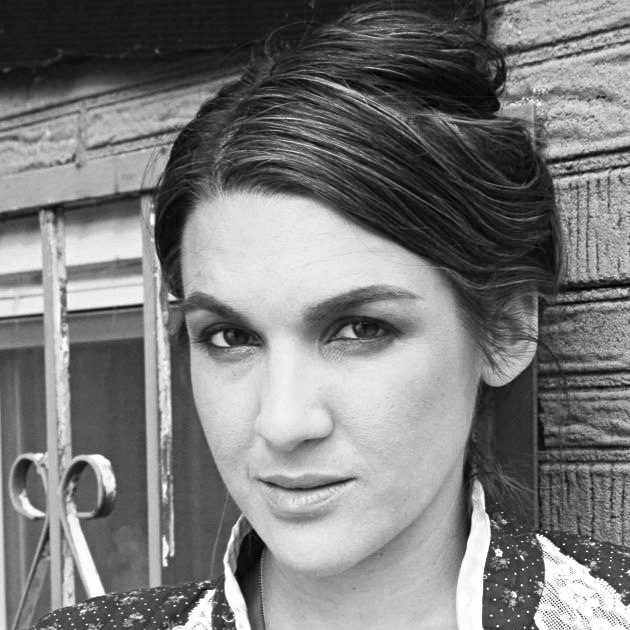
Alicia Jo Rabins is a writer, musician and Torah teacher who lives in Portland, Ore.