This year, the first day of Passover and the anniversary of the 1943 Warsaw Ghetto Uprising fell only one day apart. Passover teaches the story of the Jewish people’s historic, successful dash for freedom. The young Jewish men and women of the Warsaw Ghetto, who led the first mass uprising against Nazi rule in occupied Europe, were ultimately defeated, and most of the survivors were transported to the death camps. No Red Sea parted for Warsaw’s Jews during the terrible years of Nazi occupation, nor did the heavens darken; however, they were not totally abandoned to their fate. The 23,788 names on the Yad Vashem roster of Righteous Among the Nations remind us of that. One of those names, Irena Sendler, will be the focus of a new American documentary film that will premiere nationwide on PBS on May 1, Holocaust Remembrance Day.
The single largest group of the Righteous comes from Poland, once host to Europe’s largest Jewish population and the country the Germans singled out as the focal point of the Holocaust. And although thousands of individual Poles — whether motivated by hatred, greed or fear — did take part in the genocide, throughout the war thousands of others risked their lives and the lives of their families to help save Jews, often complete strangers. Irena Sendler, a woman of enormous courage and prodigious organizing skills, was one of these rescuers. Titled “Irena Sendler: In the Name of Their Mothers,” the PBS documentary includes the last in-depth interview Sendler gave before her death in 2008, at age 98. Jewish men and women who as children were saved by Sendler’s rescue operation are also profiled.
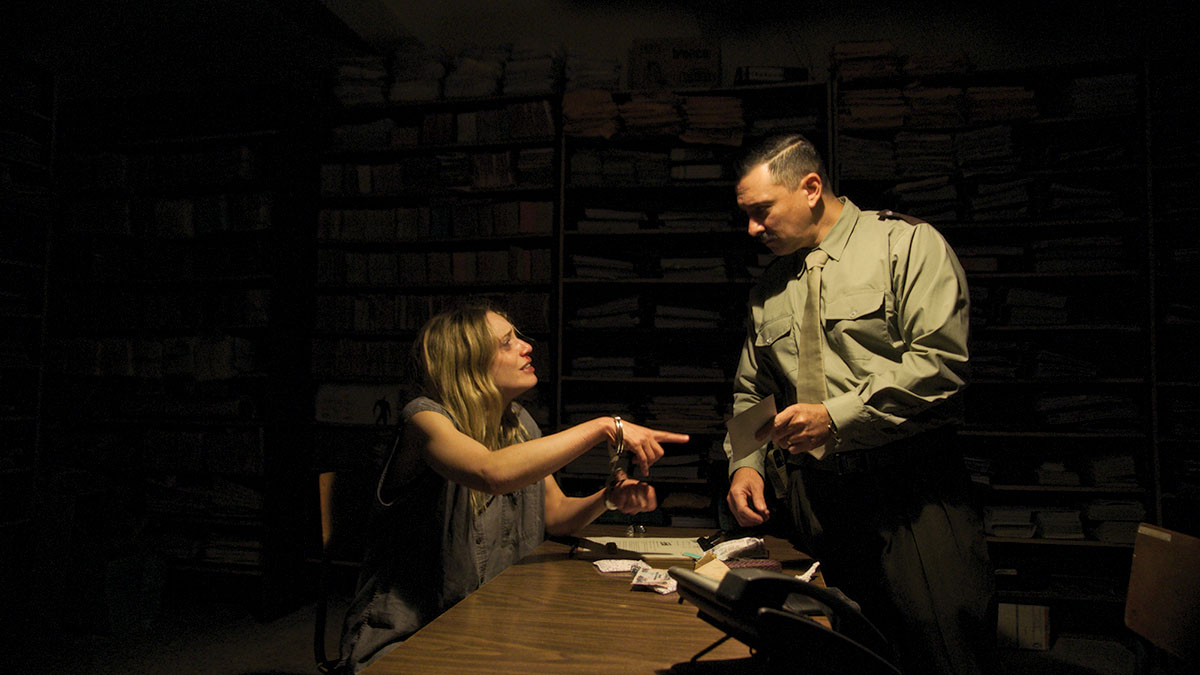
Sendler was a dedicated social worker before the war, and her wartime activities on behalf of the Jews were a logical extension of her early commitment to do what she felt was just. Placed in charge of the children’s department of Zegota, the Polish underground’s committee to save the Jews, she organized the escape of some 2,500 Jewish children from the ghetto in 1942 and 1943. Many were placed in Catholic institutions and survived the war. Denounced to the Gestapo, arrested and tortured, Sendler was able to escape, only to be hunted down as a “dangerous communist” by extreme-right elements in the Polish underground. Safety eluded her even after the war, when she was arrested by the communist authorities for having been active in the general Polish underground rather than the communist one. Again imprisoned and tortured — she suffered a miscarriage — Sendler was eventually freed from prison but became a “nonperson” in the eyes of the communist state. Yad Vashem remembered her, awarding her a listing in 1965, but she was otherwise surrounded by official silence, even after the communist government fell.
People forgot about Sendler, and she refused to remind them of what she had accomplished. Then, in 1999, a group of American high school students decided — based on a small clipping from a 1994 issue of U.S. News & World Report — to research her story as a class project. They went on to stage a play about her life, and Sendler was “rediscovered.” The Polish state has since honored her with its highest decorations and nominated her for the Nobel Peace Prize. Polish schools now carry her name, and two annual Irena Sendler awards are presented: one by the Polish Association of the Children of the Holocaust, whose members survived the war in the early years of their lives, the other by my own Taube Foundation for Jewish Life & Culture in San Francisco. Since 2008, the Taube Foundation has honored Poles who have heeded Sendler’s larger message of justice and humanity through their rescue and preservation of Jewish life and heritage in Poland. This year’s recipient will be announced on May 13, the anniversary of Sendler’s death.
We live in a time when one is not required to risk one’s life for one’s brothers and sisters — yet, as the Pirke Avot reminds us, “Neither are we free not to do our part.” Irena Sendler, her contemporaries and the recipients of the Sendler Award did not — do not — work alone; thousands of Poles work to preserve and cherish their country’s Jewish legacy and to further understanding between Jewish and Gentile Poles. Midrash teaches that the children of Abraham, fleeing Egypt, were joined by other slaves, who wanted their freedom no less desperately. Even then, we were not alone. And throughout the ages, thanks to those whose love of freedom and their fellow human beings was more powerful than the shackles of prejudice and fear, we never really were. Nor shall we ever be.
Tad Taube is honorary consul for the Republic of Poland in the San Francisco Bay Area, chairman of Taube Philanthropies and president of the Koret Foundation. In 2007, he was recognized as a Forward 50 American Jewish Leader.