fbpx

LETTERS: November 6-12, 2009

I am troubled by Rabbi Isaac Jeret’s “Key to Peace” d’var Torah in the Oct. 30 Journal. Much as we are continually informed and taught by our Torah, its blessings and its commandments, I am reluctant to base international political decisions on biblical promises — be they Hebrew or Christian — or anyone else’s scriptural promises for that matter. That the land of Israel has been (continuously) inhabited by Jews does not negate the fact that it has also been (continuously) inhabited by others. “An honest accounting of history” often rests in the eyes of the beholder, and in the end what stands out in my mind is that the current relationship between Israel and her neighbors is not working well for them, nor for the rest of the world.
[additional-authors]
November 5, 2009

Who Were the Historical Inhabitants of Israel?

I am troubled by Rabbi Isaac Jeret’s “” title=”Who Owns The ‘N’ Word?”>Who Owns The ‘N’ Word?” Oct. 30) correctly points out the dangers and trivialization of Holocaust analogies to current controversies such as health care, as well as criticism of President Obama, yet he omits a significant part of the history of the use of the N word: The use of the Nazi epithet to de-legitimize and stigmatize individuals as well as nations has been utilized for over thirty yeas by two disparate groups — the anti-religious American and European left use the term Nazi as a substitute for anti-Christ, something purely evil. Conservative figures such as George W. Bush and Dick Cheney have been tarred with the term Nazi or fascist regularly by the left.

The second group to use the Nazi epithet is the Arabs and Muslims at large. This ruse attempts to hit a raw nerve with Jews but it is a ruse — the Palestinian Grand Mufti was allied with Hitler and offered to aid Germany in the Final Solution.

Therefore what is ideological among the left is used cynically by the Muslim world as a propaganda tool. The use of the Nazi and Holocaust analogies has no place in American discourse and those who recklessly trivialize it, on both sides of the aisle, should be censured.

Richard Friedman
Los Angeles


A Favorite Deli Overlooked

As a former New Yorker who’s had her fill of deli, from brises to funerals, it’s unconscionable that David Sax never even mentioned Label’s Table on Pico Boulevard in his article, “” title=”Fans Embrace Maccabi Electra at Staples”>Fans Embrace Maccabi Electra at Staples” (Oct. 30), the Clippers’ Blake Edwards’ name was spelled incorrectly.


THE JEWISH JOURNAL welcomes letters from all readers. Letters should be no more than 200 words and must include a valid name, address and phone number. Letters sent via e-mail must not contain attachments. Pseudonyms and initials will not be used, but names will be withheld on request. We reserve the right to edit all letters. Mail: The Jewish Journal, Letters, 3580 Wilshire Blvd., Suite 1510, Los Angeles, CA 90010; e-mail: {encode=”letters@jewishjournal.com” title=”letters@jewishjournal.com”}; or fax: (213) 368-1684.


Did you enjoy this article?
You'll love our roundtable.

Editor's Picks

Latest Articles

The Joy Within

Sukkot asks us to receive the harvest that has actually come in—not the one we imagined or wished for.

A Bisl Sukkot ~ Don’t Be Afraid, Go Outside

The sukkah reminds us to go out into the world, especially when the comforts of insularity beckon us closer—to explore paths we have yet to take and seek journeys ready for wandering.

A Harira Hug in the Sukkah

I love making soup for this holiday because even if the days are still warm, the cooler evenings make you start craving something warm and comforting.

The Beat Goes On

While so much of the world seems obsessed with and consumed by its hatred of Israel and Jews, Israelis continue to build, create, work, celebrate, argue, raise families, and plan for the future.

Viral AI Video Targets Jewish Comedian

“The biggest concern is that people now have a pathway to shut down Jewish voices through complete falsities that people will believe. … For the future of Jewish entertainment, it’s very scary.”

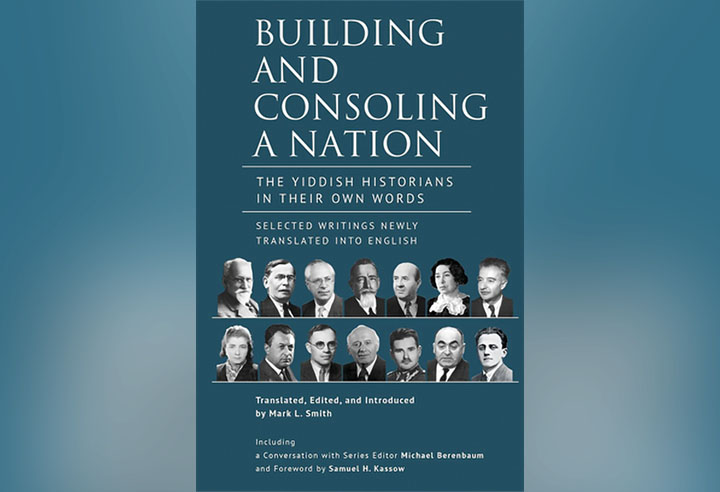
Yiddish Historians: Writing in Their Own Language for Their Own People

Mark Smith has compiled an important anthology of Jewish history using 49 works by Yiddish historians to recreate or at least open the door to a world of Jewish thought that was once almost mainstream, but which no longer exists, except in the minds of too few specialists.

The Everlasting Melody

Most Jews who have sung “Eitz Chaim” over the past half-century probably never knew Portnoy. They did not know when he wrote the melody or how young he was when he composed it. They simply knew the song.

More news and opinions than at a Shabbat dinner, right in your inbox.