“Oh, by the way, Leonard,” I say into the phone, as breezily as I can feign, “what did you think about Diane’s belt?”
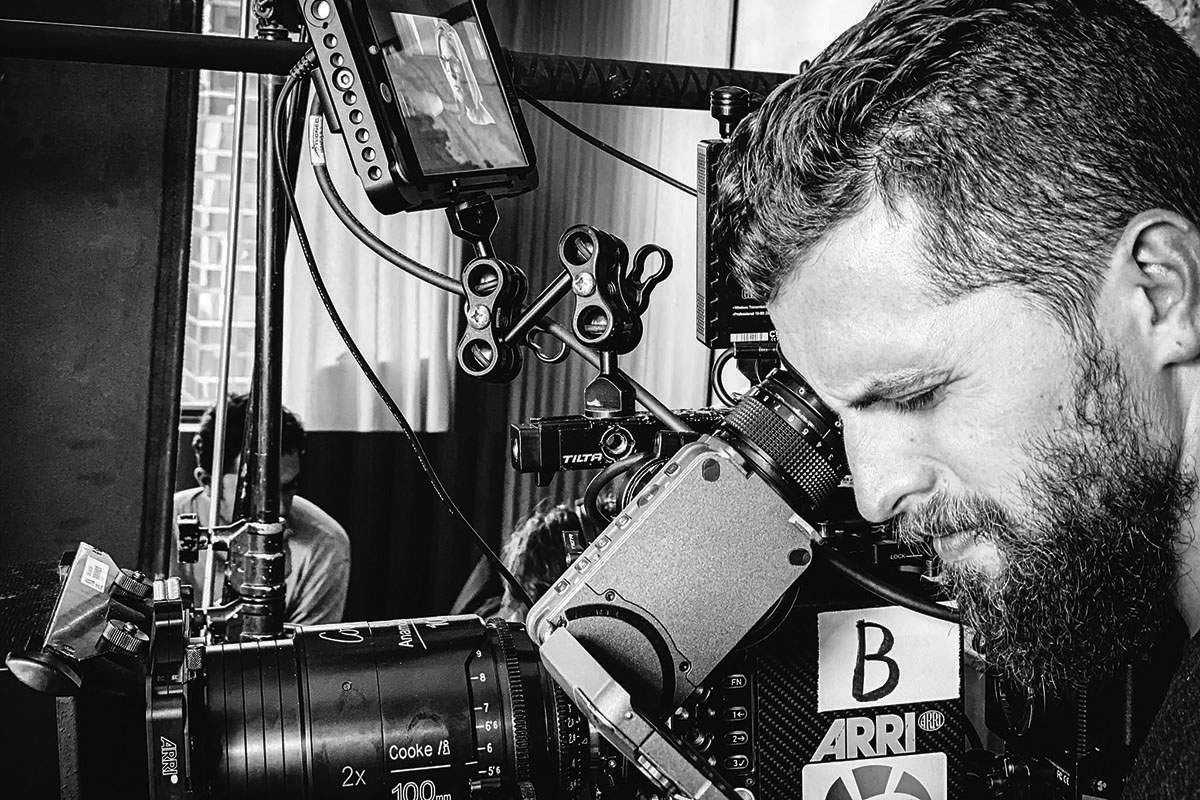
Leonard Nimoy is on location in Cambridge, Mass., preparing to direct “The Good Mother” for Disney, starring Diane Keaton. I’m the executive on the movie, on the lot, where a studio chieftain and I have just watched the makeup, hair and wardrobe test Leonard had shot. (I won’t identify the mogul, but it’s unlikely you’d know his name.)
“What about Diane’s belt?” Leonard replies, not remotely breezy, more like, Do not go there.
“Didn’t you think it was kind of wide? So wide it pulls your eyes from her face?” I am trying my best to translate the order the studio honcho had barked in the screening room – “Tell him to lose that goddam belt” – into a casual afterthought.
Silence. Then: “Where did you say you went to college?”
He knows where, it’s located in the city where he’s shooting, but I answer.
“And after that? Your next degree – where did you get that?”
I tell him. This call is not going to a good place.
“And then a Ph.D, if I’m not mistaken. Where’s that from?”
I have now named three of the world’s most storied universities.
After another excruciating silence: “Tell me. Is this what you thought you’d be doing with that education?”
“Excuse me?”
“Yes,” he muses, “I can see how having to tell me what some imbecile suit doesn’t have the balls to tell me himself – that must be fairly difficult for someone as bright as yourself.” The words are brutal, but the tone is Vulcan.
“I’ll give him your regards,” I lie.
It’s a miracle that a near 30-year friendship could rise from ashes like that, but it did. I loved hanging out with him. At birthdays and seders, in the classroom and on the radio, talking politics or parenting, Leonard and his wife Susan generously opened their hearts and home to me. And after all those years, having been reamed by Leonard Nimoy remains pretty much the coolest thing about me.
“The Good Mother” was the second picture that Leonard directed for Disney, after the hit comedy “Three Men and a Baby.” But “The Good Mother” was no comedy. Disney chairman Michael Eisner was slipped the unpublished manuscript of what the New York Times would call “Sue Miller’s phenomenally assured, morally troubling and meticulously precise first novel,” and it struck him as a descendant of classics like “The Scarlet Letter” and “Ethan Frome.” When it was assigned as an overnight read for the production executives, including me, we already knew he wanted to option it, so it surprised me how much I hated the story.
It tells of a divorced mother who finds herself in a custody battle for her young daughter, whom she loses after her new boyfriend, an artist, helps her discover her long-repressed sexuality, an erotic awakening depicted (in my reading, anyway) as the gateway to parental negligence. At the meeting to discuss how much to pay for the book, who should write the screenplay and what actresses could get an Academy nomination for playing the lead, I – a lone voice at the table – said I thought the book’s message was reactionary: The cost of feminism is sin, and its price is tragedy. For half an hour, Eisner and I sparred over what “The Good Mother” was about and who would want to see it. Afterward, I wondered how much I actually believed what I’d been saying, and whether my big mouth had just lost me my job. Instead, I learned the next day that Eisner had decided I should be the executive on the film’s development, under the tutelage of the aforementioned suit.
A beautiful screenplay by Michael Bortman landed Leonard as director, who cast Keaton as the mother, and as the boyfriend he persuaded the studio to let him hire an Irish actor whom no one at Disney except the casting director had heard of: Liam Neeson. Keaton kept her belt; I kept further imbecilities from the director, and my objections to the allegory to myself; and within a year, Leonard delivered a cut of the movie.
Like most studios, Disney’s custom was to test directors’ cuts of movies in front of audiences, so it would be possible to make changes, and develop a marketing campaign, based on their reactions. A test screening of “The Good Mother” was held at a multiplex deep in the San Fernando Valley. Afterward, we sat glumly at the back of the theater, empty except for the focus group, as we heard them say the movie was a downer. In their words and in the comment cards, there was no whiff of my problem with the story. No one thought it was anti-feminist, anti-sexual, anti-anything; they just wanted to be entertained.
Leonard was unconvinced. He pointed out that this audience, recruited in a suburban mall, was a complete mismatch for the picture, whose sweet spot was cosmopolitan adults who would find its moral complexity rich and uplifting. The studio agreed to test it again, in San Francisco. The response was better, but not much.
Back in Burbank, we met with Leonard. This meeting was run by someone higher up the food chain than me – not the suit, but someone Leonard seemed to trust when he made his last picture. The first words out of the executive’s mouth: “This movie has cancer.”
Now “Three Men and a Baby” had been a huge cash cow for Disney. Any other director, especially someone the studio wanted to stay in business with, would have been enraged by this provocation. But Leonard instantly found his Spock.
“I see,” he said, without a flicker of emotion. “And what course do you propose?” I was surprised he didn’t add “Captain” to the end of his question.
“We would never take final cut from you, Leonard. But if you want to shoot a different ending, we’ll step up to the cost, and you can compare the scores and decide which way to go. It’ll be your decision.”
Silence – the kind I knew well. Then: “What do you mean, ‘a different ending’?”
“A happy ending. Joint custody. She keeps the kid.”
I haven’t seen any mention of “The Good Mother” in Leonard’s obituaries, perhaps because so few people saw or heard of it. Would it have done better box office if Leonard had caved? Even “King Lear” was a bomb until Nahum Tate’s happy-ending version of 1681, in which Lear lives and Cordelia marries Edgar. “The Good Mother” wasn’t Shakespeare, but Leonard stuck to his guns. He also razzed me about that belt for the next 30 years.
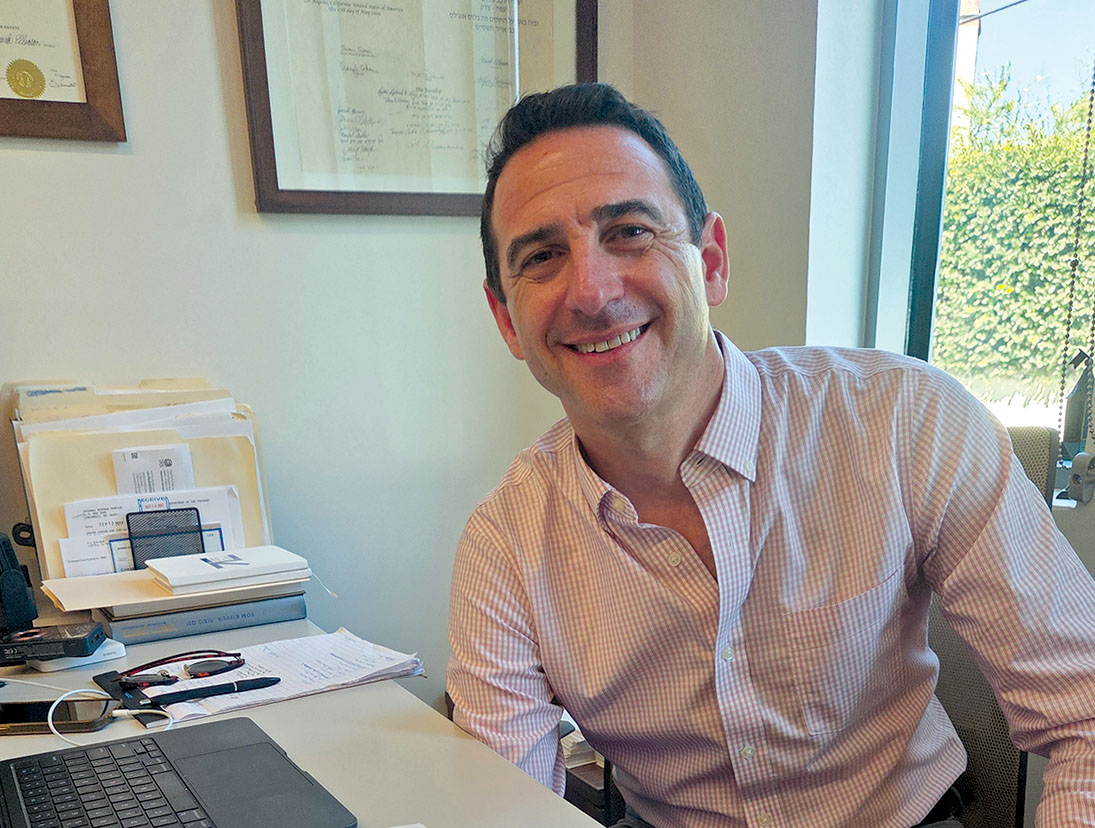
Marty Kaplan holds the Norman Lear chair at the USC Annenberg School for Communication and Journalism. Reach him at martyk@jewishjournal.com.