I began writing this blog late last week with the intent to focus on some good news amid the dreary news that has dominated the headlines over the past few weeks—-from ISIS and its murderous ways, to the Ukraine, to Ebola in Africa, to countless other horrible stories that have spread depression across America, the times seemed right for a change in tone and attitude.
I thought it would be appropriate to welcome fall on a better note—-to focus on some news that has a bit longer time horizon than the evening’s headlines and which have greater implications for America’s long term future course.
I was about to post the blog when I read Sunday’s Tom Friedman “> column in The New York Times—he must have drunk the same Kool Aid. Clearly, the headlines and the 24 hour news channels are out to depress us, but the facts belie their message, as America’s two top pundits conclude.
In a terrific piece, Friedman contrasts the divisiveness evidenced in the referendum on independence that took place in Scotland, the push for Catalan and Basque independence in Spain, the wars in the Middle East with our situation in the United States.
Friedman writes,
God bless America. We have many sources of strength, but today our greatest asset is our pluralism — our “E pluribus unum” — that out of many we’ve made one nation, with all the benefits that come from mixing cultures and all the strengths that come from being able to act together.
As I’ve asked before: Who else has twice elected a black man as president, whose middle name is Hussein, whose grandfather was a Muslim, who first defeated a woman and later defeated a Mormon? I’m pretty sure that I will not live long enough to see an ethnic Pakistani become prime minister of Britain or a Moroccan immigrant president of France. Yes, the unrest in Ferguson, Mo., reminds us that we’re still a work in progress in the pluralism department. But work on it we do, and I’ll take the hard work of pluralism over the illusions of separatism any day.
Friedman goes on to extoll the virtues of pluralism—defined as “not diversity alone but the energetic engagement with diversity—-mere diversity without real encounter and relationship will yield increasing tensions in our societies.” Pluralism is built on “dialogue” and “give and take, criticism and self-criticism…both speaking and listening.”
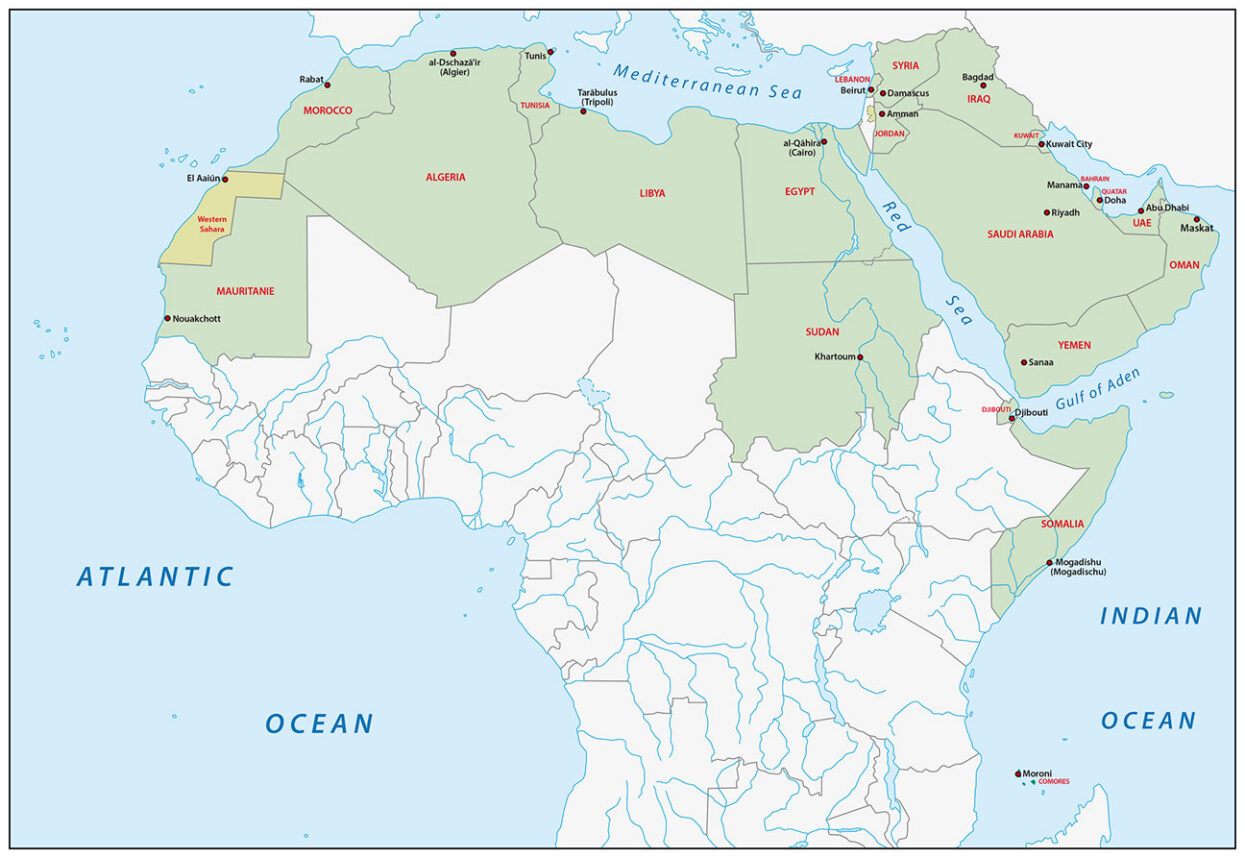
He contrasts societies in which there may be “diversity” (i.e. lots of different groups) but in which pluralism is lacking. While they may have had periods of relative “peace,” they were invariably “controlled from the top by iron-fisted Ottomans, then the British and the French and finally local kings and colonels……a strongman.” He might have mentioned the Balkans (and the absence of Tito) as well countless other areas where strongmen kept the lid on ethnic strife until they were gone.
Those societies failed to develop an ethic of pluralism and are now paying the price with the absence of strongmen and their top-down control—they simply haven’t learned to live together.
In contrast, the United States and its ethic of pluralism—however imperfect—is in stark contrast to much of the world. However difficult the struggle for civil rights has been in this country for much of our history, we are incredibly tolerant, diverse and pluralistic. Our debates and arguments are civil, our elections generally fair, and the notions of due process of laws and civil redress of grievances pervasive.
The payoff is not only the lack of strife but economic as well—-“40% of the Fortune 500 firms were founded by immigrants or their children.” Different “perspectives, ideas and people” mash up and create new and different businesses, ideas, and ethos. A niece of mine has just started a “>Millennials, who make up 95 million of our fellow Americans, according to “>he most tolerant group that Pew has polled.
By virtually every measure, America and much of the world is in better shape than it has ever been—ISIS, Syria, Ebola and the Ukraine notwithstanding. As Brooks notes, “we’re living in an era with the greatest reduction in global poverty ever — across Asia and Africa. We’re seeing a decline in civil wars and warfare generally.”
Friedman and Brooks offer insights that should remind us to turn off the twenty four news channels and ignore the Chicken Littles who seem omnipresent. The world isn’t perfect, there are—and will always be—serious problems; but the arc of history seems to be bending in the right direction.
Fall should be better than summer.