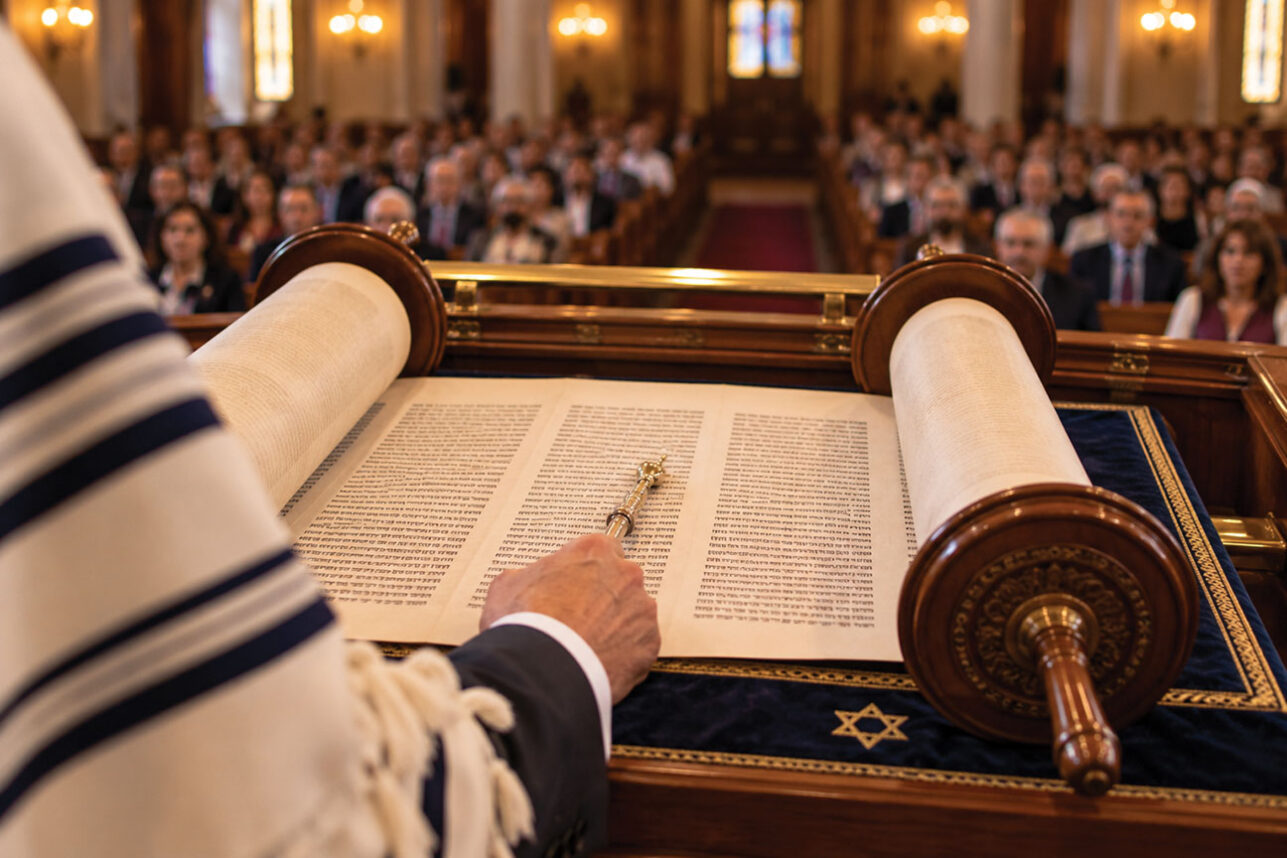
There’s an unusual tradition on the holiday of Simchat Torah, after we complete the annual reading cycle of the Five Books of Moses. Instead of a celebration for a job well done, we open a second Torah scroll and go right to the beginning of the very first Torah portion of Genesis.
We end, but we don’t really end. We begin anew.
We complete, but we also continue.
Jews hate endings.
I had a friend years ago who was known as Mr. Saturday night. He loved Shabbat so much he didn’t want it to end. After reciting the Havdala prayer to mark the end of Shabbat, he would invite people for a melaveh malkah, a little-known Jewish tradition intended to “escort the Queen” of Shabbat into the week.
Instead of jumping right back into the week, he would invite friends, serve a meal, play music and ease back into the week with a touch of joy and holiness.
Jews hate endings.
Our history is marked by traumatic “endings” that could have finished us– the destruction of two Temples, the attempts to annihilate and convert us, the pogroms and inquisitions, the Holocaust— all of these could have triggered an end to our ancient tribe.
Indeed it was not uncommon for that to happen. Ancient civilizations– from the Assyrians to the Romans— eventually disappeared. Yet somehow, the Jews kept going.
Why?
There are many explanations written in hundreds of books, but I’d like to offer one:
Jews have always had something to look forward to.
Our holiest moment—the weekly Shabbat—was never more than a few days away.
One good thing or another was always just around the corner– another holiday, another festive meal, another ritual, another Torah portion.
As much as we hate endings, we love beginnings.
After the Second Temple was destroyed, we refused to vanish and “moved” the temple to our Shabbat tables and became the people of the book.
After the Holocaust threatened to exterminate us, we refused to go away and built new beginnings in Israel and the diaspora.
When we grieve a loss, we find ways to honor the departed so that their memories will go on.
Jews love when things go on and on and on. The Jewish story itself is very much about going on and on and on, about endings turning into beginnings.
We’ve endured for so long because we’ve always had reasons to continue our story, things to look forward to, moments to begin anew.
Perhaps the only ending we like is at sundown on Friday, when the week ends and we enter the serenity and joy of Shabbat, just as we’ve done for millennia.
Shabbat shalom.