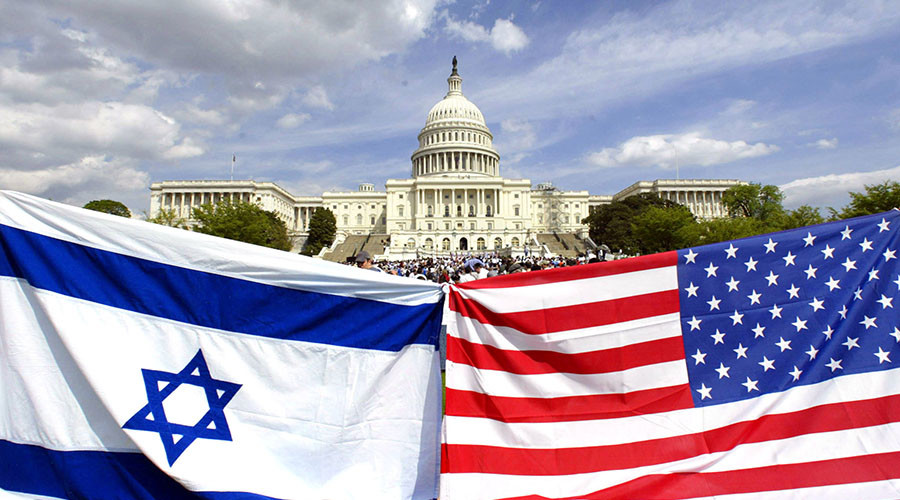
The brouhaha over anti-Semitic tropes connected to Jewish “lobby power” in D.C. has brought to the surface an important issue: Is the U.S.-Israel relationship a one-way street? In return for the incredible support Israel gets from America, does it give anything back?
Among those who think America is getting a raw deal is prominent New York magazine writer Andrew Sullivan, who wrote last week that what the U.S. gets from Israel is “worse than nothing” because “The U.S. suffers internationally from this alliance.”
Behind this American support, he says, is “a very powerful lobby that deploys the money and passion of its members to ensure that a foreign country gets very, very special treatment from the U.S.”
To show he’s not using any anti-Semitic tropes, Sullivan does what looks like a plain accounting of the relationship, which, according to him, boils down to this: America gives, Israel takes.
Unfortunately, by being so dismissive of Israel’s value to America, Sullivan ends up grossly distorting a special relationship.
A more honest accounting would have recognized the depth, strength and unique quality of the U.S.–Israel relationship, as laid out by historian and former Israeli Ambassador to the U.S. Michael Oren in a 2011 Foreign Policy essay.
“What is the definition of an American ally?” Oren asked.
“On an ideological level, an ally is a country that shares America’s values, reflects its founding spirit, and resonates with its people’s beliefs. Tactically, an ally stands with the United States through multiple conflicts and promotes its global vision.
“The brouhaha over anti-Semitic tropes connected to Jewish ‘lobby power’ in D.C. has brought to the surface an important issue: Is the U.S.-Israel relationship a one-way street?”
“From its location at one strategic crossroads, an ally enhances American intelligence and defense capabilities, and provides ports and training for U.S. forces. Its army is formidable and unequivocally loyal to its democratic government. An ally helps secure America’s borders and assists in saving American lives on and off the battlefield. And an ally stimulates the U.S. economy through trade, technological innovation and job creation.
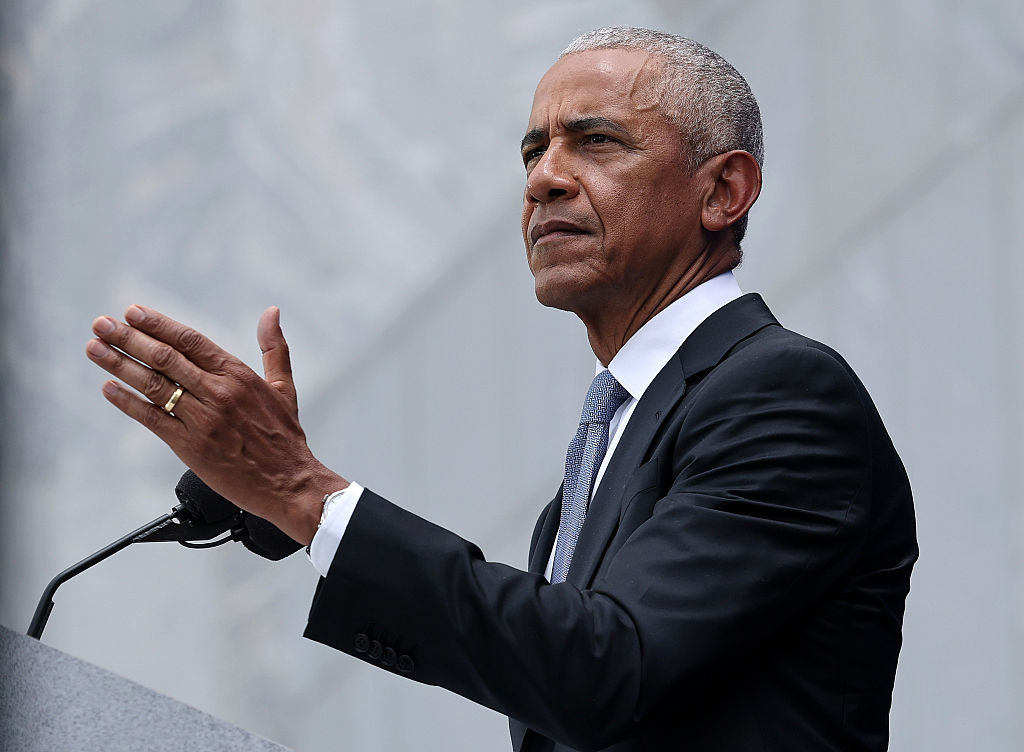
“Few countries fit this description, but Israel is certainly one of them. As U.S. President Barack Obama told a White House gathering, ‘The United States has no better friend in the world than Israel,’ a statement reflecting the positions of Democrats and Republicans alike. The importance of the U.S.–Israel alliance has been upheld by successive American administrations and consistently endorsed by lawmakers and military leaders.”
Sullivan includes none of those benefits to the U.S. in his appraisal, presumably because it would undermine his one-sided take of “a very powerful lobby” ensuring that “a foreign country gets very, very special treatment from the U.S.”
In fact, had he done his homework about the American Israel Public Affairs Committee (AIPAC), he would have learned that its mission is “to strengthen, protect, and promote the U.S.–Israel relationship in ways that enhance the security of the United States and Israel.”
In return for its aid to Israel, Oren writes, “The United States receives not only an armed but an innovative ally, enhancing America’s military edge. That contribution is real and requires no lobbyists to fabricate it. While organizations such as AIPAC press Israel’s case in government and in popular forums, they represent American citizens who view the alliance with Israel as a national American interest.”
“Israel’s fundamental interests, like its values, are America’s,” he writes. “For the price of annual military aid equaling roughly half the cost of one Zumwalt-class destroyer, the United States helps maintain the military might of one of the few nations actively contributing to America’s defense.”
“Maybe you don’t have to be anti-Semitic to believe that the U.S-Israel relationship is a one-way street, but it certainly feeds the beast.”
As Michael Eisenstadt and David Pollock wrote in 2012 for the Washington Institute, “The benefits to the United States of its relationship with Israel belie the argument that the alliance is based solely on the two countries’ shared democratic values, on the popularity of Israel in American politics, or on the elusive pursuit of progress in the peace process. It is a relationship based on tangible interests — and will remain so for the foreseeable future.”
Oren quotes former Secretary of State Alexander M. Haig, who once observed: “Israel is the largest American aircraft carrier in the world that cannot be sunk, does not carry even one American soldier, and is located in a critical region for American national security.”
The benefits of the U.S.–Israel relationship, Oren concludes, “are of incalculable value to the United States, far outweighing any price.”
One can acknowledge the many moments of tension and friction that have dotted the U.S.–Israel relationship and still agree that Sullivan’s take was hollow and blatantly one-sided. It’s as if Sullivan set a personal challenge for himself: Let’s see if I can go over-the-top on the “Israel lobby power” without being accused of anti-Semitic tropes.
Maybe you don’t have to be anti-Semitic to believe that the U.S-Israel relationship is a one-way street, but it certainly feeds the beast.