If a camel is a horse designed by a committee, what do you call a Gaza rebuilding process that will be directed by no fewer than four separate oversight entities?
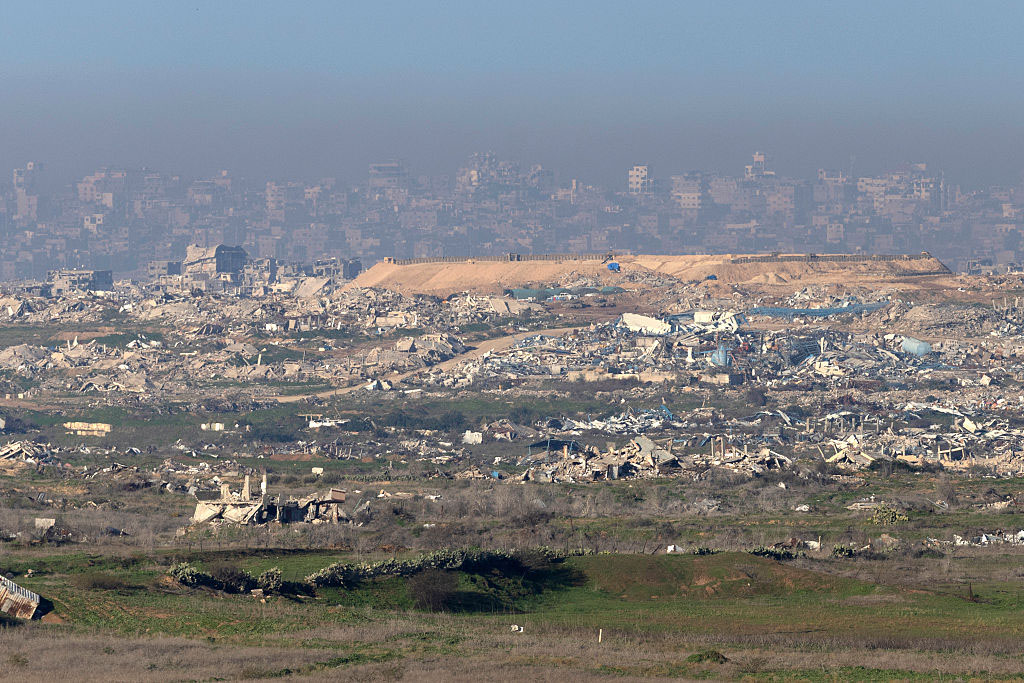
Over the course of a 72-hour frenzy in mid-January, the Trump administration announced four different administrative bodies tasked with various responsibilities for the transition and reconstruction of post-war Gaza. But this flurry of appointments exposes a worrisome lack of accountability, as it is unclear which of these four groups will be assigned to the seemingly endless series of tasks that will be required to rebuild a region that has been destroyed by almost 28 months of warfare.
What is clear is the Trump-dubbed “Board of Peace” will be the most prominent of these commissions. The president refers to the group as “the Greatest and Most Prestigious Board ever assembled at any time, any place,” which is understandable given that he has appointed himself as its chair. He has invited roughly 60 heads of state from around the world to join him, giving rise to suspicions that he envisions this body emerging as an alternative to the United Nations that he would control. However, countries would only be part of the Board for three years, at which point they would be asked to contribute $1 billion to retain their seat.
The Board of Peace will be assisted by a “Founding Executive Board,” which has been designated to focus on strategic and financial matters, and includes a passel of current Trump advisors, including Secretary of State Marco Rubio, US Special Envoy Steve Witkoff, Deputy National Security Advisor Robert Gabriel and son-in-law Jared Kushner. Rounding out the seven-member committee will be former British Prime Minister Tony Blair, World Bank President Ajay Banga and Apollo Global Management CEO Marc Rowan.
There is also an 11-member “Gaza Executive Board,” which includes Witkoff, Kushner and most of the other Founding Executive Board members, and appears to be more directly responsible for coordinating with the on-the-ground technocrats who will directly oversee the reconstruction efforts. Because this group includes government officials from Hamas allies Turkey and Qatar, it has already been the target of heated complaints from Israel’s leaders. (While an Israeli business leader was named to this group, there were no representatives of Benjamin Netanyahu’s government included.)
The committee tasked with the reconstruction work is the National Committee for the Administration of Gaza (NCAG), which will take on the task of day-to-day governance. It is comprised of 15 Palestinian engineers, community leaders, business owners and educators. These 14 men and 1 woman may have the most thankless jobs on the planet.
Aside from the exceedingly confusing organizational chart, the biggest problem is that none of these four groups is responsible for actually disarming Hamas, the most necessary prerequisite for an Israeli military withdrawal, any significant foreign investment and any meaningful efforts toward rebuilding. This task falls to a fifth committee, the United Nations International Stabilization Force (ISF), a multinational peacekeeping and enforcement body. The most significant flaw of the ISF is the most obvious one. It does not exist.
When the ISF was authorized by the U.N. at the request of the Trump administration last fall, Major General Jasper Jeffers III, a veteran of U.S. Special Operations Command Central, was appointed to lead what was envisioned as a 20,000-person effort. Since then, more than 70 other countries have been invited to participate. None have accepted. A handful of Muslim and Arab countries, led by Indonesia and Morocco, have indicated an interest in joining. But asking their soldiers to forcibly take arms away from Hamas terrorists has presented an insurmountable obstacle to a meaningful role.
Meanwhile, Hamas continues to rebuild its military capability lost during the war, recruiting new commanders and beginning to restore its tunnel network. The Israeli armed forces are drawing up plans for a new ground operation if Hamas continues its work. But no one, from Trump on down, seems to have been tasked with these specific security-based assignments.
When everyone is in charge, then no one is in charge. The war in Gaza continues.
Dan Schnur is the U.S. Politics Editor for the Jewish Journal. He teaches courses in politics, communications, and leadership at UC Berkeley, USC and Pepperdine. He hosts the monthly webinar “The Dan Schnur Political Report” for the Los Angeles World Affairs Council & Town Hall. Follow Dan’s work at www.danschnurpolitics.com.