“Turn on the cold water and give me room!”
That was the last thing I heard before I passed out in my father’s arms, after my small body slammed into a dozen scalding cups of hot tea during a dinner party back in Iran.
I was five. And if being burned over half my body wasn’t bad enough, there was a war going on outside.
“I thought tonight was supposed to be clear! They just announced a curfew!” my mother shrieked when she saw my father throw me over his shoulder and run outside into the street, in search of any open hospitals or medical facilities. It was nighttime, and Iraqi warplanes were getting ready to bomb Tehran again during the height of the Iran-Iraq War (1980-1988).
The poor woman. She didn’t know whether to scream in fearful pain over the prospect of losing her youngest daughter or her husband. Or both.
My body hurt. I looked down to see tender areas of pink and red flesh near my legs and abdomen. There almost seemed to be smoke emanating from my skin. But it felt good to wrap my thin arms around my father’s thick neck and close my eyes. The air was cold, and the wind dried my tears as soon as they began to trickle down my cheeks.
After 15 minutes of being carried by my father as he ran through the streets, I saw it. As if placed there by G-d himself, it was an oasis in the middle of a warzone, seemingly enshrined in a golden halo of divine providence and healing: An open urgent care facility.
“If you’d gotten here five minutes later, I don’t know what we could have done for her,” I overheard the doctor say to my father. I lay on the hospital bed and smelled rubbing alcohol throughout the room. The lightbulb over my head flickered on and off with the arrival of each Iraqi warplane above. Then, the room went black. Per the government’s orders, nearly every home and office in Tehran turned out the lights so as not to be detected by the Iraqis — as if targets couldn’t be hit in the dark. The doctor held a small flashlight and approached me with a bright orange salve.
As it turned out, wrapping my arms around my father’s neck as he darted out of the house became the norm in the years after that accident. One autumn, during the worst night of Iraqi aerial bombardments against our neighborhood, I wrapped my arms so tightly around his neck that I almost choked him.
Earlier that night, as if by instinct, he’d used a staple gun to attach our thickest wool blankets over every large window in the house because the radio had warned us of another imminent attack. In the middle of the night, we all ran out of our bedrooms from the sound of a horrifying sonic bloom, and I tripped and fell beneath a three-foot-tall window. My father swept down and threw me over his shoulder the second before glass shattered where I’d fallen. The sound was deafening; the wool blanket caught most of the deadly shards of glass.
Stories like this set the tone for how my family views my father: A protective, quick-thinking and, above all, resilient Papa Bear, not just for my sister and me but also for most of my cousins (and even some of my friends) as well.
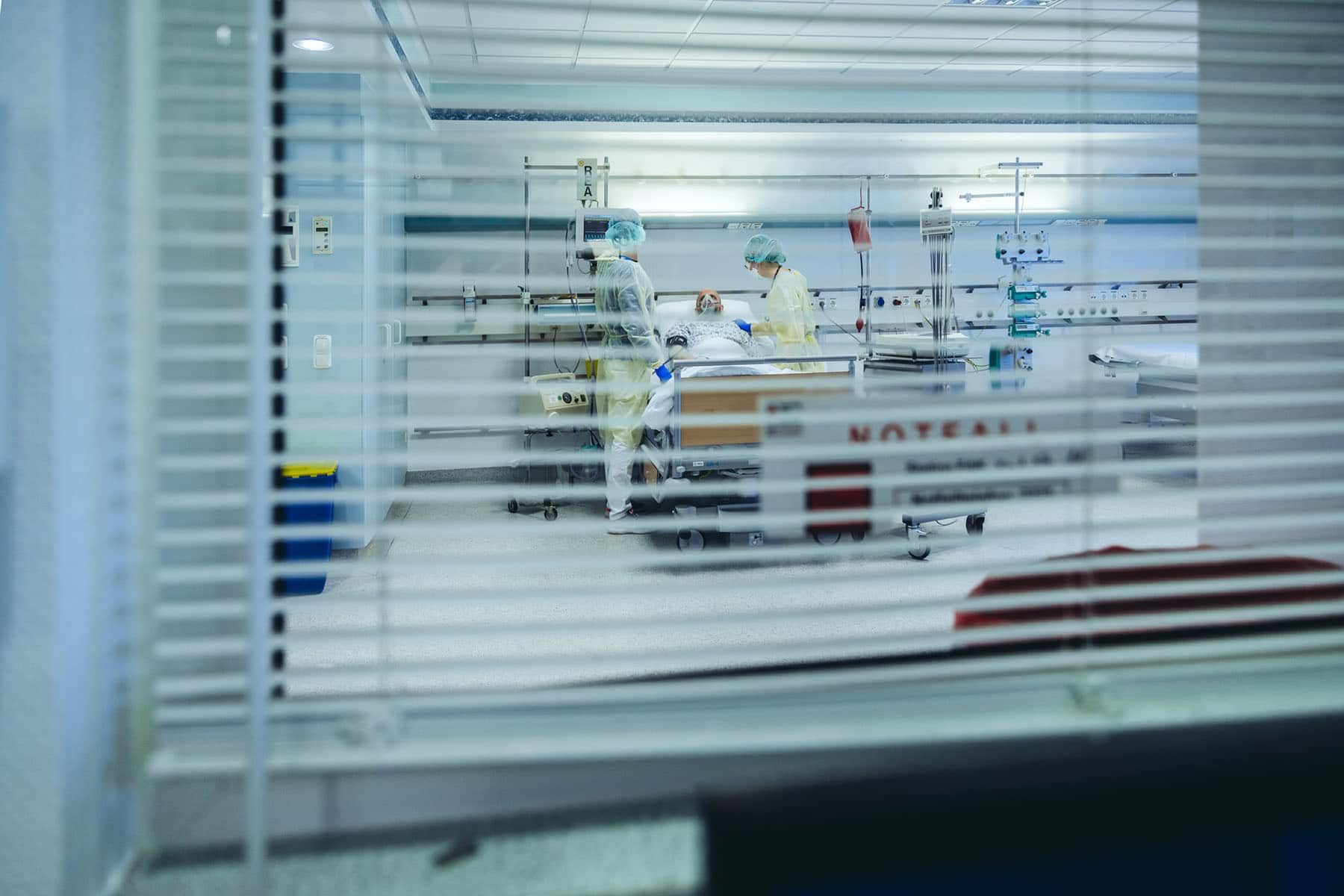
Last week, that same, seemingly unsinkable man was taken to the hospital due to low oxygen levels from COVID-19 and…pneumonia. The rock of our lives fell ill. We haven’t even been allowed to set foot on the same floor as his hospital room. Suffice it to say, we’re all losing our minds. And that includes relatives who aren’t even related to my father by blood. Through his likeability and reliability, the man means something to everyone.
In the past week, I’ve learned that for refugees like my family, there’s an added level of processing the pain and fear of having a father fall ill. In addition to all the unconditional love and helpless fear, you also feel something others might not experience: a sense of personal responsibility toward someone who saved your life.
I view my father as someone who gave me not just one or two, but four or five metaphoric kidneys. Yes, he saved me from physical death, but by deciding to escape Iran with his wife and two young daughters, he also saved me from something else: perishing in the oppression of post-revolutionary Iran, a death of the spirit and a death of dreams.
He also saved me from something else: perishing in the oppression of post-revolutionary Iran; a death of the spirit and a death of dreams.
In America, I came to life again. So did my sister and my mother. That’s not to say life was easy. At times, it was really, really hard. But unlike many of those whom we left behind and who continued to endure dictatorship in Iran, as long as we were in America, we counted ourselves among the living.
What do you do for the man who’s saved your life on every level? I’ve been pestering doctors and nurses for every single detail of my father’s condition. I’ve also been doing everything I can to ensure he’s comfortable.
“What can we get you?” my sister asked him the other day, in response to the less-than-savory hospital food at his disposal, which, given his decreased appetite, he’s barely touched. We smiled profusely when he responded, “A skewer of kabob would be nice.” It was classic Persian Papa Bear.
I find it extraordinary that until now, my father hadn’t realized how much he means to others. When I called him at the hospital and told him that my close friends were losing sleep over his condition, he said, “Really?! Wow. I can’t believe it.” I continue to tell him, clearly and frequently, that he’s our rock, that we derive our strength from him and that, above all, he is needed.
It’s amazing what feeling needed can do for the body as well as the soul. The Dalai Lama once said that the root of all anxiety is the fear of feeling unneeded. In the past few years, I’ve seen this anxiety and sadness firsthand with older relatives who were once indispensable but who now are seen as almost irrelevant.
This morning, one of my paternal uncles in Los Angeles called to see how my father was doing (as he does every day) and confessed that his “whole world had been turned upside down” in the days since hearing my father had been in the hospital. He has a wife and children (and grandchildren) of his own, but he seemed to feel as much worry and stress over my father as I did.
And then, my cousin called. And then another cousin. And another.
And that’s when I realized: Over 30 years ago, once he’d made it safely out of Iran, my father had worked desperately with HIAS (then known as the Hebrew Immigrant Aid Society) to secure my uncles’, aunts’ and cousins’ escape from the country, too, by applying for visas to Italy — where, besides Austria, Iranian Jewish refugees were temporarily resettled for months before being granted protected admission into the United States. In this way, he not only saved my life but theirs too. Bound by an unshakeable responsibility toward family, he had stepped up to the metaphoric plate.
And now, it’s our turn to be there for him and to ensure his cup runs over with the knowledge that he’s deeply loved and deeply needed. Of course, some kabob on a paper plate doesn’t hurt, either.
Tabby Refael is a Los Angeles-based writer, speaker and activist.