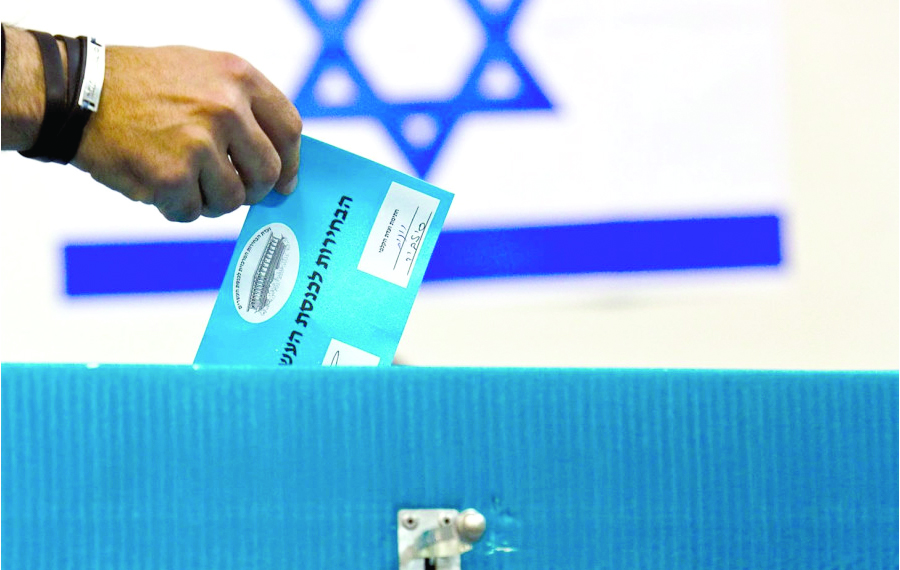
With the great election redo of 2019 less than two weeks away Israelis across the political spectrum are meeting up in living rooms, pubs and coffee shops around the country to discuss the great issues of the day…not.
The political fatigue is palpable right about now: Picture an old basset hound passed out on the front porch, trying to escape the summer heat. Sure, the major media outlets continue to breathlessly report on corruption allegations and the latest attempted mergers and acquisitions of splinter parties, whose potential votes could prove to be the difference between a center-left or right-wing government. But Israelis by and large have tuned out of the incessant focus on labyrinthine negotiations, political jockeying and mudslinging.
Their concerns are more immediate. Parents are busy getting their kids back into the school year swing, young men and women are gearing up for their university studies and those who’ve recently returned from vacation are just now trying to figure out how on earth to pay off that 7-day luxury trip to Greece. Israelis, once the most politically engaged citizens of any democracy on the planet, have settled into a low-grade stupor just days before a national election.
What’s this epidemic of ennui all about? Some of it can be traced to that point in Israel’s history when personalities began to trump platforms. Local journalists have only fueled this “Gossip Girl” approach to covering politics. As a result, there are no great issues, only rumors, allegations, spin and endless innuendo. It’s not surprising that people would rather spend their well-earned Saturday afternoons at the beautiful Beit Yanai Beach not discussing politics with their family and friends.
The problem is that such apathy is anathema to the long term wellbeing of any democracy. What truly legitimizes any form of representative government isn’t its regulations, laws, Constitution or Declaration of Independence. These are but procedural mechanisms that will blow away like dust in the wind if people stop cherishing and fighting for the values that undergird free nations everywhere.
Democracies can’t long function on autopilot. The very legitimacy of a representative government depends on a proactive public holding its leaders’ feet close to the fire. To paraphrase Robert Kennedy, a passionate and engaged citizenry, “…dreams of things that never were, and asks why not.” But detached, disinterested citizens accept the smallness of its countries’ leaders and settle for small victories: holding on to a job, making the monthly rent, getting through an entire summer without a call from the bank.
When the national discussion isn’t about Israel’s security, economy or place among the family of nations, playing matkot or backgammon is surely a more productive way to spend one’s time. But viable democracies demand much of their citizens. Escaping these responsibilities will only prolong and deepen Israelis’ crisis of confidence in the country they so love.