fbpx

September 5, 2019

Rosner’s Torah Talk: Parshat Shoftim with Rabbi George Gittleman


Our guest this week is rabbi George Gittleman, from congregation Shomrei Torah in Santa Rosa, California. In 1991 Gittleman embarked on his rabbinical journey after 8 years in computer sales, obtaining a Masters in Hebrew Letters and Ordination from the Reform Seminary, Hebrew Union College Jewish Institute of Religion in 1996. Rabbi George is also a Senior Rabbinic Fellow at the prestigious Shalom Hartman Institute in Jerusalem, and a graduate of the Rabbinic Leadership Program of The Institute for Jewish Spirituality.

This week’s Torah Portion – Parashat Shoftim (Deuteronomy 16:18-21:9) – begins with instructions concerning the appointment of Judges and law enforcement officers. Moses commands the people of Israel to pursue Justice and to avoid corruption and favouritism. The portion also includes prohibitions of sorcery and Idolatry; rules concerning the appointment and the behaviour of Kings; and many laws of war, including the demand to offer terms of peace before going out to war.


Previous Torah Talks on Shoftim

Rabbi Elaine Zecher

Rabbi Rachel Kahn Troster

Rabbi Joshua Hammerman

Rabbi Jeffrey Kamins

Rabbi Lester Bronstein

Rabbi Howard Voss-Altman

Shmuel Rosner’s book, #IsraeliJudaism, Portrait of a Cultural Revolution, is now available in English. The Jewish Review of Books called it “important, accessible new study”. Haaretz called it “impressively broad survey”. Order it here: amzn.to/2lDntvh

Rosner’s Torah Talk: Parshat Shoftim with Rabbi George Gittleman Read More »

NY County Chair Says Video Warning of Chasidic ‘Takeover’ Will Return

The head of the local Republican Party in Rockland County, N.Y. said that their video warning of a Chasidic “takeover” in the county will eventually be back.

The video, titled “A Storm Is Coming”, accuses Rockland County legislator Aron Wieder, a Chasidic Jew, and the “Ramapo Machine” – referencing the town of Ramapo, which has a large population Chasidic and Charedi Jews – of “overdevelopment” in Rockland County. The video claims that Wieder is attempting to sell land to 75 Yeshiva camps and that he and the “Ramapo Machine” of attempting to redistrict the county to increase their “power to take over Rockland.”

Rockland County GOP Chair Lawrence Garvey told the New York Post that they had taken down the video from their site on Aug. 29, but said this was because it “accomplished its goal of highlighting the issues that face our county. And second, [we] took it down because the controversy stopped adding to number one above.”

Garvey then said that “the video will be back, because this conversation is important to Rockland.”

New York City Councilman Kalman Yeger tweeted, “This is not a partisan issue. The @NewYorkGOP Chair can and must take action against the Rockland County Chair’s antisemitic divide-and-conquer campaign.”

Former Democratic New York Assemblyman Dov Hikind tweeted, “Anti-Semitism in broad daylight, why?! Because there are no consequences for these haters. If the @GOP is ok with local representatives tarnishing their party with such anti-Semitism they will pay for it at the ballot-box nationwide.”

The Republican Jewish Coalition and Anti-Defamation League New York and New Jersey have previously condemned the video as anti-Semitic.

NY County Chair Says Video Warning of Chasidic ‘Takeover’ Will Return Read More »

Do the Right Thing. Do it All the Time. – A poem for parsha Shoftim

Justice, justice shall you pursue…

Justice – the concept so important to pursue
they said the word twice.

They listed the laws and were very specific
on when you should turn right, and when

you should turn left, and when you
should head straight down the path

without thinking of succumbing to
the temptations of your peripheral vision.

They told you who would make the
big calls and surely there was a stone pelting

in your future if you didn’t take the words
of the judges seriously.

Justice is for men and women. Yes, in a rare
display of egalitarianism women are

called out as liable to pursue justice too.
No law school for the judges…

They just inherited the responsibility
because of their last name.

We should pursue justice with the same
automatic imperative. If you have a last name

or a first name, or have ever been called
by a name, or used a name to call out someone else

then justice (justice) should be your bag
so that you may live


God Wrestler: a poem for every Torah Portion by Rick LupertLos Angeles poet Rick Lupert created the Poetry Super Highway (an online publication and resource for poets), and hosted the Cobalt Cafe weekly poetry reading for almost 21 years. He’s authored 23 collections of poetry, including “God Wrestler: A Poem for Every Torah Portion“, “I’m a Jew, Are You” (Jewish themed poems) and “Feeding Holy Cats” (Poetry written while a staff member on the first Birthright Israel trip), and most recently “Hunka Hunka Howdee!” (Poems written in Memphis, Nashville, and Louisville – Ain’t Got No Press, May 2019) and edited the anthologies “Ekphrastia Gone Wild”, “A Poet’s Haggadah”, and “The Night Goes on All Night.” He writes the daily web comic “Cat and Banana” with fellow Los Angeles poet Brendan Constantine. He’s widely published and reads his poetry wherever they let him.

Do the Right Thing. Do it All the Time. – A poem for parsha Shoftim Read More »

US Vetoes UN Statement for Failing to Denounce Hezbollah

The United States vetoed a United Nations Security Council statement on Sept. 5 because the resolution didn’t condemn Hezbollah.

The Times of Israel (TOI) and Agence France-Presse (AFP) reported that France had drafted the statement to denounce “all violations of the Blue Line, both by air and ground, and strongly calls upon all parties to respect the cessation of hostilities.” 

The Blue Line is a reference to the U.N.’s delineation of the Israel-Lebanon border.

The U.S. vetoed the statement twice because it drew a moral equivalency between Israel and Hezbollah’s actions; eventually the statement was scrapped altogether when the rest of the member states refused to call Hezbollah a terror group. A Security Council statement needs to have the approval of all 15 members of the council.

Tensions have been escalating of late between Israel and Hezbollah; Hezbollah targeted an Israel Defense Force (IDF) vehicle on Sept. 1 in retaliation for an August Israeli strike into Syria against Hezbollah members. Israel retaliated with strikes against Hezbollah in Lebanon later on Sept. 1.

In recent weeks, Israel revealed that Iran and Hezbollah are working to build precision-guided missile factories in Lebanon to attack Israelis. The Israeli government fears that such weaponry could overwhelm their missile defense systems. Hezbollah currently has as many as 150,000 rockets at their disposal, according to a Sept. 4 Foreign Policy article

The article also explains that it’s only a matter of time before another war breaks out between Israel and Hezbollah. Seth Jones, director of the Transnational Threats Project at the Center for Strategic and International Studies think-tank, told Foreign Policy, “If you compare this to the last conflict, this one is almost certainly likely to be more destructive and broader in scope. I find it hard to believe that this would be limited to Israel and Lebanon … This is a much more dangerous situation than I think we’ve ever seen along the Israeli-Lebanese border.”

In December, U.N. Watch Executive Director Hillel Neuer noted in a Facebook post that in 2018, the U.N. General Assembly condemned Israel 21 times and didn’t condemn Hezbollah once. In a video of him in front of Hezbollah’s tunnels into Israel, Neuer asked, “Will the United Nations be ready to adopt one resolution condemning Hezbollah for violating international law?”

US Vetoes UN Statement for Failing to Denounce Hezbollah Read More »

Co-Founder and President of Gastromotiva, Named Charles Bronfman Prize 2019 Recipient

David Hertz, a chef and social entrepreneur who pioneered a model that uses food to improve the lives of low-income people, is the 2019 recipient of the Charles Bronfman Prize, announced on Sept. 5. 

In 2006, Hertz co-founded Gastromotiva, a Brazilian-based, socio-gastronomic organization that fights unemployment and social inequality. He said in a statement to the Journal it uses food waste as a tool to “create opportunities for those living on the margins of society.”

Hertz’s experience working in a kibbutz kitchen as an 18-year-old started a journey that inspired him to develop projects to help youth and the vulnerable.

“It’s a tremendous honor to be the recipient of the Charles Bronfman Prize for 2019,” the 45-year-old chef said. “I feel responsible to represent social entrepreneurs who are promoting Jewish values beyond our community, increasing the knowledge about how food and social gastronomy can address the most pressing issues of our planet and transcend geography, class, background and religion.”

The Charles Bronfman Prize is an annual award of $100,000 presented to a humanitarian younger than 50 whose innovative work, informed by Jewish values, has significantly improved the world. 

“We are privileged to honor David to help amplify his important work,” prize co-founder Ellen Bronfman Hauptman said in a statement on behalf of the four founders. “He takes his place among the exceptional Prize laureates each of whom has tackled a key problem of our day with transformative solutions.”

Hertz said that “while a third of food is wasted, we have almost 1 billion people living with chronic hunger and 200 million unemployed workers around the globe.” He added that Gastromotiva, provides “free vocational kitchen training, entrepreneurial classes and nutrition classes across Brazil, El Salvador, South Africa and Mexico, and we are expanding.”

During the 2016 Olympics in Rio de Janeiro, Hertz opened Refettorio Gastromotiva to serve meals to vulnerable, often homeless populations, “in a welcoming space that encourages dialogue and companionship.”

The woman who nominated Hertz, Devry Boughner Vorwerk — a fellow Young Global Leader, partner in the social gastronomy movement and former corporate vice president of Cargill — wrote: “David has taken something that could remain a small, community effort and has connected that effort to a global movement.”

Co-Founder and President of Gastromotiva, Named Charles Bronfman Prize 2019 Recipient Read More »

AJC Los Angeles Names New Director

The American Jewish Committee (AJC) Los Angeles named former Anti-Defamation League Midwest Regional Director Richard Hirschhaut as their new director on Sept. 3, his first day on the job.

Hirschhaut has also served as the executive director and founder of the Illinois Holocaust Museum and Education Center from 2004-2014, senior director of external relations at the American Jewish Joint Distribution Committee from Aug. 2014 to Jan. 2017 and the American Friends of the Rambam Medical Center National Executive Director from Feb. 2017 to Jan. 2019.

During his tenure with the Illinois Holocaust Museum, Hirschhaut co-produced the Emmy-award-winning 2014 documentarySkokie: Invaded But Not Conquered” about the neo-Nazi march in Skokie, Ill. in the 1970s. He was also a contributing blogger for the Times of Israel discussing Israel and healthcare.

AJC CEO David Harris said in a statement, “We are excited that Rick Hirschhaut will be bringing his depth of experience and passion for the well-being of the Jewish people and Israel to AJC. A strong and vibrant AJC Los Angeles is crucial to advancing our global mission and we look forward to Rick’s leadership in achieving these important objectives.”

Hirschhaut said in a statement he was “humbled” to be selected for the appointment.

We are reminded of the urgency of AJC’s mission every day. With dedicated leadership and talented professional staff, we will confront the incivility of our times by standing with communities facing the sting of intolerance,” Hirschhaut said. “Our focus will be upon the issues that matter most – combating rising anti-Semitism and extremism, defending Israel’s place in the world, and safeguarding the rights and freedoms of all people. I am excited for the opportunity to build greater support for AJC’s informed advocacy.”

AJC Los Angeles Names New Director Read More »

Boris Johnson Advocates Two-State Solution in Meeting With Netanyahu

JERUSALEM (JTA) — British Prime Minister Boris Johnson reiterated his country’s support for a two-state solution to the conflict between Israel and the Palestinians during an abbreviated meeting with his Israeli counterpart.

Speaking Wednesday with Benjamin Netanyahu at 10 Downing St., Johnson said that “the UK is still supporting all efforts to reach a solution to the Middle East peace process and a two-state solution.”

Netanyahu recently promised to extend Israeli sovereignty over West Bank settlements, a move that would prevent the implementation of such a solution.

During the meeting, which lasted a half hour, Netanyahu brought up Iranian belligerence and said he would like to discuss ways in which Jerusalem and London could cooperate to oppose Tehran’s activities in the region.

“I want to say that you’ve been a great friend of the Jewish people and Israel,” Netanyahu said. “I applaud your staunch stance against anti-Semitism and your support for Israel’s security. Our relations are at an all-time high: economically, trade, technology, defense cooperation. These are all great things.”

“It’s not that we lack challenges. We have the challenge of Iran’s aggression and terrorism, and I’d like to talk to you about how we can work together to counter these things for the benefit of peace. And I want to thank you for this opportunity to do so.”

Boris Johnson Advocates Two-State Solution in Meeting With Netanyahu Read More »

Jason Greenblatt Steps Down as Broker of White House’s ‘Ultimate Deal’ on Mideast Peace

WASHINGTON (JTA) — Jason Greenblatt, President Donald Trump’s top Middle East peace negotiator, is leaving the White House.

Although the “ultimate” deal he helped craft has yet to be fully announced, the Trump administration suggested in the announcement that Greenblatt was leaving now that it had been written.

A senior White House official said the plan is done.

“The vision is now complete and will be released when appropriate,” the official said in an email.

Greenblatt said in a statement: “It has been the honor of a lifetime to have worked in the White House for over two and a half years under the leadership of President Trump. I am incredibly grateful to have been part of a team that drafted a vision for peace. This vision has the potential to vastly improve the lives of millions of Israelis, Palestinians and others in the region.”

Trump thanked Greenblatt on his favored forum, Twitter, noting Greenblatt’s prior role as a lawyer for Trump’s businesses.

“Jason has been a loyal and great friend and fantastic lawyer,” Trump said. “His dedication to Israel and to seeking peace between Israel and the Palestinians won’t be forgotten.”

Barely mentioned in the statements released by the White House from Greenblatt and his colleagues, including Trump’s son-in-law, Jared Kushner, who headed the peace team, were the Palestinians.

Kushner notably omitted the Palestinians.

“Jason has done a tremendous job leading the efforts to develop an economic and political vision for a long sought after peace in the Middle East,” he said. “His work has helped develop the relationships between Israel and its neighbors as he is trusted and respected by all of the leaders throughout the region. He is a close friend and partner and will continue to make a positive impact on the world.”

The low-key rollout of Greenblatt’s departure reflects how curtailed the initiative launched by Kushner has become, from Trump’s pledges in 2017 to bring about an “ultimate deal” to 2019, when Kushner downgraded “peace plan” to “vision for peace” and Greenblatt appeared to spend much of his time advising Palestinians to curb their enthusiasm.

This summer, the Trump administration rolled out the economic portion of the plan, which relied heavily on regional Arab businessmen investing in the West Bank and the Gaza Strip. Palestinian officials boycotted the rollout in Bahrain, and Israeli officials were not invited to attend.

The release of the political portion of the plan has been delayed in part because Trump is sensitive to how its release will affect the electoral prospects of Israeli Prime Minister Benjamin Netanyahu, the world leader to whom Trump is perhaps closest.

The Palestinians, who were enthusiastic initially about the push led by Kushner, were embittered in December 2017 when Trump recognized Jerusalem as Israel’s capital. They have since said that the plan is a stalking horse that embraces outcomes favored by hard-line Israelis and that David Friedman, the U.S. ambassador to Israel who has longstanding associations with hard-liners in the settlement movement, appeared to be the preeminent figure on the peace team.

Kushner also retreated from the two-state outcome favored by Trump’s predecessors, instructing his team not to use the term “two states.”

Notably, the senior administration official, in listing Greenblatt’s accomplishments, did not include anything that might be seen as conciliatory toward the Palestinians. Instead, the official emphasized Greenblatt’s advocacy for the recognition of Israel’s claims to Jerusalem and the Golan Heights.

“Jason was instrumental, together with others in the administration, when the president recognized Jerusalem as the capital of Israel, moved the U.S. Embassy to Jerusalem and recognized Israeli sovereignty over the Golan Heights,” the official said.

The official also alluded to Greenblatt’s transition from his first year on the job, carefully listening to multiple parties, to his second and third year, jousting on Twitter with Palestinian officials about U.S. policies.

“Jason has also been instrumental in helping to reframe the discussions about the conflict, using the approach that a real peace can only be built on truth,” the official said.

Greenblatt’s resignation, which will come in weeks, also underscores how Trump’s Middle East policy is now overwhelmingly dedicated to aligning Israel and America’s Sunni Arab allies against Iran. The senior administration official said that Brian Hook, the State Department’s top Iran official who has led the charge squeezing that country’s finances, will formally join the team.

Ivanka Trump, the president’s daughter and adviser and Kushner’s wife, also commented on the departure.

“The kindness and unique talents of Jason Greenblatt, a dear friend and colleague, will be missed in the White House,” she said. “We know he will continue to impact the world for the better.”

Friedman also weighed in, and like Kushner made no mention of the Palestinians, instead offering an implied dig at the Obama administration and casting Greenblatt’s mission as including the improvement of U.S.-Israel relations.

“It’s been a tremendous privilege to work with Jason these past few years on the critical tasks of repairing and strengthening the U.S.-Israel relationship and seeking peace and stability within the Middle East,” Friedman said.

Avi Berkowitz, Greenblatt’s assistant, will play a greater role on the team, the senior administration official said.

Jason Greenblatt Steps Down as Broker of White House’s ‘Ultimate Deal’ on Mideast Peace Read More »

The Curious Case of Israel’s Invisible Election

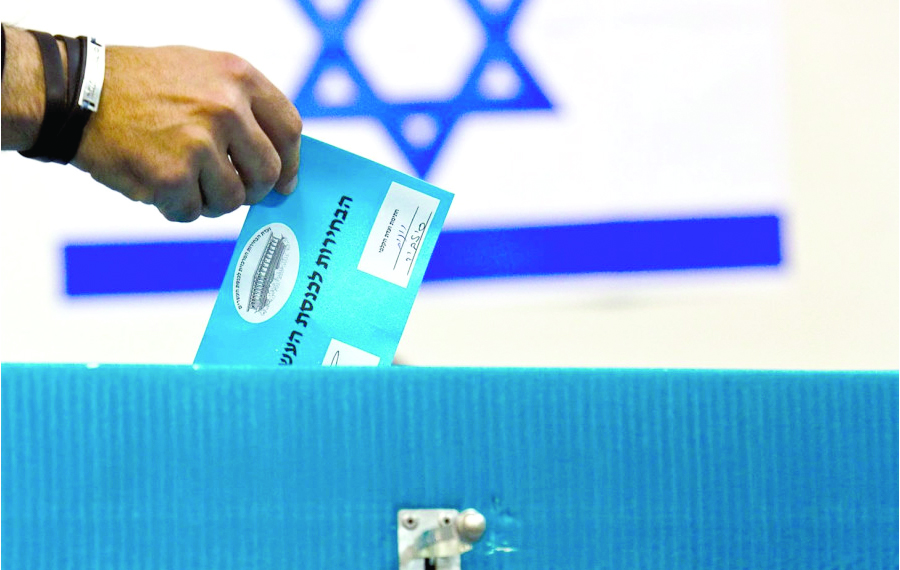
With the great election redo of 2019 less than two weeks away Israelis across the political spectrum are meeting up in living rooms, pubs and coffee shops around the country to discuss the great issues of the day…not.

The political fatigue is palpable right about now: Picture an old basset hound passed out on the front porch, trying to escape the summer heat. Sure, the major media outlets continue to breathlessly report on corruption allegations and the latest attempted mergers and acquisitions of splinter parties, whose potential votes could prove to be the difference between a center-left or right-wing government. But Israelis by and large have tuned out of the incessant focus on labyrinthine negotiations, political jockeying and mudslinging. 

Their concerns are more immediate. Parents are busy getting their kids back into the school year swing, young men and women are gearing up for their university studies and those who’ve recently returned from vacation are just now trying to figure out how on earth to pay off that 7-day luxury trip to Greece. Israelis, once the most politically engaged citizens of any democracy on the planet, have settled into a low-grade stupor just days before a national election. 

What’s this epidemic of ennui all about? Some of it can be traced to that point in Israel’s history when personalities began to trump platforms. Local journalists have only fueled this “Gossip Girl” approach to covering politics. As a result, there are no great issues, only rumors, allegations, spin and endless innuendo. It’s not surprising that people would rather spend their well-earned Saturday afternoons at the beautiful Beit Yanai Beach not discussing politics with their family and friends. 

The problem is that such apathy is anathema to the long term wellbeing of any democracy. What truly legitimizes any form of representative government isn’t its regulations, laws, Constitution or Declaration of Independence. These are but procedural mechanisms that will blow away like dust in the wind if people stop cherishing and fighting for the values that undergird free nations everywhere. 

Democracies can’t long function on autopilot. The very legitimacy of a representative government depends on a proactive public holding its leaders’ feet close to the fire. To paraphrase Robert Kennedy, a passionate and engaged citizenry, “…dreams of things that never were, and asks why not.” But detached, disinterested citizens accept the smallness of its countries’ leaders and settle for small victories: holding on to a job, making the monthly rent, getting through an entire summer without a call from the bank. 

When the national discussion isn’t about Israel’s security, economy or place among the family of nations, playing matkot or backgammon is surely a more productive way to spend one’s time. But viable democracies demand much of their citizens. Escaping these responsibilities will only prolong and deepen Israelis’ crisis of confidence in the country they so love.

The Curious Case of Israel’s Invisible Election Read More »

Israel Came Really Close to Attacking Iran and 4 Other Takeaways from The New York Times Exposé

(JTA) — As of this writing, Israel has not bombed Iran’s nuclear program.

But according to an exposé in The New York Times that dropped Wednesday, it could still happen. And nearly did.

The 10,000-word story details how close Israel came to attacking Iran, how Presidents Barack Obama and George W. Bush tried to deter the Israelis and what actually stopped the would-be bombing raid.

It also tells the story of how President Donald Trump withdrew from the 2015 Iran nuclear agreement and what that means for the future of the Iran-Israel-U.S. hate triangle.

Here are five takeaways from the story.

Israel came really close to bombing Iran.

From about 2009 to 2013, a potential Israeli attack on Iran was the most talked-about surprise ever. Iran was suspected of developing nuclear weapons in secret and was publicly threatening to destroy Israel. Israeli Prime Minister Benjamin Netanyahu responded by making the Iranian threat his focus and consistently threatening to stop Iran’s quest for the bomb. The possible Iran attack was the subject of daily news coverage in Israel, and a story about it graced the cover of The Atlantic in 2010.

According to The Times story, the attack nearly happened in 2012. As early as 2009, when large protests called the Green Revolution were rocking Iran, Netanyahu suggested to U.S. officials that a strike could destroy the Iranian nuclear program and destabilize the regime. But by late 2010, Israel wasn’t ready to strike.

By 2012, that appeared to have changed. The United States had detected Israeli drones taking off from Azerbaijan to spy on Iran and saw clusters of Israeli planes preparing for an attack. That year, then-Israeli Defense Minister Ehud Barak canceled a joint U.S.-Israeli military exercise so it would not conflict with a potential strike. Michael Oren, who served as the Israeli ambassador to the U.S., slept with his phone by his ear, ready to wake up and alert the White House of a strike, the article reports.

Bush opposed an Israeli attack as much as Obama. 

So why didn’t Israel execute the attack?

One reason could be consistent American opposition to the idea — but not just from President Obama. Netanyahu criticized Obama  repeatedly as soft on Iran and, according to the article, “part of the problem.” But President Bush opposed an attack as much as Obama — and was even more direct about it with the Israelis. In a 2008 meeting with Netanyahu’s predecessor, Ehud Olmert, and Barak, Bush interrupted as Barak was making the case for an attack on Iran.

“He banged on the table like this,” Olmert told The Times, “and he said, ‘General Barak, do you know what no means? No is no.”

The U.S. tried to stop an Israeli attack — but also simulated its own on U.S. soil.

During Obama’s his first term, according to State Department official Wendy Sherman, the United States told Israel “please don’t go off on a hair trigger and start a war.” As an Israeli attack appeared more likely, American officials began a tactic known as “Bibisitting,” a play on the Israeli leader’s nickname: A senior American official would visit Israel every few weeks, which meant the U.S. had a window of a couple weeks before and after the visit when it knew Israel would not launch the strike for fear of embarrassing the American official.

But the Americans also made their own preparations for an attack on Iran. The most intensive was when the U.S. built, in the western party of the country, a full-scale model of an Iranian uranium enrichment facility that’s embedded in a mountain. The Americans then detonated a 30,000-pound bomb on their own soil to destroy the pretend nuclear site.

Netanyahu would have attacked Iran if he’d had the votes. 

In the end, Netanyahu told The Times, none of that dissuaded him from an attack. What ended up putting the kibosh on the strike was internal opposition in Israel. Netanyahu and Barak supported a strike into 2012, but it was publicly reported that senior military and security officials in Israel opposed one, as did a majority of the Cabinet there.

“If I’d had a majority, I would have done it,” Netanyahu told The Times. “Unequivocally.”

Among the opponents were Meir Dagan, the head of the Mossad, Israel’s intelligence agency; Yuval Diskin, the head of the Israel Security Agency, or Shin Bet; and Gabi Ashkenazi, the head of the Israel Defense Forces. Ashkenazi’s successor, Benny Gantz, also opposed a strike. He’s now running against Netanyahu in elections being held in less than two weeks.

Netanyahu’s threats may have helped lead to the Iran deal he hates.

As U.S. negotiations with Iran progressed toward an agreement during Obama’s second term, Netanyahu pivoted to vociferous opposition,  decrying the impending deal at nearly every opportunity. He went so far as to deliver a controversial speech to the U.S. Congress in March 2015 lambasting the pact.

But The Times article suggests that Netanyahu’s threats of an attack may have persuaded Obama to resolve the situation diplomatically. Although some people, including Netanyahu, dispute that cause-and-effect, other officials say Netanyahu inadvertently advanced the very agreement he abhors.

“Netanyahu achieved exactly the opposite of what he wanted,” one Israeli official said.

Did the Israeli pressure affect the decision to begin talks?

“Without a doubt,” said Dennis Ross, who advised Obama. “Unless we could do something that changed the equation, the Israelis were going to act militarily.”

President Trump took office in 2017 with a promise to withdraw from the Iran deal, which he did the following year. Since then, tensions have risen and Israel has struck Iranian proxies. Now, according to the article, Netanyahu is again considering attacking Iran.

Israel Came Really Close to Attacking Iran and 4 Other Takeaways from The New York Times Exposé Read More »