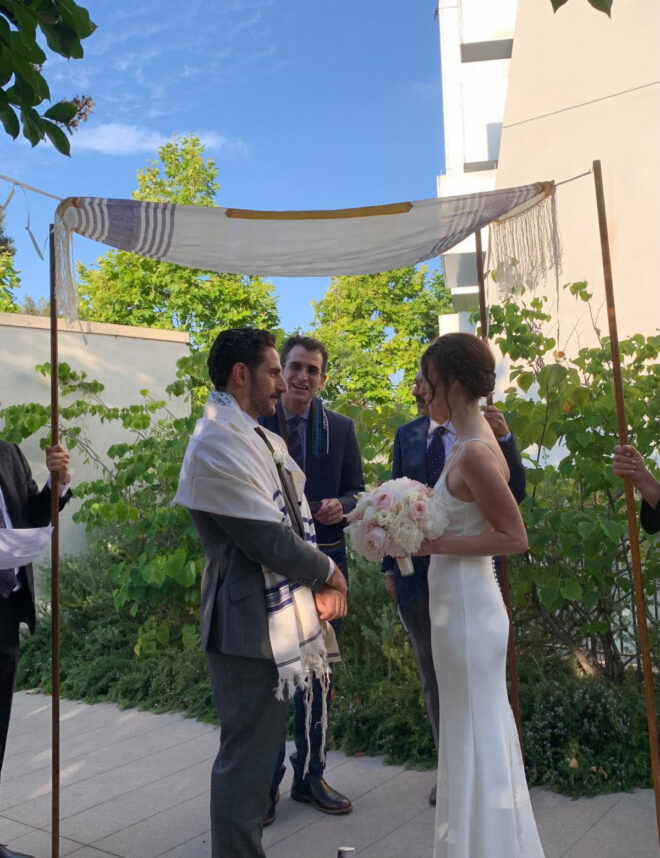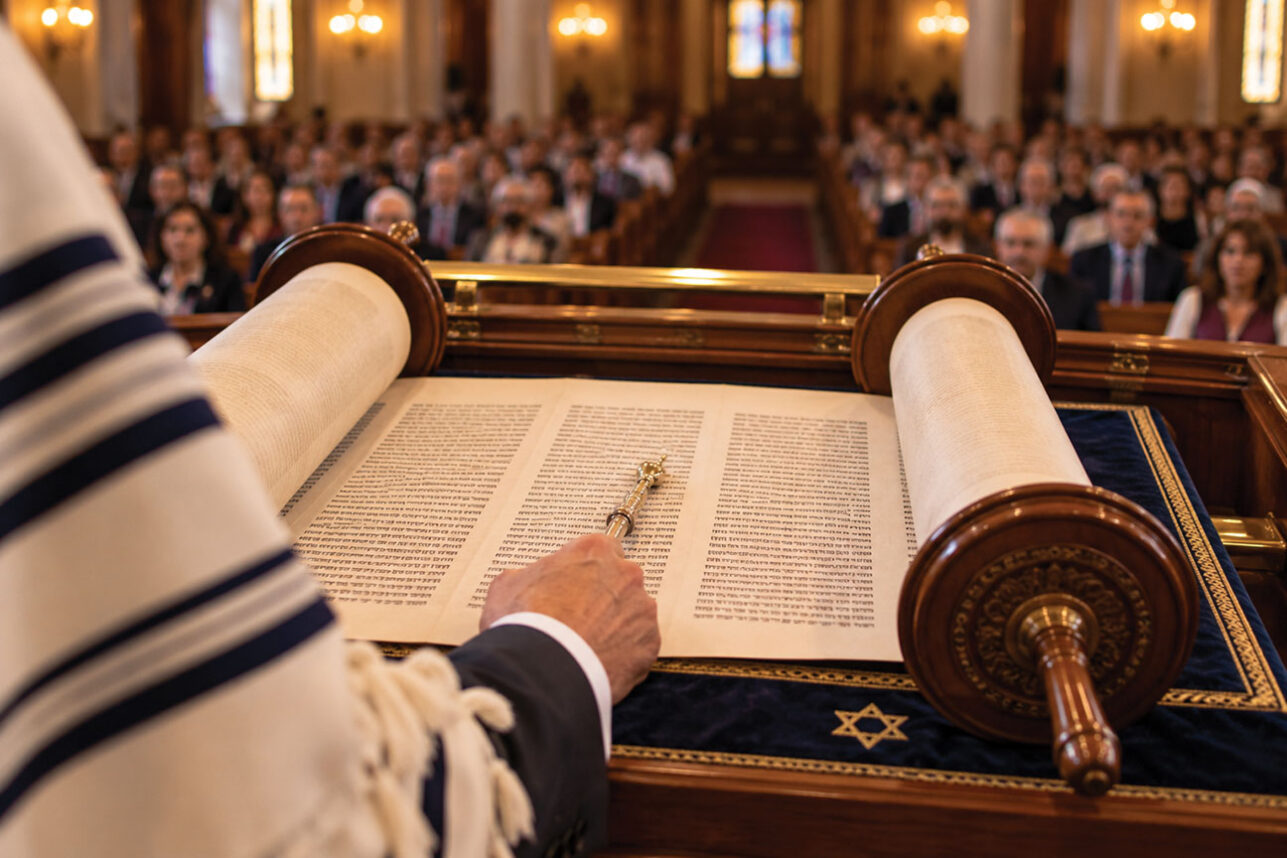
A major identity shift is taking place in the U.S. Conservative movement. According to the North American Jewish Databank, the percentage of Jews that identify as Conservative has fallen from 26% in 2012 to 18% in 2018, while the percentages of Jews that identify as Reform and Orthodox have remained steady at 35% and 10%, respectively. Some Conservative Jewish leaders see rising intermarriage rates as the primary cause of this decline, noting that increasingly intermarried Jewish couples favor Reform congregations over Conservative ones because the Reform movement admits non-Jewish spouses as full-fledged, voting members.
In response to the declining membership, the United Synagogue of Conservative Judaism (USCJ), the Conservative movement’s national body, embarked on a new strategy in 2017 allowing affiliated congregations to embrace interfaith families while still preserving halachic restrictions. The recommended framework is a two-tiered membership structure whereby non-Jews are admitted as members in the synagogue “community” but are excluded from religious rituals and sensitive leadership positions (“covenant”). The USCJ’s new approach constructs a distinction — a barrier, even — between covenant and the community (C&C) for the first time in its history.
But behind the scenes, the USCJ hasn’t been an entirely neutral arbiter, and has urged congregations to move quickly toward a decision on non-Jewish membership. Consequently, an issue central to Conservative Jewish identity is now being rushed to a resolution in many Conservative synagogues nationwide, often bitterly dividing congregants.
I have come across a few familiar arguments by those in favor of, or against, the initiative. Many agree with this move because they view Judaism as being welcoming to strangers and do not want to be perceived by the community as narrow minded. This perspective is closest to the justifications being provided at the USCJ level. Others in favor of non-Jewish membership wish to abolish all barriers to non-Jewish participation in Jewish ritual. From their perspective, non-Jews who have become part of the community should be “adopted” as Jews even if they have not formally converted. Still others are willing to support this initiative because they trust their rabbi and the USCJ.
Others in favor of non-Jewish membership wish to abolish all barriers to non-Jewish participation in Jewish ritual.
Those opposed to non-Jewish membership believe the emphasis on fairness and inclusion rather than Jewish law will erode the movement’s Jewish identity. Others opposing the initiative believe two-tiered membership is discriminatory toward all concerned. Why, for example, would non-Jews accept “second-class” status if what they or their spouses seek is full inclusion?
Meanwhile, the USCJ and congregants aren’t exploring other possible factors contributing to dwindling membership. These factors may include the deterrent effect of high membership costs going toward maintaining the large 1960s-style buildings, the relatively longer services. There is also the possibility that the label “Conservative” presents a barrier to attracting younger Jews because it is easily conflated with the loaded term “conservative.”
Perhaps as a path that is “traditional but flexible” Conservative Judaism is doomed to the same fate as other “moderate” movements in today’s American society. If so, carving a path through the middle may prove difficult. Clearly, in a country such as ours, where Jews have the
luxury and freedom to voluntarily detach from their Jewish identity without
adverse consequences while those of other or no faiths wish to join the
Jewish community, the resolution of this issue will require the wisdom of Solomon.
Jessica Emami is a sociologist living in the Washington, D.C., area.